
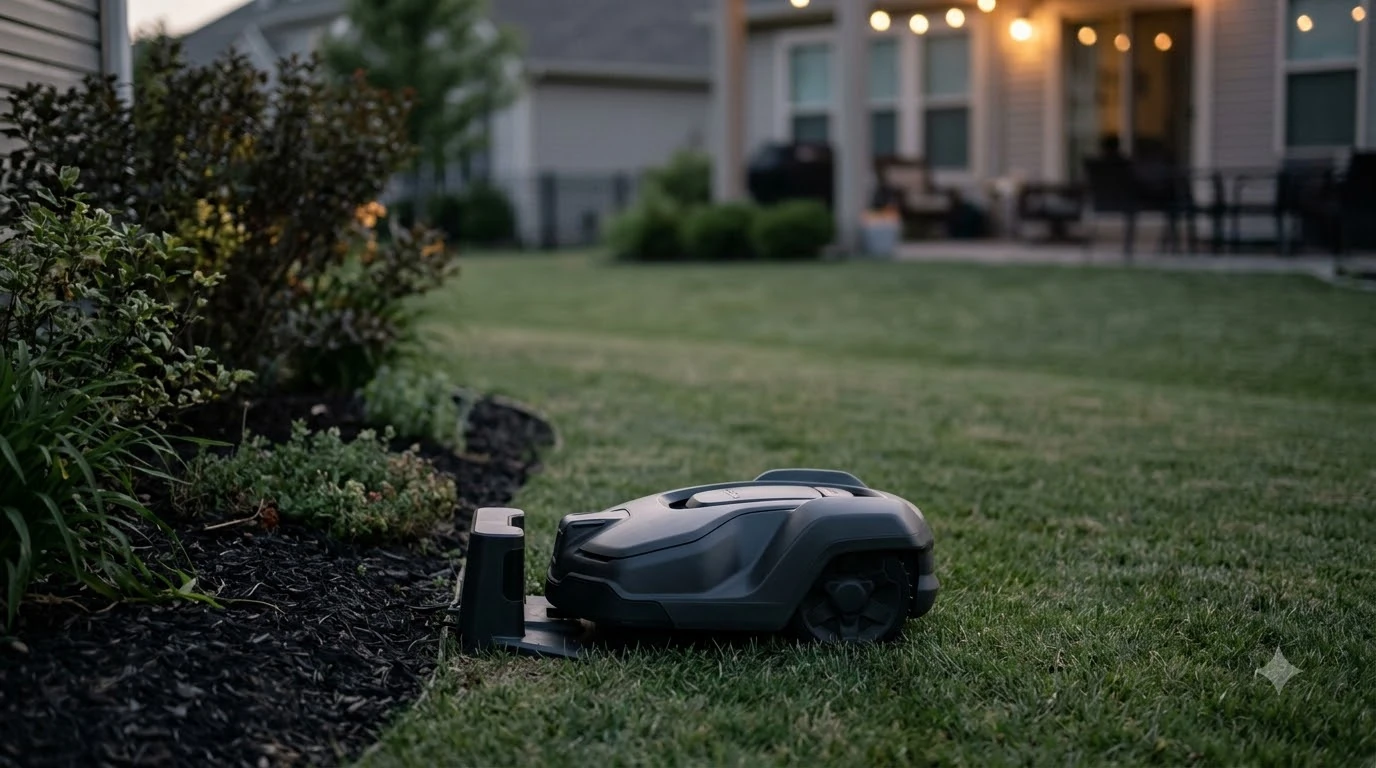

Are robot mowers allowed in HOA communities? Usually yes, but the answer is in your community’s governing documents, not in a national rule. No federal or state law says a robot mower is banned from an HOA neighborhood. What counts is the covenants, the rules the board has adopted, any architectural approval requirements, and the local noise ordinance, so check those before you buy.
The short answer
- Start with the CC&Rs: they set what the association can regulate, including equipment and noise.
- Check board rules: many HOAs adopt separate rules for landscaping equipment and quiet hours.
- Ask about approval: some communities require written approval for fixed items such as charging stations or boundary wire stakes.
- Noise is usually measured at the property line, according to one HOA-focused retailer, so a quiet mower generally avoids complaints.
Why HOA rules matter more than city noise laws
A city or county noise ordinance sets the outer limit for everyone. An HOA’s covenants can be stricter, because they are a contract that owners agree to when they buy into the community. A mower that complies with the city’s hours can still break an association rule about quiet hours or equipment noise. Municipal limits are covered separately in city noise ordinance rules, and it explains the reasoning in more depth.
This is why the same robot mower can be fine in one subdivision and questioned in another. The machine is not the issue. The question is whether the governing documents restrict outdoor equipment at all, and if they do, how the restriction is worded.
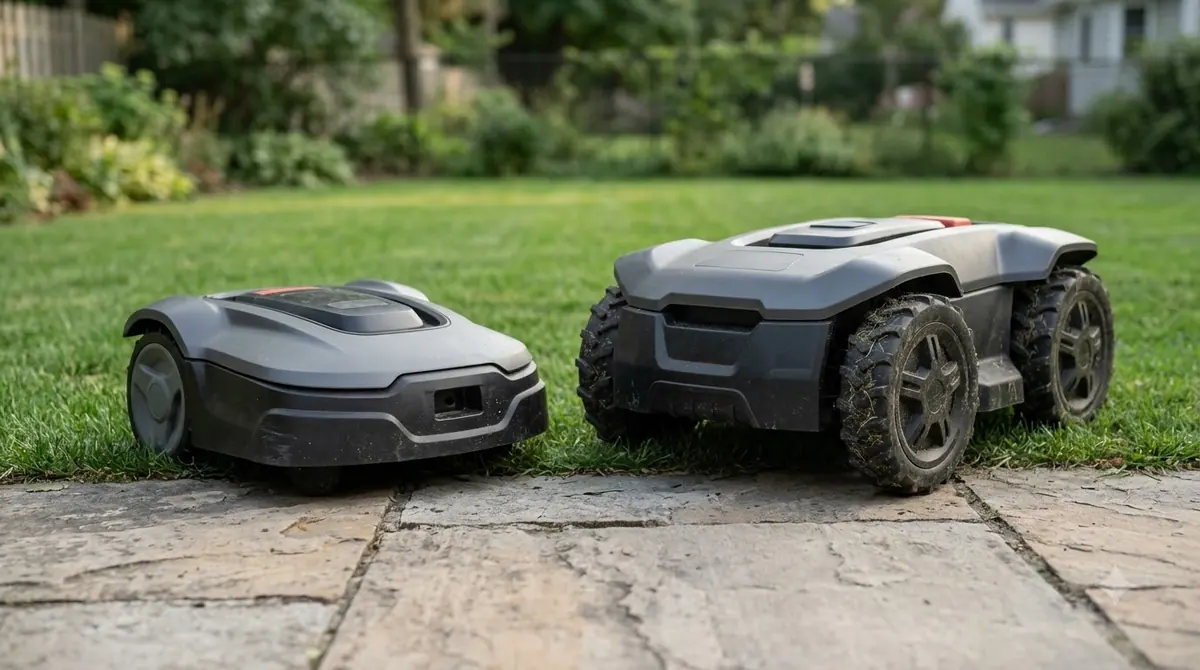
Are robot mowers allowed in HOA communities under your documents?
Start with the declaration, often called the CC&Rs. Look for sections on landscaping, outdoor equipment, nuisance, and noise. Then check the board’s published rules, which can be more specific than the declaration. Finally, ask the management company or architectural committee whether any written guidance mentions robotic or automated mowers.
Read the wording closely. A rule that bans “gas-powered” equipment or “loud” tools is different from one that restricts all outdoor power equipment, and a robot mower may or may not fall under either. When the text is unclear, the safest step is a written question to the board or management company before you buy, so the answer is on record.
Words to look for include “outdoor equipment,” “power tools,” “quiet hours,” “nuisance,” and “landscaping.” If the documents say nothing about mowing equipment, a robot mower is usually treated the same as any other lawn care tool, subject to the general noise rules.
Quiet hours and when the mower runs
Even a quiet machine can cause complaints if it runs at the wrong time. A vendor serving HOA neighborhoods puts it plainly: “Even the quietest mower can trigger a complaint if it’s running during posted quiet hours.” Set the schedule so the mower runs inside the hours your community allows, and avoid early mornings, late evenings, and weekends if the rules restrict them. Quiet-hour conflicts are covered in legal limits on night running, and it is worth reading before you change any settings. Night schedules often draw complaints, as running a mower after dark explains.
Test the schedule during the first week. Watch when the mower starts and stops, confirm it stays inside the allowed window, and note any days when rain or a delayed start pushes the run later than planned. A short log like this gives you a clear answer if a neighbor or board member asks.
Scheduling is one of the main advantages of a robot mower in a regulated community. Because the machine runs on a timer, you can keep it inside a window that suits the association, rather than relying on someone to remember.
Heads up
Some vendors cite quiet-hours patterns, such as weekday mowing starting around 8 a.m. and a cutoff around 8 p.m. These are general examples, not rules. Your own HOA and city limits govern.
Physical installation and approval
The mower itself is usually not the concern. The parts that stay in the yard can be. A charging station, boundary wire, and guide stakes are permanent or semi-permanent additions. Some communities require architectural approval for permanent changes, and a charging station against a house wall may need to be placed to meet setback or appearance rules. Installation sometimes needs approval, as whether a mower needs a permit explains. Approvals may depend on who installs it, as installing a mower without a dealer discusses.
Ask before installing anything fixed. If approval is needed, ask the committee to note whether the station’s location, height, and color are acceptable. A written reply protects you if a question comes up later.
A state-law example: written denials and specific rules
Rules differ by state, and some states limit what an association can require. Florida’s statute on architectural controls is one example. It says an association’s authority over the look, size, location, or type of improvements applies only where it is “specifically stated or reasonably inferred” in the declaration or published guidelines. It also requires that a denial be in writing and identify the specific rule or covenant relied on.
That matters if your HOA rejects a robot mower installation. A vague objection is harder to enforce than one that cites a stated rule. The statute covers Florida only, so check your own state’s homeowner association law for equivalent protections.
What to do if the HOA objects
If the board raises a concern, ask for the specific rule in writing, then review the document it cites. If the objection concerns noise, ask for the decibel standard or the measuring point the community uses. A vendor serving HOA neighborhoods notes that covenants on equipment noise are usually measured at the property line, not on top of the machine. A quiet model and a set schedule answer most concerns. A noisy unit can trigger objections, so causes of unusually loud mowers helps rule out a fault.
If the rule is unclear or the request is refused, consider the amendment process described in the documents or ask a local attorney who handles HOA disputes. Keep records of every request, reply, and inspection.
Frequently asked questions
Can an HOA ban robot mowers outright?
It can if its covenants or adopted rules restrict outdoor equipment in that way. Check your declaration and board rules, since no national rule applies.
Do HOA noise rules apply to robot mowers?
They can. A vendor serving HOA neighborhoods notes that equipment noise covenants are usually measured at the property line, and even quiet mowers can cause complaints during quiet hours.
Do I need approval to install a charging station?
Possibly. Some communities require architectural approval for permanent or semi-permanent additions, so ask the committee before installing.
What should I do if the HOA rejects my robot mower?
Ask for the specific rule in writing, review the cited document, and keep records. Where state law limits association authority, as Florida’s statute does for architectural controls, that can help.
Sources
- Freshly Charged, quiet robotic lawn mowers for HOA neighborhoods (retailer): covenant noise measured at the property line, and quiet hours guidance.
- Florida Statutes 720.3035, architectural controls (state law): limits on association authority and the written-denial requirement, Florida only.
 Up next7 min readLearnAre Robot Lawn Mowers Worth It in 2026? Cost, Time and PaybackUpdated Nov 13, 2026
 7 min readLearnAre Robot Lawn Mowers Safe? What Sensors Do and Don’t CoverUpdated Nov 13, 2026
 9 min readLearnAre Robot Mowers Better for the Environment?Updated Nov 12, 2026
 7 min readLearnAre Robot Mowers Safe at Night for Wildlife?Updated Nov 11, 2026
 8 min readLearnAre Robot Mowers Expensive to Repair? What to ExpectUpdated Nov 11, 2026
 9 min readLearnAre Robot Mowers Tax Deductible for Rental Property?Updated Nov 11, 2026