
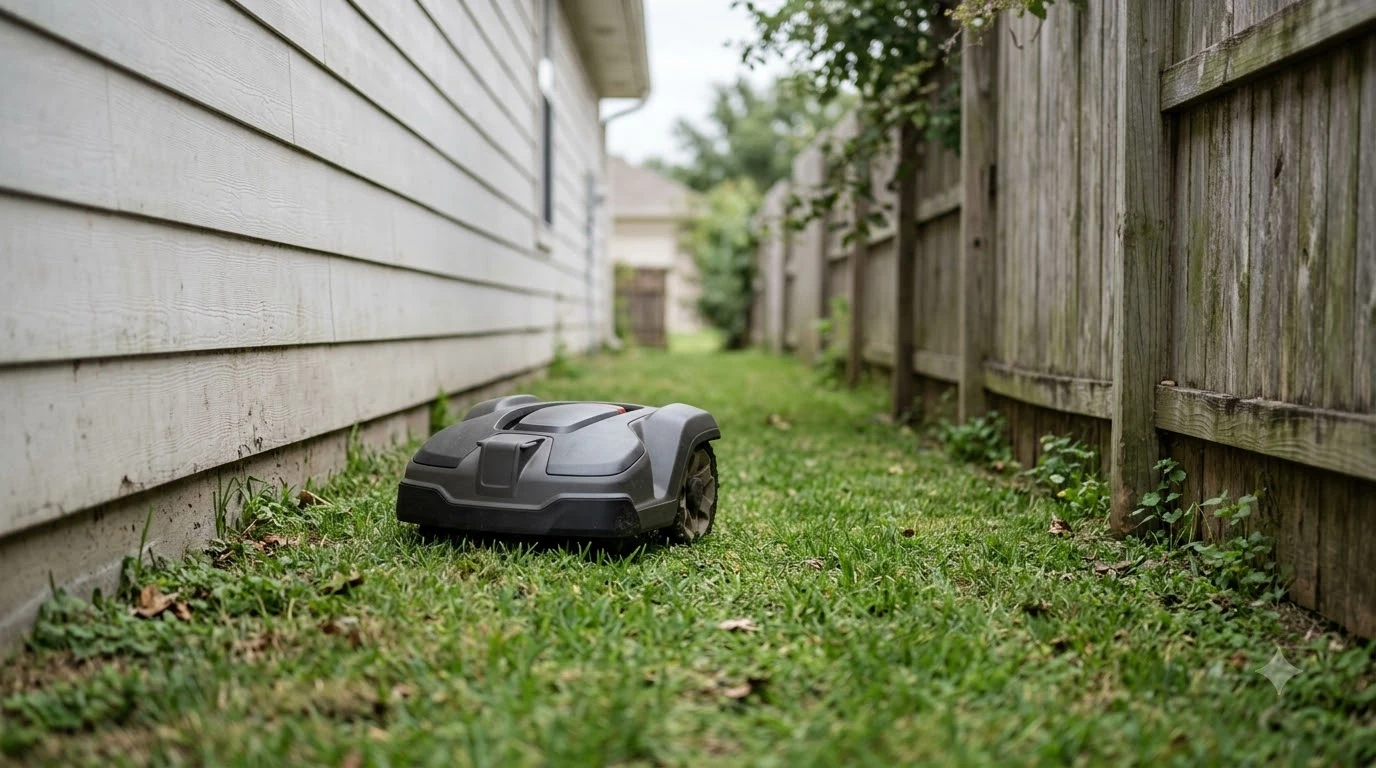

A robot mower for a lawn with bermuda and fescue transition zones works well only if the machine offers electronically adjustable cutting heights across separate virtual zones and a deck range spanning roughly 1 to 4 inches. Because bermudagrass thrives at low heights while tall fescue needs a high canopy to survive summer heat, running one uniform deck setting across both grasses will stress or scalp at least half your yard. Choosing a wire-free multi-zone model lets you map sun-exposed bermuda and shaded fescue independently and shift schedules as the seasons flip.
The short answer
- Mowing height conflict: University turfgrass extensions recommend maintaining residential bermudagrass around 1 to 2 inches, whereas tall fescue needs 3 to 3.5 inches (and up to 4 inches in peak summer heat).
- Required hardware feature: Look for motorized, app-controlled cutting height adjustment with a minimum-to-maximum span of at least 1 to 3.6 inches or 1 to 4 inches—manual dial decks cannot switch heights between zones.
- Zone mapping separation: Use RTK satellite, LiDAR, or vision-based virtual boundaries to isolate sunny bermuda areas from shaded fescue zones rather than treating the whole lot as one mixed turf block.
- Seasonal schedule flips: Increase mowing frequency on bermuda during 80°F to 95°F summer peaks, while scaling back fescue passes during midsummer heat stress and ramping fescue back up in spring and fall.
- Transition edge handling: Expect a visible step-down line where the two grasses meet unless you separate zones with mulch beds, hardscaping, or a gradual buffer strip.
Why mixed bermuda and fescue yards challenge standard robot mowers
Bermudagrass and tall fescue have opposite growth cycles and incompatible height requirements, which immediately exposes the limits of single-height entry-level bots.
In the U.S. transition zone—stretching across states like Missouri, Tennessee, North Carolina, Kentucky, and Virginia—homeowners frequently end up with split yards: sun-baked front or back lawns dominated by warm-season bermudagrass and partially shaded areas holding cool-season tall fescue. According to University of Missouri Extension turfgrass guidance, transition-zone lawns sit in a climate belt where neither warm-season nor cool-season grasses stay dominant year-round without tailored management. While frequent, light robotic cuts generally improve turf density and reduce leaf wetness, a standard robot mower with a fixed manual height dial forces an impossible compromise.
If you lock a manual deck at 1.5 inches to keep bermudagrass dense and prevent thatch buildup, the mower will scalp nearby tall fescue, stripping away the leaf surface fescue needs to shade its shallow roots and block weed germination. Conversely, locking the deck at 3.5 inches protects tall fescue through July and August heat, but leaves bermudagrass leggy, stemmy, and prone to scalping whenever the bot hits minor soil dips. Furthermore, University of Florida IFAS research on autonomous mowers notes that many older or compact robotic platforms max out below 2.5 inches, making them mechanically incapable of maintaining tall fescue at proper summer heights.
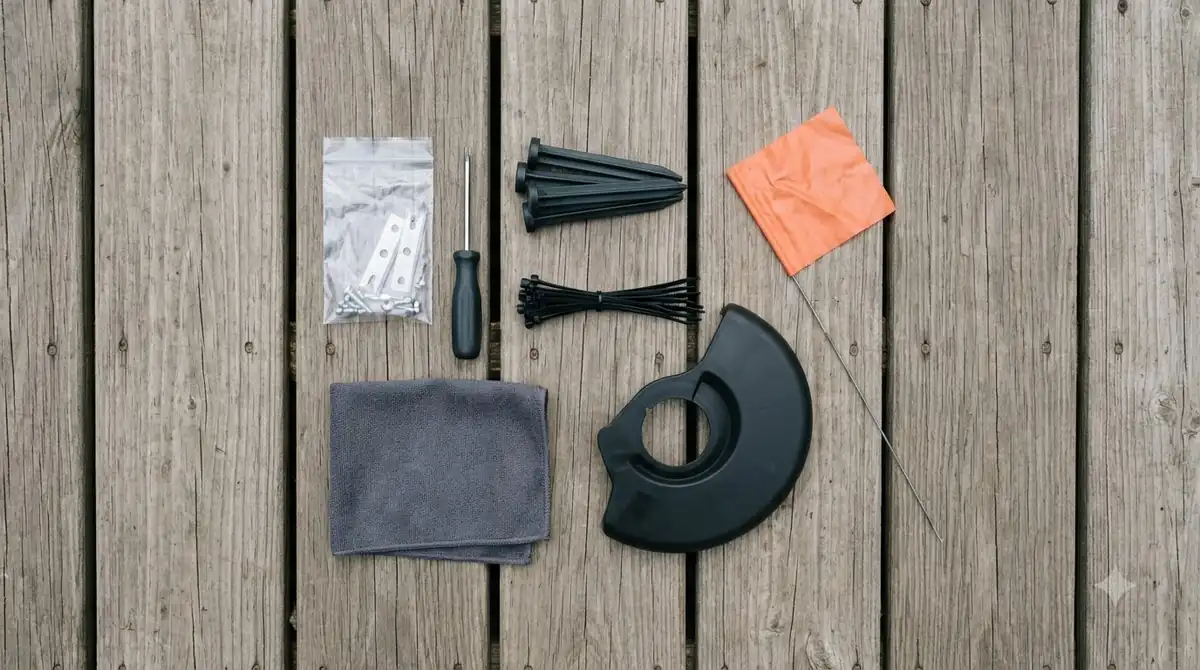
Cutting height and growth comparison across transition-zone turf
Matching your robot mower’s deck range and seasonal schedule to each grass species prevents scalping on bermuda and heat stress on fescue.
Before comparing specific robot mower models, map out the agronomic targets for both halves of your yard. Tall fescue grows most aggressively when temperatures sit between 60°F and 75°F in spring and autumn, whereas bermudagrass hits peak growth between 80°F and 95°F in midsummer and goes completely dormant and brown from roughly November through March. Because a robot mower operates on the one-third rule—clipping tiny amounts frequently so no more than a third of the leaf blade is removed at once—your app schedules must shift in opposite directions across the calendar.
| Turfgrass trait | Bermudagrass (warm-season) | Tall fescue (cool-season) | Robot mower requirement |
|---|---|---|---|
| Target mowing height | 1 to 2 inches (up to 2.5 inches in summer heat) | 3 to 3.5 inches (up to 4 inches in summer heat) | Motorized deck spanning 1 to 4 inches |
| Peak active growth | Summer (80°F to 95°F) | Spring and fall (60°F to 75°F) | Independent per-zone seasonal timers |
| Sunlight preference | Full sun (6 or more hours daily) | Sun to partial shade (4 or more hours) | Vision/LiDAR assist under tree canopy |
| Winter behavior | Dormant and brown (roughly Nov to Mar) | Remains green in mild winter spells | Ability to pause bermuda zone in winter |
| Growth habit | Aggressive spreading via stolons and rhizomes | Bunch-type grass; does not self-spread | Clean razor blades to avoid shredding fescue |
Notice that many mid-tier wireless mowers split their lineups into low-cut and high-cut (“H”) variants—for example, offering either a 1 to 2.7 inch deck or a 2.2 to 4 inch deck on separate chassis. On a pure bermuda or pure fescue lawn, picking one variant works fine. On a mixed transition-zone property, however, a split-range chassis locks you out of one grass type. You need a single chassis whose motorized cutting disc covers the full spectrum from roughly 1 inch up to 3.6 or 4 inches, such as the Husqvarna Automower iQ series (1 to 4 inches) or the Husqvarna 430X/450X platforms (0.8 to 3.6 inches), as listed in the Husqvarna Automower Buying Guide.
Essential hardware features for split-grass lawns
Four specific hardware and software capabilities separate a capable mixed-turf robot mower from one that will frustrate you all summer.
- Motorized per-zone cutting height adjustment: Physical height knobs require you to walk outside and twist a dial before every zone change, defeating automation. Ensure the companion app lets you assign a distinct millimeter or inch setting to each mapped work area so the mower raises or lowers its cutting disc automatically during transit.
- Multi-sensor navigation for tree-line transitions: In transition-zone yards, tall fescue usually lives under mature oaks, maples, or pine canopies where bermudagrass thins out from shade. Pure satellite RTK mowers can lose signal fidelity right where fescue begins. Look for hybrid positioning that pairs RTK with 360-degree LiDAR, radar, or AI vision cameras so the bot holds accurate zone borders under heavy foliage.
- Pivoting razor-blade cutting discs: Tall fescue has tough, fibrous leaf veins that fray and turn brown at the tips if struck by dull blades, while bermudagrass builds dense horizontal runners that bog down weak motors. Dual-disc or high-RPM pivoting razor systems slice both grasses cleanly without tearing, provided you swap blades every four to six weeks during peak growth.
- All-wheel drive (AWD) or high-traction tread: Transition-zone properties often feature sloped drainage swales or subtle grade changes where sunny lawns drop toward shaded backyards. AWD chassis prevent wheel spin on damp morning fescue and keep the deck from digging into softer soil transitions.
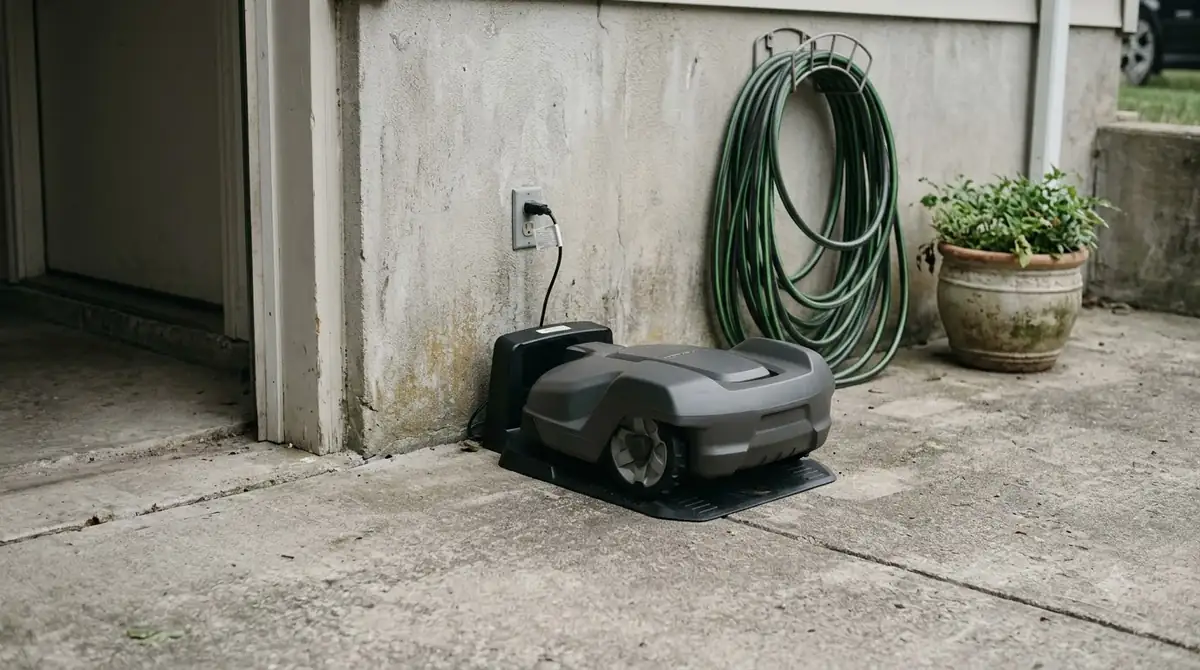
Heads up
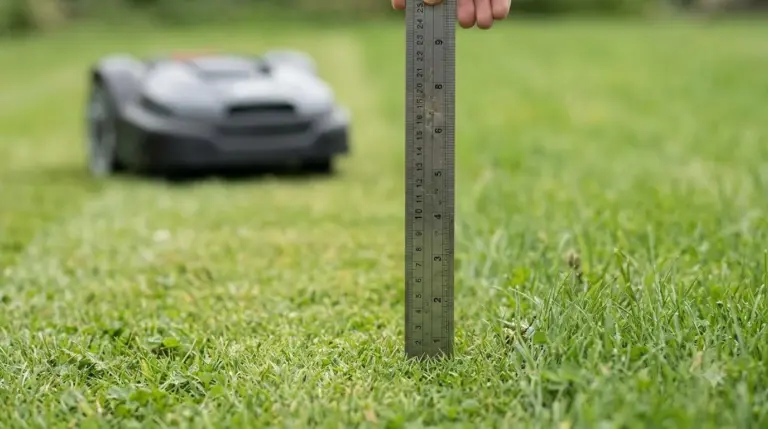
Do not rely on the cutting height number shown inside a smartphone app without verifying it on your turf. Thick bermuda thatch or spongy fescue turf can cause a lightweight robot’s wheels to ride slightly higher or sink slightly lower than the nominal setting—measure the actual cut grass blade with a ruler after the first pass in each zone.
How to set up zones and schedules for bermuda and fescue
Mapping clean virtual boundaries and staggering seasonal timers keeps both grasses healthy without manual intervention.
- Establish a physical or visual boundary line. Where bermudagrass meets tall fescue, mowing one side at 1.5 inches and the other at 3.5 inches creates a noticeable 2-inch vertical step. Whenever possible, align your virtual zone border along a sidewalk, driveway, mulch bed, or stone edging so the height difference looks intentional rather than jagged.
- Map sunny bermuda and shaded fescue as separate work areas. Walk the perimeter with your mower’s app to create distinct zones rather than one giant lawn map. Leave a narrow 6- to 8-inch buffer or a dedicated transport path between zones so the mower raises its blades to maximum height while crossing from fescue into bermuda.
- Program opposite summer and shoulder-season frequencies. From June through August, run the bermuda zone four to six times per week at 1.5 to 2 inches to encourage dense lateral spreading, while dropping the fescue zone to two or three passes per week at 3.5 to 4 inches. In April, May, September, and October, flip the emphasis: increase fescue frequency as cool-season growth surges and taper bermuda passes as nights cool below 60°F.
- Shut down the bermuda zone during winter dormancy. Once fall frost turns bermudagrass brown, disable its schedule in the app so the bot does not wear down blades or compact dormant crowns. Keep the fescue zone active on an as-needed schedule during mild winter weeks when soil is dry and turf is actively growing.
Frequently asked questions
Can one robot mower cut bermuda and fescue in the same yard?
Yes, provided the robot mower features motorized, app-controlled cutting height adjustment with a wide deck range (roughly 1 to 4 inches) and multi-zone mapping. Without electronic per-zone height control, you would have to manually adjust the mower deck every time it switches between grass types.
What happens if a robot mower cuts bermuda and fescue at the same height?
Cutting both at a low 1.5-inch bermuda height will scalp tall fescue, weakening its roots and inviting crabgrass and heat burn in summer. Cutting both at a high 3.5-inch fescue height causes bermudagrass to grow thin, leggy stems that brown out underneath and scalp whenever the mower crosses uneven ground.
How do I hide the height difference where bermuda meets fescue?
The cleanest approach is placing your virtual zone boundary along an existing hardscape edge, walkway, or mulched landscape bed. If the two grasses meet directly in an open lawn, create a narrow 2- to 3-foot intermediate transition zone set at 2.5 inches to step the height down gradually.
Should I run my robot mower on dormant bermudagrass in winter?
No. Once bermudagrass goes dormant after fall frost, it stops producing new leaf tissue until soil temperatures warm in spring. Pause the bermuda zone in your mower’s app over winter to save battery cycles, preserve blade sharpness, and avoid unnecessary wheel traffic on dormant turf.
Sources
- Managing Lawns and Turfgrass (MG10) (University of Missouri Extension): Used for transition-zone climate context and warm-season vs. cool-season turfgrass adaptation.
- Autonomous or Robotic Mower Use on Florida Lawns (EP667) (University of Florida IFAS Extension): Used for autonomous mower cutting-height limitations, turf density effects, and soil compaction benefits.
- Automower Buying Guide (Husqvarna): Used to verify commercial availability of motorized cutting height ranges spanning 1 to 4 inches and 0.8 to 3.6 inches.
 Up next9 min readBy YardSetting Up a Robot Mower for a Yard with a Gravel Parking Pad TransitionUpdated Nov 19, 2026
 8 min readBy YardBest Robot Mower for Bermuda Grass: What to CheckUpdated Nov 17, 2026
 9 min readBy YardCan a Robot Mower Cut Bermuda Grass?Updated Nov 11, 2026
 8 min readBy YardHow Often to Mow Bermuda Grass by SeasonUpdated Nov 11, 2026
 7 min readBy YardBest Robot Mower for Front and Back Yard Multiple ZonesUpdated Nov 13, 2026
 7 min readBy YardRobot Mower for a Lawn With Ground Cover Plants: Zones and EdgesUpdated Nov 14, 2026