
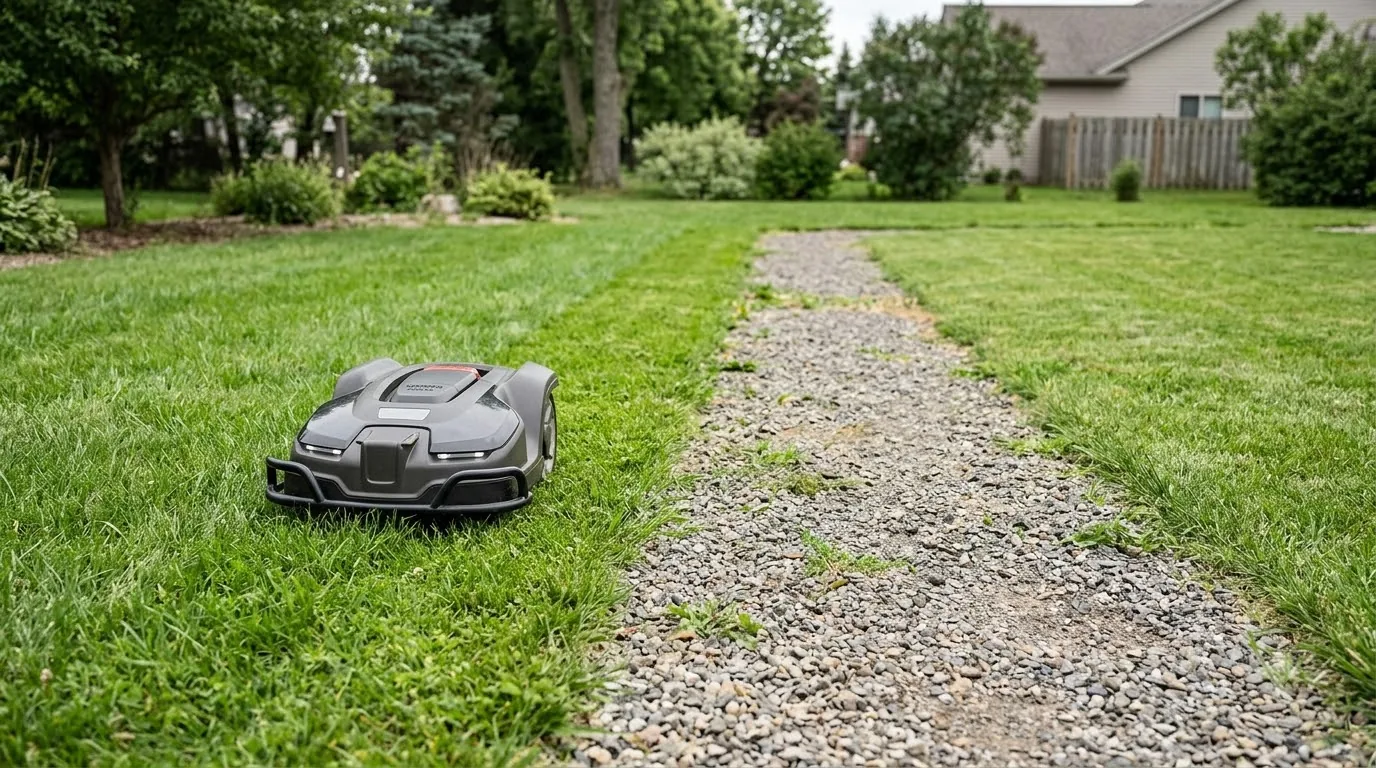

Where to place RTK antenna in a yard with trees comes down to one rule: use the most open spot you can reach, above the canopy and away from trunks and overhanging branches. RTK needs a clear view of the satellites, and trees block that view while their leaves and branches move with the wind, so the obstruction can change from season to season. The rules below come from a manufacturer install guide and a government best-practice document, both listed in Sources.
The short answer
- Open sky first: pick the highest clear point you can, with nothing above it.
- Stay off the canopy: Mammotion’s install guide lists “under a tree” among the spots to avoid.
- Plan for growth: Natural Resources Canada advises against sites where tree or shrub growth is expected.
- Mount high and upright: a roof edge or a pole beats a post that wobbles.
- Keep metal and vehicles away: NRCan lists vehicles, metal walls and metal signs within 30 m as reflectors.
Where to place RTK antenna in a yard with trees
In a yard with trees, the RTK antenna belongs on the highest open spot you can use, such as a pole in a sunny corner of the lawn or an unobstructed wall or roof. The spot you pick at ground level is not enough on its own, because a branch overhead can block the sky even when the spot looks open.
Mammotion’s install guide for its RTK reference station says the station “must be in an open area to receive satellite signals.” It allows flat, open ground or an unobstructed wall or roof, and it tells the installer to make sure no roofs or trees may obstruct the satellite signals. In a treed yard, that usually means a spot on the lawn that is away from the trunks, or a mount on the house above the tree line.
Why trees block RTK signals
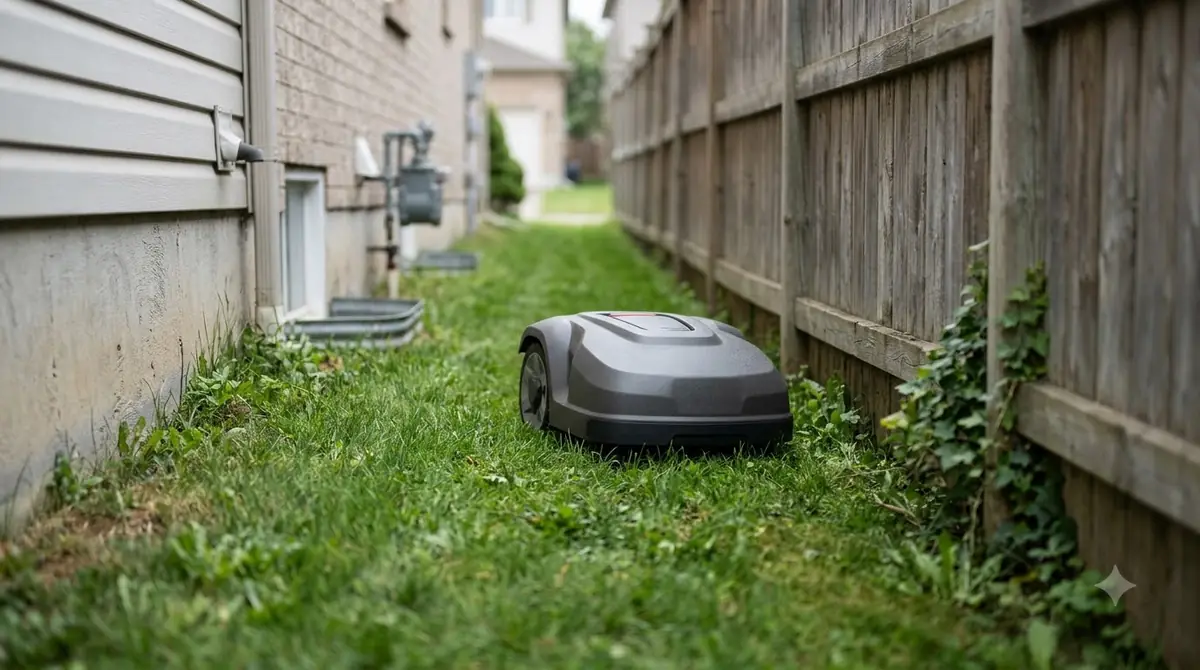
Knowing where to place RTK antenna in a yard with trees starts with what trees do to the signal. The base station needs to see satellites across most of the sky, including the ones low on the horizon. Natural Resources Canada’s best-practice guide for GNSS reference stations asks that obstructions stay below 10 degrees above the horizon from the antenna, with as little as possible between 0 and 10 degrees. A tree canopy that rises above that line blocks the low satellites first.
Trees also change over time. The same guide says to avoid sites with future tree or shrub growth, so a spot that is clear today can fill in within a few seasons. Our reading is that a spot should be judged by what the yard will look like in five years, not only by the view on installation day.
| Source | What it says about trees | Other placement rules |
|---|---|---|
| Mammotion install guide (manufacturer) | Keep roofs and trees from obstructing the satellite signals; do not place the station under a tree | Flat open ground or an unobstructed wall or roof; avoid L-shaped building corners and narrow paths between two structures; mount vertically |
| Natural Resources Canada best practices (government, January 2024) | Avoid sites with future tree or shrub growth; keep obstructions below 10 degrees above the horizon | Avoid vehicles, metal walls and metal signs within 30 m; keep lightning rods and broadcast antennas at least 3 m away; level the antenna |
| RTKdata accuracy guide (third-party blog, 2026) | Maximize open sky: do not tuck the station behind a shed or under branches | Mount it high and stable: a roof edge or pole beats a wobbly fence post |
The three sources do not give one number for trees, so the strictest rule is the one to meet when deciding where to place RTK antenna in a yard with trees. Our reading is to stand at the proposed spot, look up toward each tree, and move the station if any branch sits above the low horizon line.
Heads up
A spot that looks open at ground level can still be blocked by a branch overhead. Look straight up from the exact mounting point before you drill or stake anything.
Spots to avoid in a treed yard
Several common yard spots combine tree cover with other problems, so they are the first places to rule out. Mammotion’s guide names some of them directly, and NRCan adds the reflector rule for metal and vehicles. Each one can block satellites, reflect them, or both.
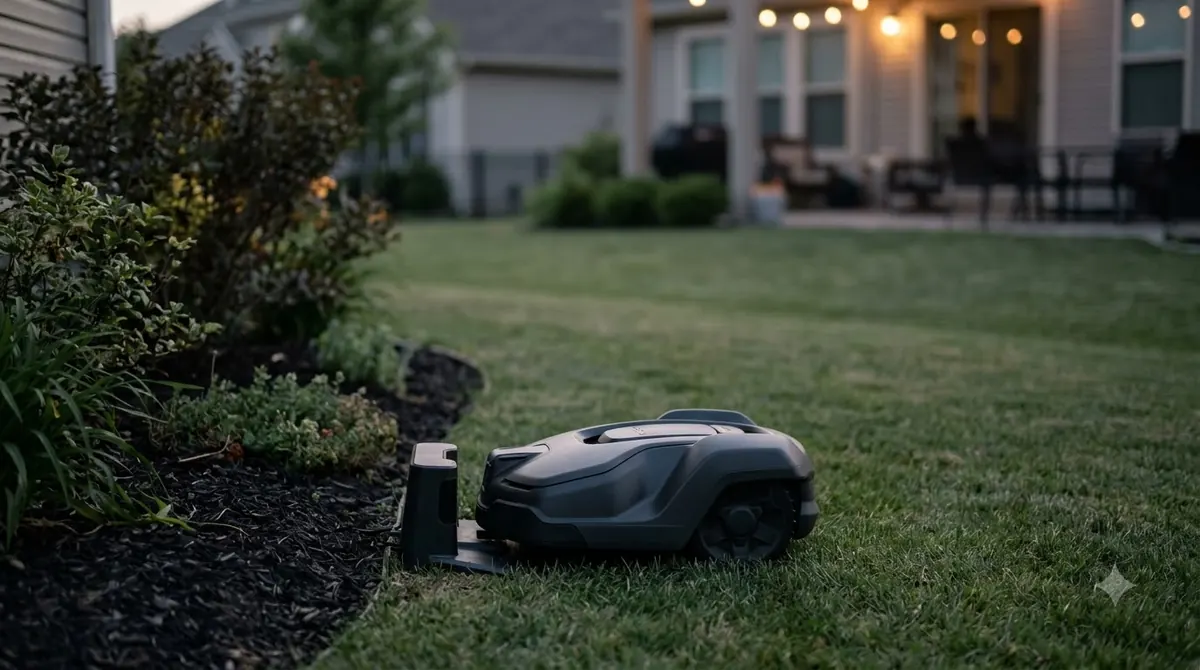
The side yard between a house and a fence is a layout to check first in a treed lot. It is a narrow path between two structures, and the guide warns against that layout whether or not trees are present. Put the station at the open end of the side yard if you have no better choice, and check the sky from the mounting point before you commit. Our page on a robot mower for narrow side yard passages covers how mowers cope with that layout.
- Under a tree or branches: Mammotion lists this among the spots to avoid.
- The corner of an L-shaped building: the guide says not to install the station there.
- A narrow gap between two structures: a side yard between a house and a fence, or a path between a shed and a hedge.
- Within 30 m of metal or vehicles: NRCan lists vehicles, metal walls and metal signs as reflectors that cause multipath, and tall buildings add to it, as in our RTK robot mower near tall buildings guide.
- Where growth is expected: a spot clear today can be blocked once nearby trees or shrubs fill out.
Mounting height and orientation for a treed yard
When you settle where to place RTK antenna in a yard with trees, mount the antenna high, upright and steady, because a pole or roof edge keeps nearby branches and fence lines lower in the sky view. Mammotion says the station should be oriented vertically, as its diagram shows, and RTKdata advises a roof edge or pole over a fence post that can move.
NRCan’s reference station guidance is stricter about the mount itself. The antenna should be leveled to within 0.15 degrees, and it should be attached through a device that lets it return to the same position if it is changed. A plain threaded rod that lets the antenna tilt is the weak point, so use a proper mount even for a home install.
What to do when no clear spot exists
If no spot in the yard meets the open-sky rules, a wall or roof mount is usually the next option, and the choice depends on the lawn shape. Where to place RTK antenna in a yard with trees is only half the decision when canopy covers the lawn, which is why we also cover a robot mower for a yard with heavy tree canopy. Mammotion’s guide recommends a wall or roof for O-shaped or U-shaped lawns, and for yards with more than one lawn area.
Our reading is that a yard where trees cover most of the lawn will be hard for RTK no matter where the station sits. In that case, compare the RTK setup with a wire boundary (see boundary wire vs RTK installation time), check the satellite reading the mower’s app reports after the install, and move the station if the fix drops often at the same times of day.
Frequently asked questions
Can an RTK antenna sit under a tree?
No. Mammotion’s install guide lists under a tree among the spots to avoid, because branches block the satellite view and move with the wind.
How far should an RTK antenna be from trees?
The sources we read give no single distance from trees. Natural Resources Canada asks that obstructions stay below 10 degrees above the horizon from the antenna, so judge the angle from the mounting point rather than a fixed number of feet.
Does a fence or shed block RTK signals?
It can, especially when it sits close to the antenna and rises above the low horizon line. Mammotion also warns against narrow paths between two structures, which is the layout a fence and a shed often create.
Does metal nearby affect RTK?
Yes. Natural Resources Canada lists vehicles, metal walls and metal signs within 30 m as reflectors that can cause multipath, so keep the antenna clear of them.
Sources
- Mammotion support, How to Install RTK Reference Station (manufacturer): open-area rule, trees and L-shaped corners to avoid, vertical mounting.
- Natural Resources Canada, GNSS Reference Station Installation and Operation Best Practices (government, January 29, 2024): future tree growth, 10-degree obstruction limit, 30 m reflectors, leveling.
- RTKdata, Wire-free Robot Mower RTK Accuracy Guide for 2026 (third-party blog): open-sky and mount-height advice. It cites NOAA’s NGS guidance, which we could not confirm directly, so we rely on it only for the mounting advice.
 Up next8 min readBy YardRobot Mower That Works Under Trees Without RTK: What to Look ForUpdated Nov 11, 2026
 8 min readBy YardRobot Mower for Yard With Heavy Tree Canopy: What to CheckUpdated Nov 11, 2026
 9 min readBy YardWhere to Put a Robot Mower Charging Station (Placement Rules)Updated Nov 11, 2026
 8 min readBy YardRTK Robot Mower Near Tall Buildings: What Affects AccuracyUpdated Nov 11, 2026
 8 min readBy YardHow Does a Robot Mower Handle Trees?Updated Nov 11, 2026
 9 min readBy YardHow to Lay Boundary Wire Around Trees and ObstaclesUpdated Nov 11, 2026