
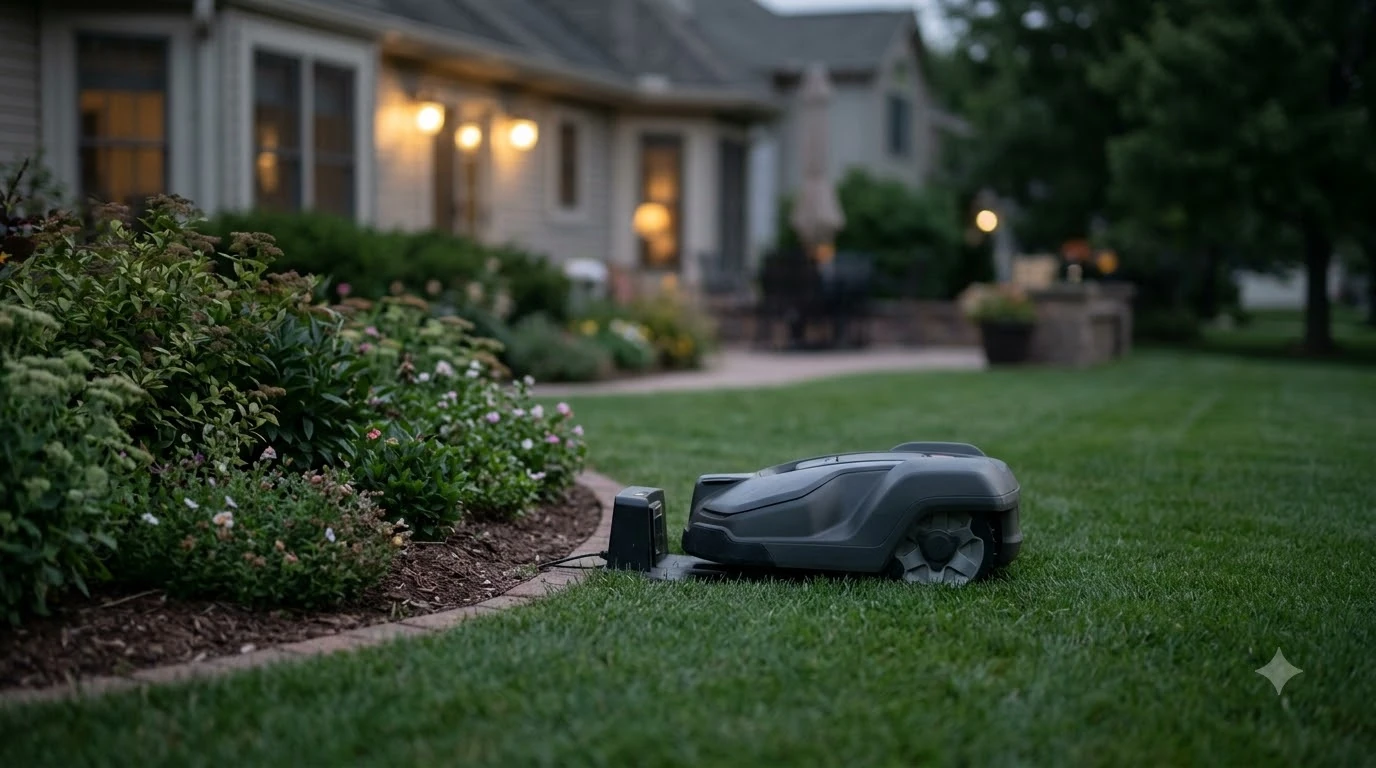

Should I level my lawn before getting a robot mower? Usually no. You do not need to level the whole yard, because robot mowers are designed to handle small bumps, so the useful job is to fix deep holes, low spots that could trap the mower, and the ground under the charging dock. Vendors describe the goal as removing abrupt changes, not making the yard perfectly flat.
The short answer
- Whole-yard leveling: usually not needed. Small bumps and shallow dips are generally fine.
- Surface variation: keep it under about 3 cm, the figure Eufy gives as a best practice.
- Deep holes and ruts: fill these, because they cause tilt, lost grip, and getting stuck.
- Dock area: put the charging station on firm, reasonably level ground.
- Slopes: compare your yard’s steepest area with your model’s rating before you buy.
Should I level my lawn before getting a robot mower at all?
Usually no. A robot mower works from a boundary and a set of sensors, and it can climb small irregularities without trouble. Anker’s UK guidance for Eufy robot mowers says small bumps and shallow dips are usually not a problem. The Eufy setup checklist makes the same point: the goal is to remove abrupt changes, not to make the lawn perfectly flat.
Leveling becomes worth the effort when the unevenness is local and sharp. A single hole, a raised root, or a step is more likely to cause a problem than a gentle roll across the whole yard. Our reading is that the answer to “should I level my lawn before getting a robot mower” depends on local trouble spots, not on general slope, so a quick walk of the yard is the right first step.
How much unevenness can a robot mower handle?
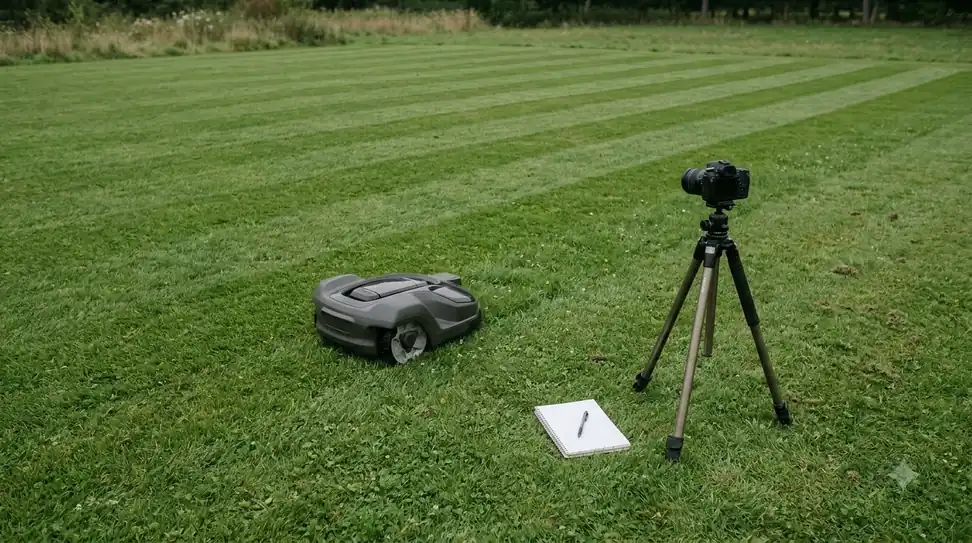
For most homeowners asking whether they should level my lawn before getting a robot mower, the practical limit is set by vendor guidance near 3 cm of surface variation, while deeper holes and ruts cause real trouble. Eufy’s slope guidance treats the figure as a best practice rather than a hard specification, so treat it as a rule of thumb.
| Ground problem | What vendors say | What to do |
|---|---|---|
| Small bumps and shallow dips | Usually not a problem (Anker UK) | Leave them alone unless they repeat |
| Surface variation above about 3 cm | Keep under this level (Eufy best practice) | Fill or regrade the spot |
| Deep holes and ruts | Can cause tilt, lost grip, and getting stuck (Anker UK) | Fill with soil and reseed if needed |
| Raised spots | Blades can cut too low over them, causing scalping (Anker UK) | Fill the low ground around them or raise the cutting height |
The mower’s own safety systems matter here. Tilt and lift sensors shut the blades down when the machine is pushed past safe angles, and Eufy notes that severe bumps can spin the tires, cause uneven cuts, and leave scalped patches. Those are signs the ground needs work, not that the mower is broken.
Check slope and dock level before you fix anything
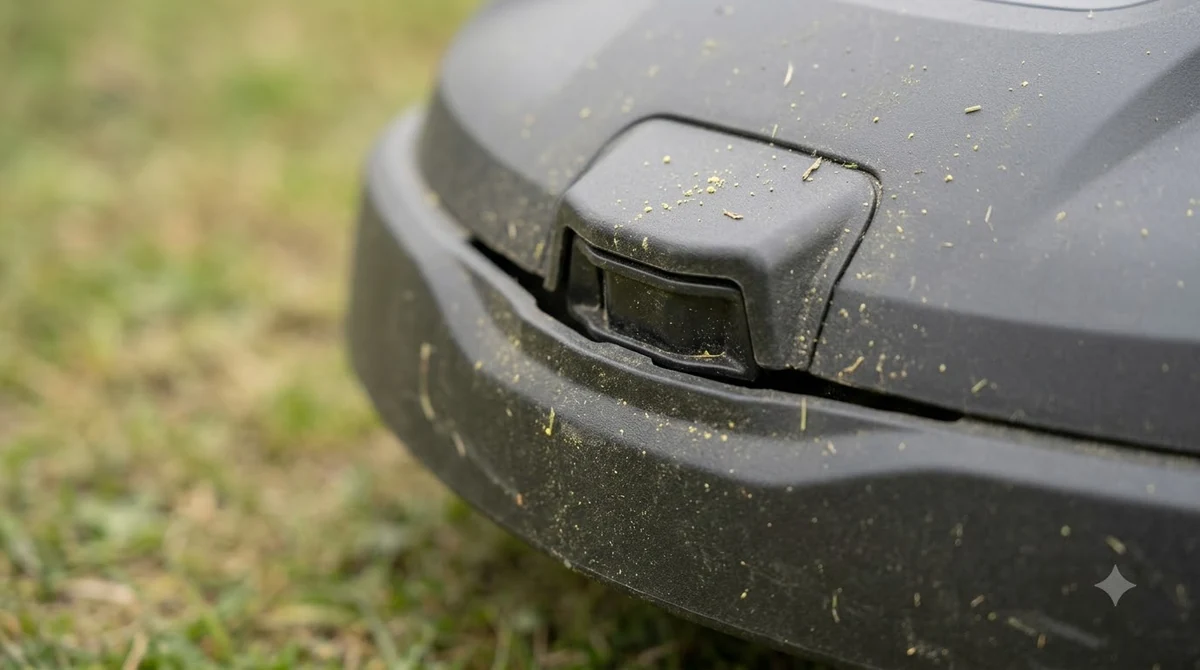
Slope limits and dock placement often matter more than the small bumps. Eufy’s published ranges are roughly 10 to 25 percent for basic models, up to 35 percent for mid-range models, 40 percent for advanced models, and 70 percent for all-wheel-drive models. Those are rated maximums and absolute limits, not a daily target.
Percent and degrees are not the same unit, which causes confusion. As a conversion, 25 percent is about 14 degrees, and 40 percent is about 21.8 degrees. Check the unit in your model’s manual before comparing a lawn’s slope with the rating.
- Wet grass: reduces tire grip, so a mower may slide even within its rating.
- Slopes and rough turf: draw more power and shorten runtime.
- Dock: Eufy’s E15 checklist asks for firm, reasonably level ground, but gives no numeric tolerance. Our reading is that leveling a small patch under the station is often the simplest fix in the whole yard.
How to fill the worst low spots
Fill low spots in thin layers over one to two weeks, and never bury the grass completely. Extension guidance says each layer should be shallow enough for the grass to grow back through it, and that covering the crowns smothers the plant.
- Mark the low spot. Use a rake or a long board to find dips that are deeper than the surrounding turf.
- Choose matching soil. Use soil similar to the lawn’s base layer. Sand is appropriate only when the underlying soil is sandy.
- Apply a thin layer. Spread a light coat and work it into the grass, leaving the blades visible.
- Wait and repeat. Give the grass a week or two to re-establish, then add another layer if the dip is still there.
- Handle large areas in strips. For a big low area, cut and lift uniform strips, fill to that strip thickness, and replace them.
- Reseed only when needed. The thin-layer method does not require reseeding. Filling so deep that the crowns are covered does.
Timing matters. The Extension guidance says topdressing can start in late summer or early fall and should stop by late September, so the grass can be aerated, composted, and overseeded before winter. Resume in spring.
Rolling, sand, and soil: what helps and what does not
Rolling can help when a lawn is bumpy but has no localized low spots, because it presses down high points gently. It does not fix a hole. Sand is the most common topdressing, but it is the wrong choice on clay, where a soil closer to the existing base works better.
- Rolling: useful for broad, shallow bumps. Skip it if the lawn has specific dips, which rolling can make worse.
- Sand: only on lawns with sandy soil.
- Clay soil: use a similar soil, or topsoil or compost, as the topdressing.
- Full fill of a deep spot: plan on reseeding, because the grass beneath will be covered.
When it is smarter to avoid an area than fix it
For a permanent dip, a drain, a retaining edge, or a step, avoiding the area is often more practical than regrading. Most robot mowers offer no-go zones or boundary settings for these features, so the mower stays out of trouble without any digging.
Before you buy, confirm whether the model uses a buried boundary wire, because that changes how you plan the zones. Eufy’s checklist suggests defining the areas the mower should avoid before regular mowing starts, and using a physical barrier where the layout calls for one, such as near a pool or steps. Our reading is that no-go zones are the better choice for a spot you cannot fix without major work.
So, should I level my lawn before getting a robot mower? For most yards the answer is no. Fix the deep holes, the raised spots that cause scalping, and the dock ground, then check the slope rating against your steepest area. That covers the cases where leveling pays off.
A prep checklist before the first run
Preparation is mostly housekeeping, and it is worth doing before the first mapping run. Eufy’s E15 checklist gives a clear sequence, and the same steps apply to most models even though the numeric limits differ.
- Mow overgrown grass first. Bring it down to the starting height recommended for your model, without cutting too short.
- Fill holes and firm loose soil. Holes left by pets or foot traffic are the most common trouble spots.
- Clear debris. Remove stones, branches, hoses, toys, and pegs from the lawn.
- Walk the route. Check the path between separate lawn areas for steps, narrow gates, and drain covers.
- Map on a dry day. Wet grass and soft soil make the first run less reliable.
Frequently asked questions
Should I level my lawn before getting a robot mower?
No. Vendors describe the goal as removing abrupt changes, not making the yard perfectly flat. Fill deep holes, low spots that could trap the mower, and the ground under the charging dock, then check your model’s slope rating.
Is a 3 cm dip a problem for a robot mower?
It can be, depending on the dip. Eufy gives about 3 cm as a surface variation best practice rather than a hard specification. Small, shallow dips are usually fine, but deeper holes and ruts can cause tilt and lost grip.
Does the charging dock need to be level?
Eufy’s checklist asks for firm, reasonably level ground under the charging station, though it gives no numeric tolerance. Level a small patch in front of the dock if it sits on a slope or a soft spot. Follow your model’s clearance requirements.
How long does it take to fill a low spot?
Extension guidance recommends thin layers every week or two, so a single low spot can take several weeks. Deep low areas may take the rest of the season and into the next. Avoid topdressing after late September, when the lawn should be aerated and overseeded instead.
Sources
- Robot lawn mower slope limits (Eufy): slope ranges by model, the 3 cm surface variation best practice, and wet-grass grip.
- Robot lawn mower setup checklist (Eufy): holes, debris, dock placement, and mowing before setup. Numeric limits apply to the E15 model.
- Do robot mowers work on uneven lawns? (Anker UK, Eufy brand): small bumps versus deep holes, scalping, and sensor behavior.
- Filling low spots in a lawn (Ask Extension): thin-layer method, crown warning, and timing.
- Filling low areas with soil (Ask Extension): matching soil, sand rules, and when reseeding is needed.
 Up next9 min readBy YardHow Do I Know If a Robot Mower Will Work in My Yard?Updated Nov 11, 2026
 7 min readBy YardWhat Size Robot Mower Do I Need?Updated Nov 12, 2026
 9 min readBy YardHow Much of My Lawn Will a Robot Mower Miss?Updated Nov 10, 2026
 8 min readBy YardIs My Yard Suitable for a Robot Mower?Updated Nov 11, 2026
 8 min readBy YardWhy Does My Robot Mower Stop on a Slope? Causes and FixesUpdated Nov 14, 2026
 7 min readBy YardWhat Cutting Height Should a Robot Mower Use for Kentucky Bluegrass?Updated Nov 10, 2026