
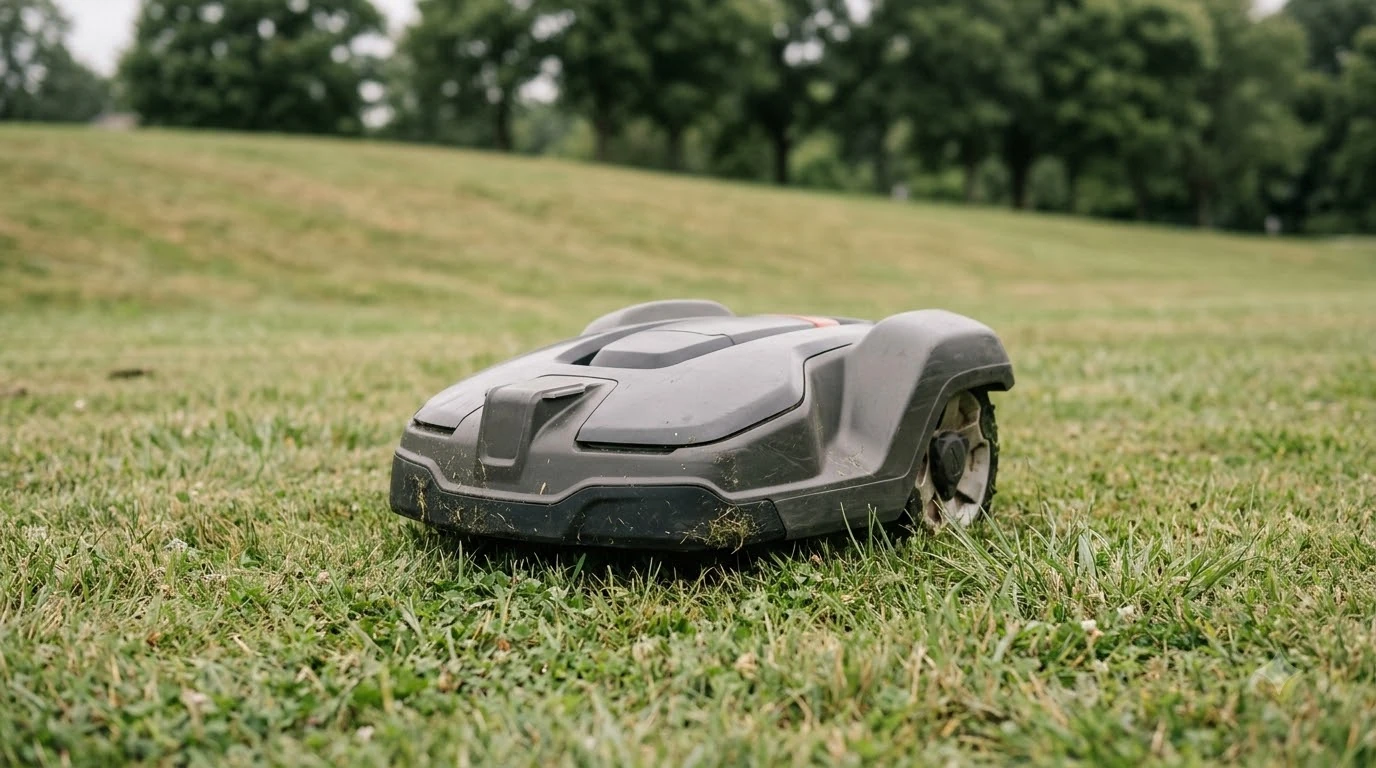

This Mammotion LUBA 2 AWD review explains an all-wheel-drive robot mower sold in several sizes, and Mammotion’s coverage list puts the line at roughly 1,000 to 3,000 square meters (about 0.25 to 0.75 acre). The slope figure Mammotion advertises, 80% (38.6 degrees), is a manufacturer claim. An independent test of a smaller sibling model stopped near 70%, so plan around the lower number. This guide explains what the published specs mean and what to verify before you buy.
The short answer
- Lawn size: Mammotion lists the LUBA 2 AWD line for about 1,000 to 3,000 m². Match the rated range to your own lawn, not to the largest model in the series.
- Slope: the advertised 80% (38.6 degrees) is a vendor claim. A test of the LUBA mini 2 AWD 1000, a different model, reported a tip-over at about 70%.
- Cutting height: launch-era figures are 1.2 to 2.7 in for the standard version and 2.4 to 4 in for the taller-cut version. Confirm the version and range on the current spec sheet.
- Navigation: 3D vision, ultrasonic radar and a physical bumper, with an RTK reference station rated IPX7.
- Our reading: all-wheel drive matters most on steep or wet ground. On a flat, dry yard, a two-wheel-drive mower of similar size is often enough.
What the LUBA 2 AWD series covers
In this Mammotion LUBA 2 AWD review, coverage rating is the first filter. Before looking at any other spec, compare your lawn area with the rated range, and keep in mind that a rating is a ceiling for the model, not a target you should run at all the time.
Mammotion’s coverage list gives the LUBA 2 AWD line a range of 1,000 to 3,000 square meters. The TopTenReviews article on the series launch, published in January 2024, names four standard models: the 1000, 3000, 5000 and 10000. It lists the 1000 at 0.25 acre and the 10000 at 2.5 acres. Those are launch-era numbers, and model lineups and listings change over time. The current Mammotion product pages could not be checked when this guide was written on 2026-11-10, so per-model figures beyond the published range are left out here.
Heads up
Some retailer listings for the 3000 model give cutting-height, runtime and per-charge area figures that differ from the launch-era numbers. We could not confirm those figures from a source we read, so they are not used in this guide. Check the spec sheet for the exact model you plan to buy.
Slope: the claim and what a test showed
The 80% figure is a maker’s claim, and a third-party test of a sibling model reached about 70% before it stopped. That does not prove the 3000 model would fail at the same point, but it does show that an advertised maximum is not a safe everyday working slope.
Mammotion’s own explainer on all-wheel drive describes the LUBA 2 AWD as using four independent in-hub motors, which is a vendor claim we read on the company’s blog. Mammotion’s own slope comparison lists 80% (38 degrees) for the LUBA 2 AWD. Notebookcheck tested the LUBA mini 2 AWD 1000, which is a different and smaller model in the same family. It was rated at 80% (38.6 degrees), and the test unit showed a “Mowing robot tipped” error at about 70%. That is one test on one unit, so treat it as a warning sign, not a verdict on the 3000.
Retail guides agree on the principle. Eufy’s slope guide says the maximum slope is an absolute limit, not a target for daily mowing. Running at the top of the range strains the motor, drains the battery and increases tire slip. The same guide notes that wet grass reduces tire grip, so a slope within the rating can still cause slides. Husqvarna’s support page gives a simple way to measure a slope: slope percent equals vertical height divided by horizontal distance, times 100. A rise of 3 meters over 10 meters of horizontal ground is a 30% slope.
For comparison, Husqvarna’s own all-wheel-drive guidance says its AWD models operate normally up to 50% inside the work area, avoid obstacles between 50% and 70%, and should keep 1.5 meters from the boundary wire near steep areas. That is a different brand’s rule, but it shows how makers often separate normal operation from the maximum rating. Our reading is that a lawn with consistent slopes above about 50% should be checked with a measurement and a test run before you rely on any mower’s rating.
Cutting height: which version fits
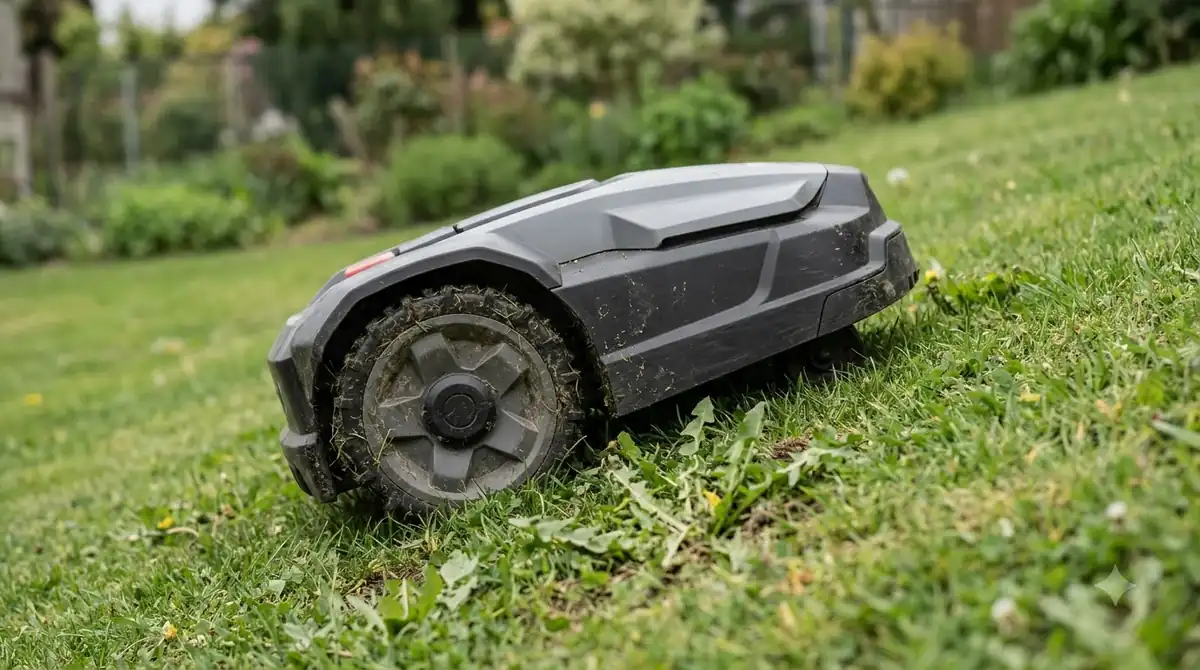
The series has a standard version and a taller-cut version, and the two height ranges are different. The standard version cuts from 1.2 to 2.7 inches, and the taller version cuts from 2.4 to 4 inches, according to the launch article. Some retailer listings give the taller range as 2.2 to 4.0 inches. We could not confirm that figure from a read source, so this guide uses the launch-article numbers.
| Version | Cutting height (launch article) | Who it may suit (our reading) |
|---|---|---|
| Standard | 1.2 to 2.7 in | Lawns kept short and even, with regular mowing |
| Taller-cut | 2.4 to 4 in | Longer grass between mows, uneven lawns, or a higher cut in dry weather |
Cutting height also affects how often you mow. A higher cut leaves more grass to cut and can make the lawn look fuller in the heat. Our reading is that the taller version is worth considering if you let the grass grow between cuts, but you should check the exact range on the spec sheet for the version you buy.
How it finds its way
Navigation relies on sensors rather than only on a perimeter wire, according to the launch article. The article describes 3D vision, ultrasonic radar and a physical bumper for obstacles. It also describes an RTK reference station rated IPX7, up from IPX6 on the earlier model.
Whether a particular setup needs a boundary wire, a reference station in an open spot, or both depends on the model and the yard. Read the installation section of the manual for the exact unit you plan to buy. Our reading is that a yard with tall trees, a wall or a fence close to the lawn edge is the place to check the signal setup first, before you commit to a model.
What AWD changes
All-wheel drive powers all four wheels instead of two. Mammotion’s explainer says AWD typically costs significantly more than two-wheel drive, weighs more and adds more moving parts. Sunseeker’s guide says AWD is the most expensive drive layout and needs the most maintenance of the three common layouts. Neither source gives a fixed dollar figure for drive type, so this guide does not quote a price.
The added traction matters most where the wheels can slip. Eufy’s guide notes that AWD models are commonly rated to 70% on paper, which matches the general pattern in this family. Husqvarna’s support page recommends cleaning the wheels with a soft brush or hose, because clogged wheels make slopes harder to handle. That step is cheap, and it applies to any mower with drive wheels on a slope.
Mammotion LUBA 2 AWD review: what to check before you buy
Five checks cover most of the buying decision. Each one uses a source above, and each one is something you can verify on your own lawn before you spend the money.
- Measure the lawn. Compare your area with the rated range of the exact model, not the largest number in the series.
- Measure the slope. Use the rise-over-run formula from Husqvarna’s guide and treat the advertised maximum as a ceiling.
- Match the cutting height. Check whether the standard or taller-cut version fits how long your grass runs between mows.
- Plan for wet grass. A slope within the rating can still cause slides when the grass is wet, so schedule mowing for dry days where you can.
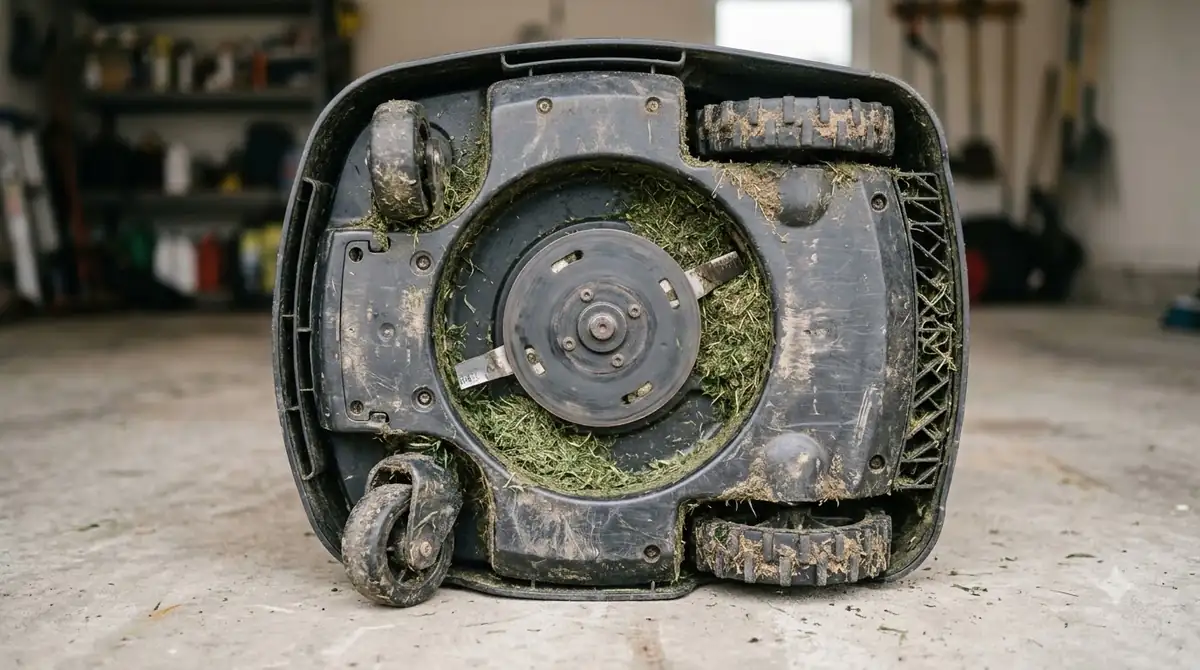
- Plan the maintenance. Clean the wheels and blades on a schedule, and budget for AWD parts, which add moving parts and upkeep.

Frequently asked questions
Is the LUBA 2 AWD worth it over a two-wheel-drive model?
It depends on the slope and the grass. Mammotion’s own explainer says AWD typically costs more, weighs more and has more moving parts. Our reading is that a flat, dry lawn often does not need AWD, while a steep or often-wet lawn does.
What is the slope rating of the LUBA 2 AWD?
Mammotion advertises 80% (38.6 degrees). That is a manufacturer claim. A test of the smaller LUBA mini 2 AWD 1000 showed a tip-over at about 70%, so plan for a lower working slope and check the spec sheet for the model you buy.
How big a lawn does the LUBA 2 AWD cover?
Mammotion’s coverage list gives the LUBA 2 AWD line a range of about 1,000 to 3,000 square meters. Choose the model whose rating covers your lawn, and check the exact figure on the product sheet, since listings vary.
Does it need a perimeter wire?
The launch article describes vision, radar and a bumper for navigation, with an RTK reference station. It does not settle the wire question for every setup, so read the installation section of the manual for the exact model before you buy.
Sources
- TopTenReviews (press): series launch article, January 2024, for model names, cutting height ranges and navigation.
- Notebookcheck (independent test): LUBA mini 2 AWD 1000 slope and specs, a sibling model.
- Mammotion (vendor blog): AWD explainer, in-hub motor claim and AWD trade-offs.
- Mammotion (vendor): LUBA 2 AWD coverage range of 1,000 to 3,000 m².
- Husqvarna (manufacturer support): slope formula, AWD zone guidance and wheel cleaning.
- Eufy (retailer guide): slope class ratings, slope as an absolute limit, and wet-grass grip.
- Sunseeker (vendor guide): drive layouts, AWD cost and maintenance.
 Up next12 min readReviews & CompareMammotion LUBA mini 2 AWD Review: Specs, Slope and Battery FactsUpdated Nov 16, 2026
 7 min readReviews & CompareIs the Mammotion LUBA 2 AWD Worth It? Slopes, Height and LimitsUpdated Nov 17, 2026
 7 min readReviews & CompareMammotion LUBA 3 AWD vs LUBA 2 AWD: What the Published Specs ShowUpdated Nov 12, 2026
 8 min readReviews & CompareMammotion LUBA 2 AWD Pros and Cons: What the Specs SupportUpdated Nov 12, 2026
 7 min readReviews & CompareNavimow i210 AWD Review: Specs, Slope and Conflicts to CheckUpdated Nov 16, 2026
 8 min readReviews & CompareMOVA LiDAX Ultra 3000 AWD Review: Specs and Slope LimitsUpdated Nov 16, 2026