
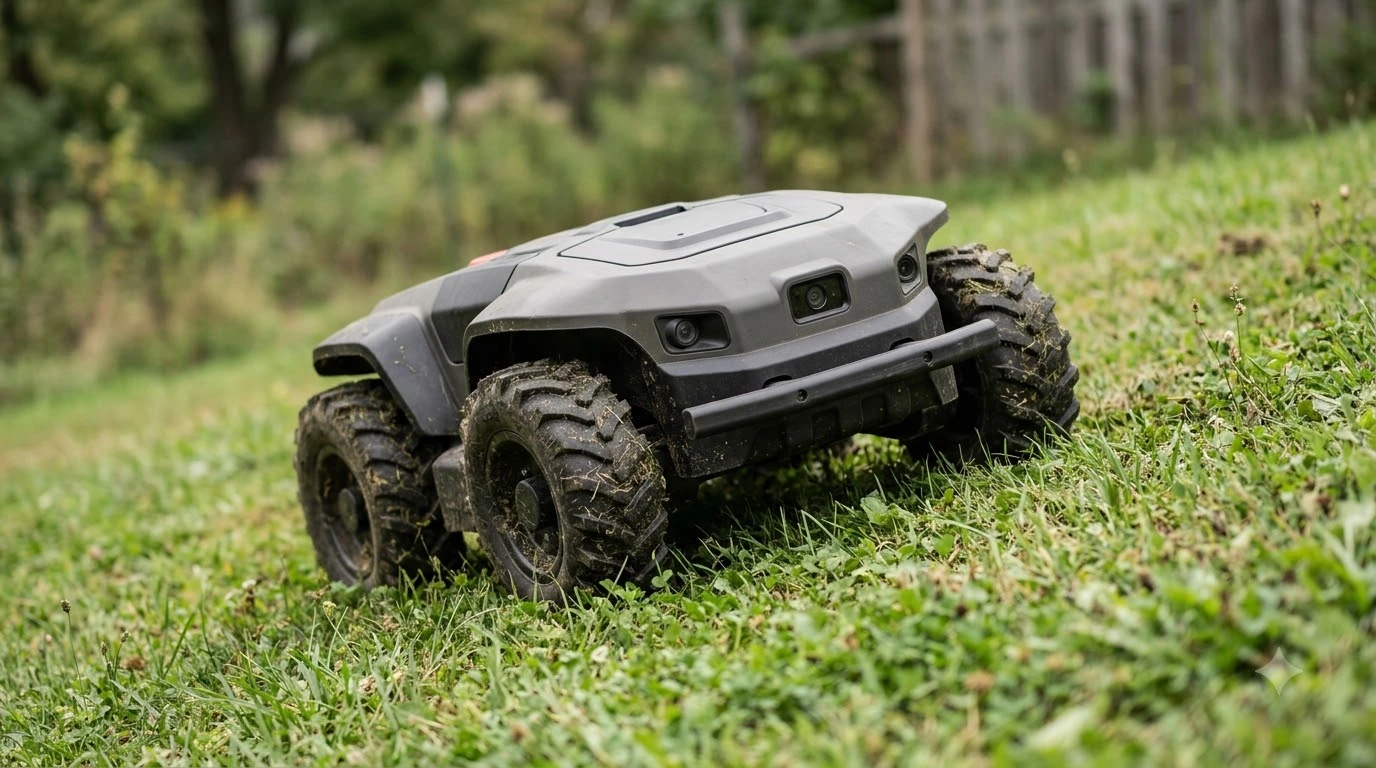

The Mammotion LUBA 2 AWD pros and cons come down to slope and grip on one side, and cost, weight and upkeep on the other. Mammotion rates the all-wheel-drive model to 80% slope, a figure an independent test of a sibling model did not reach. Whether the pros outweigh the cons depends on your lawn.
The short answer
- Main pro: all-wheel drive spreads power across four wheels, which Mammotion says gives better grip on slopes and wet turf.
- Main con: AWD costs more, weighs more and adds drive parts that may need more service, according to Mammotion’s own guidance.
- Slope: treat the 80% rating as a ceiling, not a daily working slope.
- Skip it if: your lawn is small, mostly flat and has clean edges.
What all-wheel drive gives you
All-wheel drive powers all four wheels instead of two, so the mower can keep traction when one side starts to slip. Among the Mammotion LUBA 2 AWD pros and cons, the headline pro is traction: Mammotion’s pros-and-cons article says AWD distributes torque evenly and helps the mower avoid spinning out on uneven ground. The same page gives no test data for that claim, so treat it as the vendor’s description rather than a measured result.
The article also says AWD models grip the turf instead of sliding or carving tracks into it, which matters most on wet lawns. That is an unquantified claim. Our reading is that the benefit shows up mainly on slopes and soft ground, not on a flat, dry lawn.
Slope: the 80% claim and what a test showed
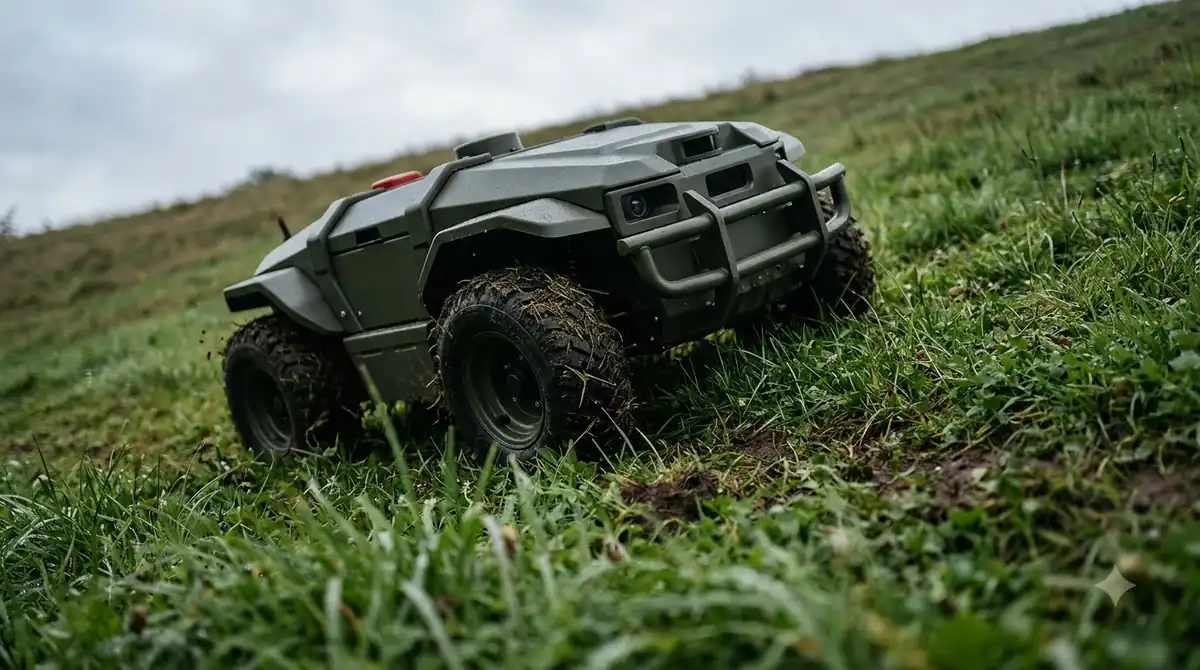
Slope is where the Mammotion LUBA 2 AWD pros and cons need the most care. Mammotion rates the LUBA 2 AWD to slopes up to 80%, about 38.6 degrees. That is a vendor claim. The same article is also inconsistent, pointing to AWD for lawns over 30% slope in one section and over 35% in its FAQ.
An independent test by Notebookcheck used the LUBA mini 2 AWD 1000, a European model for lawns up to 1,000 square meters. It is a sibling of the LUBA 2 AWD family, not the 3000 model. On an artificial-turf ramp, it did not reach the advertised 80%. It stopped with a “Mowing robot tipped” error at about 70%, and the tester said traction was not the cause. No test of the 3000 model was found in this run, so that result should not be read as a verdict on it.
Husqvarna’s steep-slope guidance is a useful check. It says normal operation up to 50% inside the work area, avoid obstacles between 50% and 70%, and keep 1.5 meters from the boundary wire near steep areas. Our reading is that a 70% or 80% rating is a limit for brief use, not the slope you should plan to mow every week. If your yard is steep, our guide to a robot lawn mower for a 45 percent slope shows how to plan around the limits.
Eufy’s slope guidance adds a second caution. It says wet grass reduces tire grip, so a slope that is manageable when dry can become a problem after rain, even on an AWD model that is rated for more. Traction spikes for slopes are one accessory owners look at for that case.
Other figures from the sibling test
The same Notebookcheck test recorded the everyday specs of the LUBA mini 2 AWD 1000. The main deck cuts from 20 to 65 mm, and a 12 cm edge deck with a fixed 50 mm height sits beside it. The mower carries a 6.1 Ah battery, and the tester reported almost three hours of running on default settings, mowing about 200 square meters in that run.
Noise measured about 55 dB at 1 meter, depending on how much mowing the unit is doing. The unit weighs about 15 kg. These figures belong to a smaller European model, so use them only as a rough guide to the family, and check the spec sheet of the exact LUBA 2 AWD version you are considering.
The cons: cost, weight and upkeep
On the cons side of the Mammotion LUBA 2 AWD pros and cons, the clearest one is price. Mammotion’s article says AWD mowers typically cost significantly more than standard robotic mowers. This guide lists no fixed prices, so check the current price on the official site before you compare.
- Weight. The article says AWD systems add weight, which can compress soft turf more and make a large unit harder to maneuver in tight spaces.
- Moving parts. The extra drive system can mean higher maintenance needs or repair costs over time.
- Service access. The article notes that not every local repair shop has experience with AWD mowers.
- Overkill risk. A flat lawn under about a quarter acre with clean edges may not need AWD at all.
Coverage and cutting height: what to check
The LUBA 2 AWD line is sold as 1000, 3000, 5000 and 10000 models. The launch article rates the 1000 for up to 0.25 acre and the 10000 for up to 2.5 acres. Match the rating to your own lawn area, not to the largest model in the series, and leave margin for uneven edges. Our LUBA 3 AWD vs LUBA 2 AWD comparison covers the newer generation.
Launch coverage from January 2024 says the standard version cuts from 1.2 to 2.7 inches. A taller-cut version cuts from 2.4 to 4 inches. Some retailer listings give a slightly different taller range, so confirm the exact figure on the spec sheet for the model you plan to buy.
| Check | What the sources say | Who it may matter for (our reading) |
|---|---|---|
| Slope rating | 80% (38.6 degrees), vendor claim | Hilly yards, where traction is the reason to buy AWD |
| Standard cut | 1.2 to 2.7 in | Short, even lawns with regular mowing |
| Taller cut | 2.4 to 4 in | Lawns allowed to grow between cuts |
| Coverage | About 0.25 acre (1000) to 2.5 acres (10000), launch article | Match the rating to your lawn size |
Navigation is another point to check. According to the launch article, the series relies on 3D vision, ultrasonic radar and a physical bumper for obstacles, with an RTK reference station rated IPX7. Whether a yard needs a boundary wire as well depends on the model and the lawn, so read the installation section of the manual for the version you plan to buy.
Cutting height also changes how often you mow. A taller cut leaves more grass to cut and can keep a lawn looking fuller in summer heat. Our reading is that the taller version suits a lawn you mow less often, and you should confirm the range on the spec sheet.
Mammotion LUBA 2 AWD pros and cons: who should skip AWD
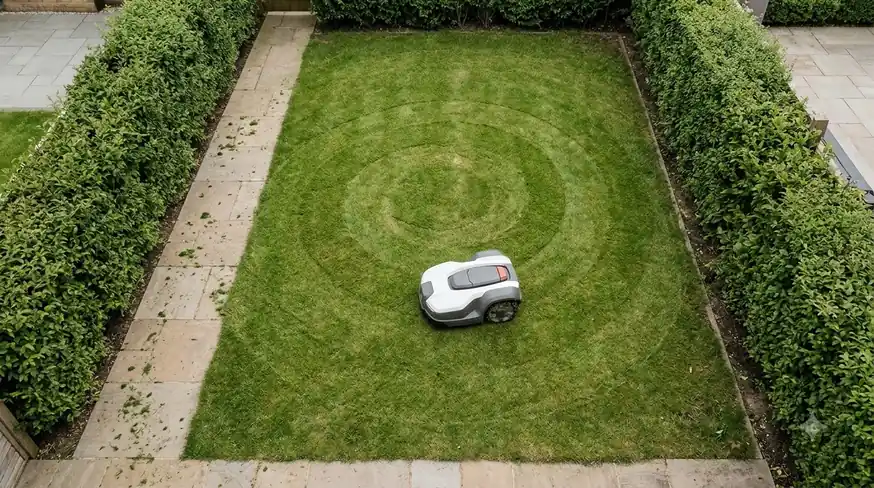
A small, flat lawn with clean edges is the case where AWD is hardest to justify. Mammotion’s own article says a lawn under a quarter acre that is mostly flat may not need AWD. Two-wheel drive models cost less and weigh less, which helps on soft turf, and our AWD vs 2WD robot mower for hills comparison explains the trade-off.
AWD makes more sense when the yard has real slopes, wet patches or grass that tends to slip under the wheels. If none of those apply, the extra cost buys you capability you will not use. Weigh the Mammotion LUBA 2 AWD pros and cons against the best alternatives to Mammotion LUBA before you decide.
Frequently asked questions
Is the LUBA 2 AWD worth the extra cost over a two-wheel-drive model?
It depends on your slope and grass, which is why the Mammotion LUBA 2 AWD pros and cons differ from lawn to lawn. Mammotion’s article says AWD typically costs significantly more and adds weight. Our reading is that a flat, small lawn gains little from AWD.
Can the LUBA 2 AWD mow daily on an 80% slope?
The 80% figure is a vendor rating. Eufy’s slope guidance says the maximum slope is an absolute limit, not a target for daily mowing, so plan for a lower working slope.
Do AWD mowers need more maintenance?
Mammotion’s article says the extra drive system can mean higher maintenance needs or repair costs. Clean the wheels regularly and check the manual’s service schedule for the exact model.
Is the taller cut option worth it on the LUBA 2 AWD?
It can be, if you let grass grow between mowing sessions. Our reading is that a taller cut suits a lawn you mow less often, and you should confirm the exact range on the spec sheet for your version.
Sources
- Mammotion’s all-wheel-drive pros and cons article (vendor): AWD cost, weight, maintenance, and the 80% slope claim.
- Notebookcheck slope test (independent): result on the LUBA mini 2 AWD 1000, a sibling model.
- Husqvarna steep-slope guidance (manufacturer): slope zones and boundary-wire distance.
- Eufy slope limits guide (manufacturer): slope classes and the absolute-limit point.
- TopTenReviews on the LUBA 2 AWD launch (press, January 2024): model names and cutting-height ranges.
 Up next9 min readReviews & CompareMammotion Yuka Mini Pros and Cons: What the Specs SupportUpdated Nov 11, 2026
 7 min readReviews & CompareMammotion LUBA 3 AWD vs LUBA 2 AWD: What the Published Specs ShowUpdated Nov 11, 2026
 8 min readReviews & CompareMammotion Luba 3 AWD vs Dreame A2: Published Specs ComparedUpdated Nov 11, 2026
 7 min readReviews & CompareMammotion LUBA 3 AWD vs MOVA LiDAX Ultra 2000: What the Published Specs ShowUpdated Nov 11, 2026
 8 min readReviews & CompareMammotion LUBA 3 AWD vs Sunseeker X7: Published Specs ComparedUpdated Nov 11, 2026
 7 min readReviews & CompareMammotion LUBA 3 AWD vs Mammotion YUKA: Specs ComparedUpdated Nov 11, 2026