
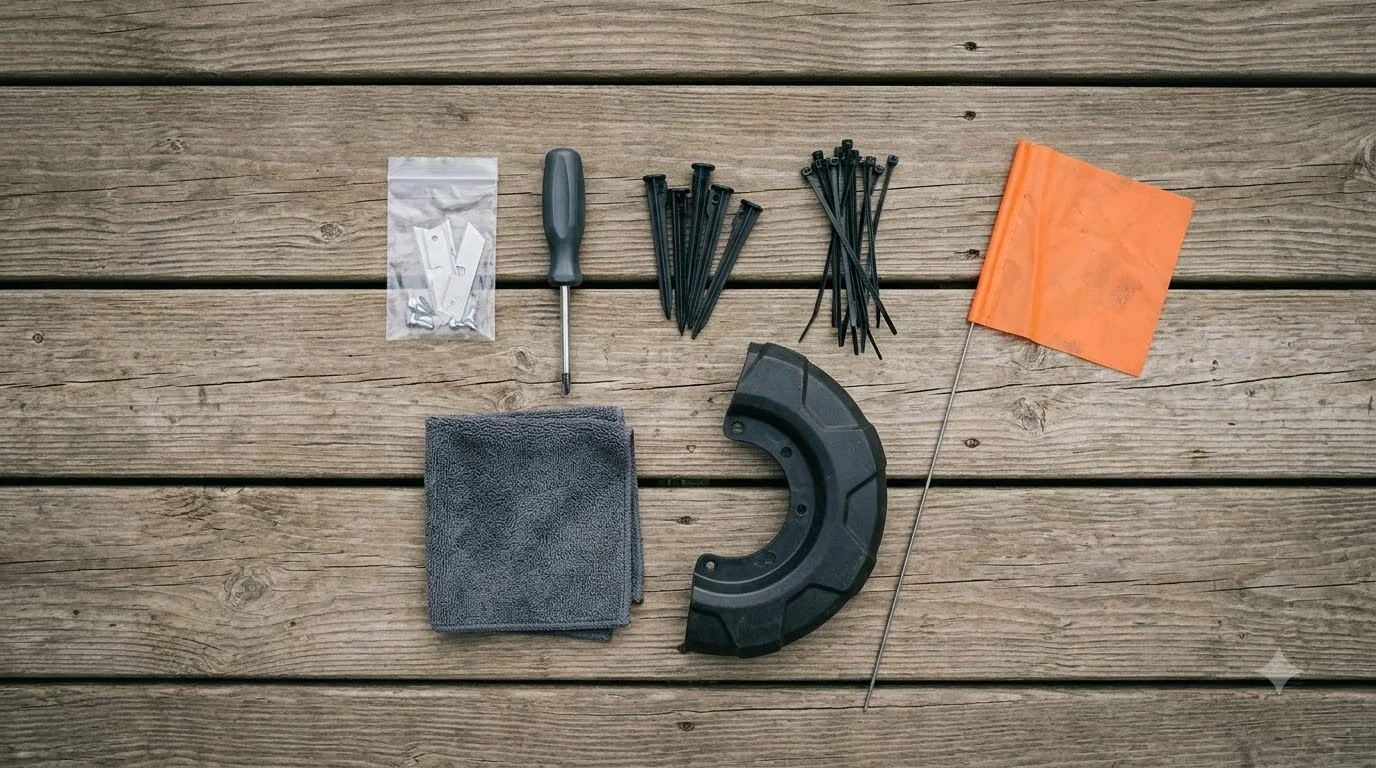

The best soil leveling rake for robot mower lawn depends on your yard. The right tool is one that can spread a thin layer of topsoil or sand into small dips without disturbing the grass crown, and that fits the size of your yard. Extension guidance says topdressing should go on in thin layers of about 1/4 to 1/2 inch, dragged into the turf, so a drag mat or a flexible leveling rake usually does the job better than a stiff garden rake.
The short answer
- Look for a flexible tool. A drag mat or leveling rake with flexible tines spreads soil without pulling up grass.
- Work in thin layers. Clemson HGIC describes a layer of about 1/4 to 1/2 inch, then dragging it into the turf.
- Fix only the worst spots. Small bumps and shallow dips are usually not a problem for a robot mower.
- Check the boundary wire and dock first. Keep the wire, pegs and dock area intact and level before you start.
Why uneven ground matters for a robot mower
A robot mower does not need a perfectly flat lawn, but its wheels and cutting deck still follow the ground. Small bumps rarely matter, but a deep hole or rut is the kind of problem that can make a mower tilt, lose grip or get stuck. Those spots are worth checking before you buy any tool. If your yard is rough overall, our guide to a robot mower on an uneven lawn covers what to expect.
How much unevenness a robot mower can handle
Manufacturer guidance is more reassuring than most people expect. Anker’s UK robot mower guide says that small bumps, shallow dips, slightly sloped areas and patchy ground are usually not a problem, and that robot mowers can normally cope with minor bumps and dips. The same guide warns that deeper holes and ruts can cause the mower to tilt, lose grip or get stuck. The page does not give exact measurements for either case, so treat any single number you see online as a starting point rather than a rule.
Before you set up a robot mower, the same guide suggests walking the lawn and marking these problem areas:
- Deep dips and sunken patches where water sits after rain
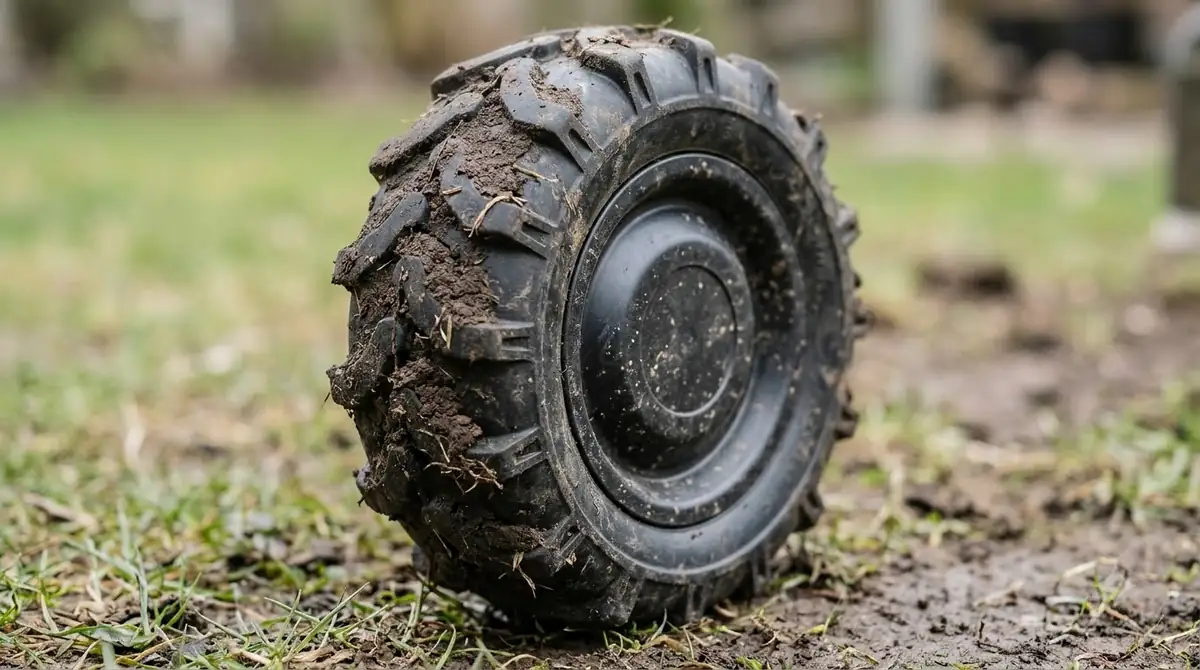
- Muddy low spots and pet or footpath ruts
- Deep potholes or sudden drop-offs at the edge of the lawn
The guide recommends filling deep potholes and severe ruts with topsoil or a soil-and-sand mix before the first mowing run, while a soil leveling rake or drag tool can handle the smaller dips. It also says you do not need to level the entire yard. In most cases, only the worst few spots need work, which is why a small leveling tool is often enough.
How to level a lawn in thin layers
Thin layers are the core of the method. Clemson HGIC describes applying a thin layer, usually 1/4 to 1/2 inch thick, then dragging it into the turf with a drag mat. A Q&A from Ask Extension, answered by an expert in August 2024, recommends adding thin layers over the low area every week or two. Repeating light passes lets the grass grow up through the new soil, so the low area fills in gradually instead of being buried at once.
The most important rule is to keep the grass crown exposed. The Ask Extension reply says the goal is never to completely cover the grass plants, because a full layer can suffocate and kill the crown. If a spot is deep, the same source says filling it may take a full season. For holes too big for thin layers, see how a robot mower copes with holes and dips in the lawn. Clemson also notes that heavy topdressing over time can create layered soil that reduces water infiltration, so light and repeated is better than heavy and occasional.
- Mark the low spots. Walk the lawn after rain, when dips hold water, and mark them with flags or stakes away from the boundary wire.
- Aerate first if the soil is compacted. Ask Extension says topdressing works best with core aerating (see the lawn aerator for robot mower lawns), and Clemson notes that sand is sometimes used on clay soils after aeration to fill the holes.
- Spread a thin layer. Apply a layer of about 1/4 to 1/2 inch over the low area only, keeping soil off the grass crown.
- Drag it in. Use a drag mat or leveling rake to work the soil down between the blades of grass.
- Water lightly and wait. Let the grass grow through, then repeat the process on the next week or two cycle.
Timing depends on the grass. Clemson HGIC says warm-season turf should be topdressed during the summer growing season, while cool-season grasses are best topdressed in spring and fall and should be left alone during the stress of summer heat. Working in the right season helps the grass recover faster after each pass.
What to look for in the best soil leveling rake for robot mower lawn
Because extension sources describe the method rather than a specific product, finding the best soil leveling rake for robot mower lawn comes down to fit. The table below lists the criteria that matter most, based on the thin-layer method above. These are our reading, not product tests.
| Criterion | Why it matters | What to look for |
|---|---|---|
| Tine or mat flexibility | Flexible tines or a drag mat spread soil without pulling up grass | Flexible tines or a fabric or rubber drag surface |
| Working width | A wider tool covers more lawn per pass | Wide enough for your largest low areas, but easy to steer |
| Handle length | Affects comfort on long passes and how far you reach | Long handle for large yards, short for beds and edges |
| Weight | Heavy tools are tiring on long passes | Light enough to pull across the lawn without pressing down |
| Storage | Many owners keep the tool in a shed or garage near the dock | Folding or compact design that fits your storage space |
A stiff metal garden rake works for breaking up clumps, but it is less suited to spreading thin topdressing. Our reading is that its tines can dig into grass and pull up runners, which is one reason the extension sources focus on drag mats and leveling tools for this job.
Pairing the tool with your robot mower
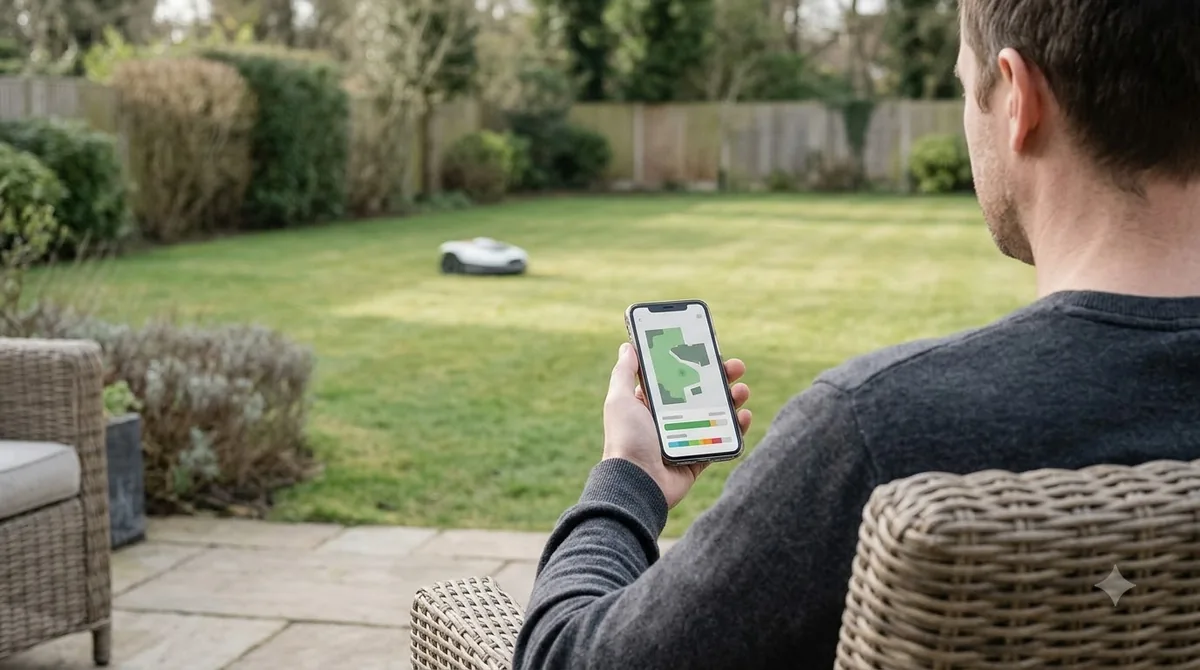
Leveling is only useful if the mower can use the lawn afterward, so the best soil leveling rake for robot mower lawn use fits your existing setup. Work around the boundary wire and its pegs. Our reading is that a rake or drag pulled over a wire can loosen pegs or damage the cable. Check the charging dock as well. Our reading is that a dock sitting on a dip or a bump can cause alignment problems when the mower returns to charge, so level the area in front of the dock first.
Keep the mower’s cutting height in mind as well. If you mow the lawn very short before topdressing, the low spots become easier to see, but the grass will take longer to recover. Wait until the grass has grown back to a normal height before you run the mower across the newly leveled areas. These are our reading of common practice, not a manufacturer requirement.
What to check before you buy
Before you buy the best soil leveling rake for robot mower lawn, match it to the problem you actually have. A few questions help narrow the choice:
- How many low spots do you have, and how deep are they?
- Is the soil clay, sand or loam, and is it compacted?
- How large is the lawn, and how far must you carry the tool?
- Where will the tool be stored, and will it sit near the mower dock?
- Does the tool fit with your boundary wire layout and the pegs already in place?
If you only have a few small dips, the best soil leveling rake for robot mower lawn care may simply be a short-handled drag tool and a bag of topsoil. For filler material, compare lawn leveling sand for a robot mower lawn, and if the wheels have already cut grooves, read about wheel ruts and brown patches. Large yards with many problem areas may benefit from a wider tool and a planned schedule across the growing season.
Frequently asked questions
Can I use a regular garden rake to level my lawn?
You can use one for breaking up clumps, but a stiff garden rake is less suited to spreading thin topdressing. Extension guidance points to drag mats and leveling tools for working soil into turf without pulling up grass.
How thick should each topdressing layer be?
Clemson HGIC describes a thin layer usually about 1/4 to 1/2 inch thick. Ask Extension advises repeating thin layers every week or two rather than covering the grass in one heavy application.
Do I need to level my whole yard before a robot mower?
Not usually. The Anker UK guide says you do not need to level the entire garden, and that small bumps and shallow dips are usually not a problem. Focus on deep holes, ruts and sudden drop-offs.
Should I rake near the boundary wire?
Work carefully around it. A rake or drag pulled over the wire can loosen pegs or damage the cable. Our reading is to mark the wire and pegs first and keep the leveling tool away from them.
Sources
- Turfgrass Cultivation (HGIC 1226) (Clemson Home and Garden Information Center): thin-layer thickness, drag mat, seasonal timing, sand after aeration.
- Ask Extension, question 881570: thin layers every week or two, never fully covering the grass crown, aeration.
- Do robot mowers work on uneven lawns? (Anker UK, manufacturer blog): which bumps and dips are usually fine, which ruts cause problems, pre-setup checks.
 Up next9 min readGearBest Lawn Leveling Sand for Robot Mower: Soil First, Then MaterialUpdated Nov 11, 2026
 8 min readGearBest Soil Moisture Sensor to Pair With Robot Mower: What Actually Controls MowingUpdated Nov 11, 2026
 8 min readGearBest Fertilizer for Robot Mowed Lawn: How to Choose the Right TypeUpdated Nov 11, 2026
 8 min readGearBest Cordless String Trimmer for Robot Mower Edges: How to ChooseUpdated Nov 11, 2026
 9 min readGearBest Garden Hose Sprayer to Clean Robot Mower: What Brands AllowUpdated Nov 11, 2026
 7 min readGearBest Lawn Aerator for Robot Mower Lawns: What to CheckUpdated Nov 11, 2026