
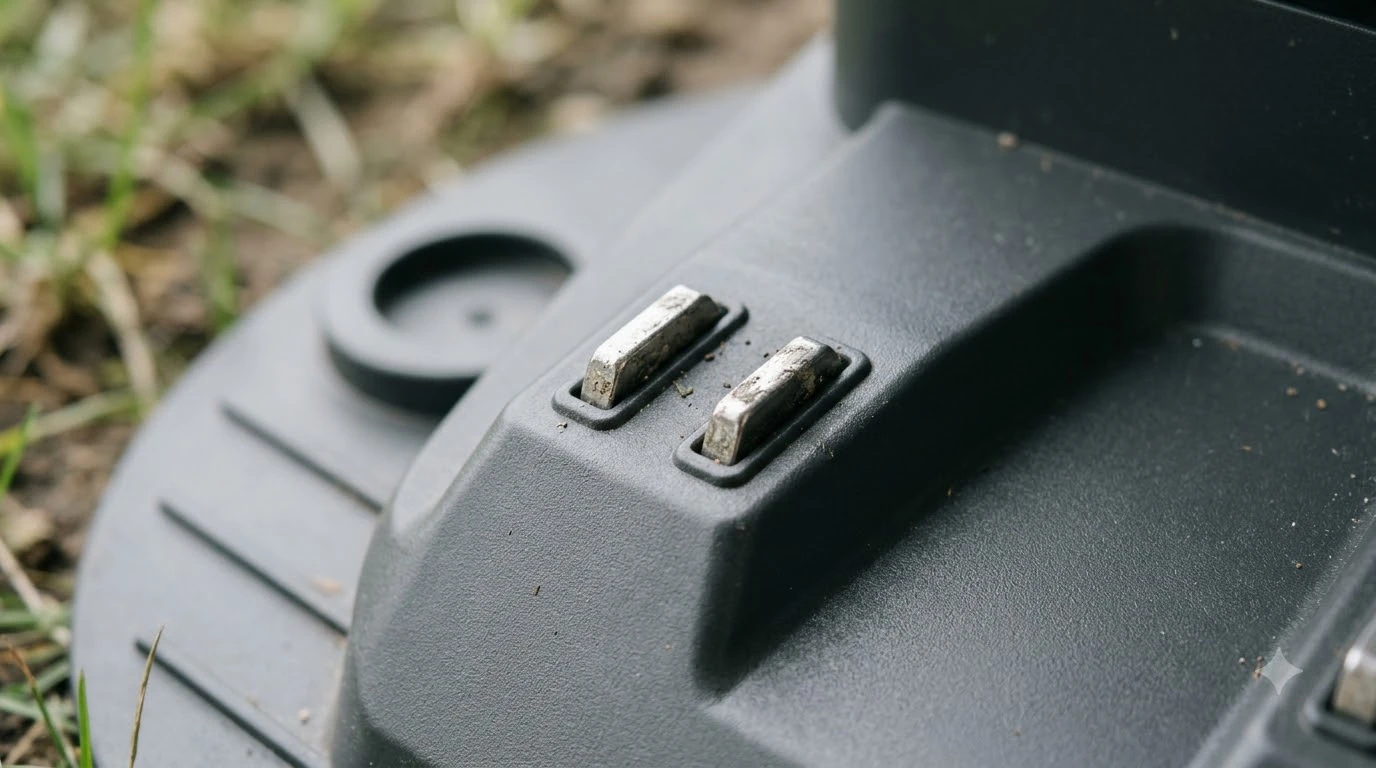

Lymow One vs Mammotion LUBA 3 AWD: the two differ most in navigation, weight and how each maker states its coverage. Lymow’s US product page for the Lymow One describes the One Plus model, and it pairs RTK with visual mapping (VSLAM) and includes an RTK reference station in the box. Mammotion’s LUBA 3 AWD page lists LiDAR with NetRTK and no separate RTK antenna. The figures below come from each maker’s own pages, read on 2026-11-11, and they are as of Nov 2026. For one model on its own, see our Lymow One review.
The short answer
- Navigation: Lymow uses RTK plus VSLAM with AI vision; Mammotion uses 360 degree LiDAR with NetRTK and dual cameras.
- Slope: Lymow lists up to 45 degrees (100%); Mammotion lists up to 80% (38.6 degrees).
- Coverage: Lymow lists 0.57 acre per charge; Mammotion lists up to 1,700 m2 (0.42 acre) per charge on its battery section.
- Weight: Lymow lists 78.5 lb; Mammotion lists 19 kg (about 41.9 lb).
- Not stated: Lymow’s page gives no noise figure; Mammotion’s page gives no warranty term.
Lymow One vs Mammotion LUBA 3 AWD: key specs side by side
In a Lymow One vs Mammotion LUBA 3 AWD comparison, both makers publish specs, but they use different bases, so read the table as a list of what each page says rather than a measured test. We did not test either mower.
| Spec | Lymow One Plus (Lymow US page) | Mammotion LUBA 3 AWD (Mammotion page) |
|---|---|---|
| Cutting width | 16 in | 400 mm (15.7 in) |
| Cutting height | 1.2 to 4.0 in | Flexible; range not stated |
| Max slope | 45 degrees (100%) | 80% (38.6 degrees) |
| Coverage per charge | 0.57 acre | Up to 1,700 m2 (0.42 acre) |
| Runtime | Max 3 hours | Up to 215 minutes |
| Weight | 78.5 lb (+/- 1 lb) | 19 kg |
| Noise | Not stated | 70 dB or less |
| Weather rating | IPX6 | IPX6 |
| Zones | Up to 80 | Up to 100 |
| Warranty | Limited, up to 3 years | Not stated on the page read |
Cutting width, height and blades
Both mowers use a wide deck: Lymow lists a 16 in cut and Mammotion lists a 400 mm (15.7 in) dual-cutting system. The Lymow page gives a cutting height range of 1.2 to 4.0 in. The Mammotion page only says “flexible cutting height” and gives no range, so a height comparison is not possible from its page.
The blade systems also differ. Lymow uses dual rotary mulching blades (SK5 blades) with a speed of 3,000 to 6,000 RPM. Mammotion uses two 165 W motors that each drive a 6-blade disc, running up to 3,000 RPM, with a slower setting for quieter mowing.
How each one finds its way
Both mowers are sold as wire-free, but the navigation stacks are different. Lymow’s page describes RTK satellite positioning combined with VSLAM visual mapping, plus AI vision and ultrasonic sensors for obstacle detection. The RTK reference station, radio antenna and mounting pole come in the box, so an RTK base has to be set up in the yard.
Mammotion’s page describes a 360 degree LiDAR with a detection range of 70 m, combined with NetRTK through its iNavi service. The page says no RTK antenna is needed, and it adds a dual-camera AI vision system.
The two positioning systems depend on different things. RTK needs a clear view of the sky, and Lymow’s own RTK vs wire guide says RTK performance may degrade under extremely dense tree canopy. For the same case, the guide says VSLAM takes over for up to 10 minutes when GPS weakens, which is the maker’s claim and not an independent test. The Mammotion page does not state a canopy limit.
Slope, obstacles and passages
Lymow lists a maximum slope of 45 degrees, which the page gives as 100% incline. Mammotion lists up to 80%, which the page gives as 38.6 degrees. Slope ratings are maximums, so the steepest part of your yard matters more than the headline figure.
For obstacles, Lymow lists an obstacle crossing height of 2.8 in, a lab-measured figure in the page footnote. Mammotion claims 300+ obstacle avoidance, with anti-fall protection, lift detection and a bumper. Mammotion’s page also says the mower fits through gaps as narrow as 70 cm (2.3 ft). Lymow’s page does not give a passage width.
Coverage, runtime and charging
Lymow lists 0.23 acre per hour, 0.57 acre per charge (about 2,300 m2) and 1.73 acres per day (about 7,000 m2). Its battery is LiFePO4 at 15 Ah, rated 35.2 V, with a 2,000 charge-cycle lifespan from lab tests. The page gives charge times of 90 minutes for the 10 A version and 150 minutes for the 5 A version, both from 10% to 90%.
Mammotion’s LUBA 3 AWD page lists up to 1,700 m2 (0.42 acre) per charge in its battery section. Its series listing shows a coverage range of 1,500 to 10,000 m2, and its US blog lists the LUBA 3 AWD 3000 at 0.75 acre. These are different model sizes, so check which variant you are looking at. The page lists runtime up to 215 minutes and a 210 W fast charger, but it does not state a charge time. For how battery life holds up over time, see how long the Mammotion Luba 3 battery lasts.
The two coverage figures are on different bases, so do not read them as a direct ratio.
Weight and size
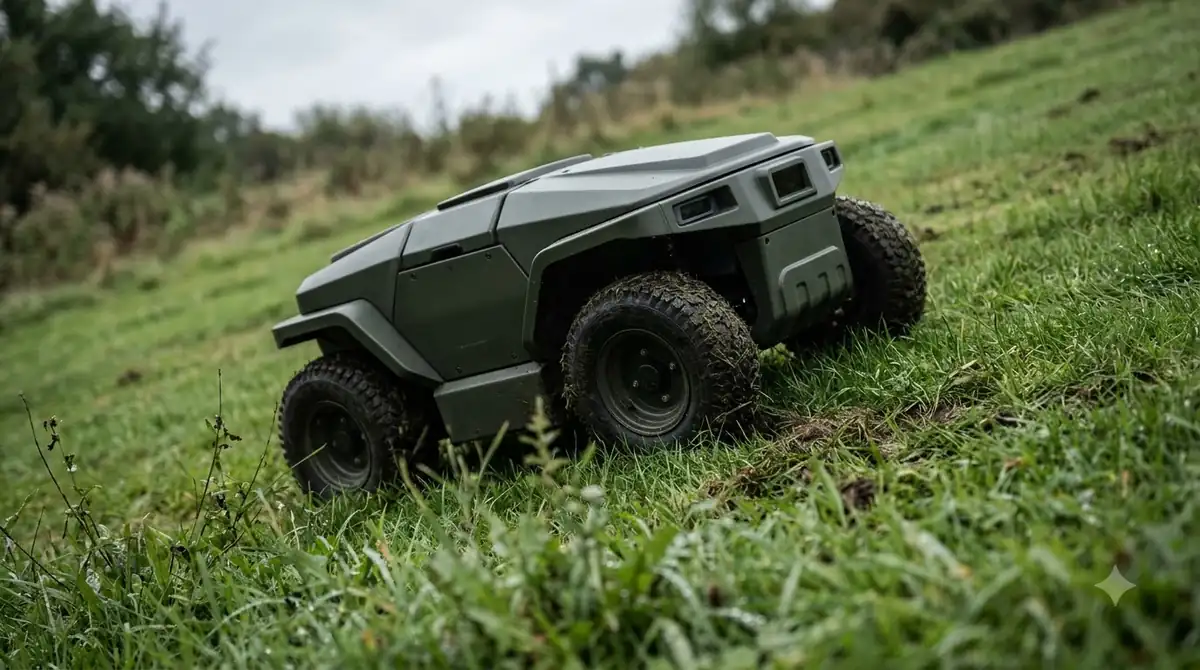
Lymow’s page lists a weight of 78.5 lb (about 35.6 kg) and dimensions of 29.5 x 23.6 x 12.6 in. Mammotion’s page lists 19 kg (about 41.9 lb). By the figures on these pages, the Lymow is the heavier mower, which matters if you lift it for storage, winter moves or repairs.
Noise and warranty
Mammotion’s page gives a noise level of 70 dB or less. Lymow’s US page does not state a noise figure, so the two cannot be compared on noise from these sources. Neither page gives a measured noise value under real yard conditions.
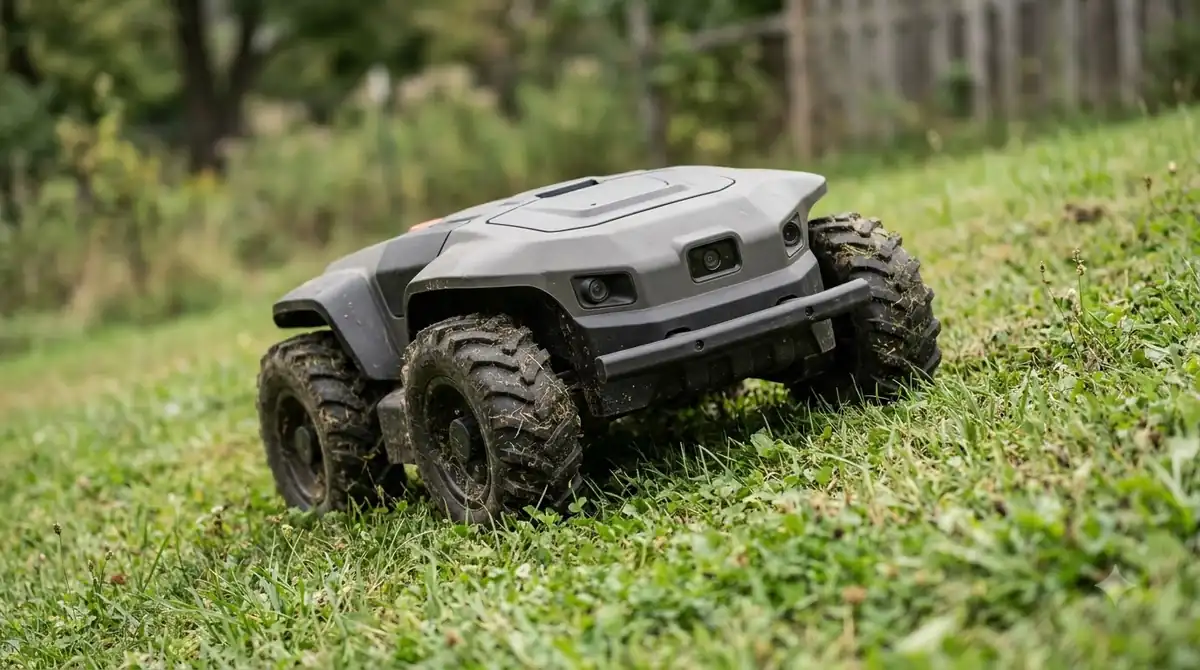
On warranty, Lymow’s page states a limited warranty covering key components and hardware for up to 3 years. Mammotion’s page links to a warranty statement but does not state a term in the text we read. Read the full warranty documents before buying.
Heads up
Lymow’s page shows sale and regular prices. Mammotion’s US blog also lists a price. Prices change, so this article does not use them. Check the maker’s current price and any regional differences before you decide.
Who each option suits (our reading)
Our reading, based only on the published specs above, is that Lymow One vs Mammotion LUBA 3 AWD is a choice between different priorities rather than one mower being better overall.
- The Lymow One Plus fits yards where a visible RTK base station and a higher slope rating (45 degrees) are priorities, and where a 3-year limited warranty is a factor.
- The Mammotion LUBA 3 AWD fits buyers who want a lighter mower, a stated noise figure, a LiDAR-based navigation stack without a separate RTK antenna, and a choice of model sizes.
- If your yard has heavy tree cover, both makers’ pages describe limits, and neither page gives test data for your yard.
- For the documented downsides of the Mammotion side, read the Mammotion Luba 3 AWD pros and cons; for other options, the Mammotion Luba 3 AWD vs Dreame A2 comparison.
What to check before you buy
Before you choose between Lymow One vs Mammotion LUBA 3 AWD, check these points against your own yard and the current maker pages.
- Confirm the model. Lymow’s US page shows the One Plus, so check that the model you find online matches it.
- Measure the steepest slope. Compare your steepest section with the 45 degree and 38.6 degree ratings.
- Check the coverage basis. Compare your lawn area with the per-charge figure and the variant size.
- Plan the base or antenna. Lymow needs a reference station in the yard; Mammotion’s page says NetRTK needs no antenna.
- Get the missing numbers. Ask for the noise figure, cutting height range and warranty term in writing.
Frequently asked questions
Does the Lymow One need a boundary wire?
No. Lymow’s US product page describes wire-free navigation using RTK and VSLAM, with an RTK reference station in the box.
Does the Mammotion LUBA 3 AWD need an RTK antenna?
The LUBA 3 AWD page says its NetRTK positioning works through the iNavi service with no RTK antenna. Its navigation also uses 360 degree LiDAR.
In the Lymow One vs Mammotion LUBA 3 AWD matchup, which mower can climb a steeper slope?
By the maker’s ratings, the Lymow One Plus is rated for up to 45 degrees (100%), and the Mammotion LUBA 3 AWD for up to 80% (38.6 degrees). The 45 degree rating is a 100% incline, so the two headline ratings use different units.
Is noise stated for both mowers?
Not on the same basis. Mammotion’s page gives 70 dB or less. Lymow’s US page does not state a noise figure.
Sources
- Lymow US product page (Lymow): cutting, slope, coverage, battery, navigation, weight, warranty figures for the One Plus.
- Mammotion LUBA 3 AWD page (Mammotion): cutting width, slope, noise, weight, navigation, runtime and coverage figures.
- Mammotion US best robot lawn mower guide (Mammotion): LUBA 3 AWD 3000 coverage and slope wording.
- Lymow RTK vs wire guide (Lymow): VSLAM takeover time and dense canopy limit, as the maker describes them.
 Up next7 min readReviews & CompareLymow One Review: What the Sourced Specs Say Before You BuyUpdated Nov 12, 2026
 8 min readReviews & CompareIs the Robomow RS630 Worth It? What the Manufacturer Manual SaysUpdated Nov 14, 2026
 10 min readReviews & CompareSegway Navimow X3 vs Mammotion Luba 3 AWD: Published Specs ComparedUpdated Nov 11, 2026
 8 min readReviews & CompareDreame A1 Pro vs Mammotion LUBA 3 AWD: Listed Specs ComparedUpdated Nov 13, 2026
 9 min readReviews & CompareMammotion Luba 3 AWD Pros and Cons: What the Sources ShowUpdated Nov 13, 2026
 7 min readReviews & CompareMammotion LUBA 3 AWD vs Mammotion YUKA: Specs ComparedUpdated Nov 13, 2026