
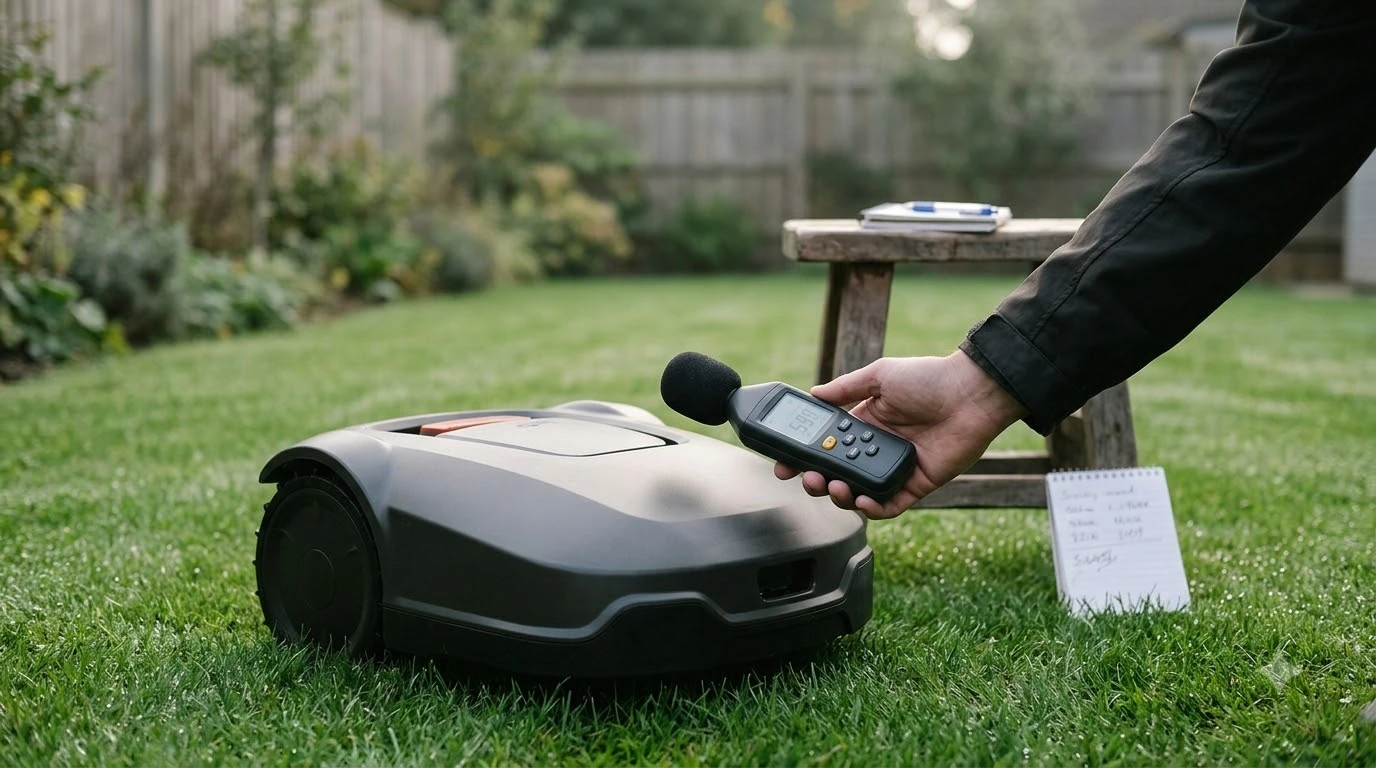

How much does it cost to install a robot mower? Usually about $50 to $150 if you do it yourself, and about $200 to $800 if a professional installs the boundary wire. The spread comes from yard size, how complicated the boundary is, and whether the charging station needs extra work. The ranges below come from published sources. Prices move, so treat them as a starting point and get a written quote for your own yard.
The short answer
- DIY install: about $50 to $150 in materials and tools for a typical yard, mostly boundary wire, pegs, and connectors.
- Professional install: about $200 to $800, rising with yard size and layout complexity.
- Biggest cost driver: the length and shape of the boundary wire, because wire and labor both scale with it.
- Often missed: the power outlet, the charging station site, and any trenching or cable run.
What you are actually paying for
The installation cost is not one item. It is the boundary wire that defines where the mower can go, the pegs or hooks that hold it in place, the charging station and its power connection, and the labor to lay everything and test it. A DIY install mostly pays for the wire and pegs. A professional install adds time, travel, and sometimes a service fee on top of the same materials. Installation is a one-off cost, and complete robot mower cost breakdown shows how it compares with running and replacement costs. Installation cost is only part of the picture, and how a robot lawn mower works explains the components that are being installed and configured.
Many buyers ask what a robot mower costs to install at all, because some models are sold as wire-free. That is a separate question. Wire-free models use satellite or camera-based positioning and skip the boundary wire, so their installation is mostly placing a base station or charging dock and configuring the app.
How much does it cost to install a robot mower yourself?
A DIY install is usually the cheapest route. Robomow’s installation guide describes the job as manageable for most homeowners and says that doing it yourself is cheaper than hiring someone. The main steps are placing the charging station, laying the boundary wire as a loop from the station, fixing the wire with pegs or lawn hooks, and running a few test cycles to confirm the mower stays inside the line.
Plan on a few hours for a small, simple lawn and longer for a large or irregular one. The Robomow guide says setup “takes a little time” and “involves a few hours’ time,” so budget a weekend rather than an afternoon. Some models also use an optional guide wire to help the mower find the charging station. Check your model’s manual before buying materials, because the wire gauge and pegs are model-specific.
Heads up
Buy a little more wire than your measured loop needs. Routing around flower beds, trees, and edges adds length fast, and running short mid-install is one of the most common DIY problems.
Professional installation cost
A professional install is the convenient option. Mowrator’s 2024 cost comparison puts professional boundary-wire installation at around $200 to $800 in the US, with the price rising as the space gets bigger or more complicated. Robomow notes that many manufacturers and third-party providers offer installation services, but presents them as optional, for people who do not want to spend the time. Hiring help is easier to weigh against robot mower cost against a lawn service for a typical lawn.
Ask the installer what is included before you agree to a price. Confirm whether the quote covers the charging station, the power connection, the boundary wire length, pegs, and a test run. Some quotes exclude the outlet work, which an electrician may need to handle separately.
| Option | Typical cost range (US) | What it usually covers |
|---|---|---|
| DIY install | About $50 to $150 | Boundary wire, pegs or hooks, connectors; your time |
| Professional boundary-wire install | About $200 to $800 | Layout, wire and pegs, labor, test run; may include travel |
| Charging station power work | Varies by site | Outlet placement or extension; may need an electrician |
The table shows ranges, not fixed prices. Mowrator’s figures are from a 2024 article, so local quotes may differ. Get two or three written estimates for the same yard before you choose.
Factors that push the cost up or down
Yard size and shape matter most. A long, narrow lawn with many corners needs more wire and more labor than an open rectangle of the same area. Obstacles such as trees, beds, and fences add routing work. Slopes and uneven ground can make pegging harder. A precise-positioning unit can add to the bill, as RTK base station cost factors explains for different setups. Lawn size also changes the quote, as mower size and lawn size explains with examples of what each model can cover.
- Yard size and complexity: more area and more islands mean more wire and time.
- Charging station distance: the station should sit near a power outlet, and the Robomow guide suggests keeping it within about 15 metres of one. A long cable run adds cost.
- Trenching or buried wire: burying wire is cleaner but takes far more work than laying it on the surface.
- Replacing an old install: removing an existing boundary wire before a new one adds labor.
When DIY makes sense and when to hire help
DIY suits a simple lawn, a handy owner, and a mower whose manual covers the install clearly. Hiring help makes more sense for a large or steep yard, a tricky outlet location, or a model that needs careful calibration. If the mower is expensive and you want the warranty to stay clean, follow the manufacturer’s install steps exactly or use an authorized installer. DIY owners can follow robot mower setup walkthrough to see how many steps there are before they decide to hire help.
A useful rule: if you would spend more than a weekend getting the wire right, a professional quote is worth comparing against your time. Our reading is that the cost gap is often smaller than it looks once you count the wire, pegs, and the mistakes a first-time install can make.
What to check before you pay for installation
Before you commit money, confirm the charging station location, the outlet distance, the total boundary length you will need, and whether the quote covers testing. Ask whether the mower model needs a guide wire. And check whether your yard has the signal conditions for a wire-free model if you want to skip the wire entirely. Prepare the right questions first, using questions to put to a dealer as a checklist before agreeing to a quote.
Related reads: For the wider decision, read whether robot lawn mowers are worth it before paying for installation or a premium model.
Frequently asked questions
How much does it cost to install a robot mower yourself?
Mowrator’s 2024 comparison puts DIY boundary-wire materials at roughly $50 to $150 for a typical US yard. Your main cost is time, which Robomow describes as a few hours for a basic setup.
Is professional robot mower installation worth the price?
It can be, if your yard is large, irregular, or needs electrical work. Professional boundary-wire installation runs about $200 to $800 in the same source, so compare the quote against what you would spend on materials and the time it takes you.
Does a wire-free robot mower need installation?
Wire-free models skip the boundary wire, so the install is mostly placing a base station or charging dock and setting up the app. The cost is usually lower, but the base or dock placement still matters for signal and power.
What extra costs should I expect during installation?
Plan for extra wire if your lawn has many corners, a longer power cable if the outlet is far from the lawn edge, and possibly an electrician for outlet work. Pegs, connectors, and a spare length of wire are small costs that add up.
Sources
- Robot Lawn Mower Cost Comparison (Mowrator, dated August 2024): professional boundary-wire installation range and DIY wire cost range in the US.
- Can I install my robotic lawnmower myself? (Robomow): DIY steps, charging station distance guidance, time needed, and the option of manufacturer or third-party installation.
 Up next7 min readLearnHow Much Does a Robot Mower Charging Station Cost?Updated Nov 14, 2026
 7 min readLearnHow Much Does an RTK Base Station Cost?Updated Nov 14, 2026
 7 min readLearnHow Much Does a Robot Mower Charging Station Cost to Replace?Updated Nov 12, 2026
 7 min readLearnHow Much Maintenance Does a Robot Mower Need?Updated Nov 13, 2026
 7 min readLearnHow Much Electricity Does a Robot Mower Use per Month? kWh GuideUpdated Nov 13, 2026
 7 min readLearnHow Much Does a Robot Mower Weigh?Updated Nov 11, 2026