
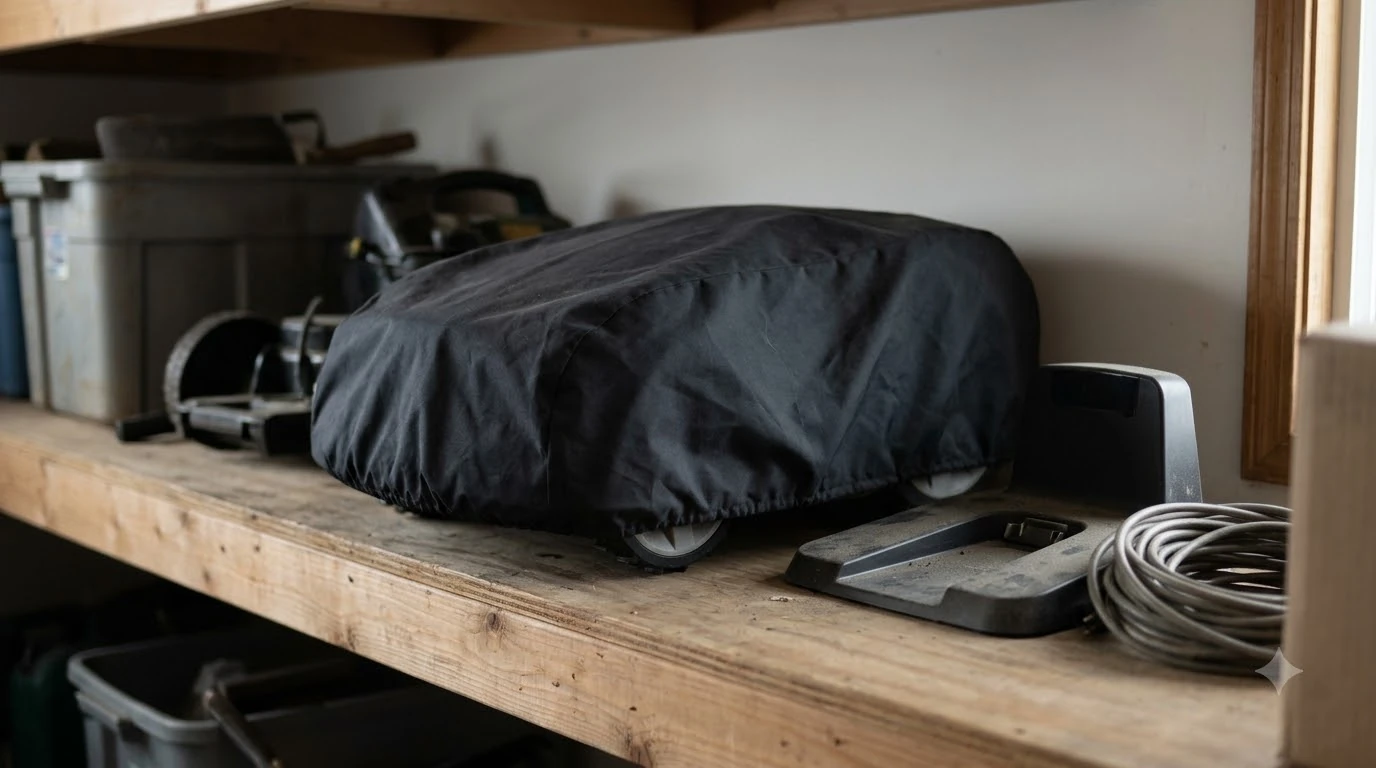

Is an extended warranty worth it for a robot lawn mower? Usually not, if the base warranty already covers the same faults. A robot mower has a battery and blades that wear out, so a paid plan helps mainly when it covers costs the standard warranty leaves out. As of November 2026, the terms that matter are the ones printed in each brand’s warranty statement, not the sales pitch.
The short answer
- Skip it if: the standard warranty already covers the unit and battery for the years you plan to keep the mower.
- Consider it if: the plan covers a repair the base warranty excludes, and its yearly cost is below the repairs you would expect to pay.
- Check first: the exclusions list, the deductibles, and who performs the repair.
- Expect to pay yourself: blades and wear parts are excluded in the warranty statements we read, so routine blade costs usually fall on you.
What the standard warranty already covers
Start with the core question: is an extended warranty worth it for a robot lawn mower, or does the standard warranty already do the job? Most robot mower warranties cover the main unit and the battery for fixed terms, and the battery often runs on a shorter clock. Worx’s EU warranty statement gives its mower a 2-year term, extended to 3 years if the unit is registered within 30 days, and a 1-year battery term that registration does not extend.
Ecovacs’s UK support page lists a 3-year unit term and a 2-year battery term for its GOAT mowers. Those are UK and EU policies, not US terms, so the warranty card that came with your mower is the document that governs your purchase. For a look at base terms across brands, see best robot mower with longest warranty.
Heads up
Under US federal rules, a written warranty on a product costing more than $10 must be titled “full” or “limited”, according to the FTC’s business guide. Check which one your mower carries before you compare it with a paid plan.
Our reading: line up the base term against how long you plan to keep the mower. If the base term already runs as long as you expect to own the unit, the extra plan has less to protect.

Compare the plan with what the base warranty leaves out
The FTC’s consumer guidance says an extended warranty is not a good deal if it does not cover more than the warranty that came with the product. That is the first test to run when you ask: is an extended warranty worth it for a robot lawn mower if it adds nothing the base cover lacks? Put the plan’s contract next to the base warranty and mark each item that both cover.
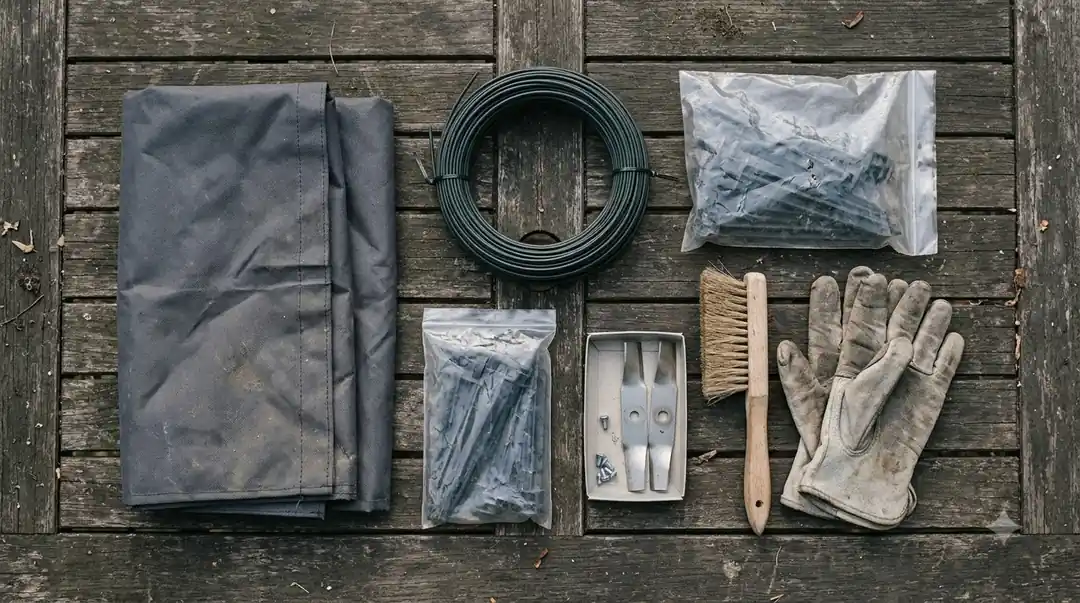
Only the items that appear in the plan but not in the base warranty are worth paying for. Accessories are a common example. Ecovacs’s UK statement excludes accessories and consumables such as filters and brushes, so a plan that also skips them adds little to everyday upkeep. Our guide to robot mower accessories not worth it shows which add-ons are safe to skip.
How to do the math before you pay
Use the FTC’s cost test when you ask, is an extended warranty worth it for a robot lawn mower: divide the total price by the contract length, then weigh that yearly figure against what repairs would likely cost you. The table turns that test into a checklist. Fill it in with the figures from the actual contract, not from a sales call.
| Step | What to calculate | Why it matters |
|---|---|---|
| Plan price | Total cost of the contract, including any fee charged up front | The starting figure for the test |
| Yearly cost | Plan price divided by the number of years it covers | Lets you compare the plan with a yearly repair estimate |
| Likely repair cost | What the covered parts would cost to repair, per year | The amount the plan has to beat |
| Deductibles and fees | Per-service charges, shipping to a repair center, and transfer fees | Each one reduces what the plan really pays |
| Savings alternative | The yearly plan cost, set aside in a savings account instead | The FTC notes that saving can be the better option in some cases |
Our reading: the math only works when the plan covers a repair you would otherwise pay in full. If it mostly covers parts you replace yourself, the yearly cost is hard to justify.
Read the exclusions before anything else
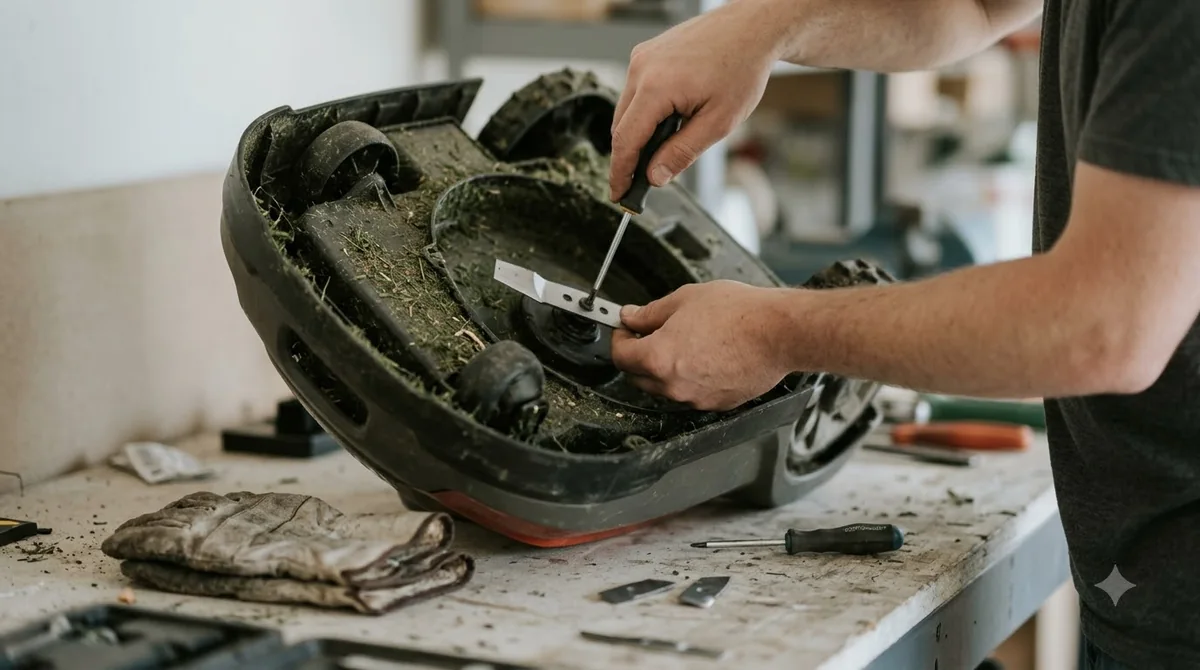
Blades, wheels and wear parts come up again and again in the warranty statements we read, so a plan that excludes them does little for routine costs. For typical repair bills, see are robot mowers expensive to repair, and for batteries, robot mower battery replacement cost. Worx’s EU statement excludes blades and wheels, natural wear parts, non-original batteries, and damage from high-pressure, steam or running-water cleaning. Ecovacs’s UK statement excludes wearing parts such as blades, normal wear, improper handling and commercial use.
The FTC’s rule of thumb is short: if an item is not listed in the contract, assume it is not covered. Read the exclusion list before the sales summary. Also check whether accidental damage is covered and whether the company can deny a claim over missed maintenance.
Registration can extend coverage without a plan
Worx’s EU statement gives a registered mower a 3-year term, against 2 years when it is not registered, provided registration happens within 30 days. The battery term stays at 1 year either way. Check the registration deadline in the warranty card for your region before looking at any paid extension. So is an extended warranty worth it for a robot lawn mower when registering on time already adds a year? Settle that before any plan is priced.
Ecovacs’s UK claim steps point to the paperwork side. Its page asks for the original invoice or cash receipt from a specialist reseller, showing the date, the unit name and the reseller name, and it asks owners to report defects immediately. Keep those documents with the mower.
Check who does the repair and who backs the plan
A plan is only as good as the company behind it, and that company may not be the manufacturer. The FTC advises checking how long the company has operated, searching for reviews and complaints, and asking your state consumer protection office about complaints. Find out who performs the repair and whether you must return the mower to a store. For brand-level support, see which robot mower brand has the best customer service.
Heads up
The FTC lists unsolicited calls or mail about a warranty, sometimes years after purchase, as a warning sign. Pressure to act now, or a payment requested before you see the contract terms, is another.
Claims decide much of the value, so the answer to “is an extended warranty worth it for a robot lawn mower” depends on the claim process as much as the price. The FTC notes that slow or difficult claims reduce what a contract is worth, so ask how the claim process works before you pay.
Is an extended warranty worth it for a robot lawn mower in your case?
An extended warranty fits owners whose base cover ends before they expect to stop using the mower, and whose plan clearly covers repairs they would otherwise pay in full. It fits less well when the plan mostly repeats the standard terms, or when the main costs are blades and other wear parts.
Skip it if you can set the plan’s yearly cost aside in a savings account, which the FTC says can be the better option in some cases. Our reading is that most owners whose base warranty covers the expected ownership period will find little left to insure.
The sources we read gave no US price or US term for a robot mower extended plan, so replace every figure above with the numbers printed in the contract you are offered.
Frequently asked questions
Does a robot mower warranty cover blades?
Usually not. Worx’s EU statement excludes blades and wheels, and Ecovacs’s UK page excludes wearing parts such as blades. Check the exclusions in the warranty that came with your mower, since terms differ by brand and region.
Is the battery covered as long as the unit?
Not in the examples we read. Worx gives its battery 1 year, which registration does not extend, and Ecovacs gives 2 years for the battery against 3 years for the unit. Battery terms can be shorter than the unit term, so check both.
Does the FTC say extended warranties are always a bad deal?
No. The FTC says an extended warranty may not be worth the price, especially for a product that rarely needs repairs. The answer depends on the product, the contract terms and the repairs you would likely pay for.
What should I check before I sign?
Read the exclusions, deductibles, claim steps and the company that backs the plan. The FTC advises against buying a contract on the spot and recommends researching the company before you pay anything.
Sources
- Extended Warranties and Service Contracts (FTC): cost test, deductibles, exclusions, scam signs.
- Businessperson’s Guide to Federal Warranty Law (FTC): full and limited warranty labeling.
- Worx warranty statement (Worx): mower and battery terms, registration, exclusions.
- Ecovacs warranty support page (Ecovacs, UK): unit and battery terms, excluded parts, claim steps.
 Up next7 min readReviews & CompareAnthbot Genie Warranty: What the Terms Cover and ExcludeUpdated Nov 15, 2026
 7 min readReviews & CompareIs Segway Navimow Good? What the Warranty, Reviews and Limits ShowUpdated Nov 16, 2026
 9 min readReviews & CompareIs Mammotion a Good Brand? What the Warranty and Reviews ShowUpdated Nov 15, 2026
 6 min readReviews & CompareRoborock RockNeo Q110H Review: Simple Specs and WarrantyUpdated Nov 16, 2026
 9 min readReviews & CompareHusqvarna Automower 115H Review: Specs, Warranty and What to CheckUpdated Nov 13, 2026
 8 min readReviews & CompareMammotion LUBA 2 AWD Warranty: What Is Covered and How to ClaimUpdated Nov 16, 2026