
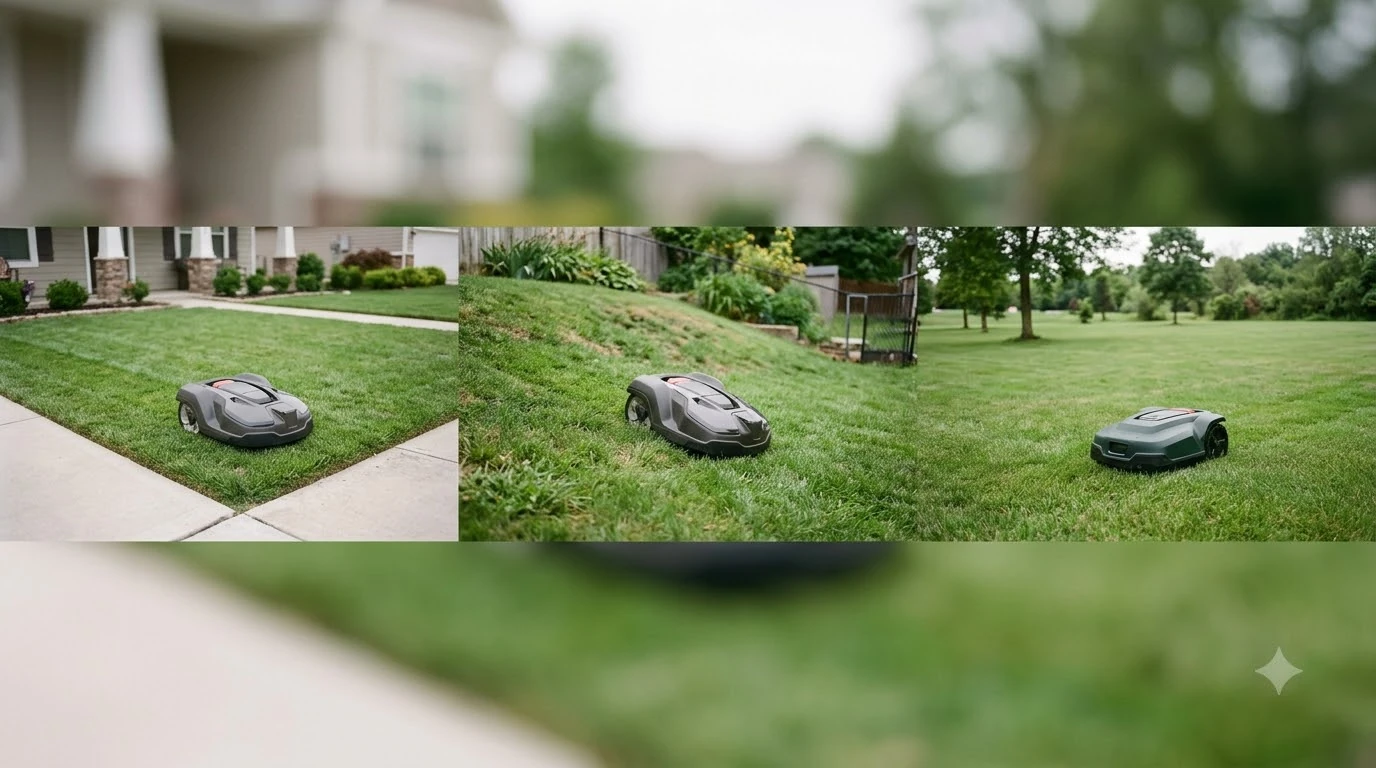

Choosing the best robot lawn mower for sandy coastal yards means prioritizing sealed bearings, wide all-terrain wheels, stainless-steel hardware, and high water-ingress ratings over raw cutting speed. Coastal properties expose autonomous mowers to airborne salt mist and quartz grit that grind down standard axle seals and corrode exposed charging pins. Focusing on drivetrain sealing, traction geometry, and coastal turf height limits keeps a robotic mower operating reliably near the ocean.
The short answer
- Ingress protection: Look for at least an IPX5 or IPX6 rating so you can rinse salt residue off the chassis with a low-pressure garden hose without breaching internal seals.
- Wide wheel treads: Soft, loose sandy soil causes narrow two-wheel-drive models to bog down and dig ruts during tight perimeter turns.
- Corrosion-resistant metals: Choose units built with UV-stabilized polymer housings, stainless-steel cutting blades, and accessible charging contacts you can wipe clean regularly.
- Warm-season height range: Ensure the cutting deck adjusts high enough for common coastal grasses like St. Augustinegrass and bermudagrass, which require distinct mowing heights.
- No single winner: Flat, manicured coastal lots with dense turf need different drive systems than sloped dunes with patchy sand patches.
Why sandy coastal environments wear down standard robot mowers
Coastal lawns combine fine airborne sea spray with abrasive quartz sand grains that accelerate mechanical wear far faster than inland clay or loam yards.
When a robot mower runs across coastal turf, loose sand kicks up into the wheel recesses and cutting deck. According to durability engineering breakdowns from Robot Mower Ranked, quartz sand grains work past unsealed wheel axles, grind gearbox outputs, and round off blade bevels much sooner than grass sap alone. Meanwhile, salt mist settles onto metal fasteners, blade screws, and dock charging pins, leading to oxidation and poor charging connections if left uncleaned.
Ultraviolet light and coastal heat also stress outer plastics and lithium-ion batteries. Consumer robot mowers do not carry specialized marine-grade certifications, which means buyers have to evaluate standard ingress protection codes, drivetrain sealing, and chassis materials to gauge how well a unit will hold up near saltwater.
Drivetrain and wheel traction specs for soft, sandy soil
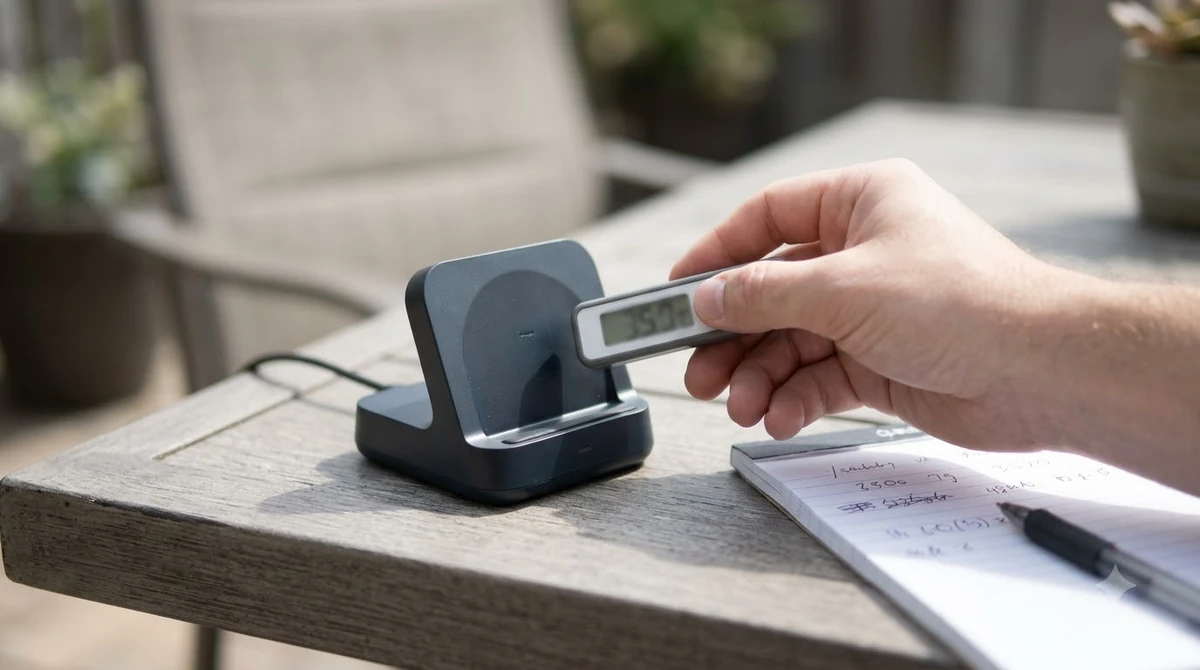
Traction on loose sand depends on weight distribution, wheel width, and drive configuration rather than motor wattage alone.
Most entry-level robotic mowers rely on two rear hub-drive wheels and small front caster wheels. On firm inland soil, that setup works well, but on thin coastal turf over loose sand, front casters can plow into soft spots while rear wheels spin and dig holes during zero-turn maneuvers. Wide chevron or block treads distribute weight across a larger contact patch and bite into sandy turf without tearing out shallow roots.
| Yard Condition | Recommended Drive Setup | Wheel & Tread Spec to Check | Primary Risk if Undersized |
|---|---|---|---|
| Flat lot with thick, established turf | 2WD rear hub drive | Wide rear tires with deep block tread | Minor turf scuffing on tight perimeter turns |
| Patchy grass with exposed sand pockets | AWD or heavy-duty 2WD | Large-diameter front wheels or all-wheel traction | Front casters sinking and triggering stuck errors |
| Sloped coastal dunes or terraces | All-Wheel Drive (AWD) | High-grip aggressive lugs and sealed hub motors | Wheel slip causing navigation drift off boundaries |
Steer-by-differential-speed designs also scrub tires sideways on every turn. Look for models that offer gentle multi-point turning modes in their companion app so the mower reverses and arcs smoothly instead of pivoting one locked wheel into the sand.
Ingress protection, corrosion resistance, and deck sealing
An IPX5 or IPX6 waterproof rating makes routine freshwater rinsing practical, which is the most effective way to remove corrosive salt deposits.
Ingress protection codes tell you how well the housing keeps moisture out, though the “X” in ratings like IPX4 through IPX6 means the manufacturer did not test for solid dust intrusion. Most weather-resistant residential robot mowers fall between IPX4 and IPX6. An IPX4 rating only protects against rain splashes, whereas IPX5 and IPX6 enclosures tolerate low-pressure garden hose sprays. Being able to hose off salt spray and packed sand from the wheel wells saves significant maintenance time.
Heads up
Never use a pressure washer on any robot mower, even an IPX6-rated model. High-pressure jets can force water and fine sand past shaft seals and sensor membranes into the main circuit board.
Pay close attention to blade and fastener metallurgy as well. Hardened carbon steel blades hold a sharp edge briefly, but stainless-steel blades resist rust better in humid, salt-laden air. Always replace blade mounting screws at the same time as the blades, because salt corrosion can weaken screw heads and cause dangerous disc vibration.
Navigation systems and coastal turf cutting heights
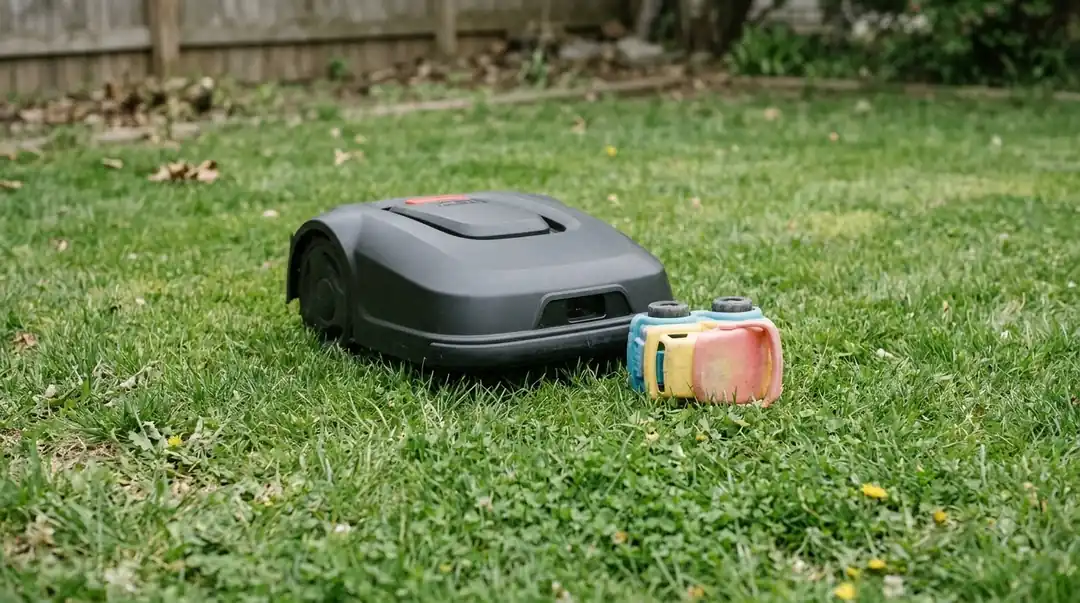
Coastal landscapes often combine open sky with salty mist, windblown sand, and warm-season grasses that require specific deck height ranges.
Wire-free navigation has expanded rapidly with models using Real-Time Kinematic (RTK) GPS, 3D LiDAR, vision cameras, or hybrid combinations. On open coastal lots with clear sky views, RTK antennas maintain centimeter-level boundary accuracy without buried perimeter wires that could be exposed by shifting sand or yard edging. However, if your mower relies on optical cameras or LiDAR windows, fine sea spray and dry sand dust can coat the lenses; as Mammotion’s maintenance documentation notes, even a thin film on optical windows reduces obstacle detection range and requires gentle wiping with a dry microfiber cloth.
Cutting height capability matters just as much as navigation. Warm-season coastal grasses such as St. Augustinegrass, bermudagrass, and zoysiagrass each have distinct height tolerances, and university turfgrass guides like University of Tennessee Extension emphasize following the one-third rule and keeping warm-season turf within its preferred range to protect roots from heat and drought stress. Verify that the mower’s cutting disc adjusts easily across your specific grass species’ target range and maintains a clean shave—dull, sand-abraded blades shred grass tips, turning coastal lawns brown and increasing disease vulnerability.
What to check before you buy
Walking through a quick pre-purchase checklist ensures your chosen mower matches your yard’s sand density, salt exposure, and storage setup.
- Verify the IP rating for hose cleaning. Confirm the spec sheet lists at least IPX5 or IPX6 so you can safely rinse salt mist and sand buildup off the underside and wheel arches.
- Match wheel geometry to your sandiest zone. Inspect photos of the front wheels—avoid tiny, narrow caster wheels if your lawn has thin turf patches or soft sandy borders.
- Check deck height limits against your grass type. Confirm the minimum and maximum millimeter or inch settings fit your coastal grass variety, especially if you maintain taller St. Augustinegrass.
- Plan a shaded charging station spot. Place the base station under a roofed mower garage or shaded eaves to block direct UV rays, salt spray, and high heat that shorten battery lifespan.
- Confirm spare blade and seal availability. Make sure replacement stainless-steel blade kits, screws, and wheel assemblies are readily stocked in the US so you can swap worn parts mid-season.
Frequently asked questions
Can a robot lawn mower drive over loose beach sand without getting stuck?
Most standard two-wheel-drive robot mowers will bog down in deep, loose beach sand because their small front caster wheels sink. All-wheel-drive models with wide, lugged tires handle thin turf over sandy soil much better, though pure loose sand dunes should still be mapped as no-go zones.
How often should you replace blades on a sandy coastal lawn?
While typical inland yards require blade swaps every one to three months, sandy soil acts like sandpaper and dulls thin rotary blades faster. Inspect the blade edges every few weeks and replace the full set of blades and screws whenever grass tips look frayed or whitish after mowing.
Does coastal salt air ruin a robot mower’s charging station?
Salt mist can oxidize exposed metal charging contacts on both the mower and the dock, causing charging faults over time. Installing a protective station cover and wiping the metal contacts periodically with a dry cloth or electrical contact cleaner helps prevent corrosion.
Is a boundary wire or wireless RTK navigation better near the coast?
Wireless RTK or LiDAR navigation is often easier to maintain on coastal properties because shifting sand, wind erosion, and frequent lawn edging will not sever or expose a buried perimeter cable. Just remember to wipe salt film and dust off optical cameras or LiDAR lenses regularly.
Sources
- Robot Mower Materials and Durability (Robot Mower Ranked): Used for housing polymers, quartz sand axle wear, blade steel comparisons, and IPX water resistance specifications.
- Cleaning a Robot Lawn Mower: A Step-by-Step Guide (Mammotion): Used for cleaning intervals, optical sensor maintenance, and charging contact care.
- Turfgrass Maintenance Mowing (University of Tennessee Extension): Used for warm-season and cool-season turfgrass mowing height principles and the one-third rule.
- Robot Lawn Mower Maintenance Tips for a Longer Lifespan (eufy): Used for sandy soil blade abrasion frequency and low-pressure cleaning precautions.
 Up next8 min readBest Robot MowersChoosing the Best Robot Lawn Mower for Yards With Zero Sky VisibilityUpdated Nov 19, 2026
 6 min readBest Robot MowersBest Robot Mower for a Yard with a Rain Garden: What to CheckUpdated Nov 14, 2026
 8 min readBest Robot MowersBest Robot Lawn Mower for a Yard With Pine Needles: What to CheckUpdated Nov 14, 2026
 8 min readBest Robot MowersWhat Is the Best Robot Lawn Mower for a Small Yard?Updated Nov 13, 2026
 8 min readBest Robot MowersMost Accurate Robot Lawn Mower Navigation for Your YardUpdated Nov 12, 2026
 8 min readBest Robot MowersBest RTK Robot Lawn Mower for Suburban Yards: What to Check Before You BuyUpdated Nov 11, 2026