
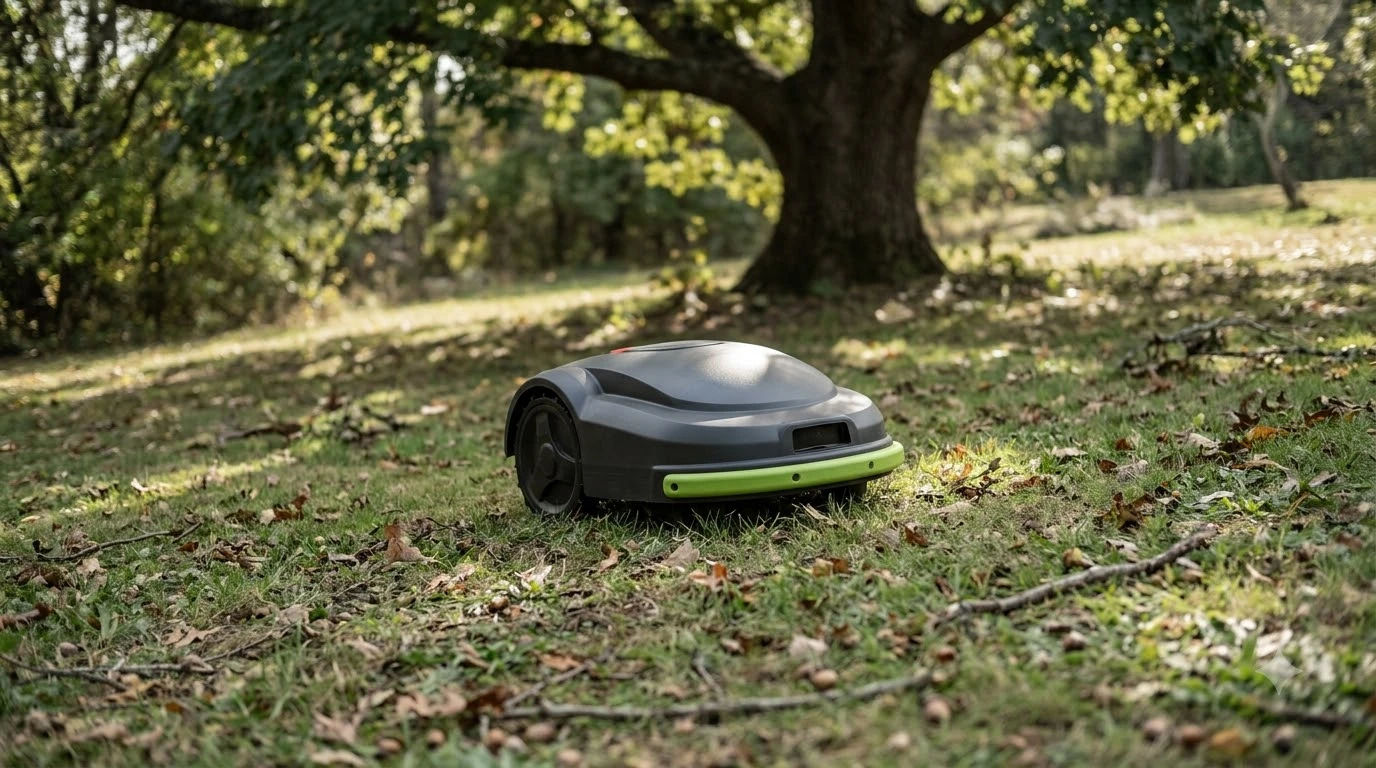

A robot mower for a lawn with oak tree acorns in autumn can keep cutting grass through normal fall drop, provided you raise the deck height, clear dense acorn piles, and swap blades on a tighter schedule. While pivoting razor blades deflect off scattered acorns rather than shattering, heavy mast-year drops and thick oak leaves will still jam decks, dull steel edges, and trap low-clearance wheels. Pairing the right navigation hardware with a simple weekly cleanup routine keeps autonomous mowing reliable until winter storage.
The short answer
- Blades survive scattered nuts: Most residential robot mowers use free-pivoting razor blades that swing back on impact rather than bending an axle like a fixed rotary blade.
- Mast years change the math: According to North Carolina State University Extension, oaks produce overwhelming mast crops on irregular multi-year cycles that can blanket turf faster than any robot can clear.
- Deck height is your first defense: Setting cutting height near the top of a mower’s range—around 3.5 to 4 inches on high-cut models—lets the blade disc pass safely above most resting acorns.
- Canopy blocks standard GPS: Mature oak crowns attenuate satellite signals, making LiDAR, camera vision, or buried boundary wire far more reliable under big trees than RTK-only guidance.
- Expect faster blade changes: According to Husqvarna Automower support, normal blade life runs 3 to 6 weeks, and regular contact with hard yard debris shortens that window.
How acorns and oak debris affect robot mower hardware
Hard oak nuts, woody caps, and leathery leaves challenge a robot mower’s cutting disc, wheel traction, and underside sensors in very different ways than summer grass clippings.
Unlike a gas push mower with a heavy steel bar spinning at high velocity, most robotic mowers rely on lightweight, double-sided razor blades mounted loosely on a rotating disc. As Husqvarna’s blade maintenance documentation explains, those blades are engineered to pivot freely on their mounting screws so they fold inward when striking small hard objects. A stray acorn tapped by a pivoting blade usually makes a sharp click and rolls aside without damaging the motor shaft.
Problems start when acorns accumulate in layers or mix with damp autumn leaves. Thick carpets of acorns act like ball bearings under smooth plastic drive wheels, causing wheel spin and turf scuffing on slight grades. Meanwhile, crushed acorn meat and wet leaf mulch can pack into the gap between the skid plate and the spinning blade disc, preventing blades from pivoting freely and spiking battery draw.
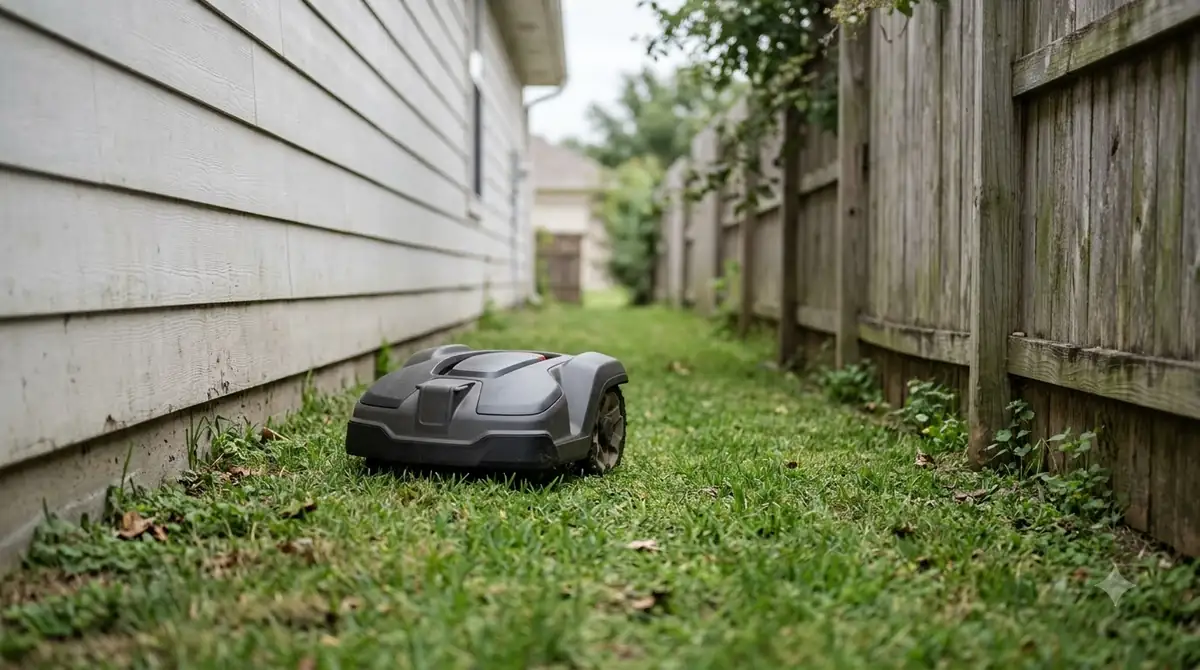
Obstruction-avoidance cameras and ultrasonic sensors also have blind spots for low-profile nuts. Vision systems trained to spot toys, hoses, and tree trunks generally ignore objects smaller than a golf ball sitting low in the turf canopy, meaning the chassis will drive straight over acorn beds rather than steering around them.
Heads up
Manufacturer manuals, including Worx Landroid and Husqvarna Automower operator guides, instruct owners to inspect the mowing zone and clear stones, twigs, and hard debris before running scheduled cycles. Acorns are harder than turf stems, and operating over dense piles accelerates blade chipping and underside buildup.
Mast years versus normal autumn drop under mature oaks
Whether your robot mower breezes through October or needs weekly intervention depends largely on whether your oak trees are in a normal fruiting season or a synchronized mast year.
As university forestry extensions note, oaks do not drop identical acorn volumes every fall. In lean or average seasons, squirrels, blue jays, and deer consume scattered acorns almost as fast as they fall, leaving only occasional nuts in the grass. Under those conditions, a robot mower running its regular schedule handles the yard with minimal extra attention.
During a mast year—which occurs irregularly every two to five years across regional oak populations—a single mature oak can drop thousands of acorns over several weeks. Thick layers of nuts not only interfere with mowing equipment, they also block sunlight and airflow from reaching cool-season turfgrasses like tall fescue and Kentucky bluegrass. In a heavy mast autumn, no consumer robot mower can mulch or sweep away the volume of hard shells falling from a full canopy.
| Yard Condition | What Happens to the Mower | Recommended Owner Action |
|---|---|---|
| Light, scattered acorns | Pivoting blades deflect off occasional nuts; minimal traction loss | Raise cutting height one step and check blades every 2 to 3 weeks |
| Heavy mast-year acorn carpet | Wheels slip on dense nuts; blade disc clogs and edges chip rapidly | Clear acorns with a nut gatherer, blower, or rake before scheduled runs |
| Acorns mixed with wet oak leaves | Matted leaves jam the skid plate and hide sticks or roots | Pause wet-weather schedules and blow leaves off turf weekly |
| Exposed surface oak roots | Low-clearance decks high-center or scrape on woody root flares | Map root zones as no-go islands or raise deck above root height |
Features that matter most under an oak canopy
Shopping for a robot mower for a lawn with oak tree acorns in autumn comes down to four hardware traits: navigation resilience under dense foliage, high maximum cutting height, wheel traction, and serviceability.
First, look closely at how the mower finds its position beneath large tree crowns. Standard RTK-GPS mowers require a clear view of the sky to maintain centimeter-level satellite locks; thick oak branches and autumn leaves can attenuate those signals, causing the robot to pause or drift off-line. Buyers with heavily wooded lots get more consistent tracking from models that pair RTK with 360-degree LiDAR or onboard AI cameras, or from proven perimeter-wire machines that do not depend on satellite visibility at all.

Second, prioritize a generous maximum cutting height. Many entry-level robot mowers top out around 2.4 inches, which puts the spinning razor tips right at acorn height. Higher-cut models—such as the Mammotion LUBA AWD lineup rated up to 4.0 inches or Worx Landroid L models reaching 3.9 inches—lift the cutting plane clear of most resting nuts while also supporting healthier autumn turf roots.
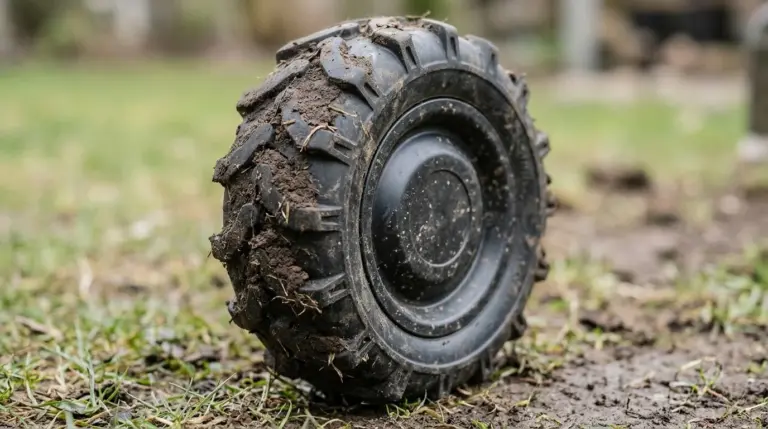
Third, weigh drive-wheel design and underside access. All-wheel-drive chassis or rear-drive units fitted with aggressive off-road treads resist spinning when rolling over scattered acorns and damp leaf litter. Equally important is a tool-free or single-screw blade disc layout so you can inspect and swap dull blades in a few minutes without dismantling the deck.
Autumn setup and weekly routine for oak-shaded lawns
A few seasonal adjustments in early September prevent most acorn-related jams and keep cut quality crisp until your final mow before winter.
- Raise your cutting height before acorns drop. Bump the deck height to 3.5 inches or higher in late summer so the blades glide over small nuts and fallen twigs rather than striking them squarely.
- Map out exposed oak roots and heavy drop zones. Create temporary or permanent no-go zones around prominent surface roots where the chassis could high-center, and widen buffer boundaries near stone borders where acorns collect.
- Schedule runs for dry afternoon windows. Wet morning dew glues oak leaves and crushed acorn residue to the underside housing; running the mower after grass dries keeps the deck cleaner.
- Do a ten-minute weekly sweep during peak drop. Use a rolling wire nut gatherer or leaf blower to clear dense acorn clusters under the drip line before the robot starts its afternoon cycle.
- Inspect blades and clean the skid plate every two weeks. Power the mower off, wear protective gloves, brush caked debris off the disc, and replace the entire blade and screw set as soon as grass tips look frayed.
When daytime temperatures drop consistently below grass-growing thresholds and oak leaves finish falling, give the underside a thorough dry brush, install fresh blades so screws do not seize over winter, and store the mower and battery indoors according to your owner’s manual.
Frequently asked questions
Will hitting acorns break a robot mower’s blades?
Occasional acorns rarely break modern robot mower blades because the small razor blades pivot backward on their screws upon impact. However, repeatedly mowing over dense beds of acorns dulls and nicks the thin steel edges much faster than grass alone, requiring more frequent full-set replacements.
Can a robot mower pick up or mulch acorns and oak leaves?
Standard robot mowers are strictly grass trimmers without vacuum suction or bagging hoppers, so they cannot collect acorns or thick blankets of oak leaves. While a few specialized models offer sweeper attachments for light dry leaves, dense acorn drops still need to be cleared with a nut gatherer, rake, or leaf blower.
Why does my wire-free robot mower lose signal under my oak trees?
Mature oak canopies block and reflect satellite signals used by RTK-GPS navigation systems, especially before leaves fall in late autumn. Mowers that combine 360-degree LiDAR or vision cameras with RTK—or traditional boundary-wire mowers—maintain far steadier navigation under heavy tree cover.
What cutting height works best when acorns are falling?
Setting your mower near the top of its range, ideally between 3.5 and 4.0 inches, gives the blade disc extra clearance over small and medium acorns resting in the turf. Higher autumn mowing also helps shaded grass under oak trees capture more sunlight before winter dormancy.
Sources
- The Secret Life of Acorns: Oaks, Wildlife, and the Science of Mast Years (North Carolina State University Extension): used for background on irregular oak mast-year cycles and autumn acorn volume.
- Automower Blades Replacement Guide (Husqvarna Support): used for pivoting blade safety mechanics, normal 3-to-6-week blade lifespan, and accelerated wear from yard obstacles.
- Worx Landroid Owner’s Manual (Worx): used for manufacturer debris-clearing requirements and maximum cutting height specifications up to 3.9 inches.
- Segway Navimow vs Mammotion LUBA: Robot Head-to-Head (WireFreeMower): used for 2026 under-canopy LiDAR/vision navigation comparisons and published cutting height ranges up to 4.0 inches.
 Up next9 min readBy YardHow Does a Robot Mower Handle Tree Stumps in the Lawn?Updated Nov 12, 2026
 8 min readBy YardHow Does a Robot Mower Handle Tree Roots?Updated Nov 10, 2026
 8 min readBy YardHow Does a Robot Mower Handle Trees?Updated Nov 11, 2026
 8 min readBy YardCan You Use a Robot Mower for a Lawn With Pecan Trees and Fallen Shells?Updated Nov 19, 2026
 8 min readBy YardChoosing and Running a Robot Mower for a Lawn with Black Walnut Trees and HullsUpdated Nov 19, 2026
 7 min readBy YardWill a Robot Mower Get Stuck on a Lawn With Tree Roots?Updated Nov 13, 2026