
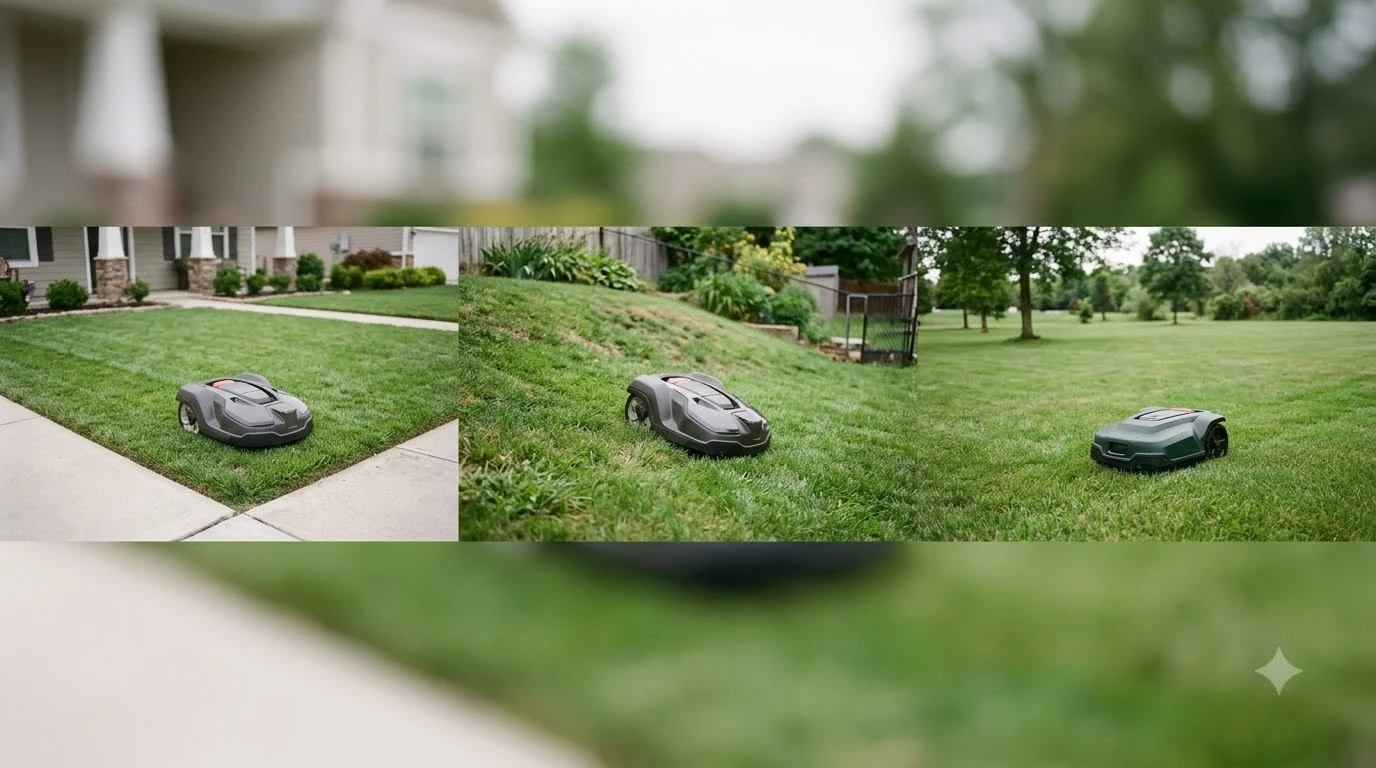

A robot mower for a lawn with pecan trees and fallen shells works reliably only if you raise the cutting height above the shells, inspect the blades frequently, and clear heavy fall drops before sending the bot out. Unlike soft grass clippings, hard pecan shells, split outer husks, and woody twigs act like tiny stones under a low-spinning cutting disc. With a few seasonal adjustments to deck height, scheduling, and debris prep, most modern robotic mowers can keep turf tidy under mature pecan canopies without tearing up their cutting systems.
The short answer
- Raise the deck in fall: Setting the cutting height near the upper limit (around 4 inches on many models) lets the blades pass over most whole nuts and shells instead of striking them.
- Expect faster blade wear: Small pivoting razor blades mounted on a disc dull much faster when they clip hard shells and twigs, so keep spare blades on hand during harvest months.
- Clear heavy shell piles first: A robot mower handles scattered shells fine, but dense carpets of husks, nuts, and wind-snapped twigs can wedge under the chassis or lift drive wheels off the turf.
- Watch canopy shade and traction: Dense pecan foliage blocks satellite signals on RTK-only bots and leaves damp, slippery litter that can cause wheel spin on slopes.
- Clean the undercarriage weekly: Brushing compacted husk fibers and shell fragments out of wheel treads and around the skid plate prevents uneven cuts and motor strain.
How pecan trees challenge a robotic mower
Pecan trees shed debris in distinct waves from spring through late autumn, creating three different hazards for an autonomous mower: hard shells, fibrous outer shucks, and woody twigs.
According to the University of Georgia Cooperative Extension, pecan shuck split typically occurs in September and October, releasing mature nuts onto the grass just as autumn leaf drop begins. Before that main harvest window, trees also shed unfertilized nutlets in May and June, and pecan twig girdler beetles can prune small branches that snap off in late-summer winds.
For a robot mower, each type of litter behaves differently once it hits the turf. Whole pecans and cracked shell halves are dense and rigid, meaning low-set blades either bat them sideways or take direct edge impacts. Dried four-valved shucks (the outer husks) are lighter and more fibrous, so they tend to shred into stringy mulch or wedge between the cutting disc and protective skid plate. Meanwhile, small twigs and fallen leaves add bulk that can mat down when morning dew or autumn rain arrives.

Canopy density also affects navigation. Older boundary-wire mowers steer reliably under thick pecan branches because their buried perimeter cable does not depend on sky visibility. Newer wire-free units that rely strictly on RTK satellite positioning can lose signal lock beneath large, overlapping pecan crowns unless they pair RTK with onboard vision cameras or LiDAR sensors.
Blade disc vs. solid star blades on hard shells
The cutting mechanism underneath a robot mower determines how well it tolerates incidental contact with pecan shells and small twigs.
Most residential robotic mowers use a rotating plastic or metal disc fitted with three to six lightweight, pivoting razor blades. When a pivoting blade strikes a hard pecan shell, centrifugal force allows the blade to swing inward slightly, reducing the shock to the drive motor. However, as noted in Robomow’s debris handling guide, small pivoting blades on a disc dull rapidly when they repeatedly contact nuts and woody twigs, leaving frayed grass tips that turn brown.
A smaller group of mowers—including legacy Robomow and select European high-cut platforms—uses a rigid, multi-pronged solid steel star blade instead of swinging razors. Solid star blades shrug off scattered nuts and twigs without chipping as easily, though they still blunt over time and transmit more vibration to the spindle if they hit a thick pile of shells.
| Debris type | Pivoting razor disc | Solid steel star blade | Best prep action |
|---|---|---|---|
| Scattered pecan shells | Blades pivot back on impact, but edges dull quickly | Chops or deflects shells with less edge chipping | Raise cutting height to maximum setting |
| Dense nut & shuck piles | High risk of wedging between disc and skid plate | Can bog down motor or high-center the chassis | Rake, blow, or roll-collect before mowing |
| Twig girdler branches | Nicks razor edges; thick twigs jam the disc | Handles small twigs well; large branches stall motor | Pick up branches thicker than a pencil |
| Autumn pecan leaves | Slices light layers cleanly into turf | Shreds leaves finely, but wet mats clog deck | Remove heavy wet leaf blankets weekly |
Regardless of blade style, a robot mower is built to trim grass tips daily—not to pulverize a bushel of fallen nuts. Even specialized sweeper attachments, such as the optional sweeper kit for the Mammotion YUKA series, are marketed for collecting leaves, twigs, and acorns on flat turf rather than grinding through thick layers of heavy pecan hulls.
Key mower specs to prioritize for pecan yards
Choosing a robot mower for a yard shaded by mature pecan trees comes down to ground clearance, traction, and obstacle sensing rather than raw acreage ratings.
- High maximum cutting height: Look for models that adjust up to 3.5 or 4 inches. Raising the deck lifts the cutting plane above most lying pecans and split shells, letting the chassis roll over scattered litter without blade contact.
- High chassis clearance and floating deck: A taller body opening prevents whole nuts in husks from jamming between the grass surface and the mower shell, while a floating deck follows tree-root undulations without scalping soil.
- High-traction treads or all-wheel drive: Fallen pecan leaves and crushed husks turn slick when damp. Deep-lug rear tires or AWD systems prevent wheels from spinning and tearing turf roots on shaded slopes.
- Multi-sensor navigation (RTK + Vision/LiDAR): Because mature pecan canopies block direct line-of-sight to satellites, wire-free bots need onboard cameras or LiDAR to hold their line beneath heavy foliage.
- Hose-washable undercarriage (IPX5 or IPX6): Water resistance makes it easy to rinse dried shuck dust and sap residue off the deck after autumn runs.
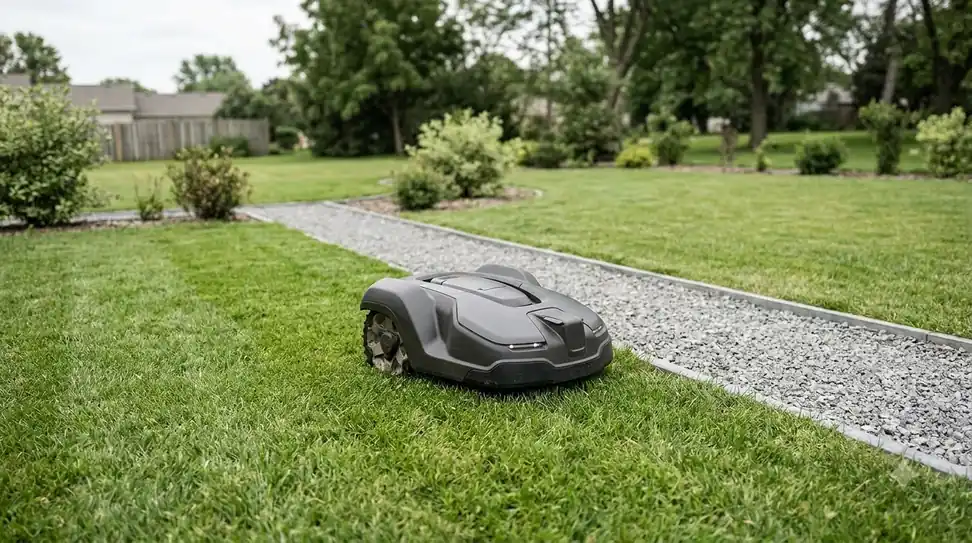
Heads up
Never sharpen disposable robot mower razor blades with a file or grinder. As EcoFlow’s maintenance guide notes, uneven sharpening throws the high-speed cutting disc out of balance, causing excess vibration and premature spindle wear. Always install matched sets of new factory blades and screws.
Seasonal setup and maintenance routine
Adjusting your mowing schedule and upkeep routine around the pecan harvest calendar keeps repair costs low and prevents unscheduled stops.
- Raise the deck before shuck split. In late August or early September, increase the mower’s cutting height to its highest setting so the blades clear early-dropping nuts and wind-blown twigs.
- Run quick debris sweeps before scheduled cycles. During peak drop in October and November, use a nut gatherer roller, leaf blower, or lawn sweeper to clear dense concentrations of shells and husks before the robot starts its route.
- Mow only when the grass is dry. Schedule afternoon runs after morning dew evaporates so damp pecan leaves and crushed hulls do not pack into the wheel treads.
- Power down and brush the underside weekly. Switch off the main isolator, wear protective gloves, and use a stiff bristle brush to clear trapped shell fragments from the skid plate, blade disc, and wheel wells.
- Swap dull blades in matched sets. Check blade edges every two to three weeks during fall; if you see nicks or frayed grass tips, replace every blade on the disc at the same time.
Frequently asked questions
Will pecan shells break a robot mower’s blades?
Pivoting razor blades usually fold back on impact rather than snapping, while solid steel star blades deflect most shells. However, repeated strikes against hard pecan shells and woody twigs will dull either blade style much faster than grass alone, requiring more frequent blade replacements during autumn.
Can a robot mower pick up or mulch fallen pecans?
Standard robot mowers cannot collect pecans; they simply pass over low-lying nuts or push them aside. While a few models offer optional sweeper attachments designed for leaves, acorns, and small twigs, heavy carpets of whole pecans and thick husks still require manual clearing with a nut roller or blower.
What cutting height works best under pecan trees?
Setting your mower to its maximum cutting height—typically 3.5 to 4 inches on consumer models—gives the cutting disc enough vertical clearance to pass over most scattered shells without hitting them. You can lower the deck back to your normal turf height once winter cleanup is finished.
Do pecan trees block GPS signals on wire-free robot mowers?
Dense, overlapping pecan canopies can weaken satellite reception for mowers that rely solely on RTK-GPS. In yards with heavy tree cover, choose either a traditional boundary-wire mower or a wire-free model that combines RTK with onboard vision cameras or LiDAR for continuous navigation.
Sources
- Home Pecan Tree Management Calendar (University of Georgia Cooperative Extension): seasonal timing for pecan shuck split, harvest drop, and orchard debris cleanup.
- Growing Pecans in North Carolina (NC State Extension): lifecycle details on pecan twig girdlers and autumn branch drop.
- How does the robotic lawnmower deal with fallen fruit and the like? (Robomow): comparison of pivoting blade discs versus solid star blades on nuts, twigs, and cones.
- How to Maintain Your Robotic Lawn Mower (EcoFlow): safety shutdown steps, skid-plate debris cleaning, and guidance against sharpening robot mower blades.
 Up next7 min readBy YardBest Robot Mower for a Yard With Fallen Branches: What to CheckUpdated Nov 12, 2026
 7 min readBy YardHow Does a Robot Mower Handle Fallen Branches?Updated Nov 11, 2026
 9 min readBy YardCan You Use a Robot Mower for a Lawn With Red Imported Fire Ant Beds?Updated Nov 19, 2026
 6 min readBy YardWhat Cutting Height Should a Robot Mower Use on a Slope?Updated Nov 14, 2026
 8 min readBy YardWhat Cutting Height Should a Robot Mower Use for St Augustine Grass?Updated Nov 10, 2026
 7 min readBy YardWhat Cutting Height Should a Robot Mower Use for Kentucky Bluegrass?Updated Nov 10, 2026