
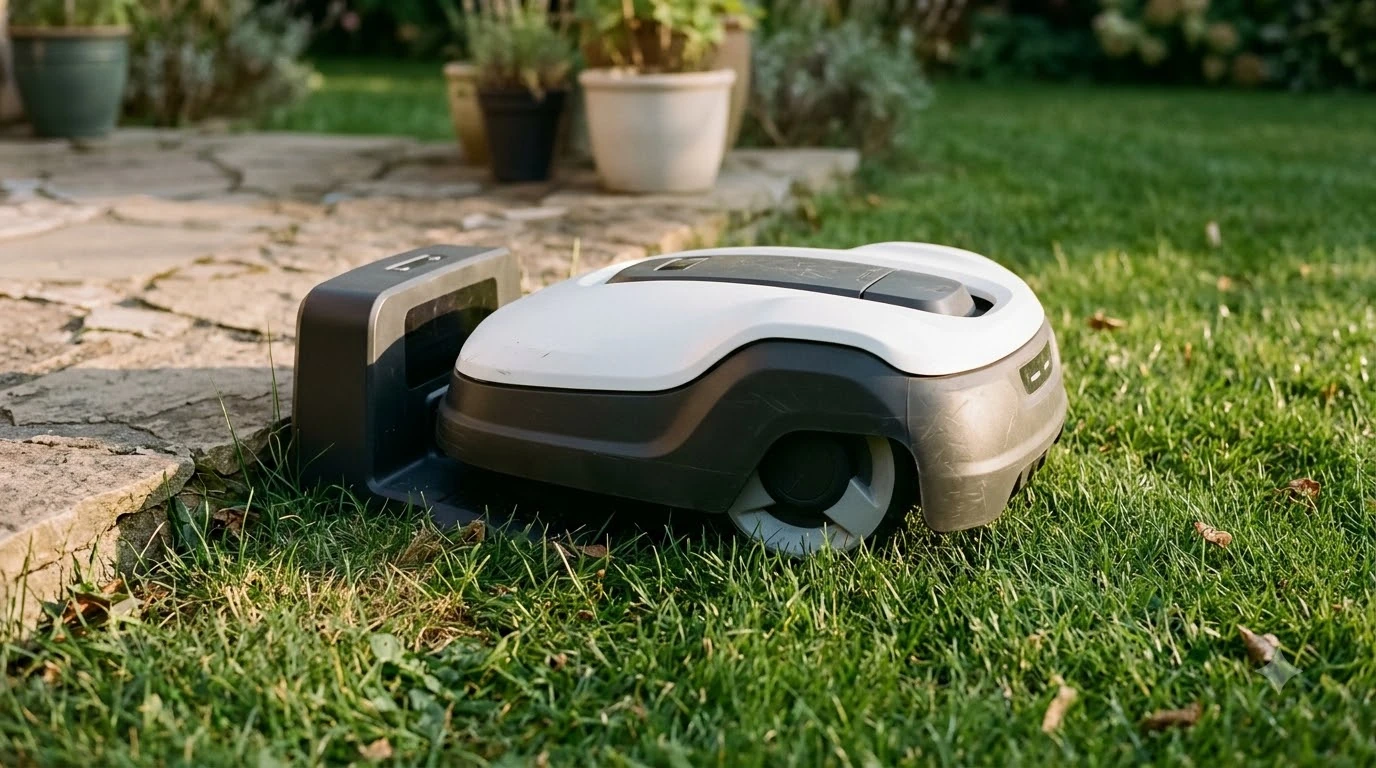

A robot mower can work in a yard with fallen branches, but the blade type decides how well it copes. Robomow’s guides say star blades chop up small fallen debris, while disc blades struggle with small branches. When you choose the best robot mower for a yard with fallen branches, the blade system, a floating cutting deck and a quick cleanup before each run matter more than any single spec.
The short answer
- Star blades handle small debris well, and Robomow says only larger branches pose a problem.
- Disc blades struggle with small branches and can be nicked by fallen fruit.
- A floating deck lets the cutting disk adapt to terrain, which Worx says helps prevent the blade hitting fallen branches.
- Cleanup of large branches, stones and toys before mowing is the simplest protection, and it is our reading, not a maker rule.
Will a robot mower cut fallen branches?
A robot mower can cut through small debris, but larger branches are the real concern. Robomow says fallen fruit and other debris can be so small that the mower simply runs over them. Bigger objects are detected at an early stage, and the mower changes direction to avoid them, a topic we cover in how robot mowers avoid obstacles. A few twigs on the lawn are usually not a crisis, while a pile of branches after a storm needs to be removed by hand before the mower runs. Our guide on whether a robot mower can mow over sticks covers the same question for small pieces.
Why blade type matters for branches
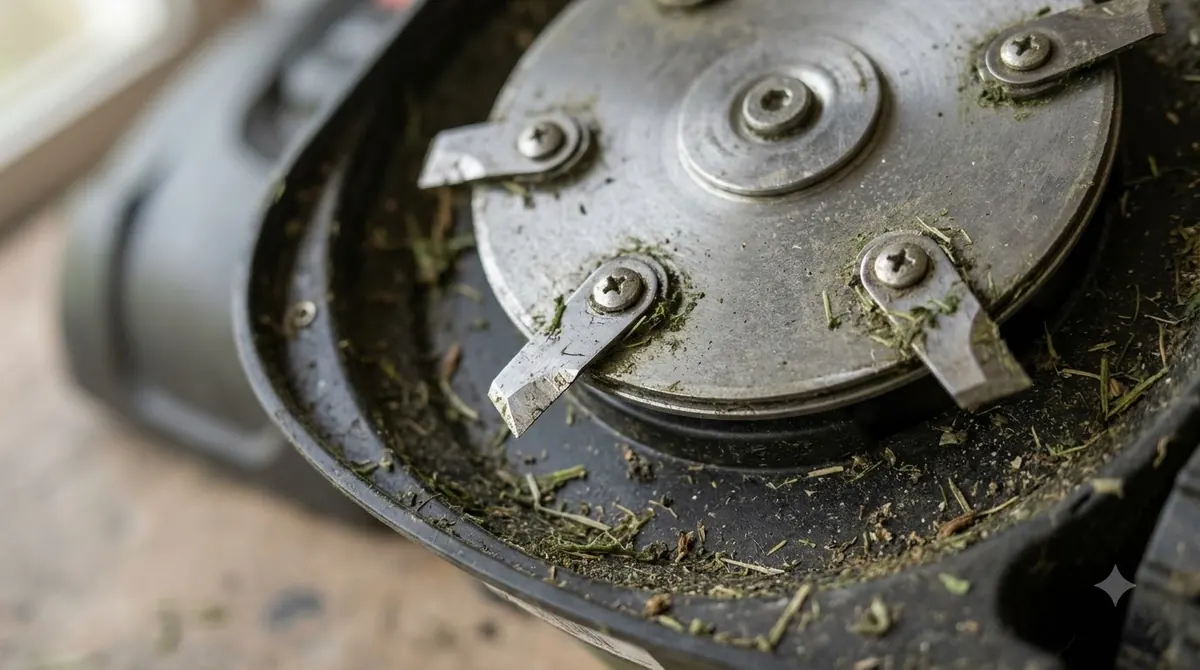
Blade type is the first thing to check if your yard has many trees, and it is the main filter when you compare any best robot mower for a yard with fallen branches. Robomow describes the difference this way: with disc blades, small branches are problematic, while with star blades only larger ones pose a problem. The maker also describes star blades as significantly more robust than disc blades, and says they are the more durable choice when debris is unavoidable.
| Blade type | Small twigs and fruit | Larger branches | What the maker says |
|---|---|---|---|
| Star blades | Chopped up | Pose a problem | Significantly more robust than disc blades |
| Disc blades | Nicked by fallen fruit | Problematic, even small ones | Less durable when debris is unavoidable |
Robomow does not give a size limit in centimeters or inches for branches in the pages we read. That gap matters: a buyer should ask the maker which blade system the model uses and how it handles branch debris, rather than rely on a single number.
What can jam or damage a robot mower on the lawn
Most stops and damage come from a short list of debris types that maker guides name. Robomow says cones and other debris can wedge under the robot and bring it to a standstill. A toy run over by a wheel can knock the mower out of position, and the blades usually stop, which means someone has to restart the unit by hand.
- Wedged debris: cones and similar items can halt the mower, which is also the question behind acorns and pine cones on the lawn.
- Toys: they can stop the blades and need a manual restart.
- Stones: they can damage the housing and ricochet off the blades.
- Gravel and stony paths: gravel beds can trap the robot, so Robomow advises against letting it cross stony paths.
Branches are not on that list by name, which is why a visual check before each run still makes sense. Our reading is that the cause of a stop is usually an object that sits flat under the chassis or wedges between the body and the ground.
A pre-mow cleanup routine for branches
A quick walk before each run catches most of the large pieces that a robot mower should not meet. The steps below follow the causes described above, and they are our recommendation rather than a schedule from a maker.
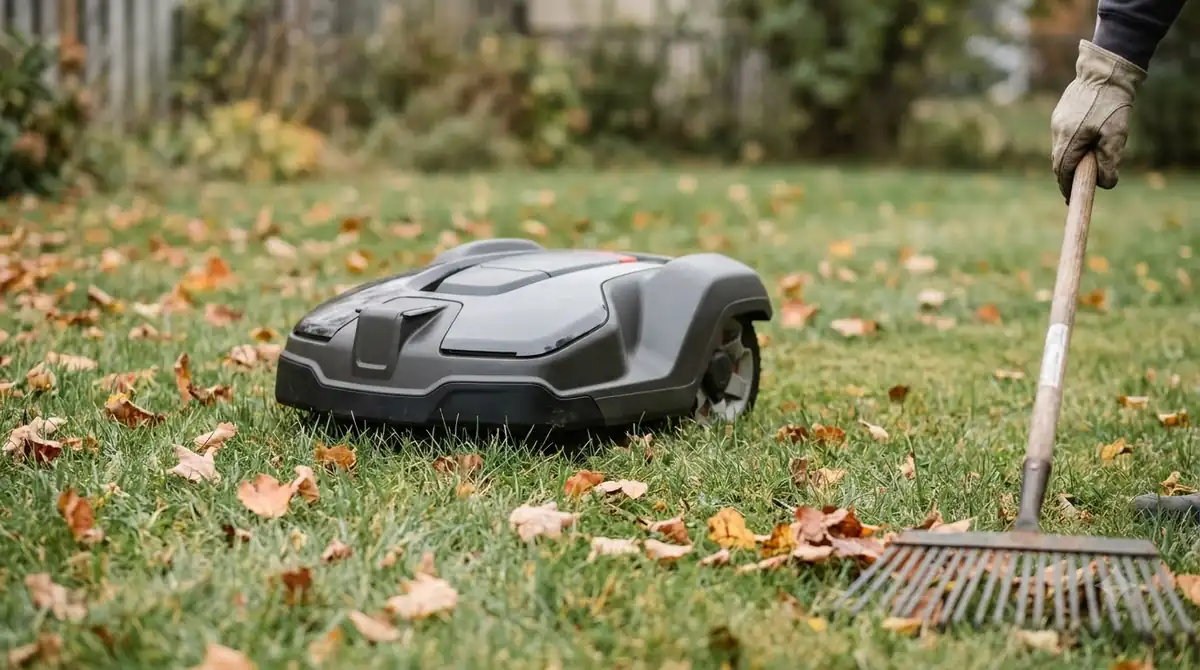
- Walk the lawn after storms. Look for larger branches and remove them by hand before the mower starts.
- Check for stones and toys. Remove them, since stones can damage blades and toys can stop them.
- Look for cones and loose items. Anything that can wedge under the robot should go.
- Clear thick leaf piles. Robomow says random leaves do not harm the mower, but a closed layer of leaves can spoil the cutting pattern, and damp leaves can make the mower lose its grip. See how a robot mower copes with fall leaves for what clogs and what is fine.
Sensors do not replace this routine. Worx describes a bump sensor that stops the mower when it hits an obstacle, and then makes it retreat. That reaction happens after contact, so a clean lawn gives the mower a better run and reduces the number of stops you need to fix.
What to check in the best robot mower for a yard with fallen branches
Four features matter most when you look for the best robot mower for a yard with fallen branches, based on the maker pages we read. Check them on the spec sheet and in the manual before you buy, because the pages describe general behavior rather than a guaranteed size limit.
- Blade type: star blades suit yards with many branches, according to Robomow.
- Floating cutting deck: adapts to terrain and helps clear low obstacles, according to Worx.
- Bump sensor: stops the mower on contact and makes it retreat.
- Passage width and slope: Robomow recommends a passage of at least 1 meter, and cites designed slopes of 30% and 45%.
Who each option suits depends on the yard. For the best robot mower for a yard with fallen branches, a lawn with many trees and frequent storms favors star blades and a floating deck. A small, open lawn with few branches may not need the same setup, and our reading is that the cleanup routine matters more than the blade choice there.
Frequently asked questions
Will fallen branches damage a robot mower’s blades?
Robomow says disc blades can be nicked by fallen fruit, while star blades chop it up. Larger branches can still cause problems with either system, so clearing them before mowing is the safer habit.
Can a robot mower run over small twigs?
Robomow says small debris can be simply run over by the mower, and larger objects are detected early and avoided. Small branches are still problematic for disc blades, so the blade type matters here.
Do fallen leaves affect a robot mower?
Robomow says random leaves do not harm the mower or generally affect the cutting result. A closed layer of leaves can spoil the cutting pattern, and damp leaves can make the mower slip, so raking or blowing thick piles before mowing is a sensible step, and a leaf blower for lawn cleanup makes that quicker.
Should I clear branches before every mow?
That is our reading, not a maker rule. A quick check is a sensible habit in a yard with many trees, and the owner’s manual for your model will give its own guidance on debris.
Sources
- Robomow: how the robotic lawnmower deals with fallen fruit (manufacturer): star and disc blades, small and large branches.
- Robomow: can a robotic lawnmower get stuck (manufacturer): cones, toys, stones, gravel, passage width and slope design.
- Robomow: what a robotic lawnmower does with leaves (manufacturer): random leaves, closed leaf layers and damp leaves.
- Worx: robot mowers and complex lawns (manufacturer): floating deck, bump sensor and low obstacles.
 Up next7 min readBy YardHow Does a Robot Mower Handle Fallen Branches?Updated Nov 11, 2026
 7 min readBy YardChoosing a Robot Mower for a Yard With Low-Hanging Weeping Willow BranchesUpdated Nov 19, 2026
 8 min readBy YardCan You Use a Robot Mower for a Lawn With Pecan Trees and Fallen Shells?Updated Nov 19, 2026
 8 min readBy YardBest Robot Mower for a Yard With a Dry Creek Bed: What to CheckUpdated Nov 12, 2026
 11 min readBy YardBest Robot Mower for a Yard With a Trampoline: What to CheckUpdated Nov 14, 2026
 10 min readBy YardBest Robot Mower for a Yard with Lawn Ornaments: What to CheckUpdated Nov 12, 2026