
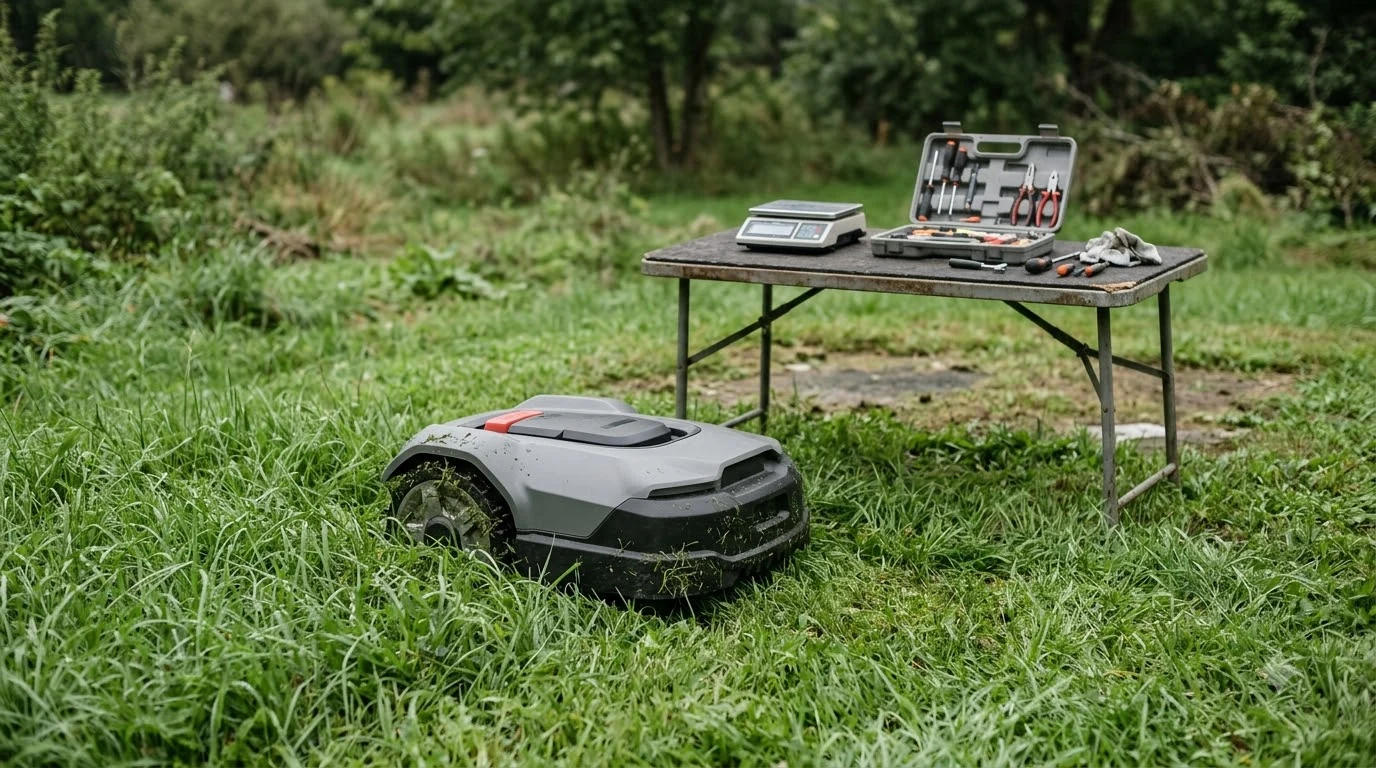

A robot mower can usually cut scattered fall leaves, but a thick, closed layer of leaves can clog the blades and damage the lawn. Robomow says random leaves generally do not harm the mower or the cut. For robot mower fall leaves, the practical rule is to clear large piles first and let the mower handle the light cover that is left.
The short answer
- Scattered, dry leaves: usually fine for a robot mower.
- Thick or wet piles: remove them before the mower runs.
- Fall cutting height: about 2 to 3 cm (roughly 0.8 to 1.2 inches), according to Robomow.
- Cleaning: after each session in leaf season, and every 2 to 3 days in wet weather, according to Mammotion.
Robot mower fall leaves: when scattered leaves are fine
Yes, in most yards a robot mower can cut through a light scatter of fallen leaves, and robot mower fall leaves are rarely a problem at that level. Robomow’s guidance is that random leaves generally do not harm the mower or the quality of the cut. The problem starts when the leaves form a closed layer that covers the grass, because the blades then have to chew through a mat rather than a few loose leaves.
Three conditions tell you when robot mower fall leaves become a real problem:
- Depth: a closed layer that hides the grass is the threshold Robomow describes, not a single number of inches.
- Moisture: wet leaves are harder on the mower than dry ones, which the next section covers.
- Amount: compact mowers can have their blades blocked when they face extremely large amounts of leaves.
If the robot leaves uncut strips after a heavy leaf fall, treat that as a signal to check the deck and wheels for trapped material rather than letting the schedule run as normal.
Why wet leaves cause more trouble than dry ones
Wet leaves cause most of the trouble with robot mower fall leaves, because they change how the mower moves and how the blades work. Robomow says damp leaves reduce grip, which causes slipping and getting stuck, especially on slopes. Leaves that stick to the wheels make traction worse as well.
- Traction: wheels that spin on wet leaves can tear up the turf underneath.
- Blades: damp leaves can dull the blades faster than dry ones.
- Motor: heavy leaf loads can wear the motor out sooner.
- Corrosion: Mammotion warns that wet debris can corrode metal parts or block sensors.
Mammotion advises removing large piles of wet leaves manually before mowing, and avoiding mowing large piles of wet foliage. Robomow gives the same advice in different words: do not operate the mower when there are many wet leaves on the lawn. If a storm has just dropped a heavy layer, waiting until the leaves dry or clearing them by hand is the safer choice. See running a robot mower on wet grass for the wider issue.
Signs your mower is clogged, and what to check
A blocked cutting system means something is obstructing the blade disc, according to Husqvarna’s support page on the “Cutting system blocked” message. The same page lists the checks to run when a mower shows that error, and they apply to robot mower fall leaves jams on the deck and wheels as well, although the page names grass and objects rather than leaves specifically.
- Lift the mower and restart it. Husqvarna lists tree roots and trampoline legs as examples of objects that stop the mower. If it keeps getting stuck in the same spot, block that area with an island or stay-out zone.
- Check under the cutting deck. Look for grass, leaves or other material wrapped around the blade disc.
- Check the wheels and the chassis. Look around the wheels and between the body and the chassis for trapped material.
- Check the cutting height. If the grass is too tall, raise the cutting height and keep the grass below your model’s maximum.
- Check the blades. Robomow notes that blades shred leaves but wear faster, and that disc blades wear faster than star blades.
Husqvarna’s full cleaning procedure is in a separate article, so follow the manufacturer’s steps for your model. The checks on the error page are a useful starting point for robot mower fall leaves cleanup on any brand.
Setting the mower for leaf season
In leaf season, Robomow suggests setting the robot mower’s cutting height to about 2 to 3 cm (roughly 0.8 to 1.2 inches), and Mammotion advises reducing mowing cycles as grass growth slows. Clearing the leaves before the mower starts is the step that matters most for robot mower fall leaves.
- Set the cutting height. Robomow recommends about 2 to 3 cm (roughly 0.8 to 1.2 inches) in autumn. Check your manual for the lowest and highest settings, and see the best mowing height for a robot-mowed lawn for the rest of the year.
- Clear the leaves before mowing. Robomow advises removing leaves regularly, ideally before mowing, and collecting them before the robot starts.
- Check the lawn for stones. Stones can damage the blades, and leaves can hide them.
- Look for hedgehogs. Robomow notes that animals such as hedgehogs may hide under leaves, so check the area before the mower runs. See whether robot mowers stop for animals for related guidance.
- Reprogram the schedule. Mammotion says to reduce mowing cycles and reprogram the schedule to match slower growth. See when to start and stop robot mowing each year for the seasonal picture.
Robomow adds that mowers without a boundary wire need leaves cleared first, because models that sense the grass can struggle to tell the lawn from other ground when leaves cover it, and clear edges help mark the lawn.
Cleaning the deck, wheels and sensors
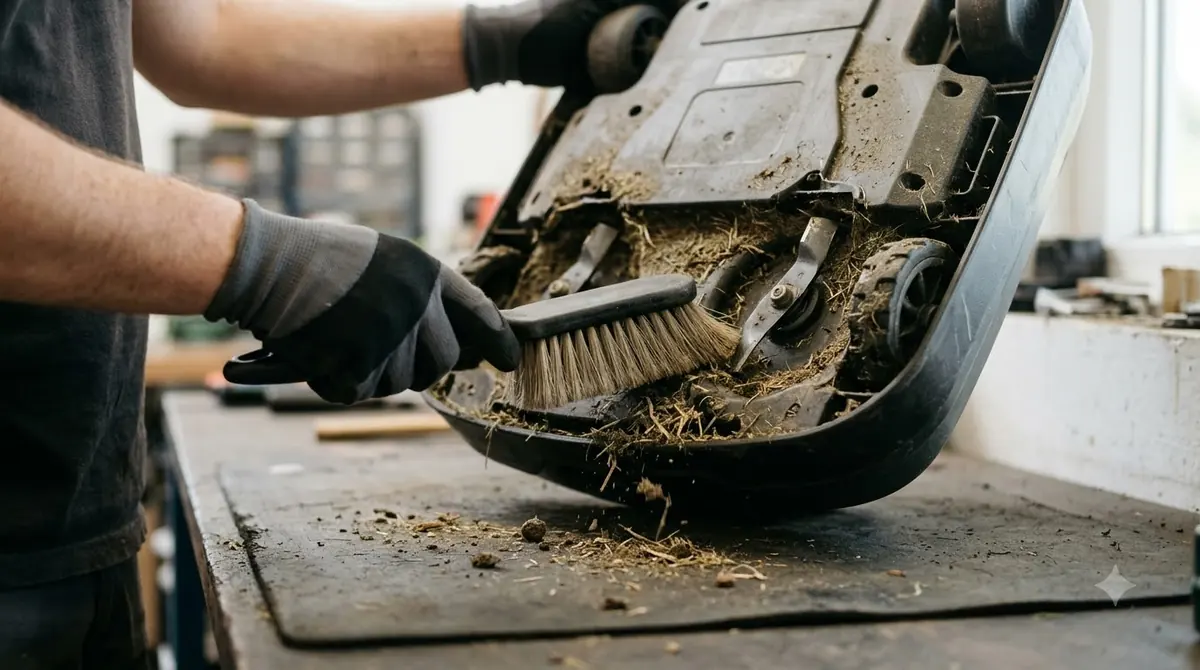
Mammotion advises removing clippings and debris from the undercarriage, wheels and sensors after each session, and every 2 to 3 days in wet conditions. With robot mower fall leaves on the ground, that schedule matters most, since wet debris can corrode metal parts or block sensors.
- Power off first. Robomow says to switch off the safety switch so the mower cannot start while you work.
- Wear gloves. Robomow also recommends gloves when you clean the mowing deck or change blades.
- Clear the wheels. Remove leaves and grass from the tread and between the wheels and the housing, using a coarse brush, a stick or compressed air.
- Brush the underside. Remove clippings from the deck before they dry and clump, with a coarse brush or spatula.
- Wipe the charging contacts. A damp cloth works, and fine sandpaper can clear slight rust.
Use a soft brush or cloth on the sensors. Mammotion warns against water jets and harsh chemicals, and Robomow says not to clean the underside with a garden hose, because the mower cannot tolerate running water. Robomow also notes that cleaning intervals depend on the model: some may need a weekly deck clean, while others may need only a 14-day rotation. A self-cleaning deck or mulch remover reduces how often you have to clean by hand. More habits are in making a robot mower last longer.
What leaves do to the lawn after mowing
Robomow says leaves reduce aeration, and in cold, wet weather they raise the risk of mold and rot. Fungal diseases also spread more easily under a layer of leaves, so a thick cover of robot mower fall leaves can cause problems even after the mower has cut it.
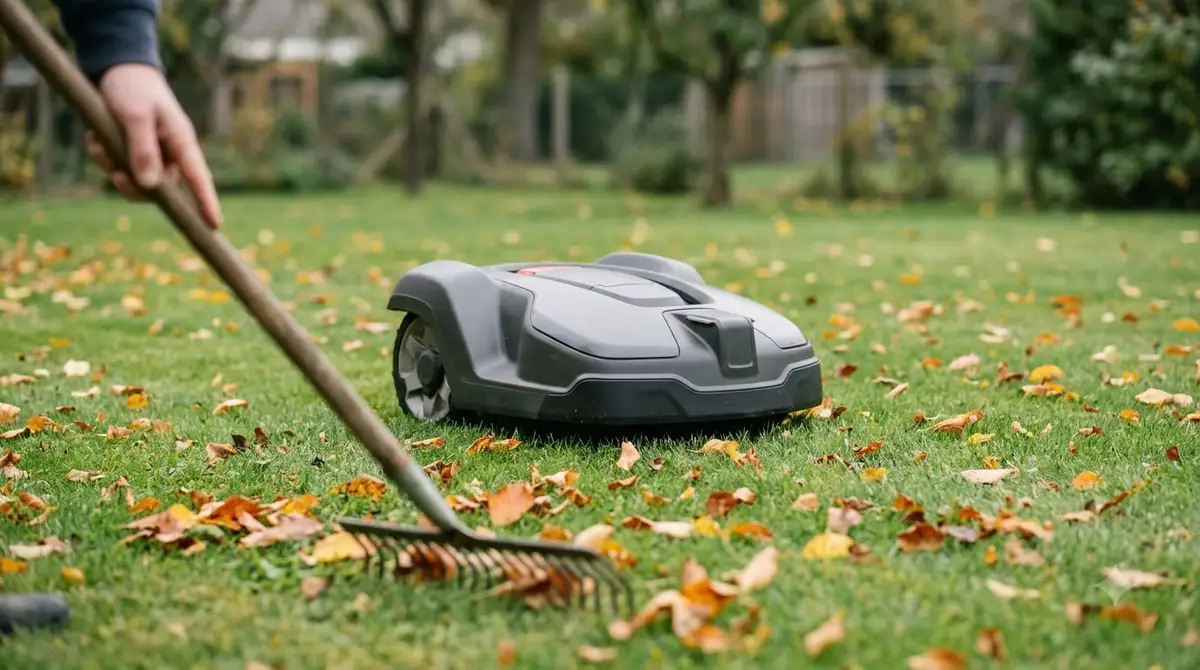
Robomow notes that shredded leaves may promote moss, and that tannic acid from oak and walnut leaves can harm soil quality. The same page warns that wheels spinning on wet leaves can damage the turf, which is one more reason to clear heavy wet piles before the mower runs.
Frequently asked questions
Should I clear fall leaves before the robot mower runs?
Yes, when the cover is thick or wet. Robomow advises removing leaves regularly, ideally before mowing, and collecting them before the robot starts. Light scattered leaves are usually fine for the mower to cut.
Can a robot mower cut fall leaves when they are wet?
It is better to skip wet piles. Robomow advises against operating the mower when there are many wet leaves, and Mammotion advises avoiding large piles of wet foliage. Wet leaves reduce grip and can dull the blades.
What cutting height should I use in fall?
Robomow suggests setting a robot mower to about 2 to 3 cm (roughly 0.8 to 1.2 inches) in autumn. Check your model’s manual for its lowest and highest settings before you change the height.
Do leaves on the lawn cause disease?
They can, especially in cold, wet weather. Robomow says leaves reduce aeration and raise the risk of mold and rot, and that fungal diseases spread more easily under leaves.
Sources
- What does a robotic lawnmower do with leaves (Robomow): closed layer, aeration and disease, blade and wheel wear, fall cutting height, leaf removal.
- Cutting system blocked: Automower error message (Husqvarna): meaning of the message, checks under the deck and around the wheels, height and stay-out zones.
- Seasonal maintenance tips for automatic lawn mower (Mammotion): removing wet leaf piles, cleaning frequency, reducing mowing cycles in fall.
- Does the robotic lawnmower need to be cleaned (Robomow): power-off step, cleaning steps, water and cleaning intervals.
 Up next8 min readBy YardBest Mowing Height for Zoysia Grass: Summer, Spring and FallUpdated Nov 11, 2026
 8 min readBy YardBest Mowing Height for Fescue: Tall vs Fine Fescue GuideUpdated Nov 11, 2026
 7 min readBy YardCan a Robot Mower Cut Fine Fescue? Heights and What to CheckUpdated Nov 11, 2026
 8 min readBy YardMowing Lawn in Summer Heat and Drought: What to ChangeUpdated Nov 11, 2026
 9 min readBy YardWhat Happens If You Cut Grass Too Short?Updated Nov 11, 2026
 8 min readBy YardOne Third Rule for Mowing Grass: How It Works and Why It MattersUpdated Nov 11, 2026