


Knowing how to make a robot mower last longer comes down to four habits: protect the battery, change the blades on schedule, keep the sensors and charging contacts clean, and store the mower indoors above 0°C in winter. Intervals differ by brand, so your model’s manual has the final word.
Husqvarna puts average battery life at 2 to 4 years, and Mammotion says 2 to 5 years, so the battery gets the most attention below. Check your owner’s manual for model-specific intervals.
The short answer
- Battery: cut unnecessary run time, shade the charging station, and follow your manual’s storage charge level.
- Blades: change them on the brand’s schedule, or sooner when they are nicked. Husqvarna gives 3 to 6 weeks for main disc blades.
- Cleaning: wipe the sensors and charging contacts weekly in the growing season, and keep the deck and wheels free of caked-on grass.
- Winter: clean the mower, follow the storage charge level in your manual, and store it indoors in a dry, frost-free place above 0°C.
How to make a robot mower last longer starts with the battery
Battery life depends mainly on how many hours the mower runs, so cutting unnecessary run time is the simplest way to stretch it, according to Husqvarna. For more on capacity, run time, and charging, see our guide to robot mower battery life. A larger lawn mowed every day drains the battery faster than a smaller lawn mowed twice a week, as Husqvarna’s battery life guide explains.
Husqvarna also points to its Weather Timer for reducing run time in the dry season, and says this will not harm the lawn because grass growth slows. Mammotion’s US article warns against frequent shallow charges. It advises letting the mower finish its cycle and return to the base on its own.
Heat is the other battery stress. Mammotion advises shading the charging base in summer and not leaving the mower in direct sunlight for hours. Husqvarna also suggests keeping the charging station in a shaded or cool place. A dealer can reprogram how long the mower searches for its charging station, and Husqvarna names about 5% of search time as the ideal maximum.
Heads up
Husqvarna lists one sign of an aging battery: the mower returns to its charging station too often and does not spend enough time mowing. An authorized dealer can replace the battery.
Keep the blades sharp and changed on schedule
Replace the blades on the brand’s schedule, or sooner when they are nicked, because Husqvarna says sharp blades reduce power consumption. That makes blade care a core part of how to make a robot mower last longer, and the steps are covered in robot mower blade replacement. Its seasonal guide gives 3 to 6 weeks for main disc blades and 9 to 12 weeks for EdgeCut disc blades, according to its seasonal support guide.

Mammotion’s US article suggests inspecting the blades weekly, and rotating or replacing them every 1 to 2 months during active growing seasons. Its EU article gives a longer rule of every 3 months or after 150 hours of use, and says to replace them more often for thicker grass.
When you fit a new blade, always replace the screw with it, as Husqvarna recommends. Our reading is that the blade’s condition is a better guide than the calendar when two schedules disagree.
Clean the deck, wheels, sensors, and charging contacts
Mammotion’s AWD maintenance article describes a weekly routine of about 10 minutes and a monthly routine of about 20 minutes. The article is written for AWD models, so check that your mower matches before you copy its schedule. Regular cleaning is the cheapest part of how to make a robot mower last longer, and our how to clean a robot mower guide goes deeper. The weekly steps are:
- Wheels and treads. Clear mud and grass from them. Husqvarna says caked-on grass adds wheel drag and uses more power.
- Sensors. Wipe them clean. Husqvarna warns that dust on the front lift sensor can cause a permanent lift error, and suggests cleaning it with water and a brush or cloth.
- Blades. Inspect them, and rotate or replace any that are nicked.
- Charging contacts. Wipe the contacts on the mower and the station. Mammotion’s EU article also says to clean the rear charging pads and infrared receiver to prevent charging failures.
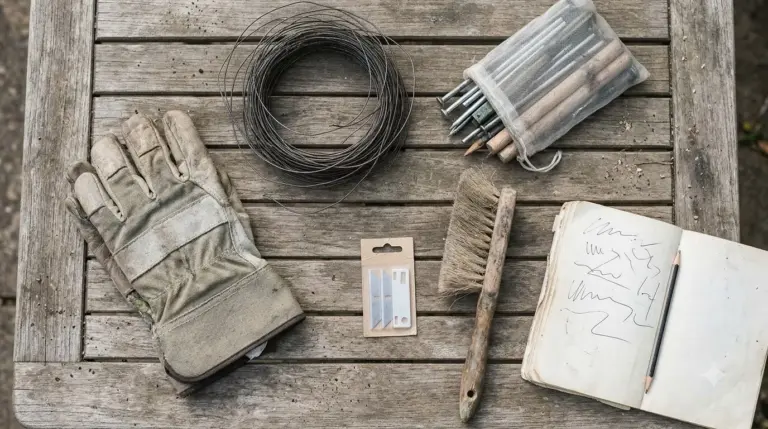
A robot mower maintenance kit keeps the brush, cloth, and spare blades in one place. The monthly routine adds a few checks: test each wheel motor, look for firmware updates, clear the chassis underbody, and check the sensors and antennae.
Keep water away from the mower. Mammotion warns that water can damage seals and electronics, so do not wash it with a hose or pressure washer. Husqvarna says never to use a high-pressure washer on the charging station. It names only NERA models and the Aspire R6V, 308V, and 312V as safe to rinse with a garden hose.
Mow in conditions that suit the mower
Avoid mowing in heavy rain or when the grass is soaked. Mammotion says wet grass clogs the mower, reduces traction, and raises the risk of electrical shorts. Husqvarna’s guide does not cover wet-grass mowing, so this rule rests on Mammotion’s advice alone. Mowing conditions are one more piece of how to make a robot mower last longer.
- Skip runs during heavy rain, and let the lawn dry before the next scheduled start.
- Run in the early morning or evening during peak summer sun, as Mammotion suggests.
- Shorten the schedule when growth slows, using a timer or a reduced run plan.
Store the mower correctly for winter
Winter storage protects the battery and electronics, so it is a big part of how to make a robot mower last longer. Husqvarna says to clean the chassis, wheels, and blade disc, then clean the charging contacts on the mower and the station. Store the mower indoors in a dry, frost-free place above 0°C, resting it on all wheels on a flat surface or on a wall hanger. The charging station should also go indoors, although the NERA baseplate can stay outdoors.
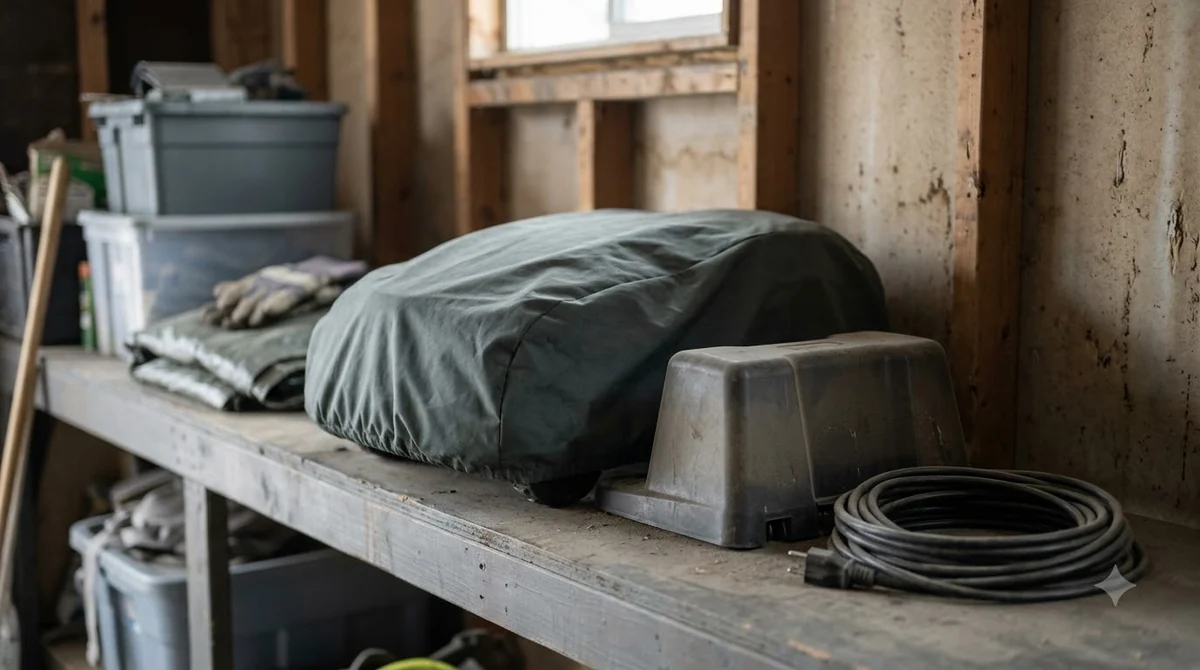
Mammotion’s EU article sets colder limits. It says to keep the robot indoors when the ambient temperature drops below -10°C, and to keep the charging station indoors below -20°C. Storing the cells below 0°C risks permanent damage, the article says, and it advises anti-corrosion lubricant on the charging pads only, not on other metal contacts.
Boundary wire can stay in the ground over winter, according to Husqvarna, but label it before you disconnect anything. Our reading is that labeled wire saves time at spring setup. For a fuller checklist, see how to winterize a robot mower.
Where manufacturer advice differs, and what to do
The table compares the points that matter most for how to make a robot mower last longer. The Husqvarna column draws on its AU battery guide and its UK seasonal guide.
| Topic | Husqvarna | Mammotion (US article) | Mammotion (EU article) |
|---|---|---|---|
| Main blade interval | 3 to 6 weeks (main disc), 9 to 12 weeks (EdgeCut) | Every 1 to 2 months in the growing season | Every 3 months or after 150 hours |
| Battery life | About 2 to 4 years on average | Typically 2 to 5 years | Not stated |
| Charge before winter storage | Fully charged | 50 to 70% for storage longer than a few weeks | At least 80% |
| Winter storage temperature | Indoors, above 0°C | Not stated | Indoors below -10°C ambient |
The storage charge level is the clearest conflict. Mammotion’s US and EU articles give different levels, so one brand’s advice can vary by region. If you are asking how to make a robot mower last longer through winter, write your model’s storage charge level on your maintenance log, and check it each time you store the mower.
Firmware updates and yearly service
Mammotion’s US article says to check for firmware updates monthly, through the app or over USB. Husqvarna’s seasonal guide asks owners to download available firmware in spring, before the first mow, and to use the latest Automower Connect app.
Husqvarna also recommends a yearly service, and a professional cleaning at the dealer after each season. Its battery guide adds that a dealer can replace the battery if it ages.
Frequently asked questions
How long does a robot mower battery last?
Husqvarna says robot mower batteries last about 2 to 4 years on average, and Mammotion says typically 2 to 5 years. Running time matters most: a larger lawn mowed daily drains the battery faster than a smaller lawn mowed twice a week. Cutting unnecessary run time and shading the charging station both help.
How often should robot mower blades be replaced?
Husqvarna gives 3 to 6 weeks for main disc blades and 9 to 12 weeks for EdgeCut blades. Mammotion’s US article suggests every 1 to 2 months during the growing season, and its EU article suggests every 3 months or after 150 hours. Replace a blade sooner if it is nicked, and always fit a new screw with it.
Should a robot mower be fully charged for winter storage?
Sources disagree. Husqvarna says to fully charge the battery before storage. Mammotion’s US article advises 50 to 70 percent for storage longer than a few weeks, while its EU article says at least 80 percent. The EU article also says to recharge to that level every 90 days, even when the mower is not in use.
Can you hose off a robot mower?
Only if your manual says it is safe. Mammotion warns that water can damage seals and electronics. Husqvarna says never to use a high-pressure washer on the charging station, and names only NERA models and the Aspire R6V, 308V, and 312V as safe to rinse with a garden hose.
Sources
- Battery life of a robot lawn mower (Husqvarna): battery life, running time, the aging battery sign, search time, and charging station shade.
- Automower support guide by season (Husqvarna): blade intervals, pressure washer rule, winter storage, cleaning before storage, and firmware.
- AWD robot lawn mower maintenance (Mammotion): weekly and monthly routines, charge cycles, storage at 50 to 70 percent, heat, and wet grass.
- Robot lawn mower maintenance (Mammotion EU): storage at 80 percent, the 90-day recharge, storage temperatures, blade life, and charging pads.
 Up next9 min readLearnHow Long Does the Mammotion LUBA 3 Battery Last?Updated Nov 11, 2026
 8 min readLearnDo Robot Mowers Make Lawns Healthier?Updated Nov 11, 2026
 8 min readLearnRobot Mower Lawn Care Calendar: What to Do Each SeasonUpdated Nov 11, 2026
 8 min readLearnDo Robot Mowers Have Blade Stop Sensors? What Lift and Tilt Sensors DoUpdated Nov 11, 2026
 9 min readLearnAre Robot Mowers Dangerous?Updated Nov 11, 2026
 7 min readLearnRobot Mower Stuck in the Same Spot? Causes and FixesUpdated Nov 11, 2026