
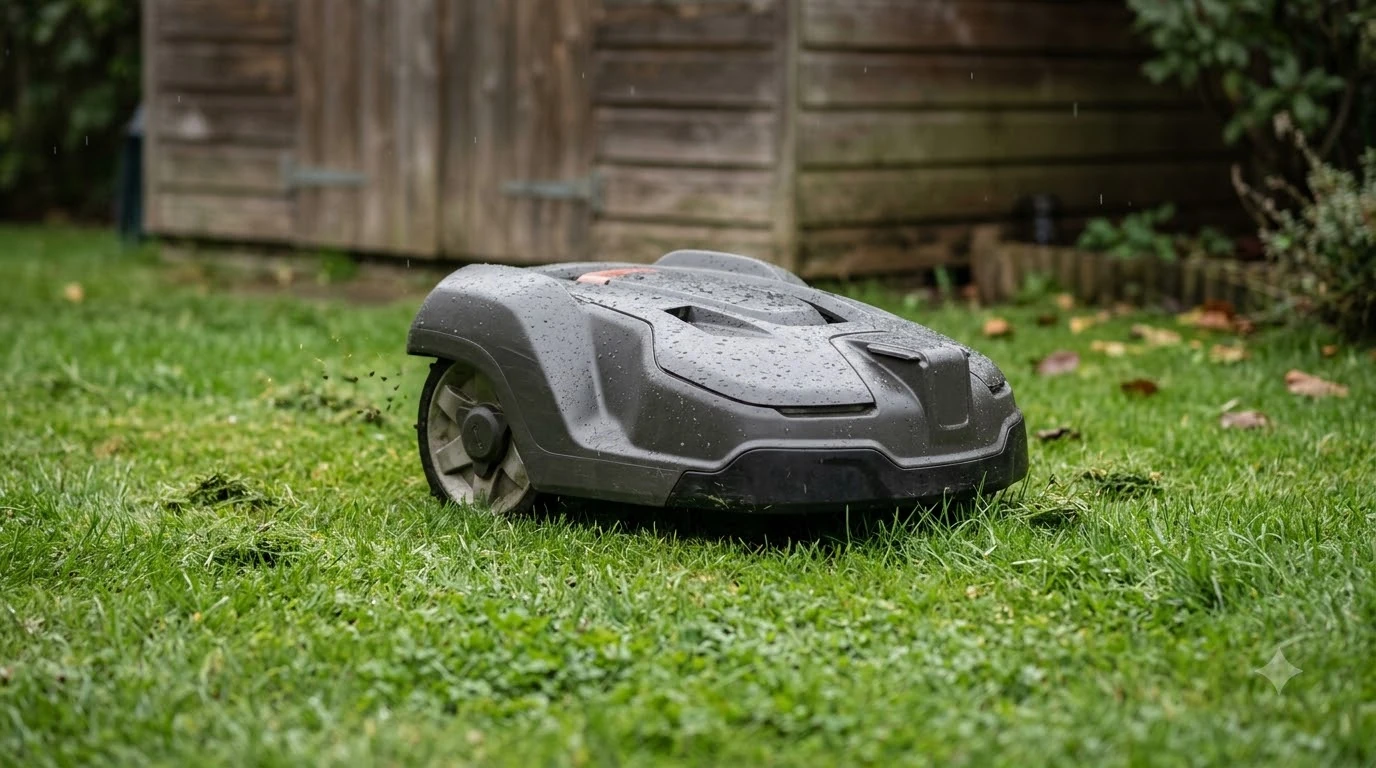

Do robot mowers make lawns healthier? Possibly, but the evidence is still limited. A University of Florida study on St. Augustine grass reported that frequent, light cutting by a robot mower kept turf healthy, though it published no density or disease numbers. That makes this a promising result for one grass type, not a general rule for every yard.
The short answer
- Frequent light cutting is the main reason researchers give for denser turf from robot mowers.
- The UF trial covered one warm-season grass at one research site, with a 2.4-inch cut.
- Clippings left on the lawn return nitrogen and, in a managed lawn, do not cause thatch.
- Your results depend on grass type, cut height, and whether clippings clump in wet or fast-growing weather.
Do robot mowers make lawns healthier? What the research shows so far
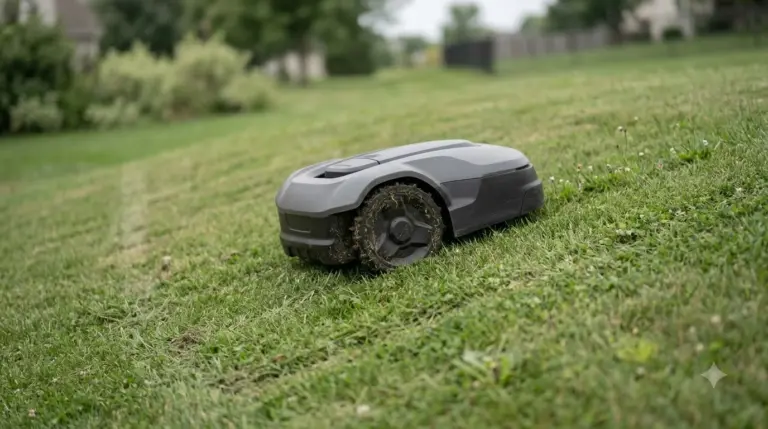
The clearest evidence is a 2026 UF/IFAS trial at the West Florida Research and Education Center, which asked whether a robot mower’s lower cut could keep hardy St. Augustine grass healthy. According to the UF/IFAS news write-up dated June 9, 2026, the answer was yes, and the robot mower cut at 2.4 inches and mowed daily. Researcher Bryan Unruh said the turf was spectacular and quite healthy compared with conventional mowers.
- Design: a robot mower cutting at 2.4 inches every day, compared with a conventional weekly mowing schedule.
- Reported result: daily robotic mowing was said to increase turf density and make turf more resistant to pests and disease.
- What is missing: the article gives no density, disease, or pest figures, and it does not state the plot count, trial length, or comparison mowing frequency.
Those gaps matter. Without measured numbers, the study supports the claim that the turf looked healthy, but it does not show how much denser or more resistant it became.
Why cutting little and often matters for turf
Frequent light cutting keeps each cut within the one-third limit, and that is the basic reason robot mowers may help. So do robot mowers make lawns healthier through this effect? Partly, and the rule behind it is simple: the one third rule for mowing grass says to remove no more than one-third of the grass blade at a time, and the University of Idaho bulletin says this may require mowing more often during rapid spring growth.
- Keep the cut small. Removing no more than one-third of the blade limits stress on the plant.
- Mow often enough. UF describes weekly mowing as the conventional schedule, which can break the one-third rule when grass grows fast.
- Let clippings fall. Short, frequent cuts leave small pieces that fall into the turf and break down quickly.
Our reading is that a robot mower meets the one-third rule more easily than a weekly mower, because it trims a little at a time. That is an explanation of the mechanism, not a measured outcome from a trial.
How the St. Augustine study applies to your grass
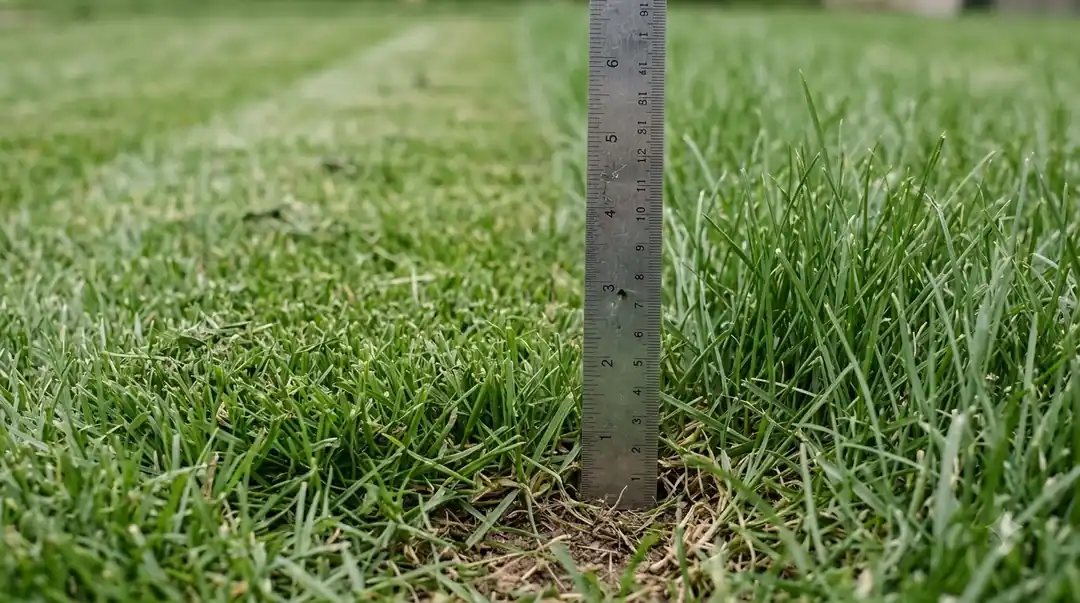
The UF trial used a 2.4-inch robot cut, which is lower than the typical 3 to 4 inches that UF recommends for most warm-season grasses. Our reading is that a lower cut carries more risk for some turf, so the result does not automatically carry over to a lawn cut at a higher height. If you are choosing a setting for your own mower, start with the best mowing height for a robot-mowed lawn.
| Factor | In the UF trial | Typical guidance |
|---|---|---|
| Grass type | St. Augustine (warm-season) | Varies by grass type |
| Cut height | 2.4 inches (robot) | 3 to 4 inches for most warm-season grasses (UF) |
| Mowing frequency | Daily (robot) | Weekly, removing one-third of the blade (UF) |
| Reported outcome | Turf described as healthy | No density figures published |
The UF write-up also notes that most robot mowers were originally designed for European lawns and cool-season grasses. That makes a warm-season result from Florida a useful signal, but not proof for a cool-season lawn in the North. Owners with the same grass can read more about robot mowers on St. Augustine grass.
What happens to grass clippings left on the lawn
Leaving clippings on the lawn returns nutrients (see also how robot mowers mulch grass clippings), and Oregon State University Extension reports that clippings contain up to 3 to 4 percent nitrogen, 0.5 percent phosphorus, and 2.5 to 3.5 percent potassium by weight. Returning those nutrients is what the Oregon State research links to a lower fertilizer need.
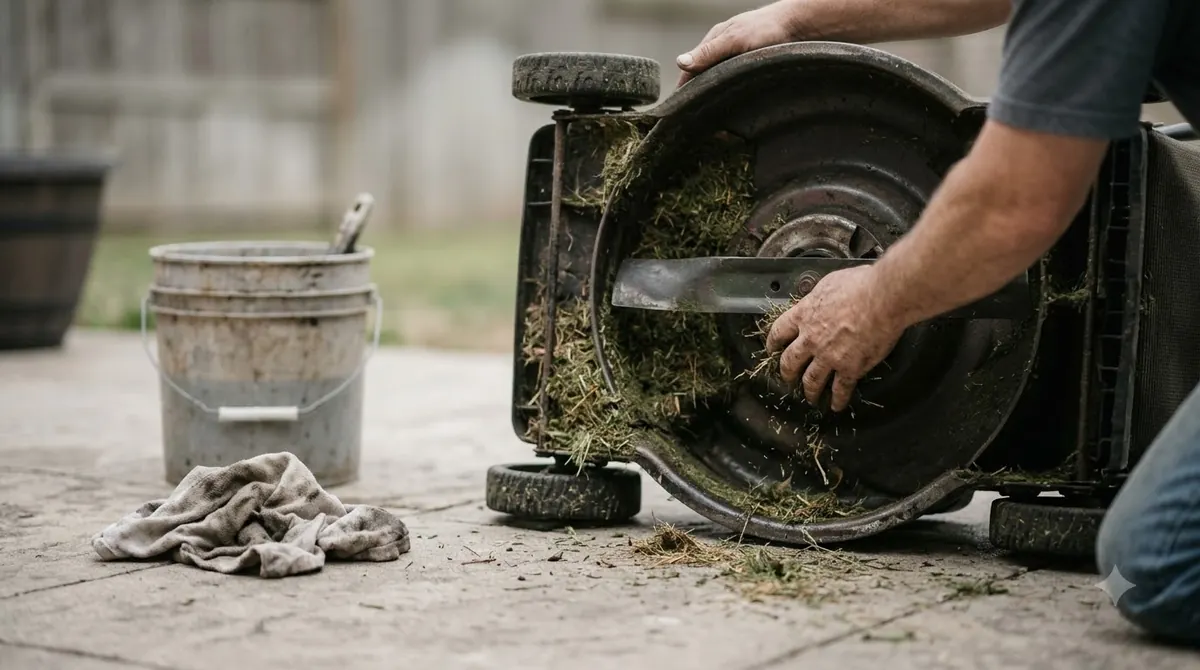
- Nitrogen: an Oregon State researcher, Kowalewski, found the fertilizer rate could be cut almost in half when clippings were returned with a mulching-type rotary mower.
- Thatch: extension research cited by Oregon State says clippings do not increase thatch, and the University of Idaho bulletin says the same for a properly managed lawn.
- Blade sharpness: a sharp blade makes finer clippings that decompose faster, according to both extension sources, which is why a regular robot mower blade replacement schedule matters.
Kansas State University Extension puts the same point in practical terms. Its bulletin says that letting clippings fall back to the turf can return up to 25 percent of the fertilizer nutrients that would otherwise be removed. It also says clippings are about 85 to 90 percent water and decompose quickly once they settle, as long as the grass is not allowed to grow tall between cuts.
Heads up
The University of Idaho bulletin is dated 1992, and its fertilizer-saving figure is an older estimate. Treat the nitrogen numbers as a guide, and check your local extension service for current fertilizer advice.
When the benefit fades: clumping and overgrown grass
Clippings stop helping when they pile up in thick clumps, which can happen in wet weather, during rapid growth, or after a missed mowing. Oregon State advises using a bagger to collect heavy clippings in those cases, then returning to mulching once the grass is back under control.
- Wet weather: wet clippings can clump instead of breaking down, according to Oregon State.
- Fast growth: spring growth can push the lawn past the one-third rule between cuts, according to Idaho.
- Missed mowing: a lawn that has grown too tall should not be covered with cut clippings, according to Idaho.
This is the boundary of the benefit. Do robot mowers make lawns healthier when they run daily in dry conditions? Our reading is that they can, but a mower left to run through a wet, overgrown week is a different case.
Do robot mowers make lawns healthier for your yard? What to check first
Check your grass type, the cut height you can set, how often the mower can run, and whether the blades stay sharp before you expect a denser lawn. Those four factors decide whether frequent cutting helps or only moves the same problems around.
| Check | Why it matters | Source |
|---|---|---|
| Grass type | The UF trial covered one warm-season grass | UF/IFAS |
| Cut height | Typical warm-season height is 3 to 4 inches | UF/IFAS |
| Blade sharpness | Sharp blades make finer clippings that decompose faster | Oregon State, Idaho |
| Docking area | Fire ants can build mounds near docking stations | UF/IFAS |
So do robot mowers make lawns healthier on their own? Our reading is that frequent cutting alone does not fix a lawn with poor fertilizer, uneven watering, or the wrong grass for the climate. It works best as one part of a plan that includes the other factors.
Frequently asked questions
Do robot mowers make lawns greener?
Frequent cutting can produce denser turf in the UF study, but the write-up gives no numbers for color or density. Greener color usually depends on fertilizer, watering, and grass variety as well as mowing.
Will a robot mower cause thatch?
Extension sources say clippings do not cause thatch in a properly managed lawn. Thatch is linked to mowing height, overwatering, and fertilizer timing, according to the University of Idaho bulletin.
Should I bag the clippings with a robot mower?
Usually no, because short clippings decompose quickly and return nutrients. A bagger is useful only when clippings form heavy clumps or the grass has grown too tall.
Do robot mowers make lawns healthier on every grass type?
No. The trial covered one warm-season grass at one research site, and the write-up reports no numbers. Check your grass type and the mower’s cut height before deciding.
Sources
- UF/IFAS news on robot mowers and St. Augustine turf (University of Florida): study design, cut heights, and the reported outcome.
- UF/IFAS study summary on robotic mowers (University of Florida): study question and the 3 to 4 inch guidance.
- Leave grass clippings on the lawn (Oregon State University Extension): nutrient content, thatch, and clumping.
- Grass clippings at home (University of Idaho Extension, 1992): one-third rule and managed-lawn thatch findings.
- Recycling Grass Clippings, MF2110 (Kansas State University Extension): clippings and thatch, nutrient return, and the one-third rule.
 Up next9 min readLearnHow to Make a Robot Mower Last Longer: Battery, Blade, and Winter CareUpdated Nov 11, 2026
 7 min readLearnRobot Mower Stuck in the Same Spot? Causes and FixesUpdated Nov 11, 2026
 7 min readLearnHow to Set Up an RTK Robot Mower: Base Station StepsUpdated Nov 11, 2026
 9 min readLearnAre Robot Mowers Dangerous?Updated Nov 11, 2026
 7 min readLearnWhat Is NTRIP for Robot Mowers?Updated Nov 11, 2026
 8 min readLearnWho Should Not Buy a Robot Mower?Updated Nov 11, 2026