
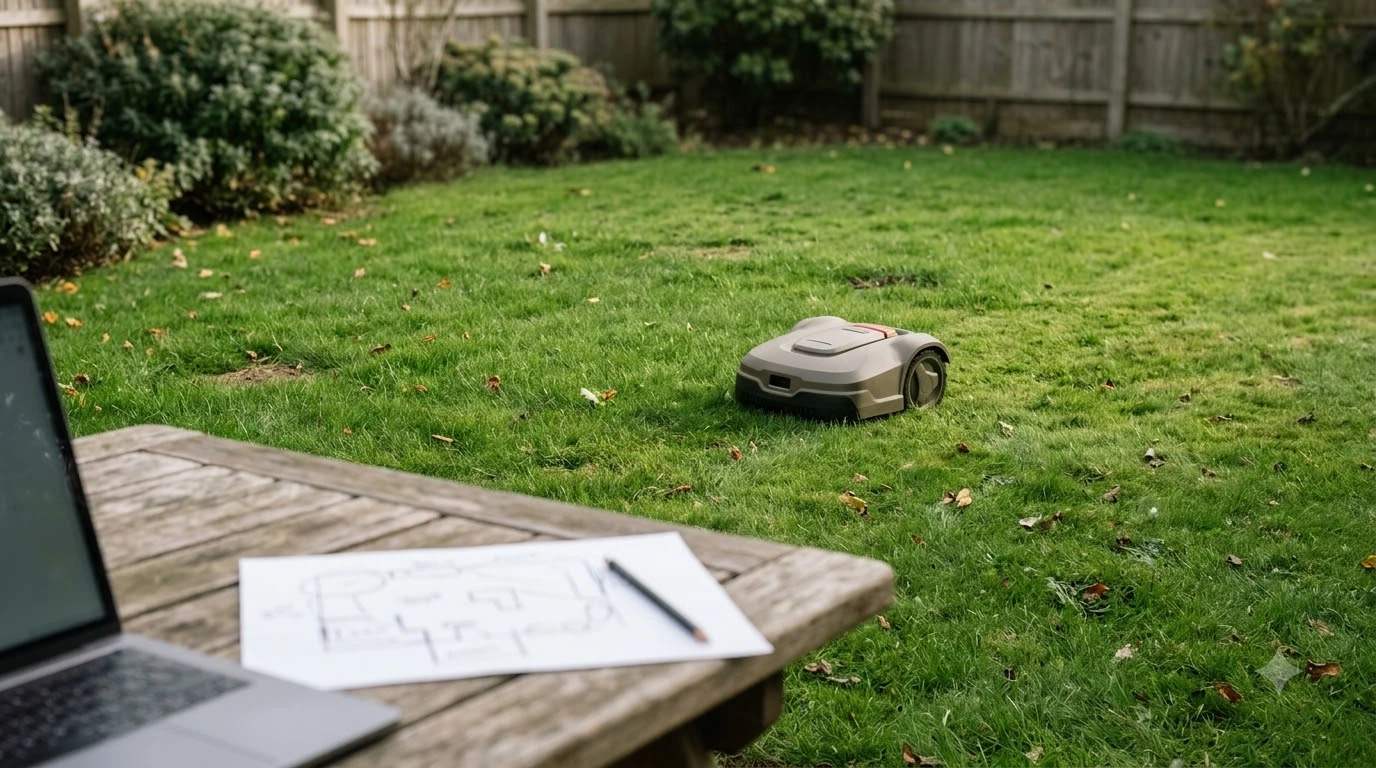

Do robot mowers mulch grass? Yes, most do. Mulching means the mower cuts a little at a time (Husqvarna says a few millimeters per run) and leaves the fine clippings in the turf instead of collecting them. Those clippings fall into the turf and, according to one university extension source, can break down within a few weeks, though wet or overgrown grass can leave visible clumps.
The short answer
- Default design: most robotic mowers are built to mulch rather than collect, according to Anker, a vendor that sells robot mowers.
- How much is cut: Husqvarna says its mower cuts “only a few millimetres at a time” on each run.
- Why it breaks down: Oregon State University Extension says chopped clippings decompose “in just a few weeks.”
- Where it struggles: wet grass, very long grass, and missed mowings can leave visible clippings or clumps.
- Collection is the exception: some models offer bags, sweeping attachments, or self-emptying designs, but they are a smaller group.
What mulching means for a robot mower
Most robot mowers mulch rather than collect, so the clippings stay on the lawn in very small pieces. Anker says that most robotic lawn mowers today are designed to mulch rather than collect. Husqvarna describes the same design on its Australian support page, where it says the clippings “fall to the soil, mulch and serve as a natural fertiliser for your lawn.” So the short answer to “do robot mowers mulch grass?” is yes for most models, with exceptions covered below.
A mulching mower is different from a standard rotary mower that happens to leave some clippings behind. Oregon State University Extension describes mulching mowers as machines that finely chop clippings and spread them evenly into the turf canopy for faster breakdown. A robot mower follows the same idea, but it runs on its own and cuts a little at a time.
Husqvarna notes that the clippings are “so fine and small they don’t need to be collected.” That is a manufacturer’s description of its own design, so read it as the design goal of the machine rather than an independent test result.
Why clippings break down quickly
Clippings break down quickly when they are chopped small, and Oregon State says the pieces decompose in just a few weeks. The same extension guide reports that clippings contain up to 3 to 4 percent nitrogen by weight, plus 0.5 percent phosphorus and 2.5 to 3.5 percent potassium. Leaving them on the lawn returns those nutrients to the turf.
The effect on fertilizer should not be overstated. Unless the grass has grown excessively tall or the clippings form thick clumps, Oregon State describes them as a slow-release fertilizer. It also cites research in which the fertilizer rate could be cut almost in half when clippings were returned with a mulching-type rotary mower. That study used a rotary mower, not a robot, so treat it as evidence for the practice rather than a result for robot mowers.
Our reading: clippings help the lawn, but they are not a complete fertilizer program. Keep feeding the lawn on the schedule your grass type needs.
Do robot mowers mulch grass without causing thatch?
No. According to Oregon State, grass clippings do not cause thatch buildup. The extension guide quotes its turf specialist: “Virtually all research conducted with turf has shown that grass clippings do not increase thatch.” Thatch comes mainly from stolon-spreading grasses, and the guide says it increases as mowing height goes up.
That shifts the thatch question away from the mower and toward the grass type and cutting height. Our reading: a steady, moderate cutting height matters more for thatch than the clippings do, but the sources do not give a thatch number for robot mowers.
Why short, frequent cuts matter
A robot mower removes only a small slice of grass on each run, which keeps the clippings fine enough to mulch. Husqvarna contrasts this with traditional mowing, which removes “a few centimetres of grass.” The company says its mower “constantly cuts the grass as it grows,” but its page does not give a schedule or a number of runs per week.
Anker says mulching works best with frequent schedules and describes the cutting as “little and often.” It gives no specific number of days or hours. Oregon State offers a simple limit: remove no more than one-third of the grass blade at a time. Our reading: that one-third rule is the easiest test of whether the mowing schedule keeps up. Oregon State also says cutting about once a week during the growing season prevents clippings from clumping. For the height side of the rule, see the guide to the best mowing height for a robot-mowed lawn.
So do robot mowers mulch grass well on a lawn that is cut rarely? That depends on how much grass each run removes, not on the machine alone.
Blade condition also affects the cut. Oregon State says a sharp blade makes cleaner cuts and chops clippings into smaller pieces, and that most mower manufacturers recommend sharpening every 20 to 25 hours of use. That figure is for mowers in general, so check your own model’s robot mower blade replacement schedule instead.
When mulching struggles
Mulching struggles with wet, very long, or overgrown grass, because these conditions produce heavy clippings that do not break down cleanly. The result can be visible clippings or clumps left on the lawn. Do robot mowers mulch grass cleanly in wet weather? Not always, and our guide to cutting wet grass with a robot mower covers when to wait.
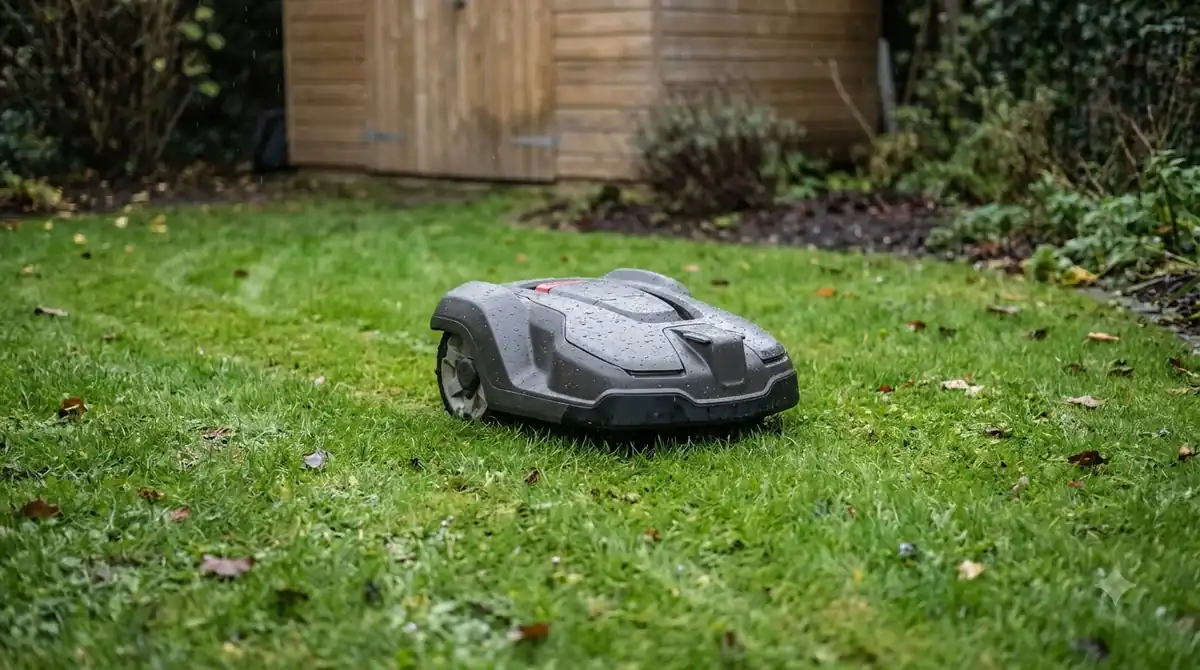
- Wet cuts: Anker warns that mulching mowers “May leave visible clippings after wet cuts.”
- Very long grass: Anker says mulching is “less effective if grass grows too long,” so a missed mowing can push the lawn into that condition. If that has already happened, read about cutting an overgrown lawn before a robot mower.
- Wet weather or rapid growth: Oregon State advises using a bagger for heavy clippings during wet weather or fast growth.
- After missed mowings: the same guide suggests bagging for a mowing or two, then resuming mulching once the grass is under control.
Oregon State’s bagging advice is limited to wet weather, rapid growth, and missed mowings. It does not give guidance for diseased grass.
Heads up
The sources behind this guide do not cover disease. If your lawn shows signs of disease, check with your state or county extension service before deciding whether to mulch or bag.
Which robot mowers collect instead
Collection is the exception, and the models that offer it are fewer than the mulch-only designs. Anker lists the main options and the trade-offs in its own blog post, which is a vendor source, so compare the claims with the product page.
| Feature | Mulch-only robot mower | Robot mower with collection |
|---|---|---|
| Where clippings go | Left in the turf to break down (Husqvarna, Oregon State) | Into a bag or a sweeping attachment (Anker) |
| Model availability | The default design on most models (Anker) | Fewer models available (Anker) |
| Wet cuts | May leave visible clippings after wet cuts (Anker) | Anker claims collection reduces clumping in damp UK conditions, a vendor claim |
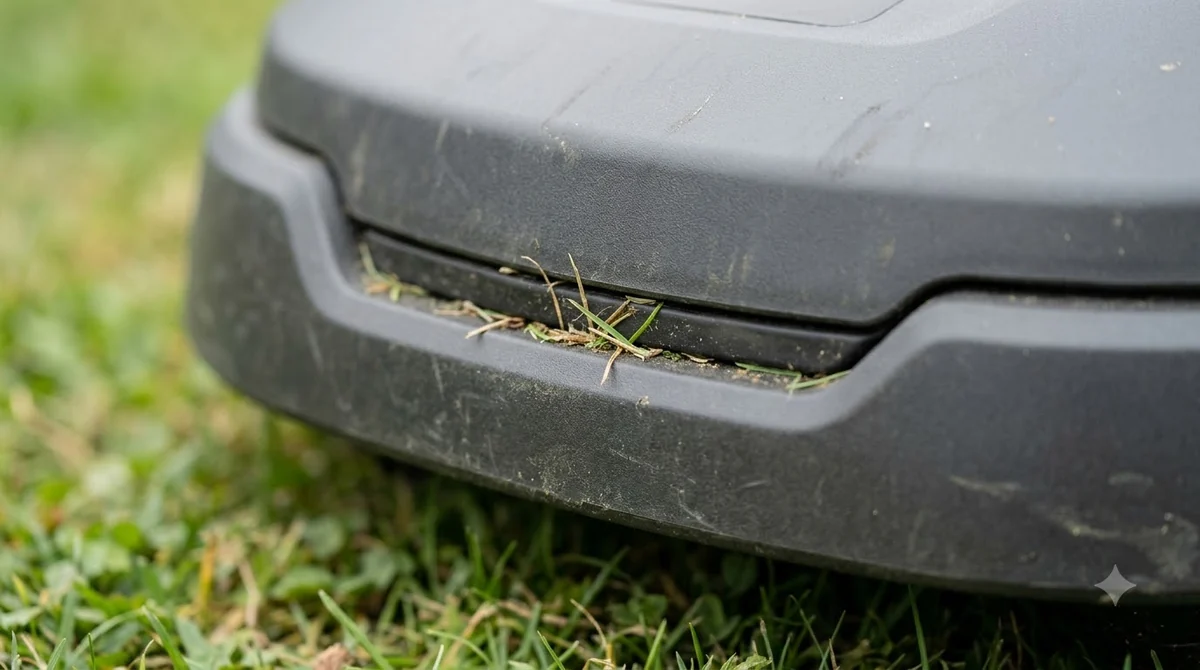
Anker also describes self-emptying designs, which move clippings to a base station, as newer concepts. Our reading: if you want clippings removed, check the product page for a collector before you buy, and confirm whether it is a bag or a sweeping attachment. Buyers who ask do robot mowers mulch grass should also expect some clippings on the body of the machine, and cleaning a robot mower safely is part of owning a mulching model.
Frequently asked questions
Do robot mowers leave grass clippings on the lawn?
Yes, most do. Husqvarna says its clippings fall to the soil and mulch, and Anker says most robotic mowers are designed to mulch rather than collect. Collection options exist on a smaller set of models.
Are mulched grass clippings good for a lawn?
Oregon State University Extension says clippings act as a slow-release fertilizer unless the grass has grown excessively tall or the clippings form thick clumps. They also return nitrogen, phosphorus, and potassium to the turf.
Can a robot mower mulch wet grass?
It can struggle. Anker says mulching mowers may leave visible clippings after wet cuts, and Oregon State advises using a bagger for heavy clippings during wet weather.
Do grass clippings cause thatch?
According to Oregon State, grass clippings do not cause thatch. The extension guide says virtually all turf research shows clippings do not increase thatch, and that thatch rises with mowing height.
Sources
- Leave grass clippings on the lawn for a greener, healthier yard (Oregon State University Extension): nitrogen, decomposition, thatch, mowing height, sharpening interval, one-third rule, and bagging conditions.
- Automower: Where do the grass clippings go? (Husqvarna, manufacturer): clippings fall and mulch, and the cut size per run.
- Robot Lawn Mower with Grass Collector: Pros, Cons and Choices (Anker, vendor blog): mulch as default design, collection options, and wet-cut limits.
 Up next9 min readLearnDo Robot Mowers Really Work? Yes, on the Right LawnUpdated Nov 11, 2026
 7 min readLearnWhat Is NTRIP for Robot Mowers?Updated Nov 11, 2026
 7 min readLearnCan a Robot Mower Cut Your Foot? What the Sources SayUpdated Nov 11, 2026
 9 min readLearnAre Robot Mowers Dangerous?Updated Nov 11, 2026
 9 min readLearnDo Robot Mowers Stop for Animals?Updated Nov 11, 2026
 9 min readLearnHow to Make a Robot Mower Last Longer: Battery, Blade, and Winter CareUpdated Nov 11, 2026