
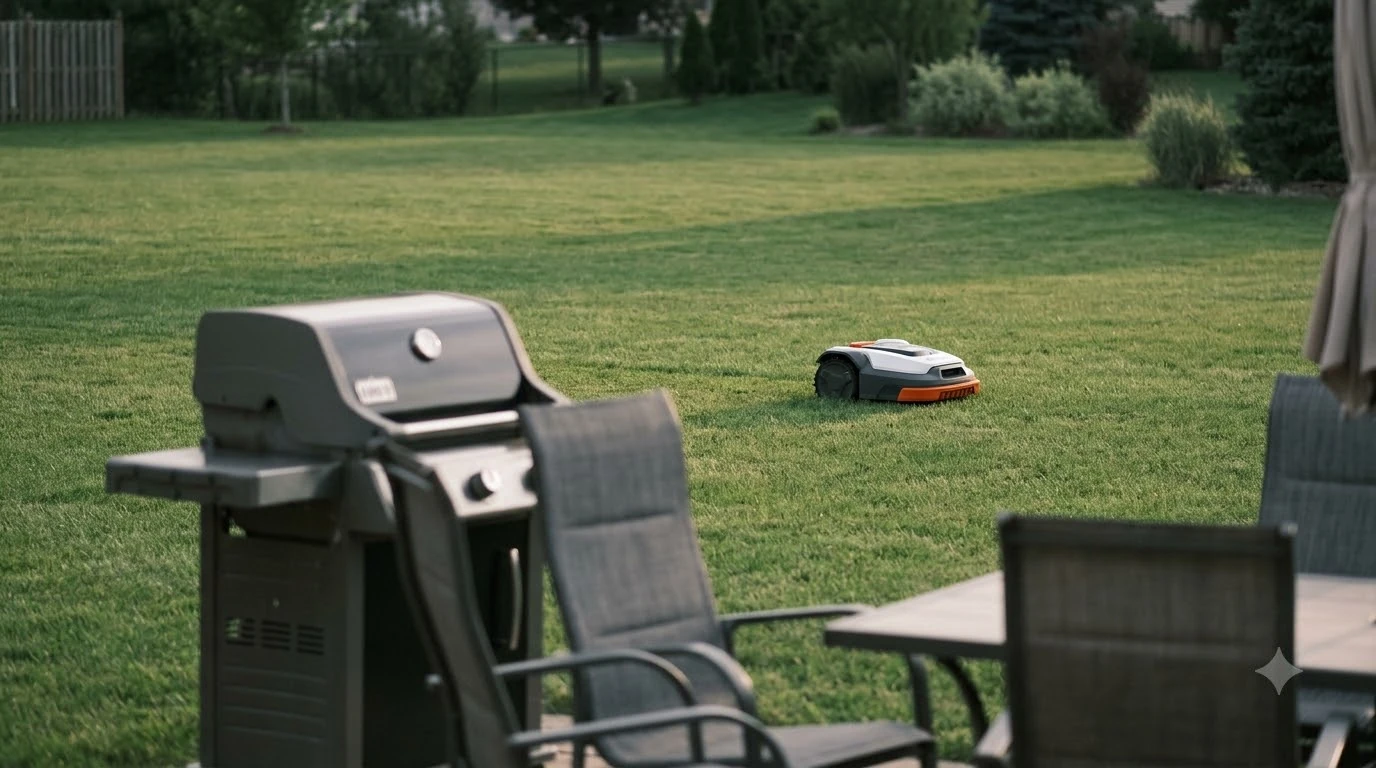

Do robot mowers really work? Yes, on the right lawn. A robot mower keeps a small to medium, simple lawn neat when it runs often, but it struggles with large or complex yards, thick or overgrown grass, steep slopes and heavy debris. The best evidence we found is a 2026 University of Florida extension publication and manufacturer guidance, and both point to the same conditions. Our reading is that the question is less about whether the machine works and more about whether your lawn fits it.
The short answer
- Turf quality: UF/IFAS says robotic mowers can maintain turf quality comparable to traditional mowing.
- Best fit: small to medium lawns with simple layouts and few obstacles.
- Weak spots: very large or complex yards, lawns needing higher cut heights, thick or overgrown grass, and frequent debris.
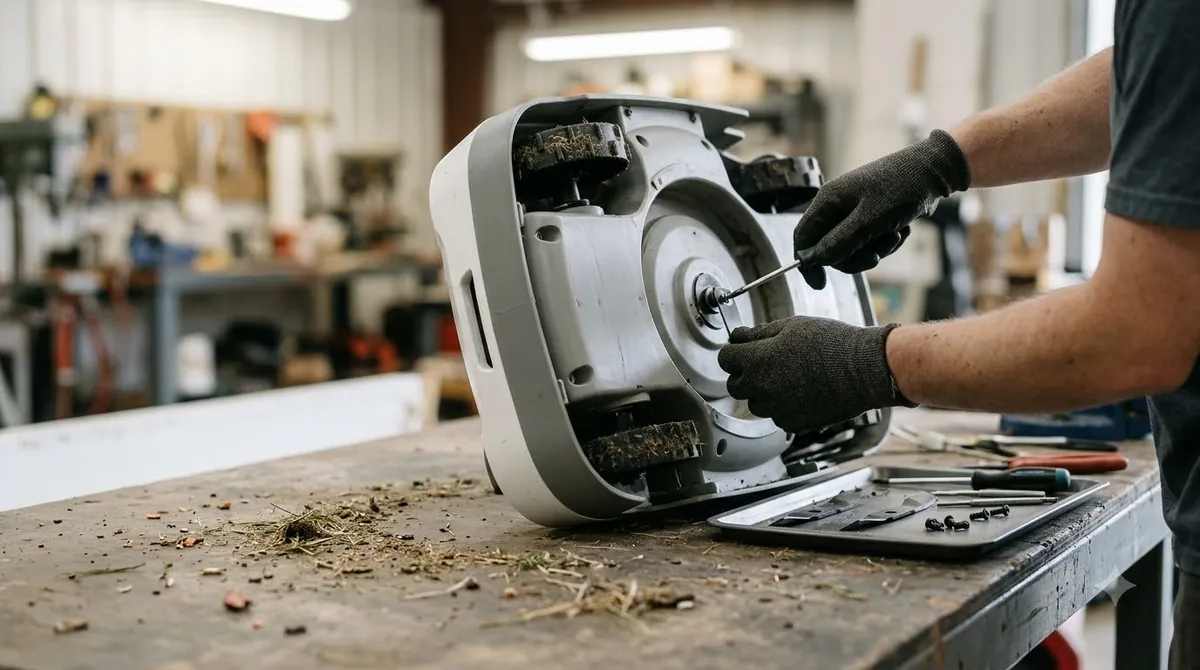
- Upkeep: blades need replacing about every six to eight weeks in the growing season, and batteries need regular checks.
What the university research shows
Robot mowers can hold turf quality close to a traditional mower. The most detailed source we found is ENH1402, a UF/IFAS publication on autonomous mowers for Florida lawns, first published in March 2026 and written by four UF and Texas A&M extension researchers. It draws on peer-reviewed studies covering tall fescue, St. Augustinegrass and zoysiagrass.
In one UF trial cited by the publication, St. Augustinegrass maintained with a robotic mower had more uniform turf and greater green cover than turf cut with a traditional mower, especially in spring and fall. The same trial found delayed winter dormancy and earlier spring green-up, which the researchers link likely to the lower mowing height. The sharper blades also reduced fraying and leaf browning. For zoysiagrass, the publication reports higher turf quality and greater shoot density, although the mowers took longer to cover the lawn.
Frequent cutting also affects weeds. According to the publication, autonomous mowers can reduce overall weed coverage compared with rotary mowers, based on a 2016 study. It also warns that creeping weeds such as clover may increase under frequent mowing. That can be a good result if you want a mixed-species lawn, and a problem if you do not. Our piece on whether robot mowers make lawns healthier goes further into lawn health.
Do robot mowers really work on small, simple lawns?
Robot mowers suit lawns that are small to medium, have simple shapes and are mowed often. UF/IFAS lists the best-suited lawns as small to medium in size with simple layouts and few obstacles, and names homeowners who want less labor and quieter operation as a good fit. The publication also reports lower noise, lower emissions and less labor compared with gas mowers.
The cutting mechanism is one reason for the results. These mowers use small, sharp blades on a spinning disk. The publication puts each blade below 1.5 inches, compared with roughly 20 inches on a traditional mower, and says the smaller blades make cleaner cuts that reduce leaf damage and turf stress. Its general guideline is to remove no more than one-third of the leaf blade at a time. Because a robot mower runs often and cuts a little each time, most passes stay within that guideline. That is our reading, not a figure from the publication. For how these mowers find their way around a lawn, see our explainer on how robot lawn mowers work without a wire.
Where they struggle
The limits are well documented, and they fall into a few groups: lawn size and layout, grass height, grass condition, and obstacles. Most of the problems the sources describe come from a mismatch between the lawn and the model, not from the basic technology. So, do robot mowers really work? It depends on the yard you have, and our guide to who should not buy a robot mower lists who tends to be disappointed.
| Condition | What the sources say | Source |
|---|---|---|
| Very large or complex yards | Less suitable, and the publication says these mowers may struggle in complex landscapes with many obstacles. | UF/IFAS ENH1402 |
| Lawns needing higher cut heights | Less suitable. Most autonomous mowers were designed for cool-season grass cut below 2.5 inches. | UF/IFAS ENH1402 |
| Thick or overgrown grass | Not as well suited. Husqvarna rates effectiveness on wet grass as low if the lawn is overgrown. | Husqvarna wet-grass guide |
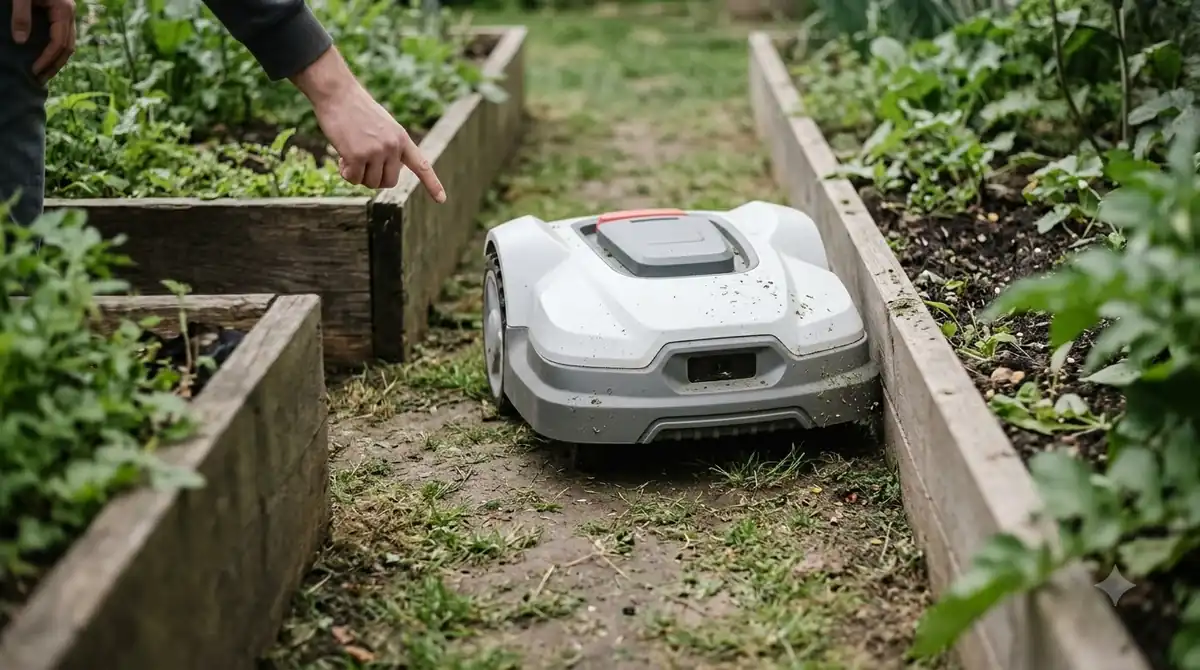
| Raised beds and borders | They block access, so grass along the edges grows taller and needs string trimming. | UF/IFAS ENH1402 |
| Frequent debris or uneven terrain | Less suitable, according to the publication. | UF/IFAS ENH1402 |
Grass height and grass type
Cut height is the limit most worth checking against your grass type. Most autonomous mowers were designed for cool-season grasses, which are typically mowed below 2.5 inches. Warm-season grasses such as St. Augustinegrass need 2.5 to 4 inches, and the publication says that may exceed the limits of some robot mower models. Check the maximum cut height in the specification of each model you consider.
The evidence is also thin for some lawns. The publication notes that limited research exists for bahiagrass, centipedegrass and bermudagrass lawns. If your lawn is one of these, treat the general findings as a starting point and ask the manufacturer or a local extension office about your grass.
Wet lawns, rain and slopes
Rain is usually manageable, but overgrown grass and steep slopes deserve more attention. Husqvarna says many robot mowers are certified to operate in the rain and are lightweight enough to avoid soil compaction. Because they cut less grass at a time, there is also less risk of tearing or clumping. Its guidance still advises waiting at least 24 hours after rain before mowing, and says heavy rain or overcast weather may need a longer wait, while strong sunlight may dry the lawn within a few hours.
Slopes depend on the model. Husqvarna’s steep-slope guide says standard Automower models handle slopes of 25 to 50 percent, or roughly 14 to 26 degrees, depending on the model. Its all-wheel-drive models can handle up to 70 percent, about 35 degrees. The guide warns that clogged wheels make slopes harder to manage, and that steep slopes raise the risk of slipping, especially in wet conditions. Its advice is to keep slopes in the work area and along the boundary within each model’s stated limit. These are manufacturer figures for one brand, and we did not find an independent test that checks them across models.
Maintenance and debris
A robot mower takes less effort than a push mower, but it still needs upkeep. UF/IFAS lists regular maintenance as a limitation, including blade replacement and battery checks. It says blades should be replaced every six to eight weeks during the growing season to keep the cut clean, because blade sharpness declines with use. The publication also notes that the mower can leave wear patterns near the docking station.
Debris needs manual attention. Toro’s help page on low-energy mowing says the system requires some manual debris management, such as removing sticks, leaves, grass and dirt, and it refers owners to the operator’s manual for preparing the lawn. UF/IFAS adds several operational risks: irrigation heads can disrupt operation and make the mower unstable, lightning can threaten docking stations, and fire ants near electrical components can cause trouble.
What to check before you buy
So do robot mowers really work for your lawn? Match the lawn to the model before you compare brands, because they work only when the design fits the yard. The checklist below follows the limits the sources describe, and our robot mower pros and cons summary shows the trade-offs side by side.
- Measure the lawn. UF/IFAS places small to medium lawns in the best-fit group, so lawn size is the first filter.
- Check the cut height. Compare the model’s maximum cut height with the height your grass needs.
- Check the slope. Compare the steepest part of the work area with the published limit for the model, and remember that all-wheel-drive models handle more.
- Plan the edges. Lower raised beds or borders where you can, or budget for string trimming along them. If the mower still leaves strips, see how to fix uncut strips on a robot mower.
- Budget for upkeep. Plan for blade changes every six to eight weeks in season, battery checks, and clearing sticks and debris from the lawn.
Our reading is that robot mowers work well when the lawn fits the design, and the sources agree on the conditions where they do not. So do robot mowers really work? Yes, when the lawn fits.
Frequently asked questions
Do robot mowers cut as well as a traditional mower?
UF/IFAS says robotic mowers can maintain turf quality comparable to traditional mowing. In a UF trial, St. Augustinegrass maintained with a robot mower was more uniform and had greater green cover than traditionally mowed turf. Results depend on grass type and model, and the publication notes limited research for several Florida grasses.
Can a robot mower handle tall or overgrown grass?
Husqvarna says robot mowers are not as well suited to thick or overgrown lawns. Its wet-grass guide rates effectiveness as low when the lawn is overgrown. Mowing more often keeps the grass within the mower’s reach, which is why the frequent cutting schedule matters.
Do robot mowers work in the rain?
Husqvarna says many robot mowers are certified to operate in the rain. It still advises waiting at least 24 hours after rain before mowing, and a longer wait after heavy rain or overcast weather.
What is the main limit of a robot mower?
Asked “do robot mowers really work?”, the sources point to fit rather than failure. Large or complex yards, grass that needs a higher cut than the model allows, and slopes above the model’s rated limit are the most common problems. Check those three things against the specification before you buy.
Sources
- Autonomous or Robotic Mower Use on Florida Lawns (ENH1402) (UF/IFAS Extension): best-suited lawns, limits, St. Augustinegrass trial, blade replacement interval and operational risks.
- What are the limitations of low-energy (autonomous robotic) mowing? (Toro help center): manual debris management.
- Can you mow wet grass? (Husqvarna): rain certification, 24-hour wait and overgrown-lawn guidance.
- How to optimise an Automower installation for steep slopes (Husqvarna support): slope limits by model and traction advice.
 Up next8 min readLearnDo Robot Mowers Mulch Grass? Yes, Most DoUpdated Nov 11, 2026
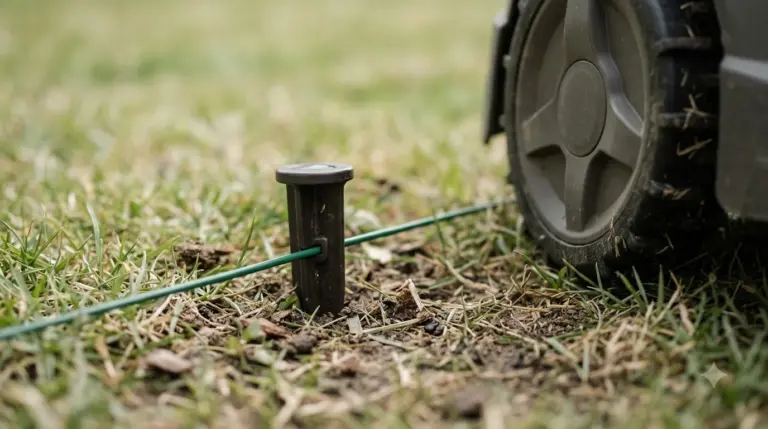 7 min readLearnWhat Is a Boundary Wire on a Robot Mower? How It WorksUpdated Nov 11, 2026
 7 min readLearnDo Robot Mowers Work in Hot Weather? Temperature Limits ExplainedUpdated Nov 11, 2026
 8 min readLearnWhat Temperature Can a Robot Mower Work In?Updated Nov 11, 2026
 7 min readLearnDoes a Robot Mower Work With a Dog in the Yard?Updated Nov 11, 2026
 8 min readLearnHow Do Robot Lawn Mowers Work Without a Wire?Updated Nov 11, 2026