
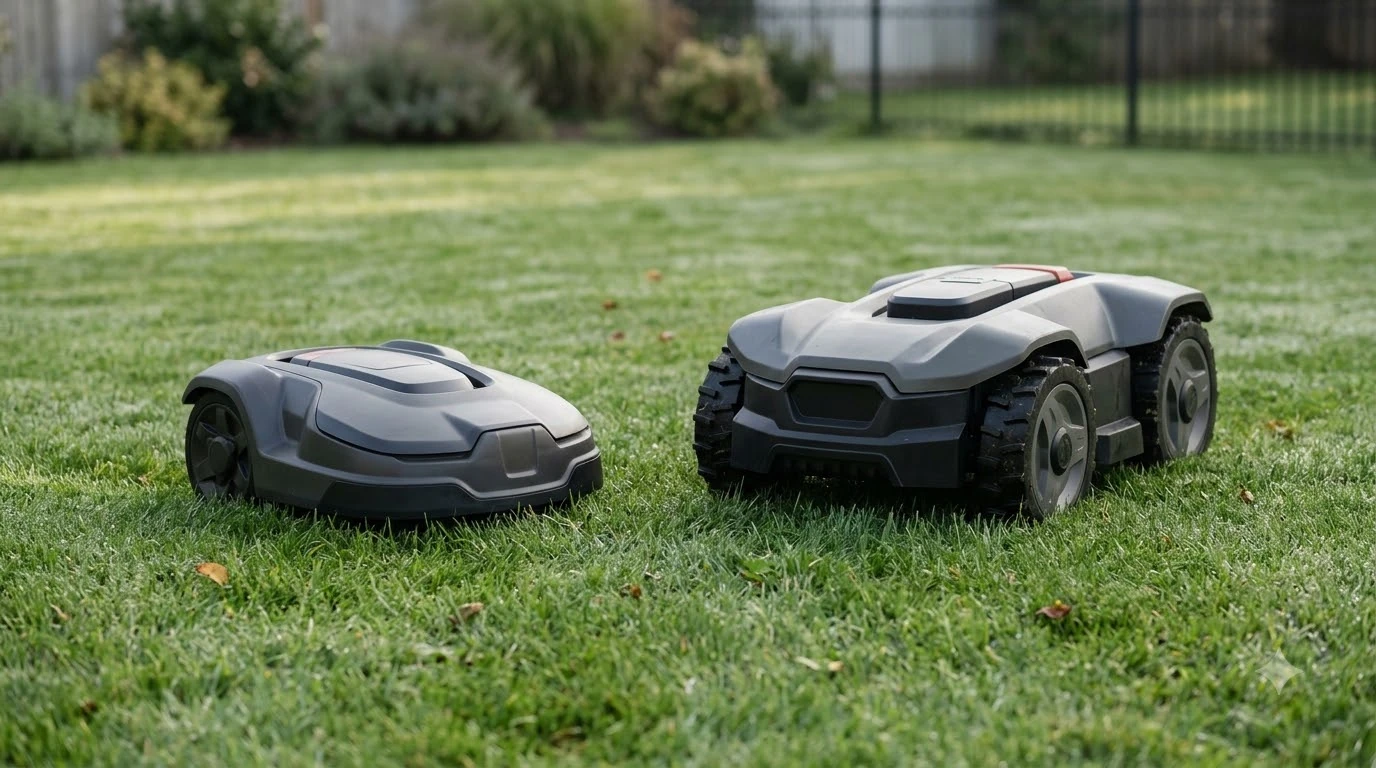

Robot mower pros and cons come down to convenience versus cost and fit. A robot mower saves weekend time, runs quietly on electricity, and can be scheduled from an app. The trade-offs are an upfront price that commonly runs from about $900 to $2,200, a setup step for some models, and real limits on steep slopes and tall, weedy grass.
The short answer
- Pros: hands-off scheduling, electric and quiet operation, and clippings that are mulched back into the lawn.
- Cons: higher purchase price, setup and upkeep work, and weaker performance on steep, rough, or overgrown ground.
- Best fit: a mostly open lawn of moderate slope, owned by someone who can pay the upfront cost.
- Poor fit: a steep, rocky, or heavily weedy yard where a conventional mower will do the job more reliably.
Robot mower pros and cons: the advantages
The biggest advantage is time. Most robot mowers follow a schedule, so the lawn gets cut without anyone pushing a machine. Owners can set cutting heights, schedules, and no-go zones from a phone app. Which? describes robot mowers as “incredibly convenient,” since they run autonomously and return to their dock to charge.
- Electric and quiet. Robot mowers are battery-powered and produce no exhaust. Ecovacs, a vendor, lists 57 dBA for its GOAT O1000 RTK, while LawnLove’s buyer guide puts the average robot mower near 60 dB, compared with about 94 dB for a gas-style mower.
- Mulched clippings. Carnegie Mellon University, which runs a Husqvarna autonomous mower on campus, says the clippings are mulched back into the ground, which reduces yard waste and helps the soil.
- Frequent cutting. CMU says its mower runs often, even at night using its headlights, which the university says helps keep lawns and walkways cleaner.
Robot mower cons: cost, setup, and upkeep
Cost is the most common objection in any robot mower pros and cons list (see robot lawn mower cost for a fuller breakdown). LawnLove reports that most robot mowers sell for $900 to $2,200, with an average near $1,550. Ecovacs puts its own entry models at US$500 and its premium models at US$2,000 or more. Abt, a retailer, lists its own robot mowers between $679 and $4,499. Larger lawns push the price up: LawnLove says robots for half-acre to one-acre lawns cost 50 to 60 percent more than small and medium models.
| Cost factor | Figure reported | Source |
|---|---|---|
| Typical robot mower price | $900 to $2,200 (average about $1,550) | LawnLove |
| Large-lawn premium | 50 to 60 percent more than small or medium models | LawnLove |
| Vendor entry and premium range | From US$500 up to US$2,000 or more | Ecovacs (vendor) |
| Best Buy robot mowers in the UK | From GBP 889 | Which? (January 2024) |
| Replacement battery | Can exceed GBP 100 in some cases | Which? (January 2024) |
Running costs are lower than for gas. Which? says robot mowers run on electricity rather than petrol, and that maintenance is mostly blade sharpening or replacement, with batteries eventually needing replacement. Ecovacs says its waterproof models need a rinse every one to two weeks. Sunseeker, a vendor, says a battery may need replacing after about two to five years and that a well-built robot mower typically lasts five to ten years. Mammotion, also a vendor, adds that most robot mowers cannot completely replace a string trimmer or edger, so expect some hand trimming. Prices and running costs vary by country and model, so check current listings before you decide.
How boundary wire and positioning affect setup
Setup is where many pros and cons lists disagree with each other, because it depends on the model and on whether robot mowers need a boundary wire. Which? notes that a perimeter wire must be laid by hand and linked to a charging base that needs a power outlet. CMU’s campus mower works differently: it uses GPS-tracked virtual boundaries, and the page does not describe a buried wire.
For the robot mower pros and cons of each method, our reading is that a wire-guided model adds installation time and a few fixed points in the yard, while a GPS or RTK model moves that work into the app and the satellite signal. Either way, a robot mower will need a charging dock placed where it can reach power and a clear route to the lawn.
Safety around people, pets, and wildlife
Robot mowers have several built-in safety features. Ecovacs says its lift sensors stop the blades from turning when the mower is lifted or tilted. CMU describes touch sensing: the mower bumps into an object at low speed, then reroutes, and it stops if it is picked up or removed from its work area.
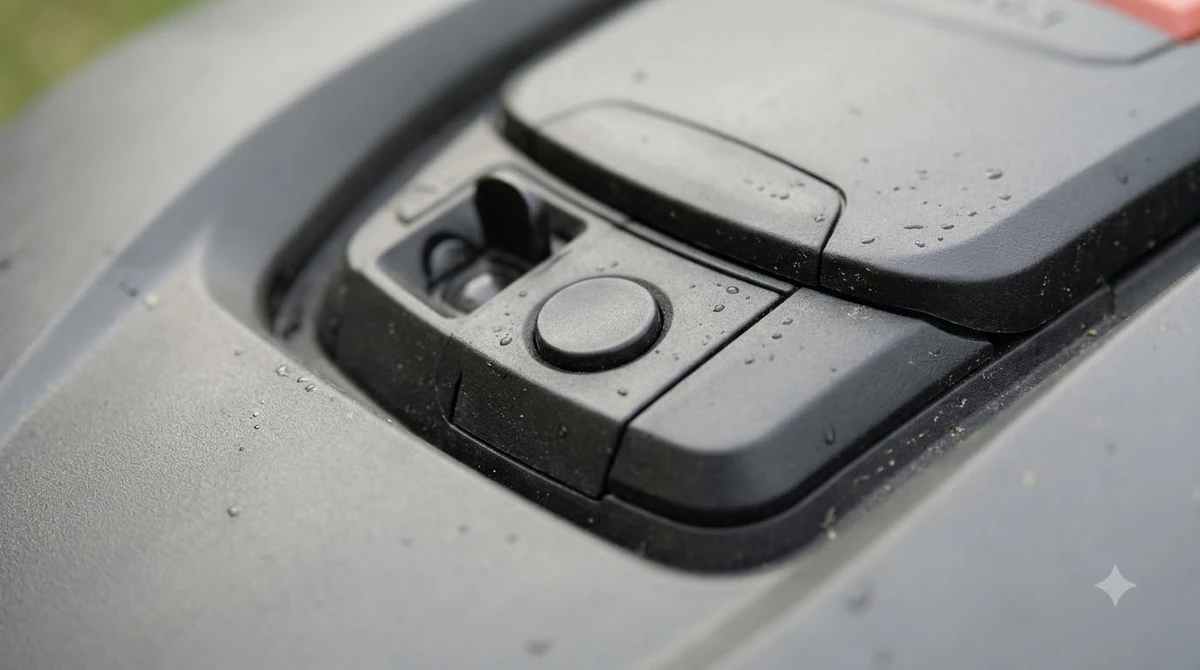
Those features do not remove every risk. Which? reports that hedgehogs have been injured by mowers running at night, and that constant short cutting can limit the flowers that insects need. CMU asks people to give the mower space if it approaches and not to touch, pick up, or move it. For household guidance, see robot mower safety for kids and pets.
Where robot mowers struggle: slopes, tall grass, and tight spaces
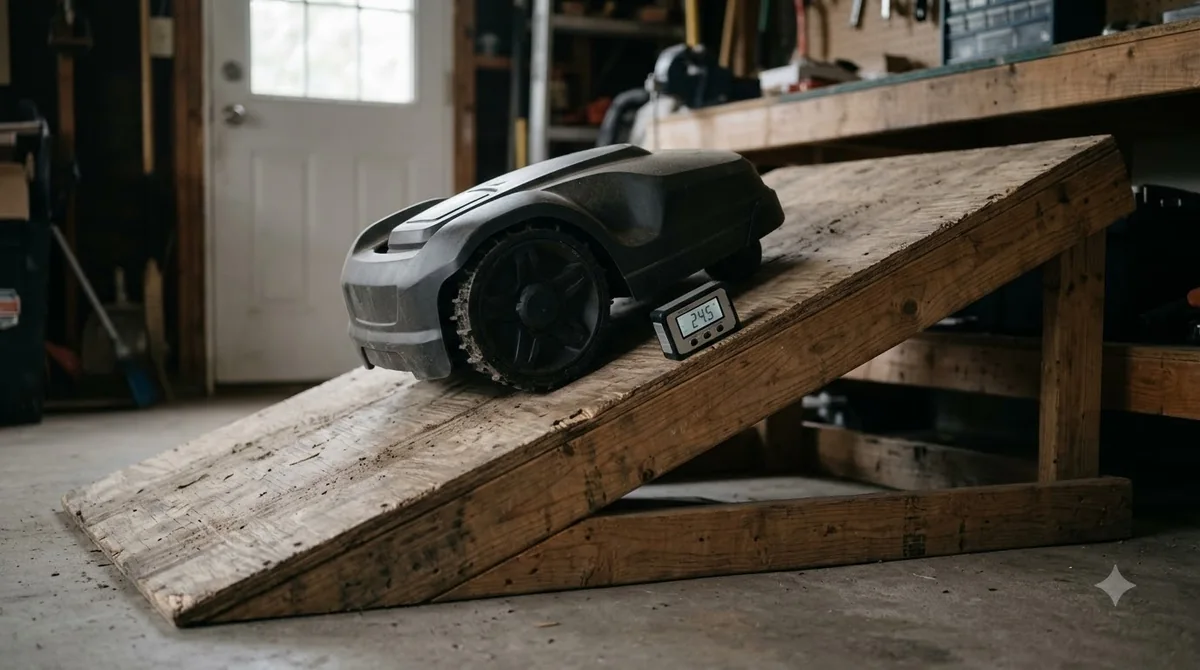
Slope is the most important limit to check, and the details are in robot mower slope rating explained. LawnLove reports an average maximum incline of about 24 degrees, with a typical range of 16 to 33 degrees. CMU says its campus mower will not work on hillsides near its tennis courts because of slope steepness, so a yard with a steep bank may need a different tool.
| Limit | Figure or behavior | Source |
|---|---|---|
| Incline | Average maximum about 24 degrees (typical range 16 to 33) | LawnLove |
| Tall grass and weeds | Can quickly clog the blades | Ecovacs (vendor) |
| Flower beds and obstacles | Mowers can struggle with flower beds | Which? (January 2024) |
| Cutting width on small lawns | 6 to 8 inch cutting width under a quarter acre, usually one mow zone | LawnLove |
| Heavy rain | Performance can be affected by heavy rain | Sunseeker (vendor) |
Tight corners and stairs are also weak spots. Ecovacs says its mowers can struggle with stairs, tight corners, and elevated surfaces, so a yard with many narrow beds may need more trimming by hand.
Theft and security
Theft is a real concern because a robot mower is small, valuable, and easy to carry. Ecovacs lists PIN code protection and alarm systems as common anti-theft features. Which? adds that GPS tracking and anti-theft sensors increase the price, so buyers should compare what is included before they pay for extras. A practical overview is in robot mower theft protection.
What the evidence says about cut quality
One of the robot mower pros and cons readers ask about most is lawn quality. A robot mower does not automatically produce a worse lawn. Iowa State turfgrass researchers Adam Thoms and Zackary Messer reported “no significant difference” in turf quality between robotic and traditional mowers over two years of study. The Iowa State report gives no figures for time or cost savings, so the time benefit remains a reasonable expectation rather than a measured number.
Grass health depends on the mowing height and frequency. Our reading is that a robot mower works best when it cuts a little and often, but the blades must stay sharp and the deck clean. Tall grass and weeds can still clog the blades, as Ecovacs notes.
What to check before you buy
Use this checklist to match the pros and cons to your own yard:
- Measure the lawn. Compare your area with the model’s rated coverage and leave some margin.
- Measure the slope. If your steepest section is near or above 24 degrees, look for a model rated higher or choose a different mower.
- Decide how it finds its boundary. Wire-guided models need installation time. GPS or RTK models need a clear view of the sky or a base station.
- Check the cutting height range. LawnLove’s typical minimum is 0.75 to 1.75 inches, which may not suit every grass type.
- Set a total budget. Include accessories, a possible battery replacement, and any anti-theft or tracking options.
Our reading is that the robot mower pros and cons favor the machine on a manageable lawn with moderate slope and a budget that can absorb the upfront price. For a steep, rocky, or heavily weedy yard, the cons usually outweigh the pros.
Frequently asked questions
Are robot mowers worth the money?
They can be for owners with a manageable lawn who value saved time. Most models cost about $900 to $2,200 according to LawnLove, and Which? calls them very expensive compared with traditional mowers, so compare the price against your mowing time and current costs.
Do robot mowers need a boundary wire?
Some do. Which? describes a perimeter wire laid by hand. CMU’s campus mower uses GPS-tracked virtual boundaries and does not describe a wire, so check the model’s setup method before you buy.
Are robot mowers safe around kids and pets?
They include lift sensors and touch sensing that stop or reroute the blades. CMU still asks people to give the mower space, and Which? reports hedgehog injuries from night running, so supervision and sensible scheduling still matter.
Will a robot mower work on a steep yard?
It depends on the model. LawnLove reports an average maximum incline near 24 degrees, and CMU excludes steep hillsides on its campus. Measure your steepest section and compare it with the rated incline before you buy.
Sources
- LawnLove robot mower buyer guide (publisher): price range, large-lawn premium, incline, noise, cutting height.
- Which? “Is it time to buy a robot mower?” (consumer testing organization, 5 January 2024): UK prices, wire installation, obstacles, wildlife concerns.
- Ecovacs pros and cons of robot lawn mowers (vendor): price tiers, noise, lift sensor, cleaning, tall grass, theft features.
- Iowa State University, “The future of lawn care” (university): turf quality comparison over two years.
- Carnegie Mellon University, robotic mower (university): virtual boundaries, safety sensing, slope limit, mulching.
- Sunseeker, “Are robot mowers any good?” (vendor): battery and lifespan ranges, rain and connectivity cons.
- Abt, pros and cons of robot lawn mowers (retailer): price range and 58 dBA premium-model noise.
- Mammotion, pros and cons of robot lawn mowers (vendor): trimmer and edger limits, maintenance.
 Up next9 min readLearnWhat to Know Before Buying a Robot MowerUpdated Nov 11, 2026
 9 min readLearnRobot Mower Buying Guide 2026: What to Check Before You BuyUpdated Nov 11, 2026
 7 min readLearnHow Much Does a Robot Mower Weigh?Updated Nov 11, 2026
 8 min readLearnWho Should Not Buy a Robot Mower?Updated Nov 11, 2026
 9 min readLearnShould I Buy a Robot Lawn Mower? Who It Suits and Who Should Skip ItUpdated Nov 11, 2026
 9 min readLearnShould You Fertilize a Lawn Mowed by a Robot Mower?Updated Nov 11, 2026