


Do robot lawn mowers need a boundary wire? Not every model does. Wired models follow a low-voltage cable laid around the lawn edge. Wire-free models use satellite positioning, cameras, or LiDAR to find their way, and some brands sell both kinds.
The short answer
- Wired mowers: need a boundary wire laid around the lawn edge and any obstacles the mower should avoid.
- Wire-free mowers: skip the wire and rely on RTK-GPS, cameras, or LiDAR, which need a clear view of the sky or working sensors.
- Hybrid setups: use short wired sections for flower beds, ponds, and steep slopes.
- Our reading: choose wire when satellite signal is weak in your yard, and wire-free when you want to avoid burying cable.
Do robot lawn mowers need a boundary wire, and what does it do?
A boundary wire is a low-voltage loop that tells the mower where the cutting area ends. Mammotion’s boundary wire guide describes the loop running along the perimeter and around obstacles, with the mower slowing, turning, or stopping when it senses the wire.
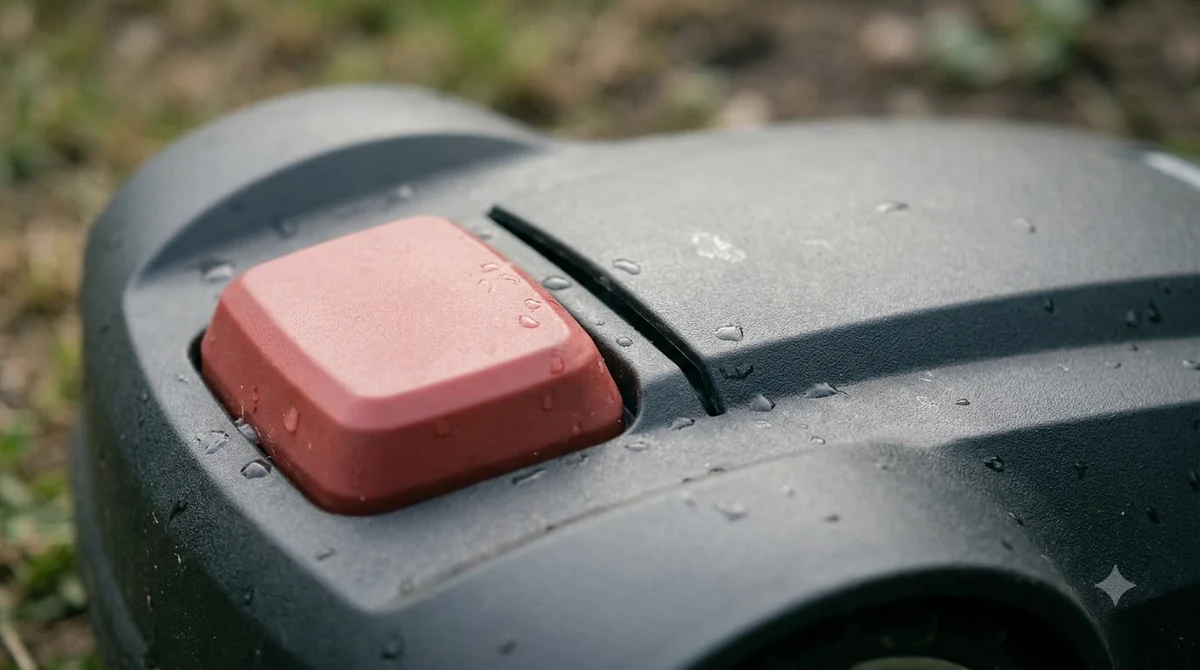
Because the wire is the edge the mower follows, its path has to match the lawn you want mowed. Mammotion notes that moving a flower bed may require re-routing or splicing the wire, though it also says the wire does not lock you into one layout, since it can be spliced and extended if the lawn grows.

Which robot lawn mowers still need a boundary wire
Wired mowers need the loop installed and tested before the first cut, and Mammotion lists the downsides as labor-intensive installation (trenching around the lawn), upkeep when the wire is cut, and limited flexibility when the landscaping changes. Worx’s European product site describes its S-series model as using “proven boundary wire technology,” but that page gives no burial depth or laying method.
| Factor | Boundary wire | Wire-free (RTK, camera, LiDAR) |
|---|---|---|
| How it finds the edge | Follows a low-voltage loop | Follows a boundary you set in the app |
| Setup | Lay and test the wire | Drive or walk the perimeter in the app |
| Shade and dense trees | Mammotion describes wired systems as consistent here | Dense trees and tall buildings can affect GPS |
| Brand price range | $800 to $1,500 | $1,800 to $3,500 or more |
The price row comes from Mammotion’s own comparison table as of 2026-11-09. It is a brand comparison, not market data, so check current prices before you buy. Do robot lawn mowers need a boundary wire on a shaded lawn with many trees? Our reading: often yes, because satellite signal is less reliable there, so a wired mower is the simpler choice.
How deep to bury the wire
Mammotion advises burying the wire 1 to 2 inches deep, so that aeration and edging tools do not cut it. Our guide to installing a robot mower boundary wire covers the laying steps.

The same guide warns that cut wire, whether from garden tools or rodents, can stop the mower, and a robot mower boundary wire repair kit is the usual fix for a break. It recommends walking the perimeter once a season to test continuity and using waterproof connectors for any splice.
Our reading: a seasonal continuity check is a small task compared with tracing a break after the mower stops mid-lawn. The sources we read do not give a repair time, so treat that point as judgment, not a measured result.
What wire-free mowers use instead
Wire-free mowers combine RTK-GPS, onboard cameras, and inertial sensors to find their position. You set the boundary in an app by driving or walking the mower around the perimeter, and our explainer on how robot lawn mowers work without a wire goes through each method.
Navimow’s explainer on wire-free mowing says its network RTK needs no base antenna on your property. The same page says availability depends on postcode, and the service is not offered in some areas, so check coverage for your address before you buy.
Brands make strong accuracy claims. Mammotion’s FAQ says RTK has “routinely hit centimeter-level accuracy in open sky,” and Worx says its Vision Cloud RTK accuracy arrives from the cloud, without extra hardware on your property. These are brand claims, not independent test results.
Mammotion also notes that dense trees, tall buildings, and bad weather can affect GPS, so the mower needs a clear view of the satellites. It lists higher price, occasional software updates or recalibration, and, on some models, a Wi-Fi or 4G connection for cloud controls as the other limits of wire-free systems.
So do robot lawn mowers need a boundary wire if you pick a wire-free model? No, but they do need a clear sky view and a finished app setup. To weigh the three wire-free methods against each other, read our RTK vs LiDAR vs vision comparison, and see the best robot mower without a boundary wire if you want models.
Slopes and coverage differ by model
Navimow lists slope ratings of 45 percent (24 degrees) for the i2 AWD, 55 percent (29 degrees) for the i2 LiDAR Pro, and 84 percent (40 degrees) for the X4. Its per-charge coverage runs from 125 square meters for the i205 to 1,300 square meters for the X450.
Our reading: slope and coverage limits apply to wired and wire-free mowers alike. A wire does not make a steep hill easier to handle, so check the model’s slope rating before you buy.
Hybrid setups use short wire runs
Mammotion describes hybrid setups where short wired sections cover flower beds, ponds or pools, and steep slopes. In that kind of yard, do robot lawn mowers need a boundary wire along the whole perimeter? Not by that description, which limits the wire to the tricky spots.
Our reading: if your yard has one tricky bed, a short wired section may be less work than a full perimeter loop. Confirm that the model supports a hybrid layout before you plan the yard.
Mowing height and schedule are separate settings
The UF/IFAS article on robot mowers, published 2026-06-09, does not say whether its test mowers used boundary wire or GPS. It does cover cut height and schedule, which are separate from how the mower finds its edge.
The study, led by Bryan Unruh at the UF/IFAS West Florida Research and Education Center, reports a robotic cut height of 2.4 inches on St. Augustine grass. The researcher recommends 3 to 4 inches for warm-season grass, and notes that robot mowers cut more often in small amounts than a conventional mower on a seven-day schedule.
The article also covers setup. It says lightning protection can come from a ground dock or surge protection, and that fire ants may build mounds near docks.
Our reading: the boundary method does not change the mowing height you pick. Set the height from the grass species, then decide whether your yard needs a wire or a wire-free setup based on its shape and satellite signal.
Frequently asked questions
Do robot lawn mowers need a boundary wire?
Not all of them. Wire-free models use RTK-GPS, cameras, or LiDAR to find their position, while wired models need a loop laid around the lawn. Some brands sell both types, so check the specific model before you buy.
How deep should a boundary wire be buried?
Mammotion advises 1 to 2 inches deep, which helps keep aeration and edging tools from cutting the wire. The sources we read did not give one standard depth for every brand, so check your model’s manual for its exact method.
Can a wire-free robot mower work under trees?
It can struggle. Mammotion says dense trees, tall buildings, and bad weather can affect GPS, and the mower needs a clear view of the satellites. Wired mowers are described as more consistent in shaded or obstructed areas.
Is wire-free mowing available everywhere?
Not always. Navimow says its network RTK depends on postcode and is not offered in some areas. Check coverage for your address before you decide between a wired and a wire-free model.
Sources
- UF/IFAS News, robot mowers study (University of Florida): cut height, mowing schedule, lightning and fire ant notes.
- Mammotion, do robot lawn mowers need a boundary wire (manufacturer): wire layout, burial depth, upkeep, and RTK and price claims.
- Navimow, how robotic lawnmowers without boundary wires work (manufacturer): network RTK availability, slope ratings, and per-charge coverage.
- Worx, Landroid Vision Cloud 4WD (manufacturer, EU site): Vision Cloud RTK claim.
- Worx, Landroid boundary wire model (manufacturer, EU site): S-series boundary wire description.
 Up next8 min readBest Robot MowersWhat Is the Best Robot Mower Without a Boundary Wire?Updated Nov 11, 2026
 8 min readBest Robot MowersWire-Free vs Boundary Wire Robot Mowers: Which Setup Fits Your YardUpdated Nov 11, 2026
 8 min readBest Robot MowersHow Do Robot Lawn Mowers Work? Wire, Sensors and Docking ExplainedUpdated Nov 11, 2026
 8 min readBest Robot MowersWhat Size Robot Mower Do I Need for 1.5 Acres?Updated Nov 11, 2026
 7 min readBest Robot MowersWhat Size Robot Mower Do You Need for 2 Acres?Updated Nov 11, 2026
 8 min readBest Robot MowersWhat Size Robot Mower Do I Need for 1/4 Acre?Updated Nov 11, 2026