
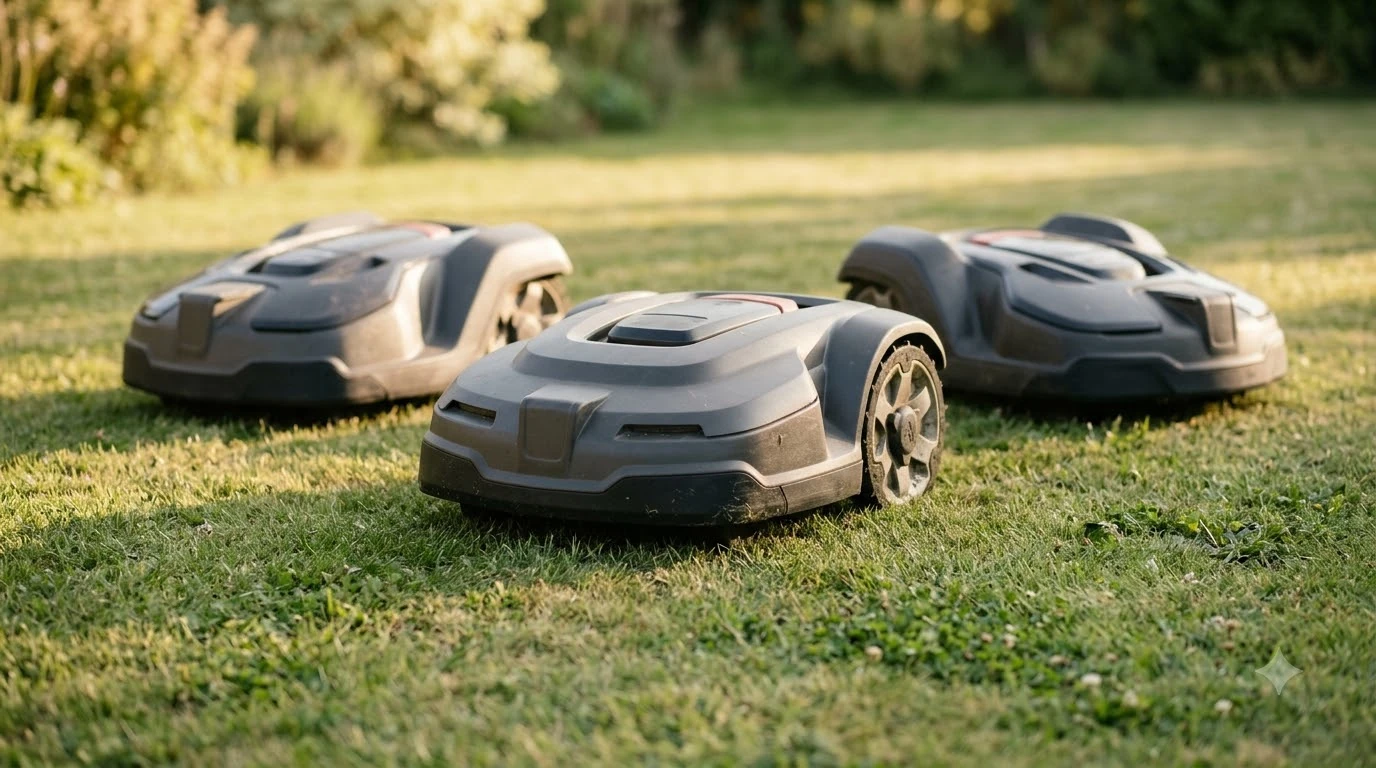

RTK vs LiDAR vs vision robot mower navigation comes down to one trade-off: satellite positioning needs open sky, while LiDAR and cameras do not. This comparison shows where each one works. RTK gives the most precise position on open ground. LiDAR maps the yard with laser pulses, and vision recognizes what is in the way.
The short answer
- Open lawn, few trees: RTK gives the most precise positioning.
- Trees or heavy shade: LiDAR is the safer choice, because it does not depend on satellites.
- Many toys, pets and furniture: vision adds obstacle recognition, but needs light.
- Mixed yards: most current mowers combine two systems, usually vision with RTK or LiDAR.
RTK vs LiDAR vs vision robot mower: how each one works
RTK, or real-time kinematic positioning, uses satellite signals plus a fixed base station with known coordinates to correct the mower’s position. Sunseeker says RTK can pinpoint a mower’s location within 1 to 3 cm, and Mammotion says it is often within 1 to 2 cm. Both figures come from manufacturers, so treat them as the best case rather than a guarantee in every yard. Our explainer on how RTK works on a robot lawn mower covers the base-and-rover step.
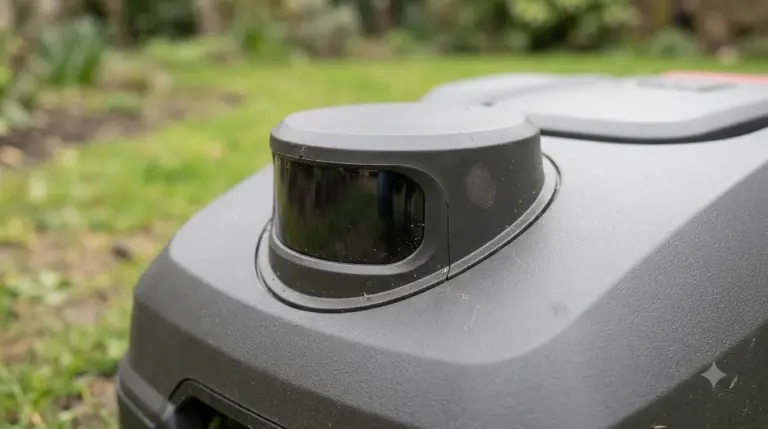
LiDAR, short for light detection and ranging, uses a sensor on top of the mower that spins 360 degrees and times laser pulses as they bounce back. According to Resident magazine, the sensor builds a real-time 3D map of the yard, which the mower uses to plan its paths (see how LiDAR robot mowers navigate). It needs a guided mapping pass when you first set it up, which is one reason it takes longer to start on a large, featureless lawn.
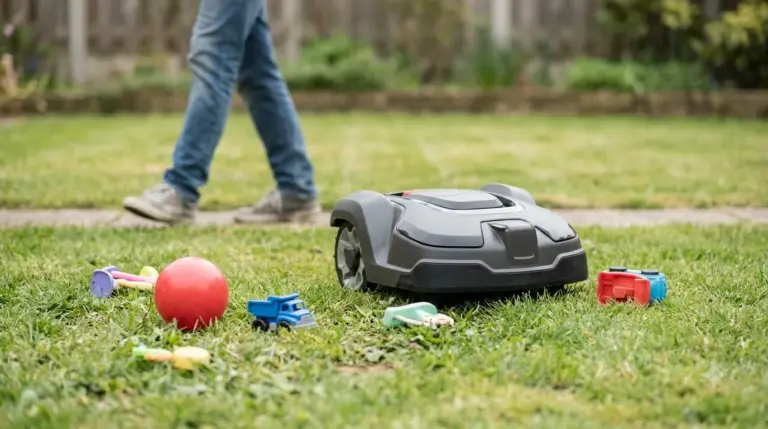
Vision uses cameras and AI to recognize objects, which completes the trio. Mammotion describes it as the system that classifies obstacles such as pets, toys and furniture, which RTK and LiDAR do not identify on their own. Its performance depends on lighting, shadows and camera quality, and our guide to how vision robot mowers work goes deeper.
Side-by-side comparison of the three systems
On the criteria most owners compare, RTK is strongest on raw positioning, LiDAR on shade, and vision on recognizing obstacles. The table below uses the ratings from Mammotion’s rtk vs lidar vs vision robot mower comparison, which are qualitative and do not cite test data.
| Criterion | RTK GPS | LiDAR | AI vision |
|---|---|---|---|
| Obstacle recognition | Limited | Good | Excellent |
| Performance in shade | Poor to moderate | Excellent | Moderate |
| Setup complexity | High | Medium | Low |
| Best lawn type | Large, open | Complex, shaded | Dynamic, residential |
The table shows why no single system wins everywhere. Each system is strong on one criterion and weak on another, so the decision starts with the criterion that matters most in your yard.

Where RTK struggles: trees, structures and the base station
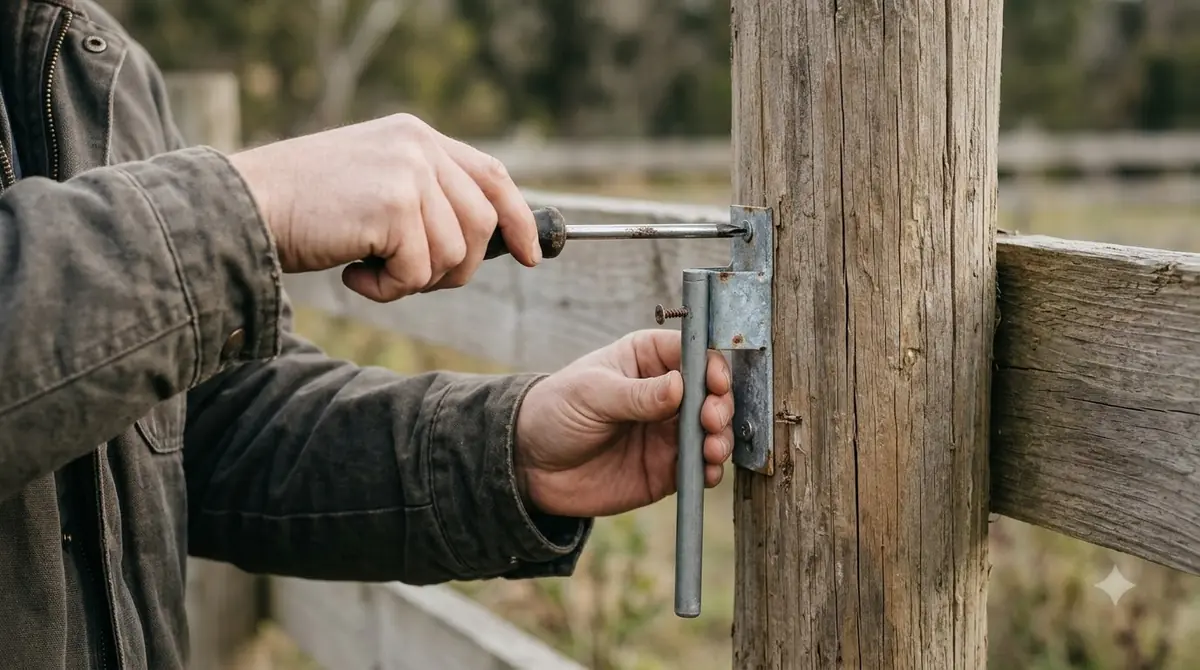
RTK loses accuracy when tree canopy blocks, weakens or reflects the satellite signals a mower needs. Mowrator explains that branches, leaves and trunks reduce the open sky the mower can use, and that a signal bouncing off a fence, wall or shed can arrive late and distort the position. This is called multipath.
The base station matters too, and it is often overlooked when people compare navigation types. Mowrator lists base station placement as one of the biggest factors in signal quality, and says it needs a clear, stable view of the sky. If the base sits under overhanging branches or close to tall structures, a correction can be lost even when the mower itself has a clear view.
- Dense seasonal foliage: Mowrator lists dense summer growth as a factor.
- Wet leaves after rain: Mowrator lists wet leaves as a seasonal factor.
- Tall buildings and narrow passages: Sunseeker lists both as areas where RTK performance may be affected.
Our reading is that RTK is a poor first choice for a yard where trees cover most of the lawn. Mowrator notes that some systems recover quickly after signal loss while others stop until the signal improves, so the behavior depends on the model.
Where LiDAR fits: shade, trees and complex layouts
LiDAR does not rely on satellites, so the Resident article says it performs the same under dense tree cover as in an open yard. That is why the article calls LiDAR the better choice for properties with significant tree cover, which is the key case for choosing between the three. Mammotion rates its shade performance as excellent, which matches this reading.
LiDAR also handles irregular shapes, several zones and tight corridors well, according to Sunseeker. In the same guide, Sunseeker notes that LiDAR accuracy can drop in heavy rain, fog or dust, and that a large open yard with few features can take longer to map.
Among the three options, LiDAR detects shapes but does not identify what they are, so the three systems work best combined. Mammotion says it does not inherently understand objects without AI vision, which is one reason many LiDAR mowers add a camera.
Where vision helps: obstacles and changing yards
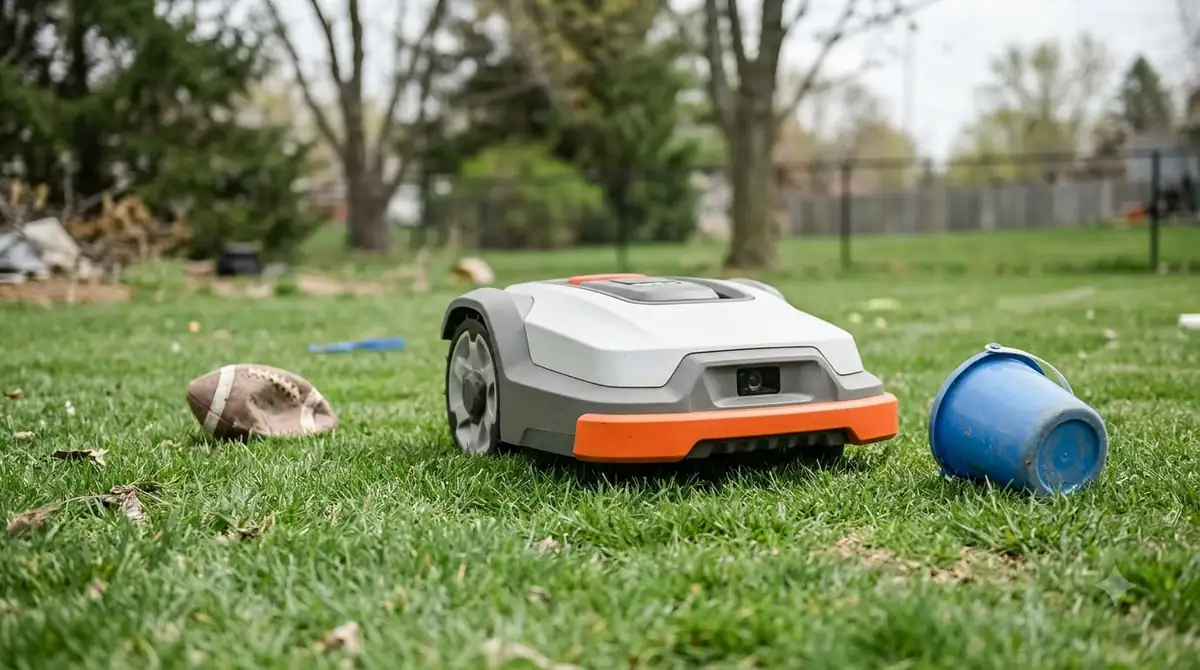
Vision is the system that recognizes what is on the lawn, which makes it useful when the yard changes often. Mammotion rates its obstacle recognition as excellent and describes it as able to classify pets, toys and furniture.
- Strength: recognizes grass edges and classifies obstacles.
- Strength: adapts to changing yards, according to Mammotion.
- Limit: performance depends on lighting, shadows and weather.
- Limit: Mammotion describes its edge precision as slightly less consistent.
Mammotion rates vision’s shade performance as moderate, so a vision-only mower in a heavily shaded yard may struggle to hold its position. That is a reason to check the sensor list before you buy.
Why most robot mowers combine two navigation systems
Most current wireless mowers combine sensors, usually AI vision with RTK or with LiDAR, so each system covers the other’s weak spot. That is why the rtk vs lidar vs vision robot mower question is rarely a single-system choice. Mammotion describes this as dual-fusion navigation and says it is now the common design.
- Vision and RTK: RTK for the open lawn, vision for obstacles.
- Vision and LiDAR: LiDAR for shade and layout, vision for objects.
- All three: a combination that covers every weak spot, but it adds hardware cost and complexity.
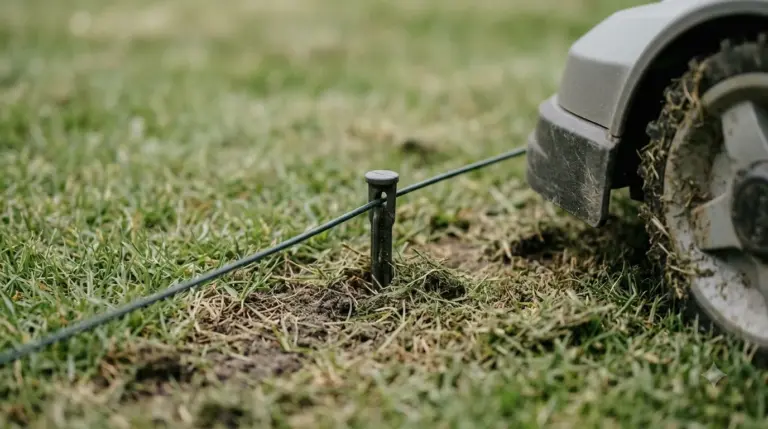
A boundary wire is the other option when satellites are unreliable. Mowrator says wire systems offer consistent performance when signals are poor, though they need installation work that wire-free models avoid. Our wire-free vs boundary wire robot mowers guide compares the two approaches.
How to choose a robot mower navigation for your yard
Choose the system by the feature that limits your yard most. Use the steps below to narrow your choice before you compare models.
- Count the trees and the shade. Heavy canopy points toward LiDAR.
- Check the sky view for a base station. A wide-open lawn points toward RTK.
- List the obstacles. Many pets, toys or furniture point toward vision.
- Check the price. RTK and LiDAR both cost more than simpler systems, and LiDAR is typically the most expensive, per Sunseeker.
Compare each mower’s spec sheet for the sensor list, not just the brand name, when you finalize your rtk vs lidar vs vision robot mower shortlist. A model with RTK alone may suit an open yard, while a model with LiDAR and vision suits a complex one.
Frequently asked questions
Is RTK better than LiDAR for a robot mower?
It depends on the yard. RTK is precise when the mower has a clear view of the sky, so it suits large open lawns. LiDAR does not depend on satellites, so it is the safer choice when trees or shade cover the yard.
Does a LiDAR robot mower work under trees?
The Resident article says LiDAR performs the same under dense tree cover as in an open yard, because it does not rely on satellites. Sunseeker notes that its accuracy can drop in heavy rain, fog or dust, so check the weather limits in the manual.
Do vision robot mowers need good light?
Yes, according to Mammotion, vision performance depends on lighting, shadows and camera quality. It rates vision’s shade performance as moderate, which is lower than LiDAR’s rating.
Do I need a base station for RTK?
Not always. Mammotion says some regions offer network RTK, and that Europe can often run RTK without a base station. In a traditional setup, the base station must have a clear view of the sky, so place it away from overhanging branches. See robot mower with a base station vs without for the trade-off.
Sources
- AI Vision vs RTK vs LiDAR of Robot Lawn Mower (Mammotion, manufacturer blog): comparison table, strengths and weaknesses of each system.
- RTK vs LiDAR Robot Lawn Mowers (Sunseeker, manufacturer blog): RTK accuracy of 1 to 3 cm, pros and cons, cost comparison.
- LiDAR in robot lawn mowers: what it is and why it matters (RESIDENT magazine, May 19, 2026): how LiDAR maps the yard and its tree cover claims.
- RTK robot mower signal loss under trees (Mowrator, vendor blog): causes of RTK signal loss, base station placement, mitigation options.
 Up next8 min readBest Robot MowersWhich Robot Mower Has the Best Navigation? It Depends on Your YardUpdated Nov 11, 2026
 8 min readBest Robot MowersMost Accurate Robot Lawn Mower Navigation for Your YardUpdated Nov 11, 2026
 8 min readBest Robot MowersWire-Free vs Boundary Wire Robot Mowers: Which Setup Fits Your YardUpdated Nov 11, 2026
 9 min readBest Robot MowersHow Do LiDAR Robot Mowers Navigate?Updated Nov 11, 2026
 8 min readBest Robot MowersHow Do Vision Robot Mowers Work?Updated Nov 11, 2026
 8 min readBest Robot MowersHow Does RTK Work on a Robot Lawn Mower?Updated Nov 11, 2026