
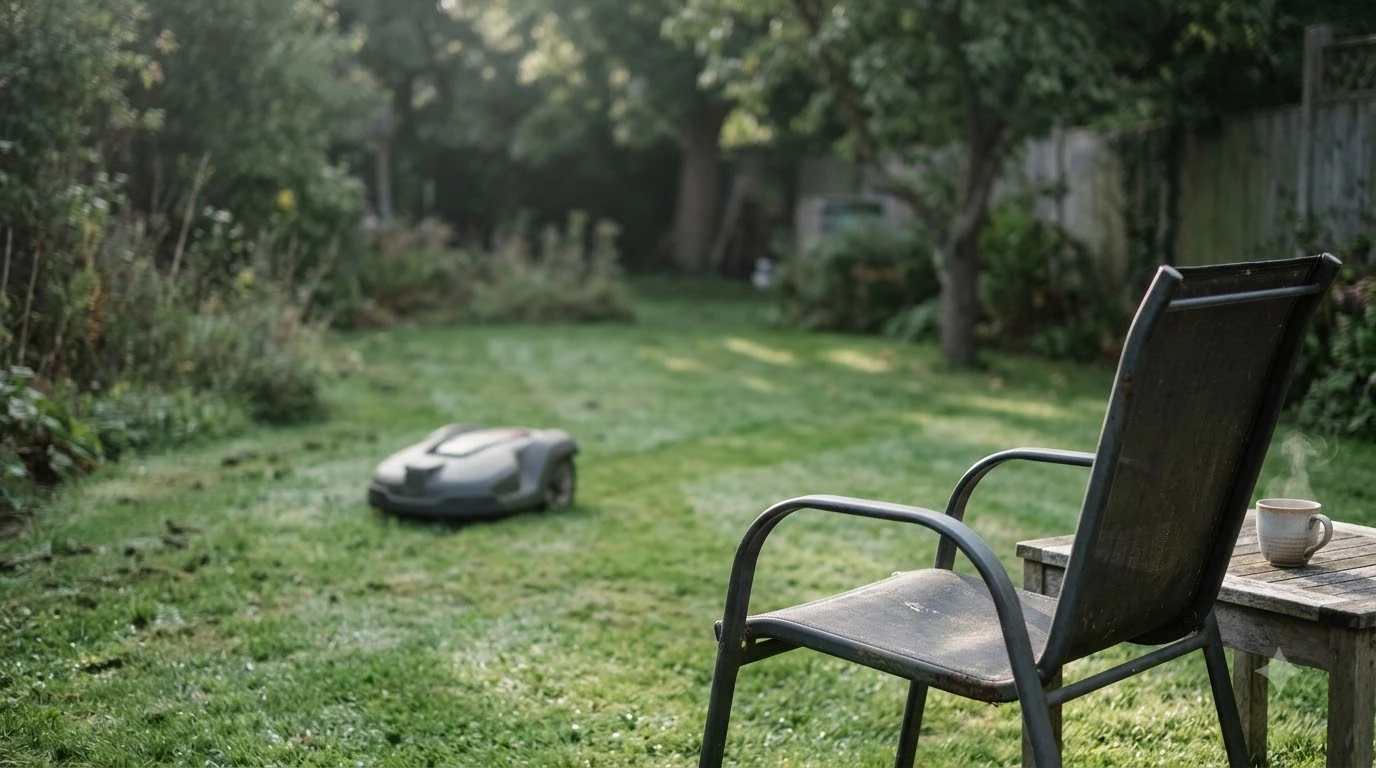

What temperature can a robot mower work in? Both manufacturers we checked start at 0°C (32°F), and the top end is 50°C (122°F) for the Husqvarna Automower and 40°C (104°F) for the Segway Navimow H2 and X4. The exact answer to what temperature can a robot mower work in depends on the brand and model, so the spec sheet for your own mower decides it. The figures below come from manufacturer support pages and turf extension research, as of 2026-11-10.
The short answer
- Lower limit: 0°C (32°F) is the bottom of the operating range for both Husqvarna and Segway Navimow.
- Upper limit: 50°C (122°F) for the Husqvarna Automower, and 40°C (104°F) for the Navimow H2 and X4.
- Heat cutoff: the Navimow app defaults to 35°C (95°F) and sends the mower back to its dock above that point.
- Grass cold point: Husqvarna says mowing is usually unnecessary below about 8°C (40°F), because grass more or less stops growing.
- Our reading: asking what temperature can a robot mower work in is not the same as asking when the grass needs cutting, and the grass limit usually matters more for your schedule.
What temperature can a robot mower work in, by brand
Manufacturer limits do not agree on one number, so ask what temperature can a robot mower work in for your exact model before you assume it can handle your climate. The two brands below publish clear figures for operation and charging.
| Mower | Operating range | Charging range | Source |
|---|---|---|---|
| Husqvarna Automower | 0 to 50°C (32 to 122°F) | 0 to 45°C (32 to 113°F) | Husqvarna support, KA 70058 |
| Segway Navimow H2 and X4 | 0 to 40°C (32 to 104°F) | Not stated on the page we read | Segway Navimow blog |
The Husqvarna figures are the widest of the two. Its page lists the same 0 to 50°C range for storage, and it says the charging station should be placed where it is protected from the sun. Our reading is that a mower rated to 50°C is not automatically better suited to a hot lawn, because the rating only answers what temperature can a robot mower work in, not when the grass benefits from being cut.
Heads up
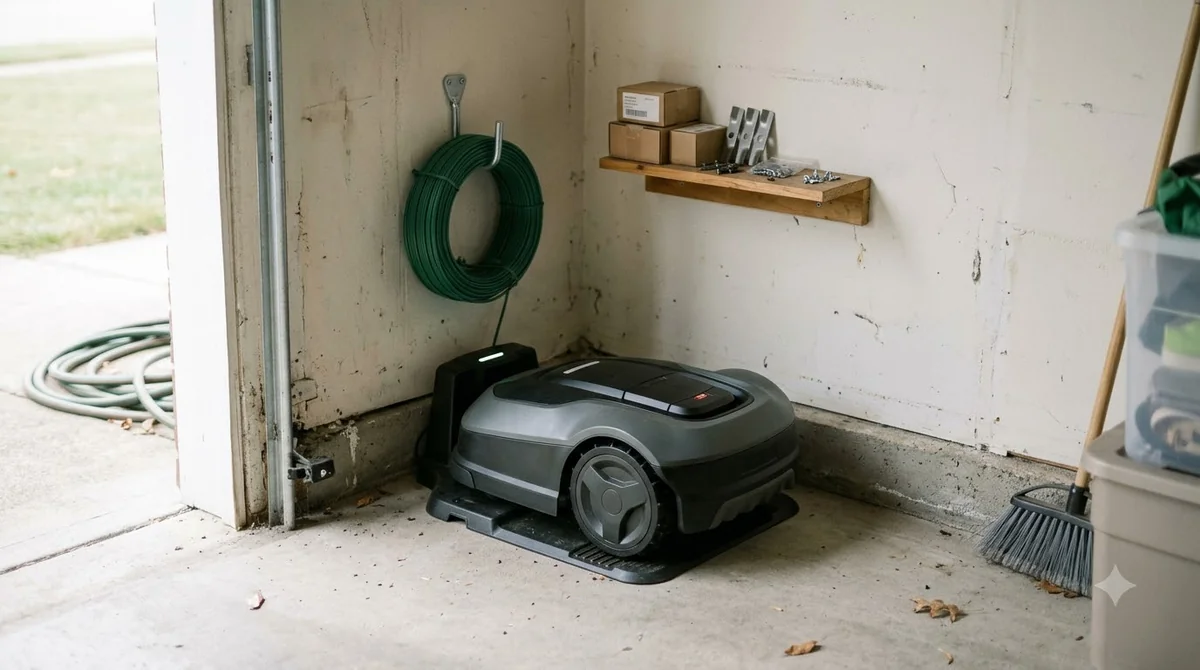
Charging limits can be narrower than operating limits. Husqvarna charges only from 0 to 45°C, which is lower than its 50°C operating ceiling, so the answer to what temperature can a robot mower work in has two separate numbers for Husqvarna.
Why 8°C (40°F) is the practical cold cutoff
For most of the year, the cold question is less about what temperature can a robot mower work in and more about grass growth. Husqvarna’s support page says it is usually not necessary to mow when the temperature falls below approximately 8°C (40°F), and that the grass more or less stops growing at that point. The page adds that this can vary by grass type.
The Navimow material does not give a separate cold or frost threshold. Its only low-temperature figure is the 0°C (32°F) bottom of the operating range. That gap matters for planning, because knowing what temperature can a robot mower work in does not tell you when mowing is worth doing, and a mower can run in cold air even when there is little grass growth to cut.
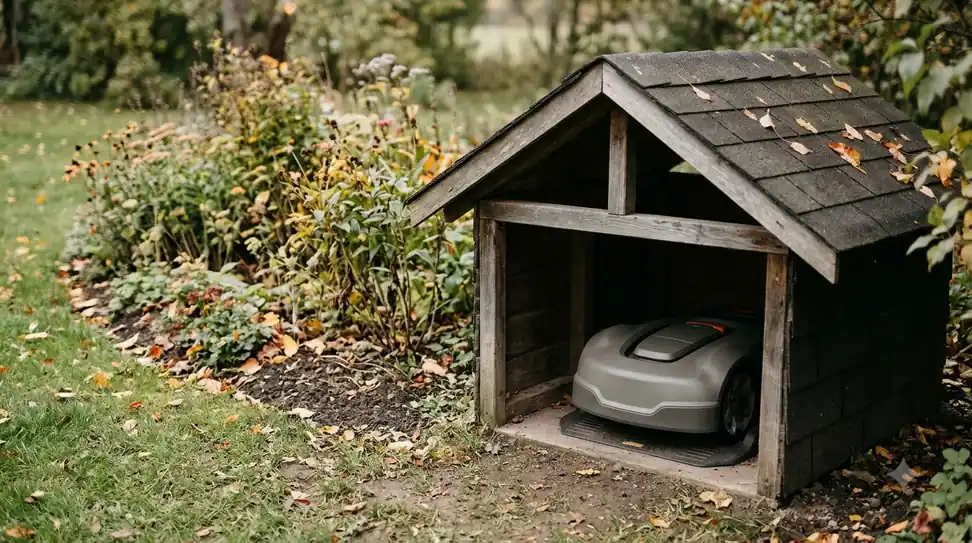
- Above 8°C (40°F): normal scheduling, with frequency driven by growth.
- Between 0°C and 8°C (32°F and 40°F): most lawns need little or no mowing, so a reduced schedule is reasonable.
- Below 0°C (32°F): outside the operating range for both brands, so the mower should not be expected to run.
Heat limits and the mower’s own cutoff
Heat limits work in two directions, so what temperature can a robot mower work in during a heat wave depends on both the mower and the grass. The mower has its own ceiling, and the grass has a point where growth slows and stress begins. Navimow’s protection routines take effect outside the 0 to 40°C range, pausing a cut or holding off a charge. Its app default for the maximum mowing temperature is 35°C (95°F), which you can adjust. When a forecast passes that threshold, the mower holds at the dock until it cools off. For a wider look at summer behavior, see robot mowers in hot weather.
Turf research puts the grass limit lower than most people expect. K-State Research and Extension says cool-season grasses thrive between 65°F and 75°F and experience heat stress once air temperatures consistently exceed 85°F. Warm-season grasses have an optimum range of 80°F to 95°F and generally do not stress until temperatures reach 100°F.
| Grass type | Best growing air temperature | Heat stress point |
|---|---|---|
| Cool-season turf | 65 to 75°F | Consistently above 85°F |
| Warm-season turf | 80 to 95°F | Generally not until 100°F |
The University of Nebraska’s turf team adds that photosynthesis in cool-season turf starts to decline once daytime air temperatures pass about 70 to 75°F. K-State also recommends keeping the mowing height higher through the year, even by half an inch, which fits a robot mower set to a slightly higher height during heat. For the mower itself, the 35°C default is a starting point, and a lower heat cutoff leaves a larger margin on lawns that run hot in the afternoon. Lawn care in a drought is covered in mowing a lawn in heat and drought.
Planning a robot mower schedule around temperature
A workable schedule starts with your local temperature record, not the calendar, and with the answer to what temperature can a robot mower work in for your model. Use the steps below as a checklist, and treat them as our reading of the manufacturer and extension guidance rather than a single rule from either.
- Compare your local range. Check the typical daytime highs and lows for your area against the operating range in your model’s manual, which answers what temperature can a robot mower work in for that machine.
- Set the heat cutoff. Keep the app default of 35°C (95°F) unless your lawn runs hot, in which case a lower limit gives the mower a larger margin.
- Mow in the cooler hours. The University of Nebraska advises mowing in the morning or evening, when temperature and water demand are lowest, so schedule the mower for early or late runs in summer. Our guide to the best time of day to run a robot mower goes further.
- Reduce runs below 8°C (40°F). Husqvarna says mowing is usually not needed in this range, so cut back the schedule in late autumn and early spring.
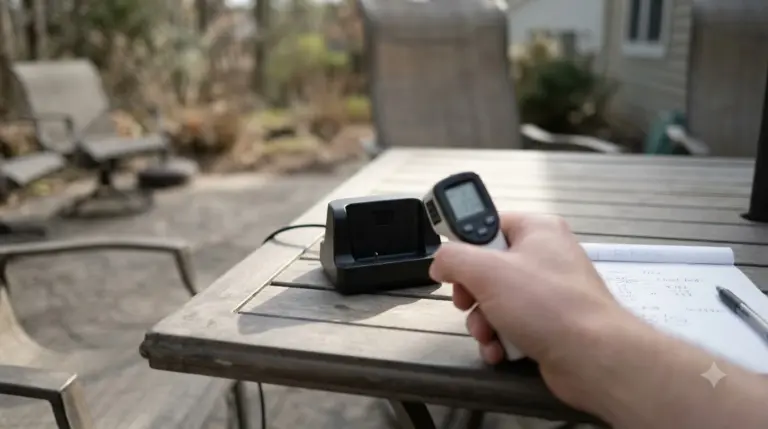
- Keep the charging station out of direct sun. Husqvarna’s page says the charging station should be placed in an area protected from the sun.
What these limits do not cover
The temperatures above answer what temperature can a robot mower work in, and when grass grows. They do not cover frost, snow, rain, winter storage or battery life over several seasons. Those topics have their own rules, and each manufacturer publishes separate guidance for them. Rain is covered in whether robot mowers work in rain, and cold-season care in robot mower winter storage. Check that material before you leave a mower outside in a freezing climate.
Frequently asked questions
What temperature can a robot mower work in when it is freezing?
The Husqvarna and Navimow operating ranges both start at 0°C (32°F), so freezing air sits at the edge of the range and is not a safe working point. Husqvarna also says mowing is usually unnecessary below about 8°C (40°F), because grass growth largely stops. Check your model’s manual for frost guidance.
What temperature can a robot mower work in at the top end?
The Husqvarna Automower is rated to 50°C (122°F), and the Segway Navimow H2 and X4 are rated to 40°C (104°F). The Navimow app also has a default heat cutoff of 35°C (95°F), which you can adjust within a range.
Will a robot mower stop when it gets hot?
For Navimow, the answer to what temperature can a robot mower work in is set by its operating range, and the models pause a cut or hold off charging when temperatures fall outside it, and they hold at the dock when a forecast passes the heat threshold. The Husqvarna pages we read do not describe a heat stop, so check the manual for your model.
Should I mow in the afternoon heat?
The University of Nebraska advises mowing in the morning or evening, when temperature and water demand are lowest, and mowing only well-watered turf. Our reading is that a robot mower scheduled for cooler hours fits that advice best.
Sources
- At what temperature can I use, charge and store my Automower robotic lawn mower? (Husqvarna): operating, charging and storage ranges, and the 8°C (40°F) mowing note.
- How Navimow decides whether or not to mow in sunny, rainy and frosty conditions (Segway Navimow): operating range, 35°C default heat cutoff and dock behavior.
- Summer Turf Wars: Battling Drought, Heat, and Seasonal Pests, Part 1 (K-State Research and Extension): growing and heat stress temperatures for turf, and mowing height.
- High temps are hard on cool-season grasses (University of Nebraska-Lincoln Turf): photosynthesis decline and mowing time in heat.
 Up next7 min readLearnDo Robot Mowers Work in Hot Weather? Temperature Limits ExplainedUpdated Nov 11, 2026
 7 min readLearnDoes a Robot Mower Work With a Dog in the Yard?Updated Nov 11, 2026
 8 min readLearnHow Do Robot Lawn Mowers Work Without a Wire?Updated Nov 11, 2026
 9 min readLearnDo Robot Mowers Really Work? Yes, on the Right LawnUpdated Nov 11, 2026
 7 min readLearnWhat Is a Boundary Wire on a Robot Mower? How It WorksUpdated Nov 11, 2026
 8 min readLearnHow to Get Stripes with a Robot MowerUpdated Nov 11, 2026