
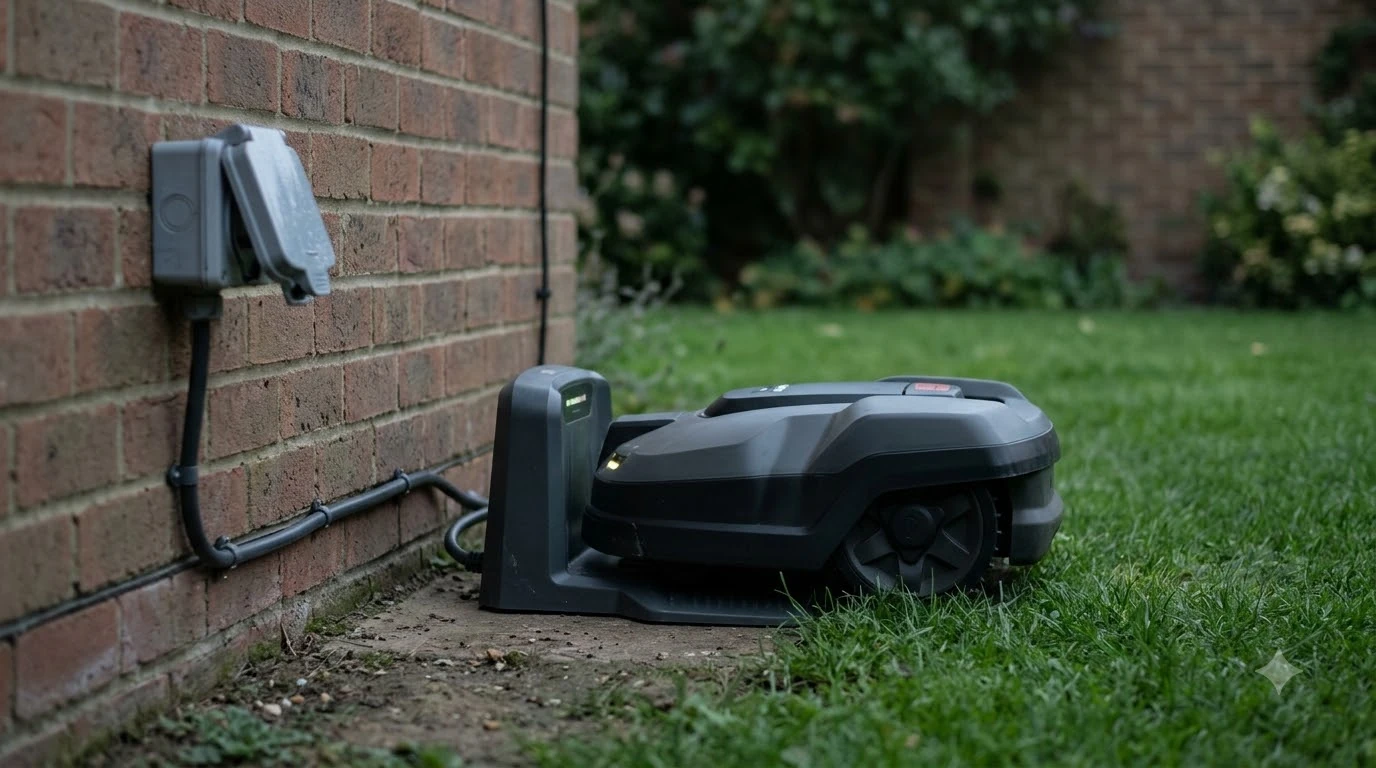

Do robot mowers work in the rain? Most can handle light rain, but many return to the charging base when it starts. The rain sensor decides when the mower stops, and the rain delay decides when it starts again. Whether a robot mower works in the rain depends on how hard it rains, how wet the lawn is and how your model is configured.
The short answer
- Light rain: most modern models can keep cutting, according to Eufy and UGA Extension.
- Heavy rain: Mammotion says robot mowing during heavy rain is generally best avoided.
- Rain sensor: many models send the mower back to its dock until conditions improve.
- Rain delay: the Worx Landroid default is 180 minutes after the sensor dries.
- Waiting after rain: Husqvarna advises at least 24 hours after rain before mowing.
How a rain sensor sends the mower back to its dock
A rain sensor detects moisture and tells the mower to return to its charging base until conditions improve. According to the Worx Landroid manual, the sensor works this way on that model, so the mower waits at the dock rather than cutting in the wet.
Eufy describes a similar system for its models. Many robot mowers include rain sensors or weather-aware scheduling, which can detect rainfall and send the mower to its charging station until the weather clears. Check your own model’s manual to see which system it uses, and read how robot mowers return to the charging station if you want to know how that trip works.
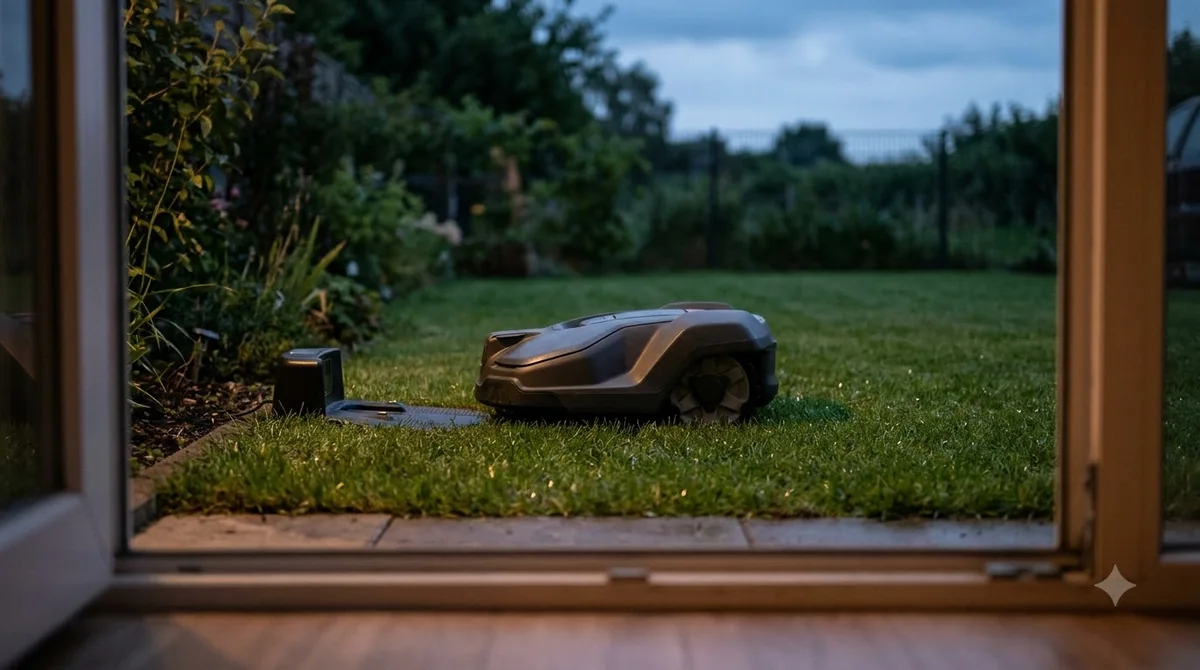
The sensor is a safeguard, not a schedule. The mower does not resume simply because the rain stops. It waits for the sensor to dry and for the delay timer to finish. Sensitivity is the main setting that changes the outcome: Robomow’s rain sensor guide says the sensitivity can be adjusted so a mower keeps working in light rain but stops in a downpour.
Default rain delay and how to change it
For a practical answer on your own lawn, check the delay first. The Worx Landroid rain delay defaults to 180 minutes, and the countdown starts only after the sensor is no longer wet. The manual says you can change the value in the Landroid app under the Rain Delay option, or on the display if your model has one.
A shorter delay means the mower resumes sooner after a shower, which can suit a lawn that dries quickly. A longer delay gives the grass more time to dry, which is safer on a soft lawn. Our reading is that a longer delay is the better choice after heavy rain, while a short delay is only sensible when you have checked that the grass is dry.
Heads up
The Worx manual warns that the rain sensor may activate even without rain in very humid conditions. If your mower returns to the dock on a dry day, that behavior is expected for this sensor and is not necessarily a fault.
Do robot mowers work in the rain? Light versus heavy rain
So, do robot mowers work in the rain? For light rain, usually yes. Light rain is manageable for a robot mower, while heavy downpours are where problems start. UGA Extension turfgrass specialist Clint Waltz says robotic mowers can operate in light rain, although hand trimming is still needed around edges. Eufy adds that heavy downpours, flooded lawns and standing water can all cause problems.
| Condition | Typical behavior | Source |
|---|---|---|
| Light rain | Most modern models can keep cutting | Eufy, UGA Extension |
| Light morning dew | Generally less problematic than saturated grass | Mammotion |
| Heavy rain | Generally best avoided; let the sensor or delay handle it | Mammotion |
| Flooded lawn or standing water | Can cause problems; keep the mower docked | Eufy |
Mammotion notes that soft ground can cause wheel slip, wheel marks and trouble holding a planned path. Outdoor Guide warns that running a mower in the rain can make it slip or get stuck because wet conditions reduce traction, especially on hills. In our reading, a slope or a patchy lawn makes rain problems more likely even when the rain itself is light.
Standing water is a different case. The same Outdoor Guide article advises skipping mowing until a waterlogged yard has drained, which is a stricter rule than the light-rain guidance above.
Why returning to the dock protects the lawn and the mower
Wet grass is the main reason owners ask this question at all. It causes three main problems for a robot mower: uneven cutting, clogging and ground damage. Husqvarna says wet grass clumps together and stands at varying heights, which leaves a patchy finish. The same page warns that clumped grass can start to clog the mower.
- Uneven cut: wet grass bends and sticks, so the blades do not cut it evenly.
- Clogging: wet clippings bunch up and can block the cutting area.
- Wheel ruts: Husqvarna says mowing after heavy rain can create wheel ruts in soft, wet soil.
- Clumped clippings: Eufy notes that very wet or saturated grass is not ideal because clippings can clump.
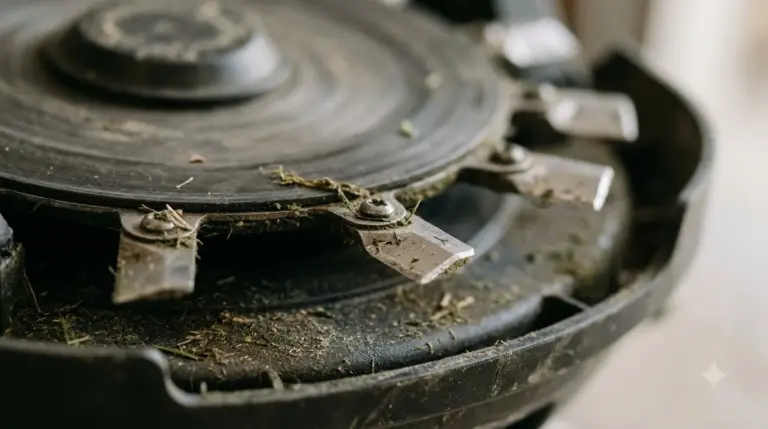
- Clogged undercarriage: Outdoor Guide notes that wet grass can clump under the deck and clog the blades and undercarriage, which can leave missed spots. Cleaning the underside after a wet session fits the routine in our robot mower maintenance checklist.
Husqvarna also notes that robot mowers cut only a small amount of grass at a time, which reduces tearing and clumping. That lower load is a reason many owners accept light-rain cutting, but it does not remove the risk on saturated turf. Our explainer on mulching robot mowers shows why short clippings behave differently from a heavy cut.
How long to wait after rain before mowing
Husqvarna advises waiting at least 24 hours after rain before mowing, with a longer wait after heavy rain or on overcast days. The same guidance says strong sunlight may dry a lawn within a few hours, so the 24-hour figure is a general rule rather than a fixed limit.
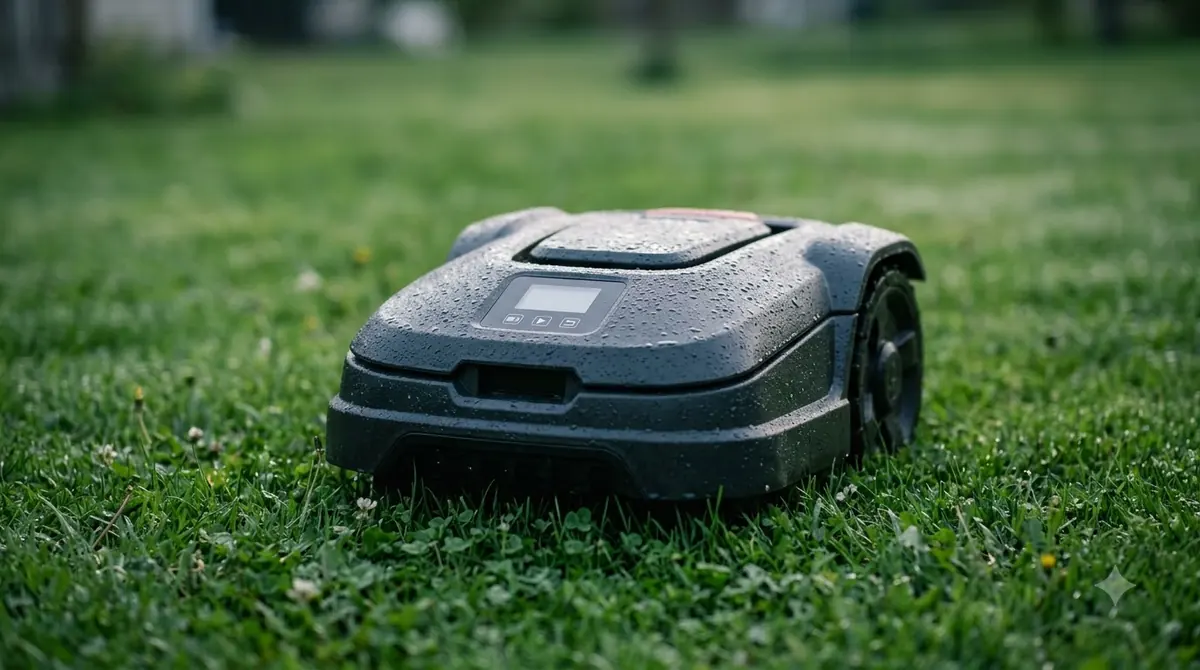
Mammotion takes a different view and says there is no universal number of hours to wait after rain. Its guide calls a rule such as always waiting two hours less reliable than checking the lawn itself. Two quick checks can help you decide:
- Press test. If the grass feels soggy or clumps when you press on it, it is too wet to mow.
- Footprint test. If footprints stay visible on the lawn, the ground is still too soft.
Rain ratings and the owner’s manual
So, do robot mowers work in the rain? The answer is only as reliable as the manual behind it. A water-resistance rating does not settle whether a robot mower should run in rain. Mammotion says owners should not assume an IP rating means the mower is meant to mow continuously in the rain. Husqvarna states that many of its robot mowers are certified to operate in the rain, which shows that rain capability varies by brand and model. For how to read the numbers on a spec sheet, see robot mower IP rating explained.
The owner’s manual is the final check, because manufacturers decide whether a mower can work during rain. Before the first wet week, read the rain section and confirm the sensor and delay settings in the app.
Frequently asked questions
Do robot mowers work in the rain?
Yes, most modern robot mowers can keep cutting in light rain. Eufy says heavy downpours, flooded lawns and standing water can cause problems, and Mammotion says heavy rain is generally best avoided. Check your model’s rain rules in the owner’s manual before relying on it.
Should I turn off the rain sensor?
Turning the sensor off is usually not advisable. Robomow says the sensitivity can be adjusted so the mower keeps working in light rain but stops in a downpour, which is a safer change than switching the sensor off. Eufy says heavy downpours, flooded lawns and standing water can all cause problems.
Why does my mower go back to the dock on a dry day?
The Worx Landroid manual says the rain sensor may activate in very humid conditions even without rain. This is expected behavior for that sensor. If it happens often, check the sensitivity or delay settings in the app.
Does a rain rating mean the mower can cut in rain?
Not necessarily. Mammotion says a water-resistance rating does not settle whether a mower should run in rain. The manufacturer’s rules and the condition of the lawn matter more.
Sources
- Can you mow wet grass? (Husqvarna): certified rain operation, 24-hour wait, clumping, wheel ruts.
- Rain Delay and Sensor (Worx Landroid manual): sensor returns mower to base, 180-minute default delay, humidity false trigger.
- Can robot lawn mowers cut wet grass (Mammotion): heavy rain, dew versus saturated grass, no universal wait, IP rating caution.
- Are robot lawn mowers waterproof (eufy lawn mower blog, hosted by Anker): light rain, heavy downpours, rain sensors and rain sensitivity, clumping.
- Extension specialist discusses advantages of robotic mowers (University of Georgia Extension, 2023): robotic mowers can operate in light rain.
- Robotic mowers with rain sensors (Robomow): rain sensor return to station, adjustable sensitivity.
- Can you get away with running your robot lawn mower in rainy weather (Outdoor Guide): traction on wet ground, clumping under the deck, waterlogged lawns.
 Up next8 min readBest Robot MowersBest Robot Mower That Works in the Rain: What to Check Before You BuyUpdated Nov 11, 2026
 8 min readBest Robot MowersHow Do Robot Lawn Mowers Work? Wire, Sensors and Docking ExplainedUpdated Nov 11, 2026
 9 min readBest Robot MowersBest Robot Mower With Obstacle Avoidance: 5 Sensor TypesUpdated Nov 11, 2026
 8 min readBest Robot MowersBest Robot Mower With Ultrasonic Sensors: 5 Checks Before You BuyUpdated Nov 11, 2026
 9 min readBest Robot MowersHow Do Multi Zone Robot Mowers Work?Updated Nov 11, 2026
 7 min readBest Robot MowersMulching Robot Mower Explained: How It Works and When It FailsUpdated Nov 11, 2026