
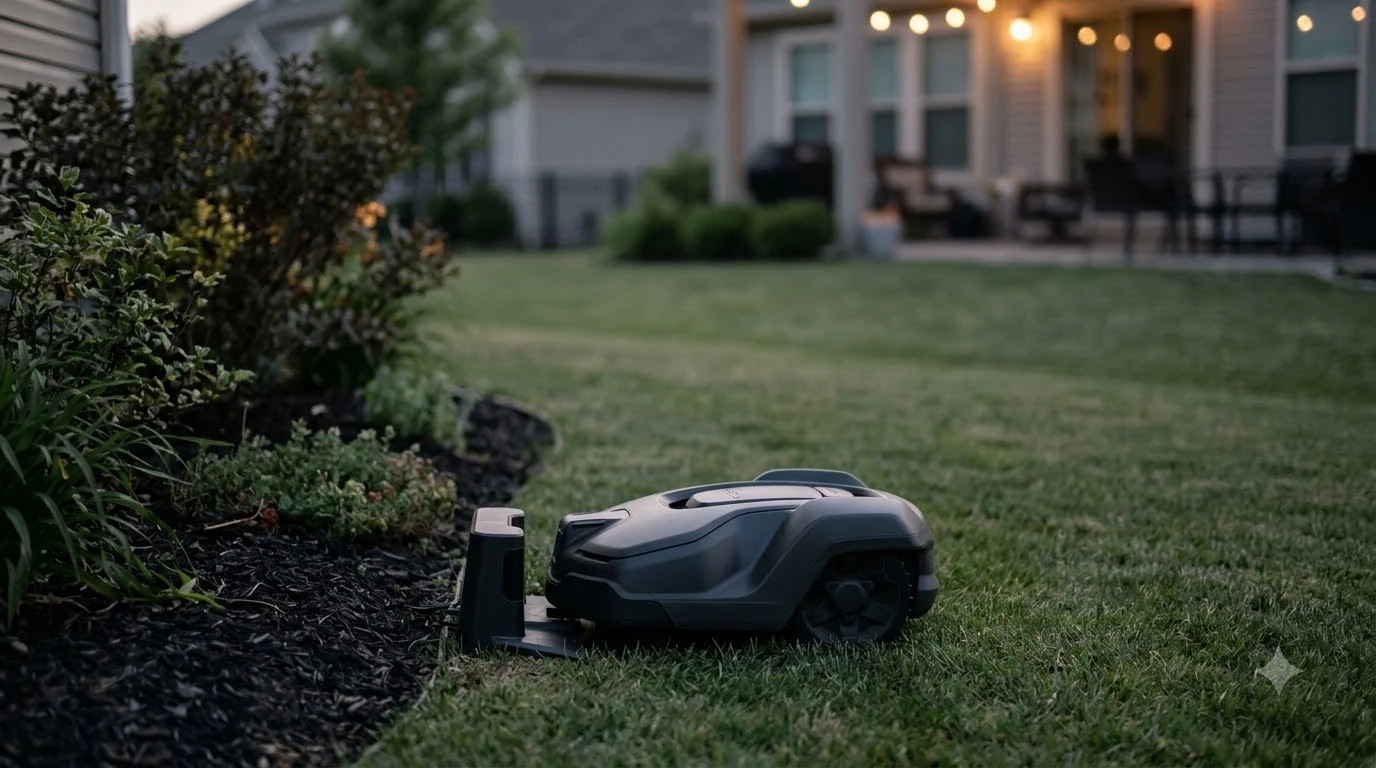

The best mowing height for fescue is about 2 to 3.5 inches for tall fescue and 1.5 to 3 inches for fine fescue. These ranges combine Clemson University’s seasonal heights and University of Tennessee Extension’s climate ranges, and both advise raising the cut in summer. The exact number depends on which fescue your lawn has and on the season.
The short answer
- Tall fescue: 2 to 3 inches in cool weather, and 2.5 to 3.5 inches in summer heat or drought.
- Fine fescue: 1.5 to 2.5 inches in winter and 2.5 to 3 inches in summer, per Clemson.
- Safe middle for tall fescue: 3 inches falls inside every range in the sources we read, so it suits the best mowing height for fescue in most yards.
- Shade and new lawns: cut at the higher end of the range.
- Frequency: never remove more than one-third of the grass height in one mowing.
Best mowing height for fescue: tall fescue by season
Tall fescue is cut higher than fine fescue, and its target moves with the seasons. Clemson recommends 2 to 3 inches in winter and 3 to 3.5 inches in summer, while the University of Tennessee lists 2 to 3 inches for cool, humid climates and 2.5 to 3.5 inches for hot, dry ones. The sources do not match exactly, so the table below puts them side by side and shows each case.
| Source | Season or climate | Tall fescue height |
|---|---|---|
| Clemson HGIC | Winter | 2 to 3 inches |
| Clemson HGIC | Summer | 3 to 3.5 inches |
| UT Extension W161-I | Cool, humid | 2 to 3 inches |
| UT Extension W161-I | Hot, dry | 2.5 to 3.5 inches |
| UC Healthy Lawns | Set the mower to | 1.5 to 3 inches |
UC’s set-mower range starts lower than the others, and it also gives a mow-when height of 2.25 to 4.5 inches for tall fescue. Three inches sits inside every range in this table, which makes it a reasonable default. Our reading is that the best mowing height for fescue in most cool-season lawns sits near that height, then moves up in summer.
Heads up
Check the seed label or the sod tag before you set the height on the mower. A lawn that is part tall fescue and part fine fescue may need a height that suits the weaker grass, not the stronger one.
Fine fescue mowing height
Fine fescues are cut lower than tall fescue, so the best mowing height for fescue drops when the lawn is mostly fine types. Clemson gives 1.5 to 2.5 inches for winter and 2.5 to 3 inches for summer, and UT Extension lists 1 to 2 inches for cool, humid conditions. UC gives set-mower targets for red and hard fescue, and UT gives a range that covers chewings fescue.
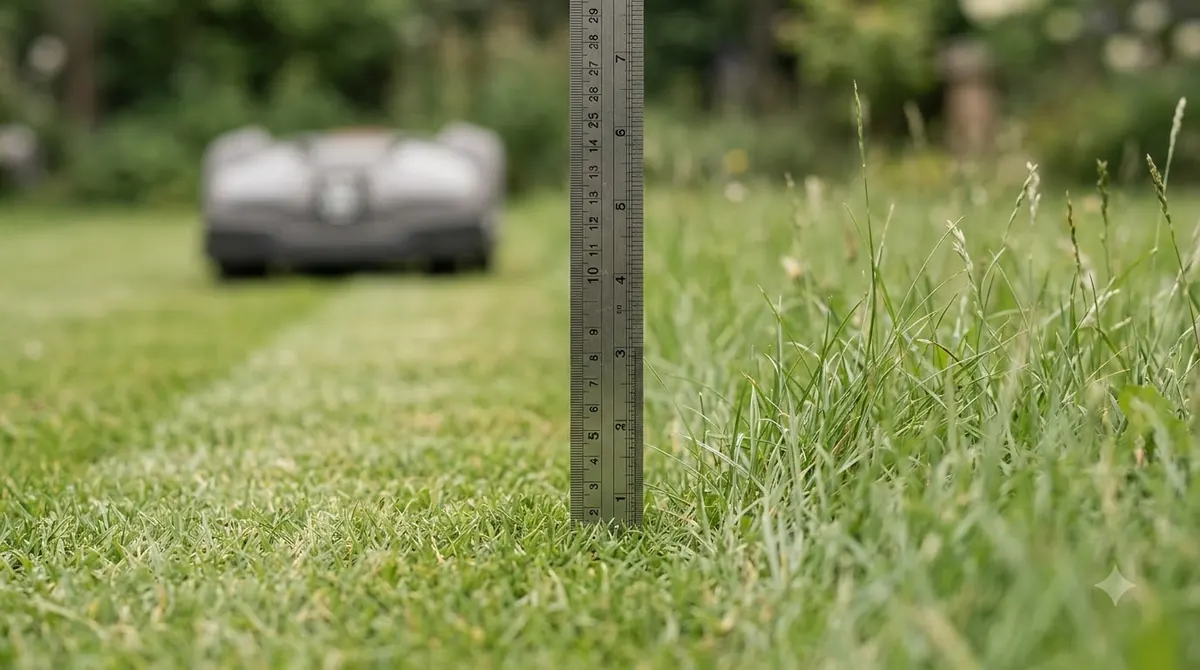
- Red fescue: UC sets the mower to 1.5 to 2.5 inches.
- Hard fescue: UC sets the mower to 2.5 inches.
- Chewings fescue: UT Extension lists 1 to 2 inches in cool, humid climates, and 1.5 to 3 inches in hot, dry ones.
UT’s hot, dry range for fine fescue runs up to 3 inches. Our reading is that a lawn in a hot region should stay near the top of that range in summer.
Tall vs fine fescue: side-by-side
Tall fescue is a bunch grass that takes a higher cut, while fine fescues are cut lower. Growth habit is the quickest clue to the best mowing height for fescue of your lawn. UT Extension describes tall fescue as growing in bunches with short rhizomes, and red fescue as a creeping grass that spreads by rhizomes.
| Factor | Tall fescue | Fine fescue |
|---|---|---|
| Growth habit | Bunch, with short rhizomes | Chewings and hard are bunch types, red is creeping |
| Winter height (Clemson) | 2 to 3 inches | 1.5 to 2.5 inches |
| Summer height (Clemson) | 3 to 3.5 inches | 2.5 to 3 inches |
| Cool, humid (UT) | 2 to 3 inches | 1 to 2 inches |
| Hot, dry (UT) | 2.5 to 3.5 inches | 1.5 to 3 inches |
If you cannot tell the two apart by sight, the mowing height gap is the practical test. If the mix is unclear, ask the seed supplier or your county extension office before you set the height. For robot mowers, see robot mowers for tall fescue and whether a robot mower can cut fine fescue.
Why raising the cut helps in summer heat
UT Extension says raising tall fescue to 2.5 to 3.5 inches before high-temperature stress may help insulate the soil from extreme heat. The same publication notes that closely mowed turf has narrower leaves, slower root growth and limited rhizome growth.
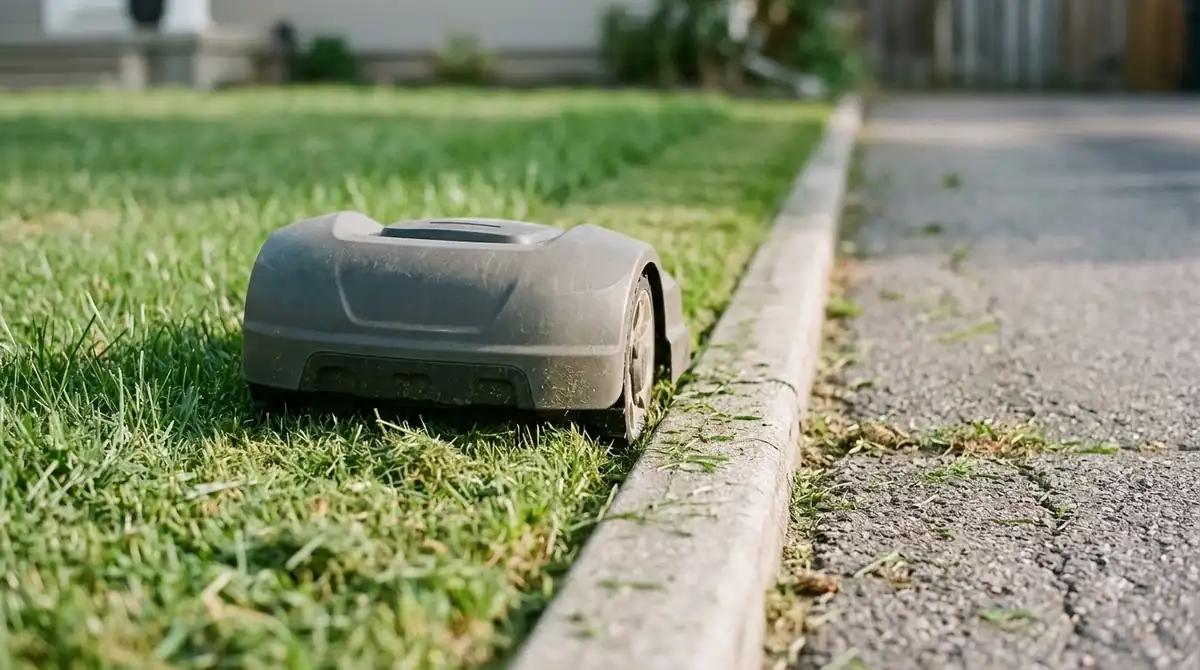
- Raise the deck before the heat arrives. UT advises moving tall fescue up toward 2.5 to 3.5 inches ahead of high-temperature stress.
- Mow less often when growth slows. UC Healthy Lawns advises mowing less frequently in summer when growth slows.
- Watch for scalping after each cut. NC State warns that mowing too short may cause scalping and stress, so raise the setting if brown spots appear.
Summer advice has limits. Raising the cut helps the grass tolerate heat, but it does not replace watering or make a lower cut safe in summer. Our reading is that a lawn that stays green on a higher setting is doing its job, while a lawn that browns in patches needs a higher cut before it needs a lower one.
Shade and new lawns
UC Healthy Lawns advises cutting tall fescue at the higher end of its range in shade and on a new lawn’s first mowing. In shade, the best mowing height for fescue is at the top of the range, because Clemson notes that taller blades intercept more sunlight. Our guide to the mowing height for shade grass covers other species.
- New lawns: let the grass establish before moving to the lowest setting.
- Shaded zones: keep the cut at the upper end of the range, which is the advice UC gives.
- Mixed yards: set one height for the lawn, and raise it only in the shadiest areas if you can adjust per zone.
Clemson does not publish a separate shade height. Its tall fescue photo caption describes a partly shaded lawn mowed at the upper end of the range, which matches UC’s approach. Treat any single shade number from a retailer as unverified unless it cites an extension source.
How mowing height affects weeds
In an NC State field study at the Lake Wheeler Turfgrass Field Lab, tall fescue cut at 1 inch had 95 percent crabgrass cover by mid-September, compared with 13 percent at 3 inches and none at 4 inches. The author concludes that proper mowing height may culturally suppress crabgrass in tall fescue.
The 2-inch plot had 48 percent crabgrass cover, which places it between the 1-inch and 3-inch results. The study is a single field trial, so it shows direction rather than a guaranteed result. For a weedy lawn, the best mowing height for fescue may be the cheapest control to try first. The pattern lines up with what extension guides say about scalping and weak turf, and it supports a cut in the middle of the range.
One-third rule and how often to mow
Remove no more than one-third of the grass height at any one mowing, and mow by the grass’s actual height rather than a fixed calendar. Frequency matters as much as the height itself. Clemson gives the same one-third rule, and UT Extension says to mow based on plant height instead of a preset weekly schedule. Our guide on how often to mow fescue covers the timing by season.
- Pick your target height. Use the ranges above for your fescue type and season.
- Find the trigger height. Divide the target by about 0.67. A 3-inch target means mowing once the grass reaches about 4.5 inches, by our arithmetic.
- Mow regularly in peak growth. Clemson advises mowing regularly, and UC advises less frequent mowing when summer growth slows.
Repeatedly scalping the lawn back to a low height tends to produce a weak, weedy turf, so keep the height steady instead of chasing a lower cut. If the grass has grown too tall, our reading is that lowering the setting gradually over several mowings is safer than cutting it short in one pass.
Frequently asked questions
What is the best mowing height for tall fescue in summer?
Clemson recommends 3 to 3.5 inches for tall fescue in summer. The University of Tennessee lists 2.5 to 3.5 inches for hot, dry conditions. Staying in the upper part of that range helps the grass handle heat and drought, which is why the best mowing height for fescue rises in July and August.
Is 2 inches too short for fine fescue?
No, 2 inches is within the winter range Clemson gives for fine fescue, which is 1.5 to 2.5 inches. In summer, Clemson suggests a higher cut of 2.5 to 3 inches, so raise the setting when the weather heats up.
Can I cut fescue shorter than the recommended range?
Cutting below the best mowing height for fescue tends to stress the turf and can cause scalping. NC State warns that mowing too short can make a lawn less able to compete with weeds such as crabgrass. If brown spots appear after mowing, raise the setting.
Does shade change the mowing height for fescue?
Yes. In shade, the best mowing height for fescue is at the upper end of the range, which UC Healthy Lawns advises. Clemson does not give a separate shade height, but its shaded tall fescue example is mowed at the upper end of the range.
Sources
- Mowing Lawns, HGIC 1205 (Clemson Cooperative Extension): tall and fine fescue winter and summer heights, one-third rule.
- Turfgrass Maintenance: Mowing, W161-I (University of Tennessee Extension): optimum ranges by climate, growth habit, heat insulation.
- Mowing Cool Season Grasses (UC Healthy Lawns, UC IPM): set-mower and mow-when heights, shade and new-lawn advice.
- Mowing Height Impacts Weed Populations (NC State Extension TurfFiles): crabgrass cover by mowing height in the Lake Wheeler study.
 Up next8 min readBy YardRobot Mower for Tall Fescue Lawns: Height Limits That MatterUpdated Nov 11, 2026
 7 min readBy YardCan a Robot Mower Cut Fine Fescue? Heights and What to CheckUpdated Nov 11, 2026
 7 min readBy YardBest Mowing Height for Kentucky Bluegrass by SeasonUpdated Nov 11, 2026
 7 min readBy YardBest Mowing Height for Centipede GrassUpdated Nov 11, 2026
 8 min readBy YardBest Mowing Height for Buffalo Grass (What Extension Guides Say)Updated Nov 11, 2026
 8 min readBy YardBest Mowing Height for St Augustine GrassUpdated Nov 11, 2026