
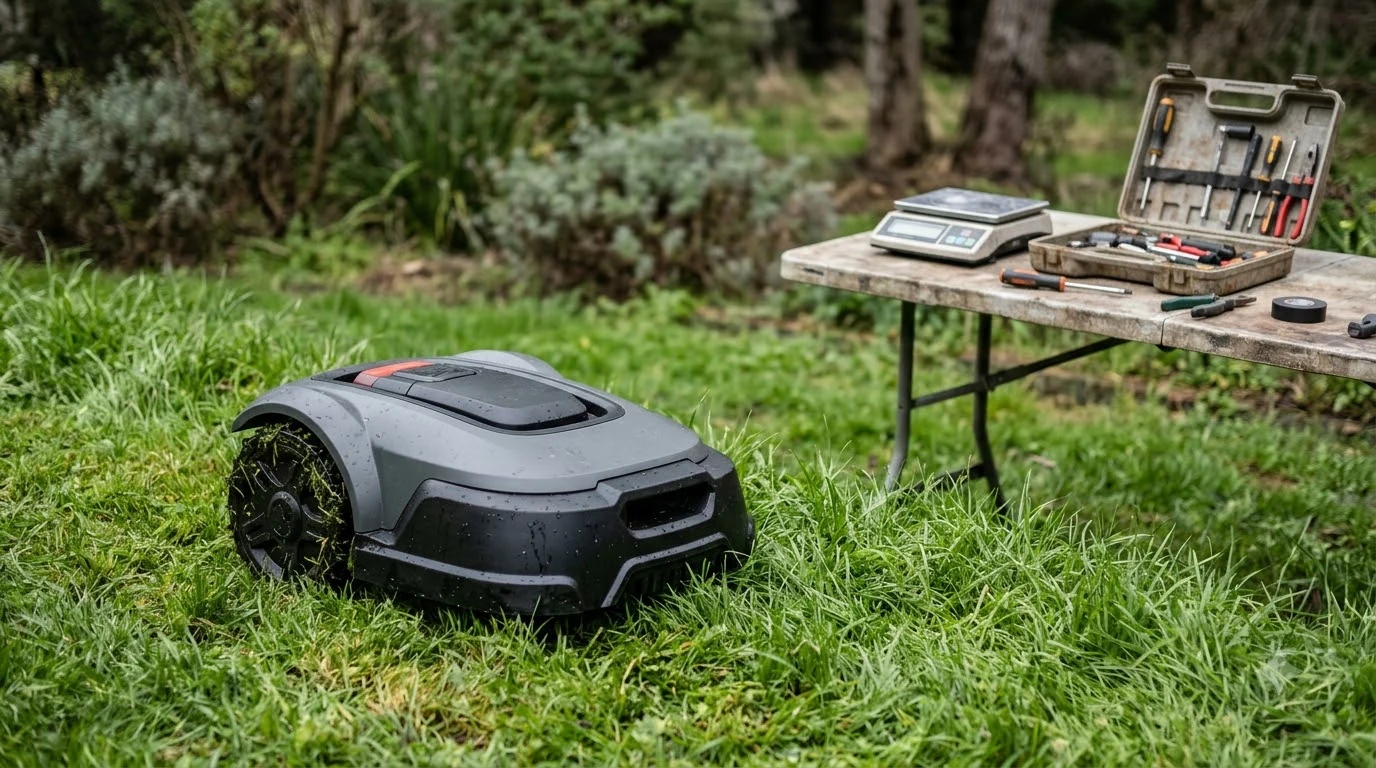

How often to mow fescue depends on how fast it grows, not on a fixed calendar. Mow often enough that no more than one-third of the blade comes off in one cut. In late spring, tall fescue often needs a cut every five to seven days.
Tall fescue is usually kept near 3 inches for most of the year and at 3.5 inches in summer. Fine fescue has a different range, so check which type you grow before you set a schedule.
The short answer
- Height: keep tall fescue between 2.5 and 3.5 inches for most of the year, and at 3.5 inches in summer.
- Frequency: cut whenever the grass has grown enough that a cut would remove more than one-third of the blade.
- Spring: expect to mow about every five to seven days in late spring, according to NC State Extension.
- Fine fescue: keep it higher, usually 2.5 to 4 inches, and mow it less often in hot summer months.
How often to mow fescue by season
Tall fescue is usually cut to about 3 inches in spring and 3.5 inches in summer, and the two main extension calendars agree on most seasons. Clemson HGIC publishes one for tall fescue, and NC State Extension publishes another, so the table below shows both side by side. Each row sets the target height for every cut.
| Season | Clemson HGIC | NC State Extension |
|---|---|---|
| March to May | 3 inches | 2.5 to 3.5 inches |
| June to August | 3.5 inches | 3.5 inches, before the grass passes 5 inches |
| September to November | 2.5 to 3.5 inches | 2.5 to 3 inches |
| December to February | 3 inches, leaves removed | 3 inches, leaves and debris removed |
The two sources differ slightly in spring and fall, and both are reasonable starting points. If your state extension office gives a different range, follow the local guidance. The height is the target, and the one-third rule tells you when to cut again, which is the core answer to how often to mow fescue.
How often to mow fescue: the one-third rule
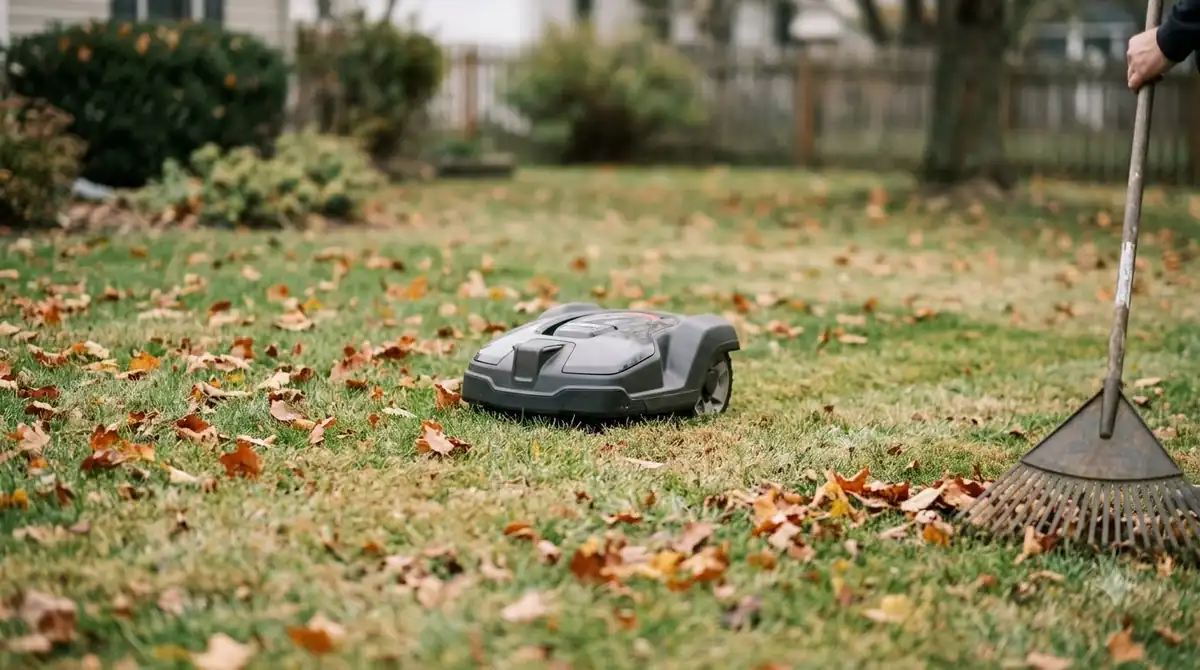
Mow often enough that no more than one-third of the grass blade comes off in one cut, so the growth rate, not the calendar, sets how often to mow fescue. Clemson HGIC, NC State Extension, and Purdue Extension all state this one-third rule, and UC IPM describes it the same way. Our reading is that the rule is the simplest test you can apply on any given week.
- Growth sets the pace. UC IPM says grasses need more frequent mowing during their active growing period.
- Change height slowly. UC IPM advises against sudden height changes, and suggests mowing more often for a while, then lowering the cut gradually.
- Check the blade length. Purdue Extension says to mow as often as needed to maintain the desired height of cut.
If the lawn has grown well past its target height, take it down in two passes rather than one heavy cut. This is our reading of the gradual-lowering advice, and it keeps the one-third rule in reach. Our reading is that a robot mower, which cuts a little on every run, makes the one-third rule easier to keep, but check that its highest setting reaches the 3.5 inches tall fescue needs in summer. Our page on robot mowers for tall fescue covers the fit.
How often to mow tall fescue in spring and fall
In late spring, NC State Extension says tall fescue may need mowing every five to seven days, and in fall the cut stays between 2.5 and 3.5 inches. Spring is the fastest growth period, so how often to mow fescue matters most then. NC State’s tall fescue maintenance calendar gives the spring frequency and keeps the height between 2.5 and 3.5 inches from March to May.
Fall works differently. NC State lists 2.5 to 3 inches for September to November, while Clemson lists 2.5 to 3.5 inches. Either range fits the sources, so use the one your local extension office gives if it differs from both. Fall still follows the one-third rule.
Winter needs less attention. Both calendars call for a 3-inch cut from December to February, with leaves and debris cleared before you mow.
Summer mowing and heat stress
From June to August, NC State Extension advises a 3.5-inch cut and mowing before the grass grows taller than 5 inches. Tall fescue grows quickly in warm weather, but it does not tolerate close mowing, so the summer answer is a high, steady cut (see also mowing in heat and drought).
- Height: keep the cut at 3.5 inches from June to August, not lower.
- Cap: do not let the grass pass 5 inches before you cut.
- Disease: keep the height above 3 inches to help manage brown patch and gray leaf spot.
NC State also recommends watering between 2 a.m. and 8 a.m. to help manage brown patch. Clemson HGIC’s summer advice is mostly about watering or letting the lawn go dormant, and neither source gives a separate summer mowing interval. Our reading is that the one-third rule and the 5-inch cap are the practical limits, so check the height each week.
Fine fescue needs a different schedule
Fine fescue lawns are usually kept at 2.5 to 4 inches, mowed more often in spring and late fall and less in hot summer months, according to Purdue Extension. Fine fescue is a different group from tall fescue, so the schedule depends on which one you have. It is usually kept higher, and our page on whether a robot mower can cut fine fescue covers the robot case. Purdue’s home lawn turf guide says to keep the height above 2 inches, preferably between 2.5 and 4 inches.
Frequency follows growth, so it changes with the seasons. Purdue says to mow more often in spring and late fall, when growth is faster, and less often in hot summer months when growth slows. The same guide says shaded areas should be mowed 0.5 to 1.0 inch higher than turf in full sun.
- Shade: mow shaded areas 0.5 to 1.0 inch higher than the sunny parts of the lawn.
- Moisture stress: do not mow under mild or severe moisture stress.
- Dry spells: mow only after at least 1 inch of rainfall or irrigation.
If you are not sure which type of fescue you have, check the seed label or ask a local extension office, because the height ranges differ.
Clippings, rain delays, and winter care
When rain delays mowing, NC State Extension says clippings can be collected and used as mulch instead of bagged for trash. That makes a longer gap between cuts easier to manage, since the clippings can go back onto the lawn rather than into the bin. A rain delay does not change how often to mow fescue, only when you can get out to do it.
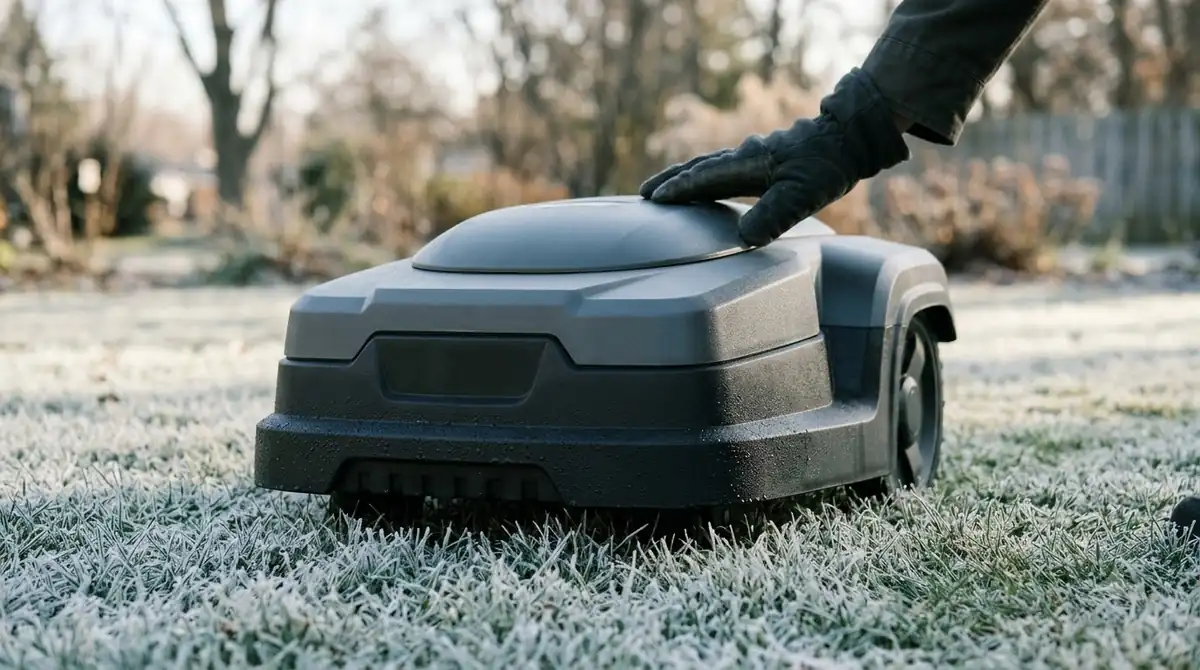
In winter, both calendars call for a 3-inch cut from December to February. Clear leaves and debris before you mow, as both calendars advise, so the cut is clean and the lawn stays tidy through the cold months. Our page on robot mowers and fall leaves covers the robot case.
Frequently asked questions
How often should I mow tall fescue in spring?
In late spring, NC State Extension says tall fescue may need mowing every five to seven days. Let the one-third rule decide how often to mow fescue on any given day, and keep the cut between 2.5 and 3.5 inches from March to May. Check the height each week, because growth changes with the weather.
What height should tall fescue be in summer?
Both Clemson HGIC and NC State Extension recommend 3.5 inches from June to August. NC State adds that the grass should not be allowed to pass 5 inches before cutting, and that keeping it above 3 inches helps manage brown patch and gray leaf spot.
Should fine fescue be mowed less in summer?
Yes, according to Purdue Extension. It says to mow fine fescue less often in hot summer months, when growth slows, and to keep home lawns between 2.5 and 4 inches. Mow fine fescue as often as needed to hold the height you want.
Can I mow fescue when the lawn is dry?
Purdue Extension advises against mowing fine fescue under mild or severe moisture stress. It says to mow only after at least 1 inch of rainfall or irrigation. If the lawn looks stressed, wait for rain or watering before you cut it, which matters more than the calendar during a dry spell.
Pick the schedule from the grass in front of you rather than a fixed day count. Measure the height, apply the one-third rule, and check whether you grow tall or fine fescue, since that decides how often to mow fescue for your lawn. If the lawn is partly shaded, mow those areas a little higher, as Purdue advises.
Sources
- Tall Fescue Maintenance Calendar (Clemson Home and Garden Information Center): mowing heights by season and the one-third rule.
- Tall Fescue Lawn Maintenance Calendar, AG-367 (NC State Extension): spring mowing frequency, summer height cap, and disease height guidance.
- UC IPM mowing amount guidance (UC Statewide Integrated Pest Management Program): the one-third rule and gradual height changes.
- TURF-65-W (Purdue Extension): fine fescue height, shade, and mowing during dry spells.
 Up next9 min readBy YardHow Often to Mow Kentucky Bluegrass by SeasonUpdated Nov 11, 2026
 8 min readBy YardHow Often to Mow Bermuda Grass by SeasonUpdated Nov 11, 2026
 9 min readBy YardHow Often to Mow St. Augustine GrassUpdated Nov 11, 2026
 8 min readBy YardHow Often to Mow Buffalo Grass (Schedule and Height)Updated Nov 11, 2026
 8 min readBy YardHow Often to Mow Zoysia GrassUpdated Nov 11, 2026
 8 min readBy YardHow Often to Mow Centipede GrassUpdated Nov 11, 2026