
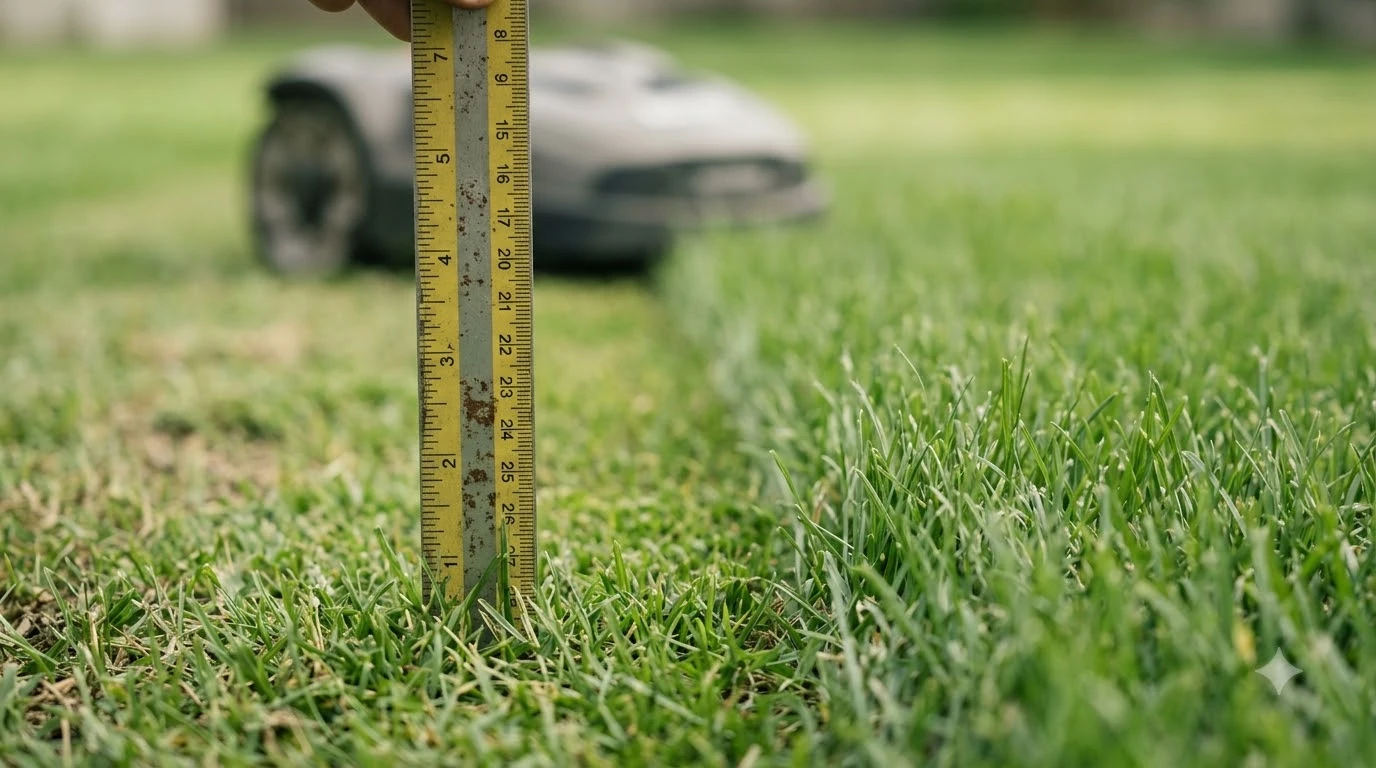

The answer to how often to mow centipede grass is every 10 to 14 days during active growth. The UF/IFAS frequency table gives that range, and growth rate, not the calendar, should set the exact day. Extension sources agree the grass needs less mowing than most lawns.
The short answer
- Summer frequency: about every 10 to 14 days while the grass is growing, per UF/IFAS.
- Mowing height: 1 to 2 inches for most lawns, per Clemson and NC State Extension.
- One-third rule: remove no more than one-third of the blade in a single cut.
- Stress and shade: raise the blade by ½ to 1 inch until the stress passes.
- Fall: raise to about 2 inches once nights drop below 70 °F.
How often to mow centipede grass
Mow centipede grass about every 10 to 14 days during the growing season. UF/IFAS lists that interval in its mowing table for centipedegrass, and the same extension source says the growth rate of the lawn decides how often it needs cutting.
Other extension sources are less specific. Clemson HGIC describes centipedegrass as needing “infrequent mowing” and gives no set schedule. NC State Extension says the grass “doesn’t need frequent mowing.” Those statements match the UF table, since a slow grower can go two weeks between cuts.
Company guidance is more frequent. Walter Reeves, a lawn-care company, says that with moderate fertilizing a lawn should need mowing only once per week. Our reading is that a heavily fed lawn may need the weekly cut the company describes, while a lightly fed lawn may stretch toward the two-week interval.
Our reading is that the calendar is only a starting point. Check the grass every week in peak summer, and mow when it has grown past the one-third mark for your target height. That check is the simplest way to decide how often to mow centipede grass in a given season.
Centipede grass mowing height by season
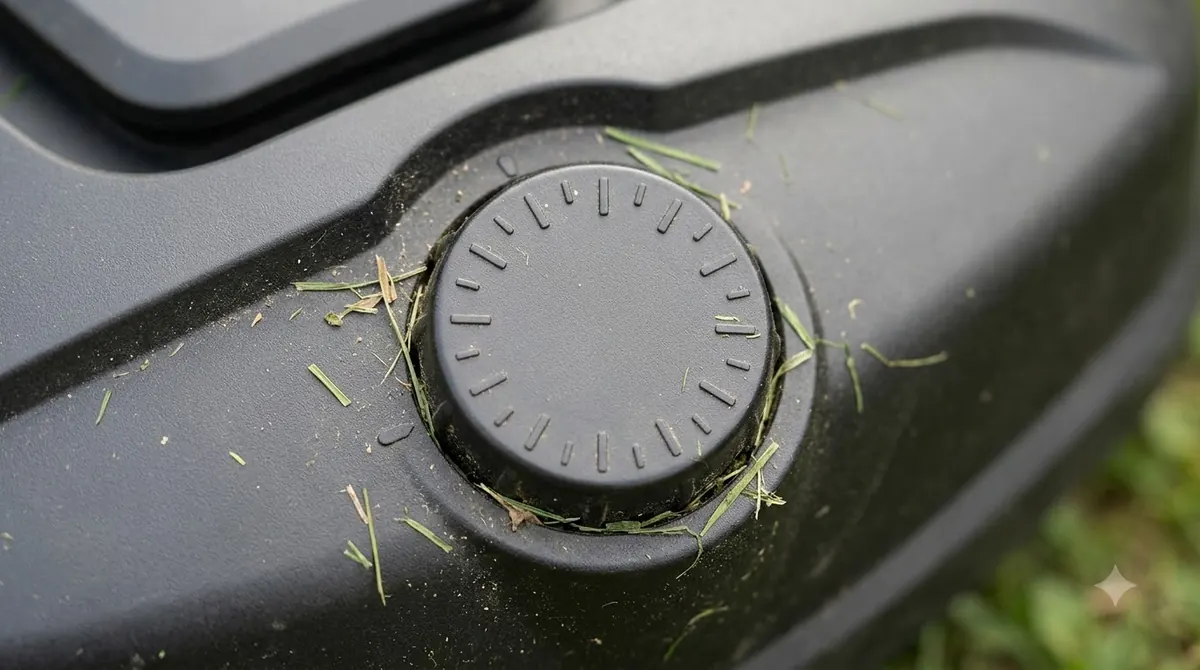
Keep centipede grass at 1 to 2 inches for most of the year, and aim for the upper half in shade or heat. The sources give slightly different numbers, which the table shows side by side.
| Source | Recommended height | Note |
|---|---|---|
| Clemson HGIC | 1 to 2 inches in summer | Depends on site and management |
| NC State Extension | 1 to 2 inches March to May and September to November | Do not let grass get taller than 2½ inches |
| UF/IFAS | 1.5 to 2.0 inches | Listed as optimal height |
| Alabama Cooperative Extension | 1 to 1½ inches | Increase height during stress |
The UF/IFAS range is higher than the Alabama range. Both are extension sources, so the difference reflects regional climate and lawn conditions. If you are unsure, 1.5 inches sits inside every range in the table and is a safe starting point for most home lawns.
Heads up
Walter Reeves warns that mowing higher than 1.5 inches, except in special cases, can lead to winter injury. That conflicts with Clemson’s fall advice to raise the blade to about 2 inches, so check your local extension office before you change the height for winter.
The one-third rule for centipede grass
Follow the one-third rule and never remove more than one-third of the blade height in one mowing. UF/IFAS states the rule directly: mow often enough that no more than one-third of the blade is removed per cut. Alabama Cooperative Extension puts the same limit as no more than 30 percent of the leaf area.
- Pick a target height. For a 1.5-inch lawn, the one-third rule sets the trigger height at about 2.25 inches.
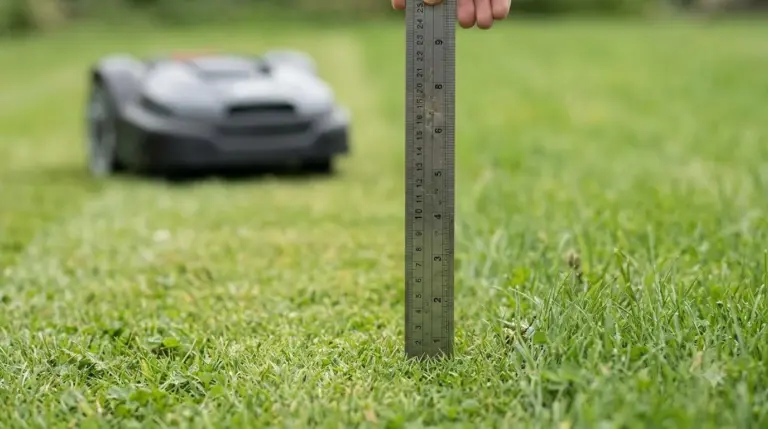
- Measure the grass. Check the height with a ruler at several spots before you mow, not after.
- Mow sooner in peak growth. If the grass has passed the trigger, cut it even if the usual interval has not arrived.
The rule also sets the answer to how often to mow centipede grass when the weather changes. A wet spell can push the grass past the trigger in a few days, so a cut that was due in two weeks may be due sooner, although you should still check whether the lawn is too wet for a robot mower before it runs. Letting the grass grow far past the trigger, then cutting it back hard, removes more green tissue in one pass than the rule allows.
Spring green-up and fall mowing
In spring, lower the mowing height just before the grass greens up, then return to the normal summer height. Clemson HGIC recommends setting the mower slightly lower than the regular summer mowing height at that point.
Fall works the other way. Keep mowing at the normal height until the weather cools, then raise the blade to about 2 inches once nights fall below 70 °F, according to Clemson HGIC. The higher cut helps the turf prepare for dormancy.
Once the grass is dormant, mowing is mostly for clearing debris. NC State Extension says to mow in winter only to remove leaves and other debris, at 1 to 2 inches.
Scalping and when to raise the blade
Raise the blade by ½ to 1 inch during summer stress, and keep it raised until the stress is gone. Clemson HGIC gives that range for heat and drought, and Alabama Cooperative Extension says to increase the height during any period of stress.
- Scalping: removing too much shoot tissue at once can cause long-term turf damage, according to UF/IFAS.
- Spring cuts: Clemson warns against setting the mower too low in spring, since that can scalp the lawn.
- Shade: lawns in partial shade do better at about 2 inches, per Clemson HGIC.
- Thin grass: if the lawn looks thin or scalped in summer, return to the previous height setting.
Alabama Cooperative Extension notes that a well-managed centipede lawn produces little thatch and is not especially prone to scalping. The advice above is a precaution for lawns that are cut too low (see cutting grass too short), not a sign that the grass scalps easily.
Setting a robot mower for centipede grass
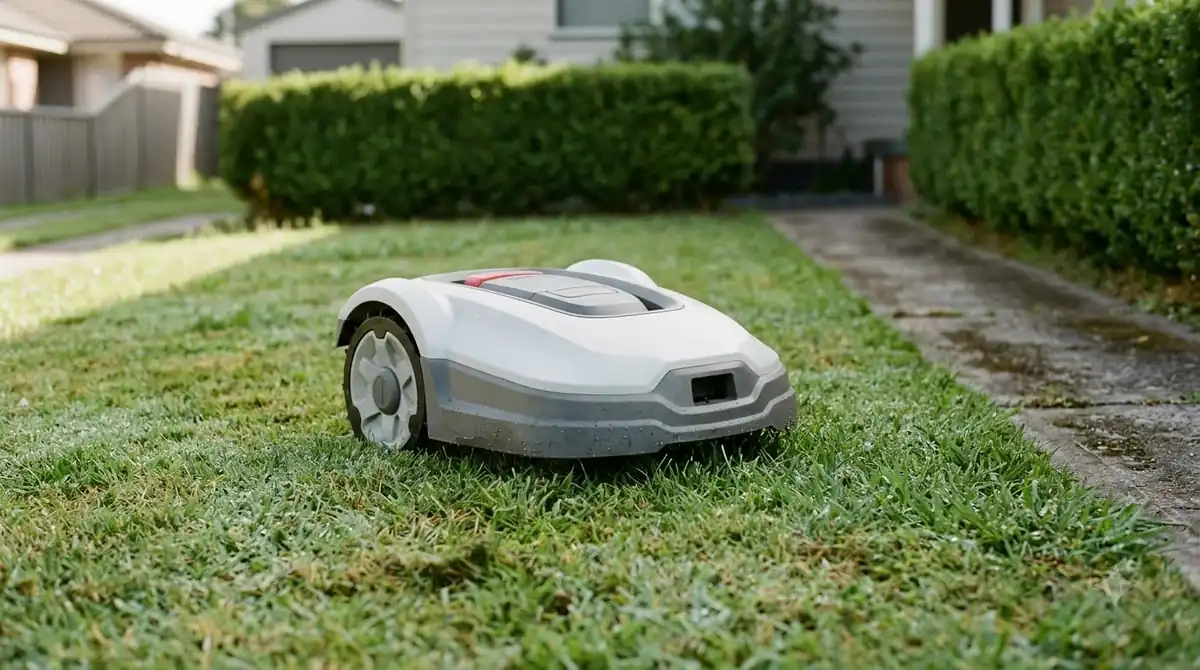
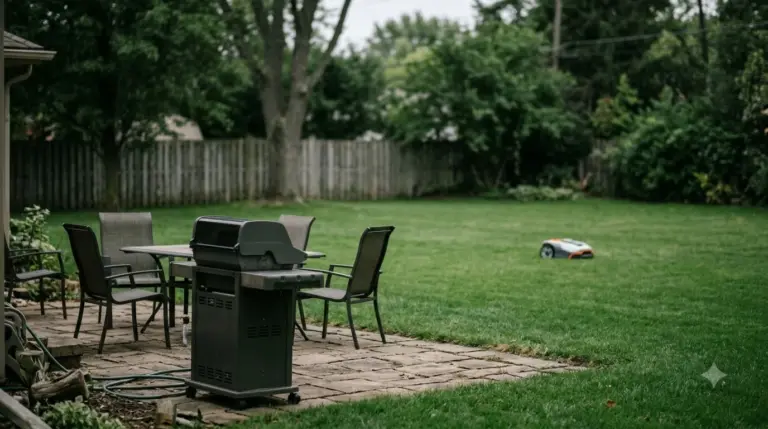
A robot mower can keep centipede grass at 1.5 to 2 inches, since it can cut short runs that follow the growth rate, and our list of the best robot mowers for warm-season grass is a place to start. Extension guides are written for push and ride-on mowers, so the steps below are our reading of their advice, not a quote from them.
For a robot mower, the schedule question changes. Instead of asking how often to mow centipede grass once per season, set short cycles during peak growth and let the one-third rule decide the cutting height. Our reading is that this suits a slow grower, because each run removes only a small slice of blade.
- Check the lowest cutting height. Compare the mower’s lowest setting with the table above. A setting above 2 inches will cut higher than the UF/IFAS optimum.
- Start near the top of the range. Begin at about 2 inches and lower the setting one step at a time if the lawn stays healthy.
- Raise the setting for stress. Move up ½ to 1 inch during heat, drought or shade, then return once the grass recovers.
- Follow growth, not the calendar. Run the mower more often in peak growth and less often in fall and winter, and use our steps to set a robot mower schedule to change the run days.
Frequently asked questions
How often should I mow centipede grass in summer?
Mow about every 10 to 14 days during active summer growth, according to the UF/IFAS mowing table. Mow sooner if the grass passes one-third of its target height. Growth rate matters more than the date on the calendar.
What height should centipede grass be?
Most extension sources give 1 to 2 inches in summer. UF/IFAS lists 1.5 to 2 inches as optimal, while Alabama Cooperative Extension gives 1 to 1½ inches. Raise the blade by ½ to 1 inch during stress.
Can I mow centipede grass too short?
Yes. Removing too much shoot tissue at once can scalp the lawn and cause long-term damage, according to UF/IFAS. Clemson HGIC warns against setting the mower too low in spring for the same reason.
When should I stop mowing centipede grass in winter?
Keep mowing at the normal height until cooling weather, then raise the blade to about 2 inches once nights fall below 70 °F, per Clemson HGIC. In winter, NC State Extension says to mow only to remove leaves and debris.
Our reading is that the answer to how often to mow centipede grass is a starting range, so adjust it after two or three cycles. If the lawn stays healthy at 1.5 inches with a 10 to 14 day interval, the schedule is working. If it thins or browns, raise the blade and mow more often. Your county extension office can confirm the right height for your region, especially before winter.
Sources
- Centipedegrass Yearly Maintenance Program (Clemson HGIC): summer height, spring and fall mowing, stress and shade advice.
- Centipedegrass Lawn Maintenance Calendar (NC State Extension): height range, height cap, winter debris mowing.
- Mowing Your Florida Lawn (UF/IFAS Gardening Solutions): frequency table, one-third rule, scalping damage.
- Home Lawns: Centipedegrass (Alabama Cooperative Extension System): height range, 30 percent leaf rule, stress mowing.
- Centipede Mowing (Walter Reeves lawn care): weekly mowing with fertilizer, one-third rule, fall height caution.
 Up next8 min readBy YardHow Often to Mow Bermuda Grass by SeasonUpdated Nov 11, 2026
 8 min readBy YardHow Often to Mow Buffalo Grass (Schedule and Height)Updated Nov 11, 2026
 9 min readBy YardHow Often to Mow St. Augustine GrassUpdated Nov 11, 2026
 8 min readBy YardHow Often to Mow Zoysia GrassUpdated Nov 11, 2026
 7 min readBy YardBest Mowing Height for Centipede GrassUpdated Nov 11, 2026
 8 min readBy YardCan a Robot Mower Cut Centipede Grass? Heights and LimitsUpdated Nov 11, 2026