
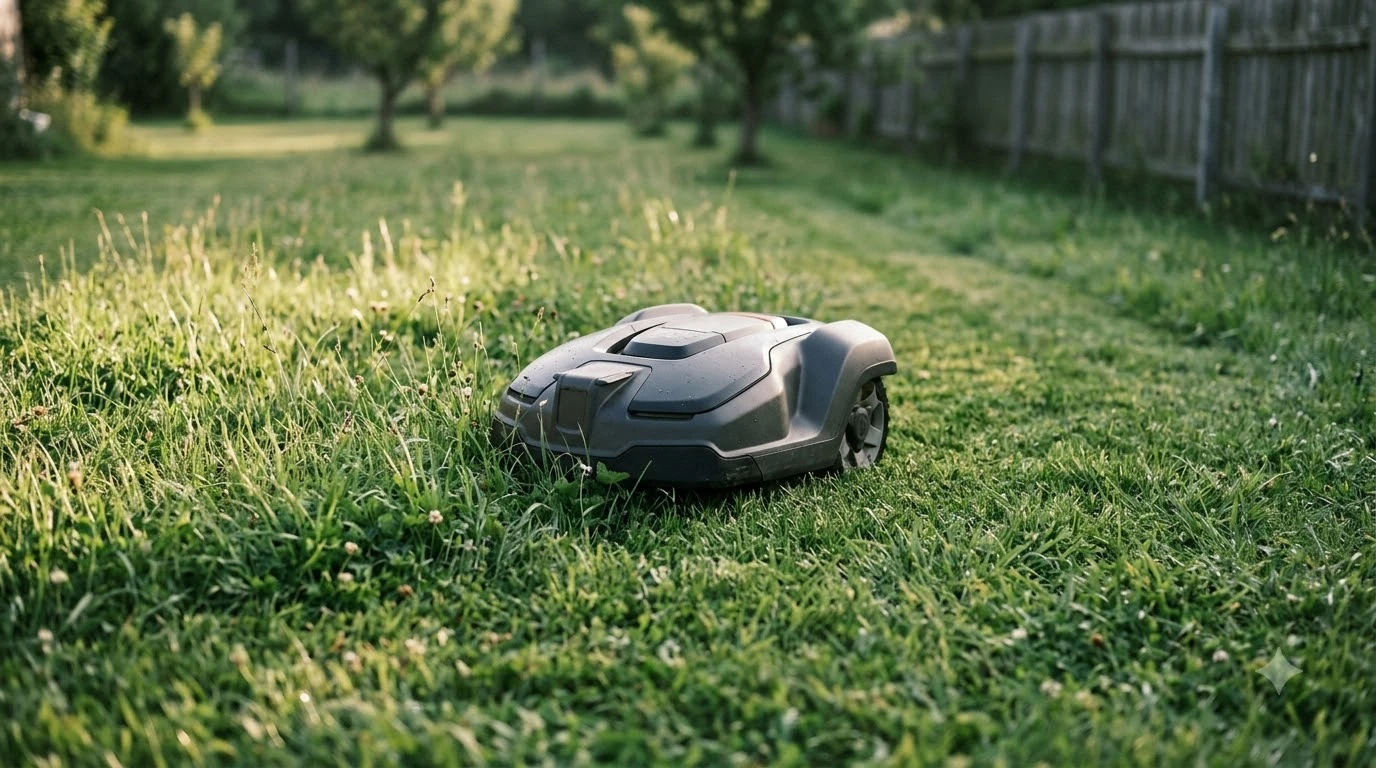

The best mowing height for centipede grass is 1 to 2 inches during the growing season. Clemson University extension recommends starting at 2 inches and lowering the setting in small steps while you watch how the lawn responds. The right number shifts with the season, shade, and summer stress, so this guide walks through each adjustment.
The short answer
- Growing season: mow at 1 to 2 inches from May through August.
- Shade: partial shade lawns do better at about 2 inches.
- Fall: raise the blade to about 2 inches once nights drop below 70 F.
- Never remove more than one-third of the blade in one mowing, and avoid scalping.
Why centipede grass needs a low, steady cut
Centipede grass is a warm-season turf that spreads by stolons, which are stems that creep along the ground and root as they go. Because the stolons sit close to the soil, centipede handles a low cut better than many lawn types. Walter Reeves notes that the stolons are harmed by hot sun and cold winters, so the grass still needs careful handling through the year.
The goal is a dense, even turf. Walter Reeves makes the same point from the weed side: a lawn cut too low is not thick enough to compete with weeds. A steady cut inside the recommended range keeps that turf thick without stressing it.
Best mowing height for centipede grass by season
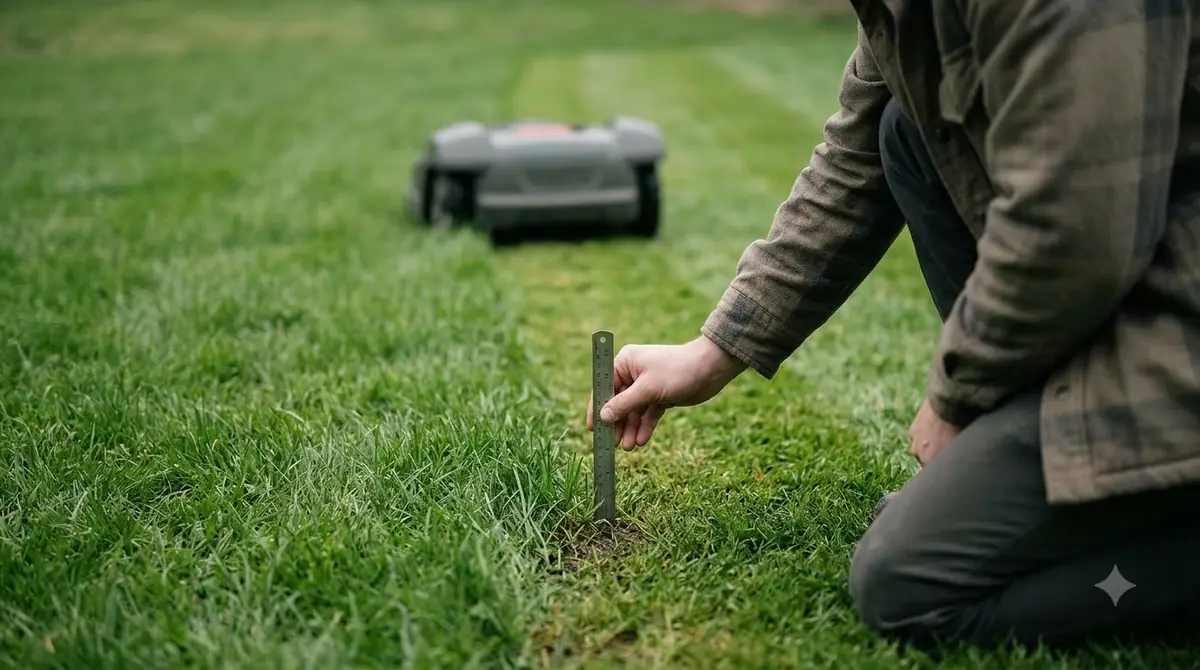
From May through August, Clemson recommends a cut of 1 to 2 inches. Begin at 2 inches and lower the setting in small steps while you check the lawn. If the turf starts to look thin or scalped, go back to the previous setting. The table below summarizes the adjustments Clemson describes for each part of the year.
| Time of year | Suggested height | Why |
|---|---|---|
| May to August (growing season) | 1 to 2 inches | Clemson routine range |
| Heat or drought | Raise by ½ to 1 inch | Clemson stress guidance, until the stress is gone |
| Partial shade | About 2 inches | Clemson shade guidance |
| Fall, nights below 70 F | About 2 inches | Clemson fall guidance |
| Late winter, before green-up | About 1 inch | Clemson spring guidance |
Clemson also advises sharpening the blade about once a month during the growing season. Walter Reeves gives a stricter rule: if the blade has not been sharpened in the past year, it should be sharpened or replaced.
Not every source agrees on fall and winter. Walter Reeves warns that mowing higher than 1.5 inches, except in special circumstances, leads to substantial winter injury. Clemson’s fall guidance is about 2 inches. Our reading is that the 2 inch fall setting is the extension-backed number, and that you should check your local extension office if winter damage is a concern in your area.
The sources also differ on the overall range. Mississippi State University Extension lists 1.5 to 2.0 inches, and Texas A&M AgriLife Extension gives a range of 1.5 to 2.5 inches with 2 inches as the optimal height. Walter Reeves gives 2 to 2.5 inches on one page and 1.5 to 2 inches on another. Our reading is that 2 inches is the one figure that sits inside nearly every range, so it is a safe starting point before you lower the setting.
Adjusting for shade and heat
Partial shade changes the best mowing height for centipede grass. Clemson says lawns in partial shade are better mowed at 2 inches, which is the top of the usual range.
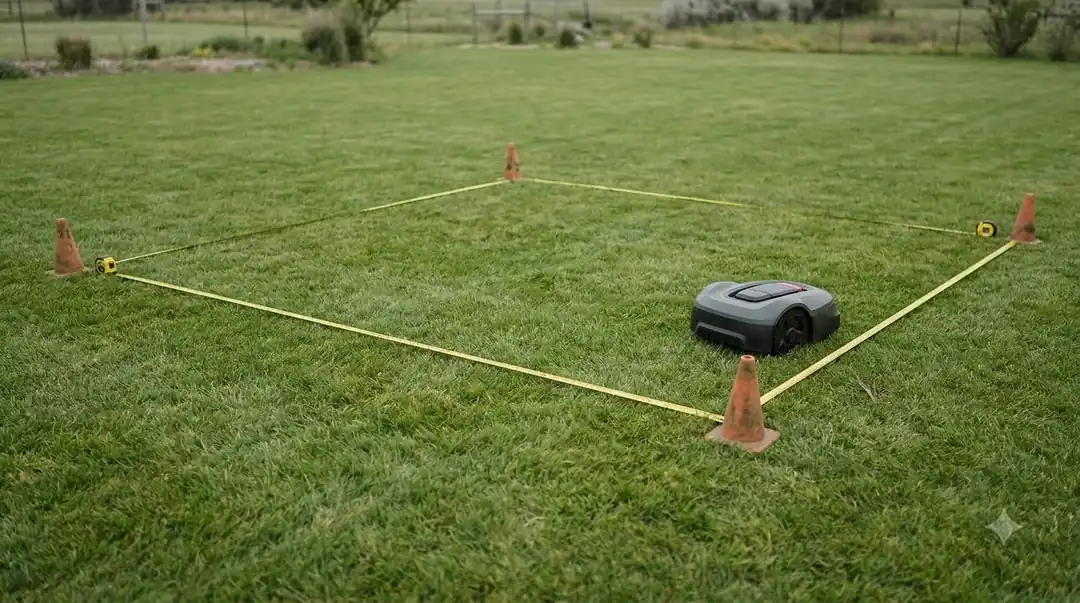
- Shaded areas: set the mower at about 2 inches.
- Heat or drought: raise the height by ½ to 1 inch until the stress eases.
- Thin patches: return to the previous, higher setting and watch how the grass recovers.
Raising the height helps during stress, but Clemson presents it as a mowing adjustment, not a full answer to drought. Our reading is that the change works best when it is made early, before the lawn is already stressed.
The one-third rule and scalping
When you set the best mowing height for centipede grass, LSU AgCenter gives a simple limit, the one-third rule: never remove more than one-third of the leaf blade height in a single mowing. If the grass is tall, step the height down over several cuts rather than taking off a large amount at once. Our guide on how often to mow centipede grass covers the schedule side of the same rule. LSU’s Louisiana Home Lawn Series on centipedegrass recommends mowing at 1 to 2 inches routinely during the growing season.
Scalping, the worst case of cutting grass too short, happens when the mower cuts so low that soil and bare crowns show. Clemson warns against setting the mower too low in early spring, when the mower can scalp the lawn. Walter Reeves adds that scalping the grass very low is not necessary. Mississippi State University Extension goes further and states that it is not recommended to scalp centipede or St. Augustine grass.
- Check the height. Measure from the soil to the top of the blade before you start.
- Raise the setting if the grass is tall. Cut in steps, so you never remove more than one-third at once.
- Watch for bare spots. If the lawn looks scalped, go back to the previous height for the next cut.
Common mistakes that thin the lawn
The most common error is cutting too low, according to Walter Reeves. Mowing too high is a mistake as well. Walter Reeves says a lawn cut above the recommended range does not grow as densely as it should and may develop a thatch problem. Three other habits also undermine the best mowing height for centipede grass.
- Dull blades: Walter Reeves notes that dull blades leave ragged ends that make the lawn look yellowish.
- Feeding at the wrong time: Clemson advises no nitrogen from January through April.
- Feeding without a test: Clemson recommends a soil test first, then 1 to 2 pounds of actual nitrogen per 1,000 square feet per year.
Robot mowers and centipede grass
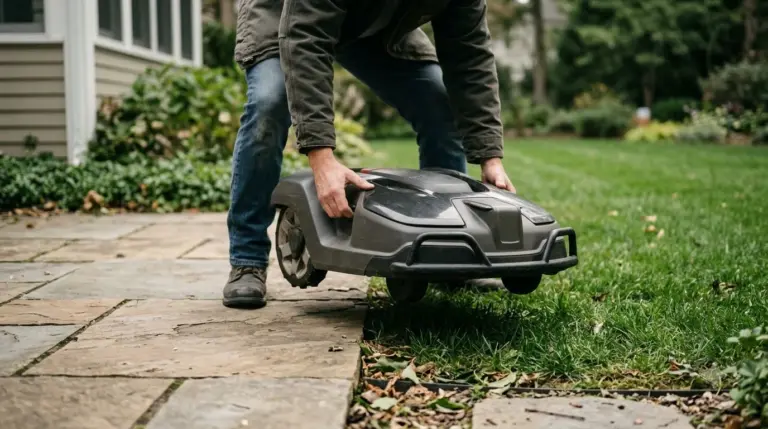
A robot mower can hold the best mowing height for centipede grass only if its cutting settings cover the 1 to 2 inch band. Before you buy, check the minimum and maximum height on the spec sheet rather than relying on general claims, or start from our guides to robot mowers with adjustable cutting height and the best robot mowers for warm-season grass. Our reading is that a mower whose lowest setting stays above 2 inches cannot follow the Clemson summer range.
Because a robot mower trims the lawn on a schedule, the one-third rule still applies. Check that the lawn stays evenly thick over the first few weeks, and raise the height if the turf starts to thin.
Frequently asked questions
How often should you mow centipede grass?
Clemson describes centipede grass as needing infrequent mowing and gives no fixed schedule. Walter Reeves says that with moderate fertilization, mowing should only be needed about once a week. Cut when the lawn grows past the height you set, and never remove more than one-third of the blade in one pass.
Is 1 inch too short for centipede grass?
Not by Clemson or LSU AgCenter, whose ranges both include 1 inch. Clemson suggests going closest to 1 inch in late winter, just before green-up, and returning to about 2 inches in fall. Walter Reeves names cutting too low as the most common centipede mistake, so treat 1 inch as the bottom of the range, not the target.
How much fertilizer does centipede grass need?
Clemson recommends 1 to 2 pounds of actual nitrogen per 1,000 square feet per year, with the higher rate on sandy soils. Base the amount on a soil test, and do not apply nitrogen from January through April.
What height should centipede grass be in winter?
Once nighttime temperatures drop below 70 F, raise the blade to about 2 inches. In late winter, lower it to about 1 inch just before green-up begins in spring.
Sources
- Centipedegrass Yearly Maintenance Program (Clemson HGIC): ideal height, shade, fall and spring settings, fertilizer timing.
- Louisiana Home Lawn Series: Centipedegrass (LSU AgCenter): routine 1 to 2 inch cut and the one-third rule.
- What Length Should You Cut Your Grass? (Mississippi State University Extension): 1.5 to 2.0 inch range and the scalping warning.
- Mowing (Texas A&M AgriLife Extension): 1.5 to 2.5 inch range and 2 inch optimal height for centipedegrass.
- Centipedegrass Height Matters (Walter Reeves): the most common mowing mistake and stolon damage.
- Centipede Mowing (Walter Reeves): winter injury warning, mowing frequency, blade sharpening, and scalping.
- What Is The Best Height To Mow Centipede And Bermuda Grass? (Walter Reeves): 1.5 to 2 inch range and thatch risk when mowing high.
 Up next8 min readBy YardCan a Robot Mower Cut Centipede Grass? Heights and LimitsUpdated Nov 11, 2026
 8 min readBy YardBest Mowing Height for Buffalo Grass (What Extension Guides Say)Updated Nov 11, 2026
 8 min readBy YardBest Mowing Height for St Augustine GrassUpdated Nov 11, 2026
 8 min readBy YardBahia Grass Mowing Height and Schedule: What Extension Sources SayUpdated Nov 11, 2026
 8 min readBy YardBest Mowing Height for Zoysia Grass: Summer, Spring and FallUpdated Nov 11, 2026
 7 min readBy YardBest Mowing Height for Shade Grass: What Extension Sources RecommendUpdated Nov 11, 2026