
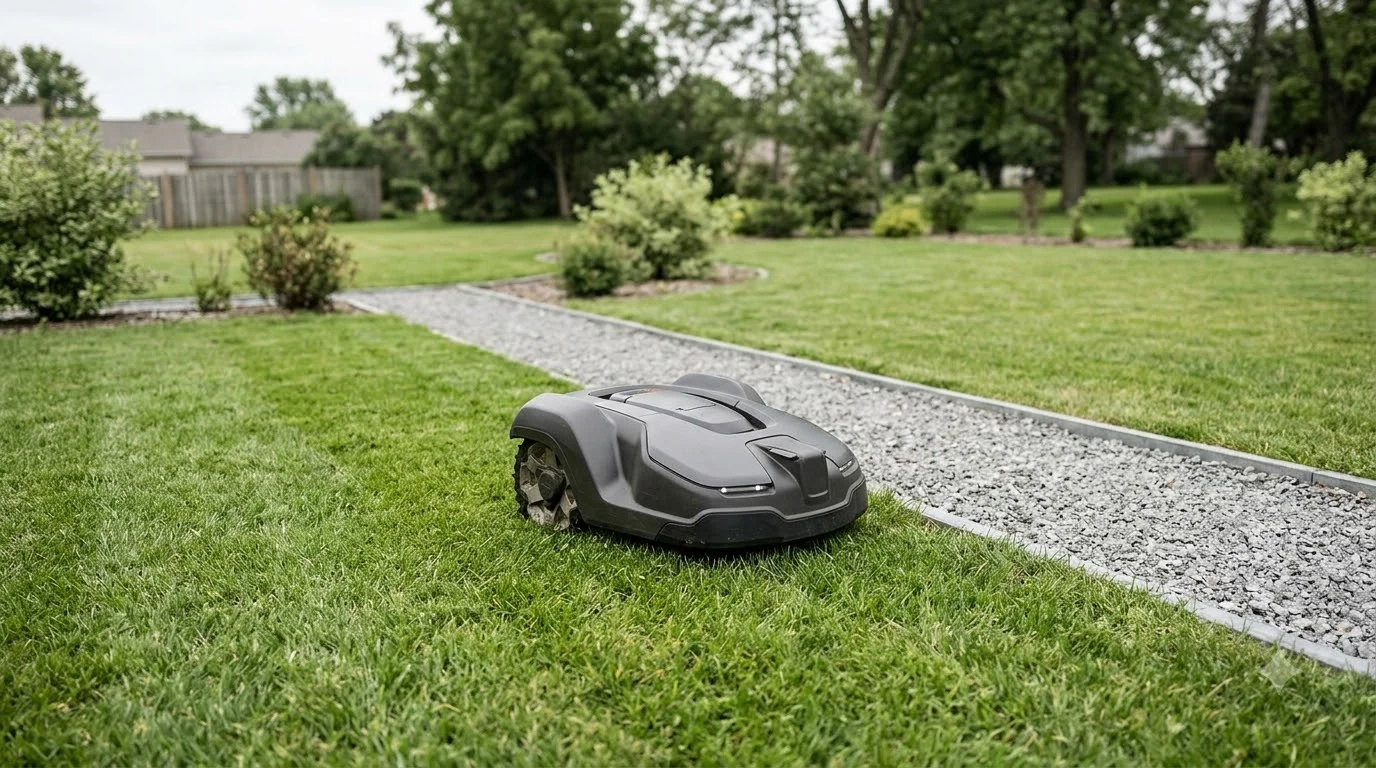

What happens if you cut grass too short? It causes scalping. Scalping removes the green leaf and exposes the stems and crowns, which leaves the lawn brown and stubbly. Severely scalped turf can weaken, thin out and, in some cases, fail to recover.
The short answer
- What happens if you cut grass too short: the lawn turns yellow or brown where stems are exposed.
- Root damage: short-cut turf usually develops a shallow root system and less density.
- Weeds: open, thin turf gives weeds such as crabgrass room to establish.
- Recovery: creeping grasses like bermudagrass usually outgrow scalping, while severely damaged ryegrass and fescue may need reseeding or sodding.
- Rule of thumb: remove no more than one-third of the blade at any one mowing.
What happens if you cut grass too short
Scalping happens when grass is mowed so short that the stem tissue is exposed, according to the University of California’s Integrated Pest Management program. Damaged turf turns yellow or brown, and the damage shows up as patchy color on the lawn.
K-State Research and Extension describes the same look. Scalped turf appears brown and stubbly because the healthy leaves have been removed and the crowns, dead leaves or even bare soil are showing. The extension guidance is direct on the point: avoid scalping, because it can leave an unattractive lawn and, in some cases, severely scalped turf may not recover.
The leaf blade is where the plant makes most of its energy. University of Maryland Extension warns that removing a large share of the leaf surface can result in plant shock. Our reading is that a cut this deep also sets off a longer repair period.
Why short grass has weaker roots
Roots suffer when you cut grass too short, because the top of the plant is cut too far. K-State notes that turf cut too short usually has a shallow root system and lacks density. Those lawns also tend to need more pesticide applications. University of Maryland Extension puts it more plainly: low mowing stresses grass roots, leaving the plants weaker and less drought-tolerant.
K-State also warns that removing more than one-third of the blade may cause root growth to stop while the leaves and shoots grow back. The plant spends its reserves on regrowth instead of on depth, which is why a scalped lawn can look fine above ground for a while and still be weak below.
Illinois Extension makes the reverse point. Lawns mowed at higher heights tend to have deeper roots, and deeper roots help the grass cope with dry spells. In practice, the height you choose shapes how the lawn grows underground as well as how it looks.
How short grass lets weeds in
If you cut grass too short, the lawn thins out and weeds fill the gaps quickly. K-State says that when turf is mowed too short it can become open, which allows weed invasion, and it names annual weeds such as crabgrass as the usual problem. University of Maryland Extension calls mowing cool-season grass too short a major contributor to lawn deterioration and weed abundance, especially for crabgrass.
Illinois Extension reaches the same conclusion from the other direction: mowing too close invites weed growth, while taller mowing is linked to fewer weed problems. Our reading is that taller grass shades more of the soil, which leaves weed seedlings less room to start.
University of Maryland Extension notes that mowing to the proper height can reduce weeds and diseases by 50 to 80 percent in tall fescue lawns. Our reading is that weeds are often the first visible sign of a scalping problem, since bare or thin patches appear before the grass itself has died back. Treating the weeds without fixing the cutting height usually brings them back.
Which grasses recover from scalping
What happens if you cut grass too short, and whether the lawn recovers, depends mainly on how the grass grows. UC IPM separates the two groups clearly, and the difference matters when you decide whether to wait or to reseed.
| Grass type | Typical recovery after scalping | Source |
|---|---|---|
| Bermudagrass and other creeping grasses | Generally outgrow the injury if proper cultural practices are followed | UC IPM |
| Ryegrasses, fescues and other bunch grasses | May need reseeding or sodding if damage is severe | UC IPM |
| Any grass, severe scalping | K-State warns that severely scalped turf may not recover | K-State |
Our reading is that creeping grasses can spread sideways into a bare patch from the healthy turf around it. Bunch grasses grow in clumps and spread less, which is why the extension guidance more often calls for reseeding or sodding them.
How short is too short for common lawns
The safe minimum, meaning how short is too short, depends on the species. The table below uses Illinois Extension ranges, with the K-State figures noted where the two sources differ.
| Grass | Height range | Notes |
|---|---|---|
| Tall fescue | 2.5 to 3.5 inches | Illinois Extension |
| Kentucky bluegrass | 2 to 3 inches | Illinois Extension; K-State lists 2 to 3 inches |
| Bermudagrass | 1 to 2 inches | Illinois Extension; UC IPM gives 1 to 1.5 inches for seeded types |
| Zoysiagrass | 1 to 3 inches (Illinois) or 1 to 1.5 inches (K-State) | The two sources disagree |
The sources also disagree on warm-season grasses. UC IPM sets seeded bermudagrass at 1 to 1.5 inches, while Illinois gives 1 to 2 inches and University of Maryland Extension gives 1 to 1.5 inches. For zoysiagrass, the ranges run from 1 to 3 inches in Illinois to 1.5 to 2.5 inches in Maryland. Compare your own lawn with the extension office that covers your area.
K-State gives a simple example for Kentucky bluegrass kept at 2 inches: mow it when it reaches 3 inches. Following the one-third rule keeps each cut small enough that the plant can keep up. For long-term targets, see the best mowing height for Kentucky bluegrass and the best mowing height for fescue.
Heads up
Heights are guidance, not a fixed rule. Lawns under heat or drought stress need the higher end of the range, and K-State advises raising the mowing height during warm, hot periods. See mowing a lawn in summer heat and drought for more.
What causes scalping besides mowing too low
Cutting grass too short is only one cause of damage, and a safe height does not guarantee that the lawn stays green. UC IPM lists several other causes that can expose stems even when the mower is set correctly.
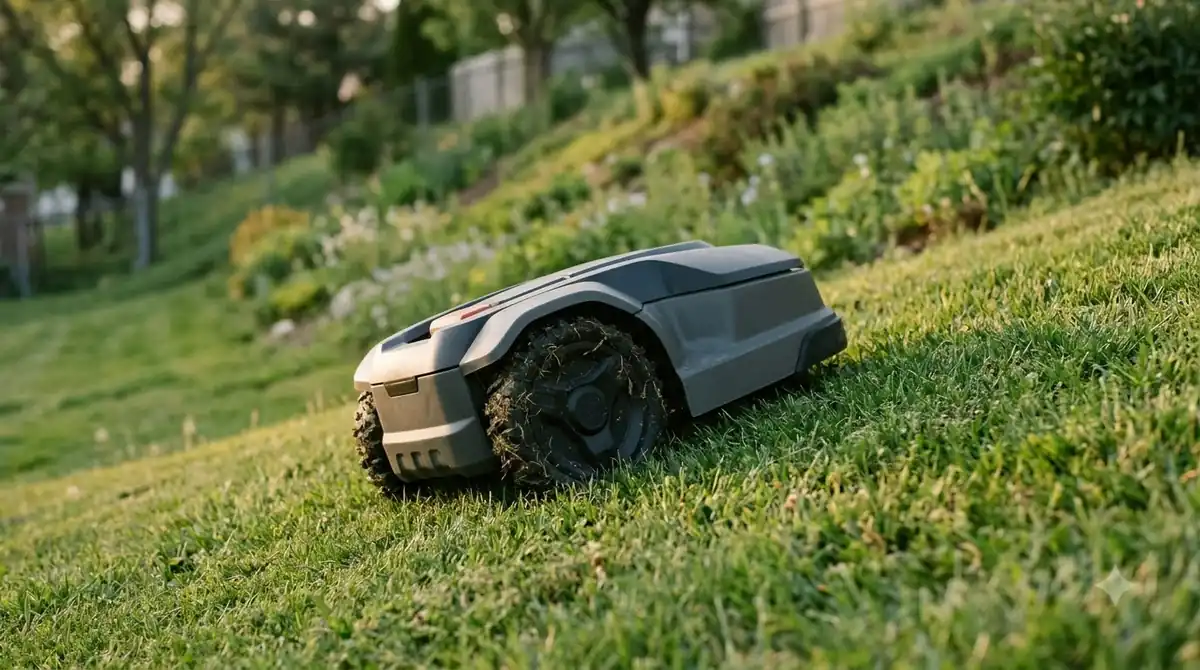
- Uneven ground: scalping is more likely on hills or where the wheels drop into a low spot, a problem covered in robot mowers on uneven lawns.
- Low mower setting: University of Maryland Extension says a low mowing height increases the risk of scalping, especially over uneven ground.
- Lumps and debris: mole and vole runways, buried debris and shallow tree roots create bumps that scalp the high spots.
- Thick thatch: UC IPM recommends dethatching when thatch is more than 1/2 inch thick.
- Extremely weedy turf: dense weed growth can contribute to scalping.
If a lawn scalps in the same place every time, check the ground first. Our reading is that filling low spots or raising the mower on that side often solves the problem better than adjusting the whole lawn. University of Maryland Extension recommends leveling lumpy areas where feasible.
How to recover a scalped lawn
What happens if you cut grass too short includes a slow recovery, and the first steps are about giving the grass room to regrow. The steps below follow the extension guidance and our reading of it.
- Raise the mowing height. K-State advises a higher setting during warm, hot periods or when turf is stressed.
- Keep to the one-third rule for mowing grass. Once the grass is growing again, never remove more than one-third of the blade at a time. University of Maryland Extension warns that removing larger amounts can cause plant shock, dried-out leaf tips and reduced grass health.
- Check for thatch and uneven spots. UC IPM names both as common causes, so dethatch if the layer is over 1/2 inch.
- Decide whether to reseed. Creeping grasses usually fill in on their own. For ryegrass or fescue with severe damage, UC IPM says reseeding or sodding may be needed.
Frequently asked questions
What happens if you cut grass too short?
It scalps the lawn, exposing stems and leaving brown patches, and the roots can grow shallow. Whether it grows back depends on the grass type and how badly it was scalped. UC IPM says bermudagrass and other creeping grasses generally outgrow scalping injury, while bunch grasses may need reseeding or sodding if the damage is severe.
How much grass can I safely cut off at once?
No more than one-third of the grass blade at any one mowing, according to K-State, UC IPM and Illinois Extension. Mow more often in peak growth so each cut stays within that limit.
What is the difference between scalping and cutting too short?
Scalping is cutting so low that the stem tissue is exposed, as UC IPM defines it. Grass can be cut shorter than ideal without being scalped if the crowns stay covered, but the stress still weakens the lawn over time.
Should I raise my mower for summer?
Yes, K-State advises raising the mowing height during warm, hot periods and when turf is under stress. Illinois Extension links taller mowing to deeper roots, and University of Maryland Extension notes that low mowing stresses the roots.
Sources
- Healthy Lawns: Managing Pests, Abiotic Disorders, Scalping (UC IPM): scalping definition, causes, recovery by grass type, thatch threshold.
- Mowing (K-State Research and Extension): scalped turf appearance, one-third rule, shallow roots, weeds, raising height in heat.
- Mowing Warm-Season Grasses (UC IPM): mowing heights for bermudagrass and zoysia, one-third rule.
- Maintaining an Established Lawn (University of Maryland Extension): cutting too short and weeds, root stress, plant shock from removing too much leaf.
- Lawn Problems Not Caused by Pests or Diseases (University of Maryland Extension): low mowing height as main scalping cause, uneven ground, lumps.
- Mowing Your Lawn (University of Illinois Extension): mowing heights by grass type, deeper roots, weeds.
 Up next9 min readBy YardHow Do I Know If a Robot Mower Will Work in My Yard?Updated Nov 11, 2026
 10 min readBy YardCan a Robot Mower Cut St. Augustine Grass?Updated Nov 11, 2026
 9 min readBy YardCan a Robot Mower Cut Bermuda Grass?Updated Nov 11, 2026
 7 min readBy YardRobot Mower Wet Grass: Can You Cut It and When to WaitUpdated Nov 11, 2026
 8 min readBy YardCan a Robot Mower Cut Cool Season Grass?Updated Nov 11, 2026
 8 min readBy YardCan a Robot Mower Cut Centipede Grass? Heights and LimitsUpdated Nov 11, 2026