
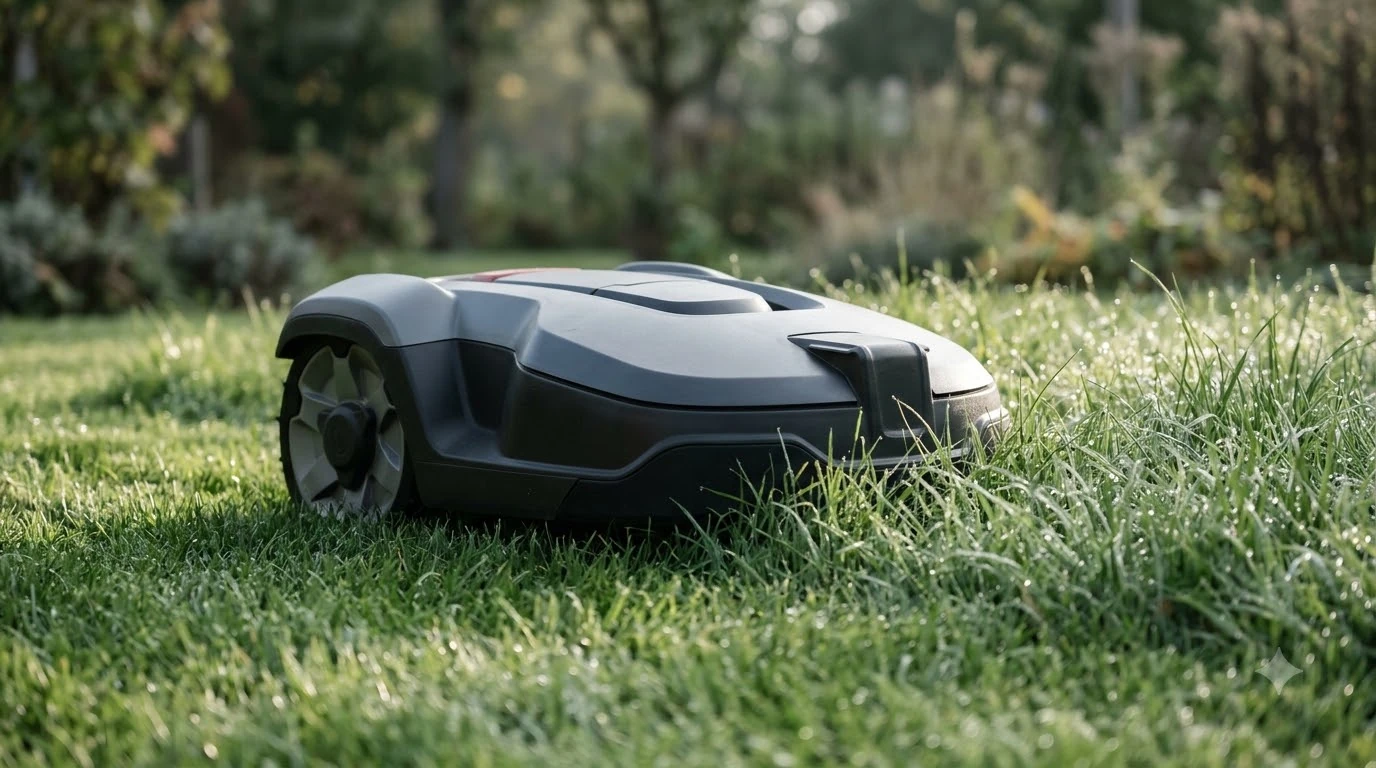

The best mowing height for Kentucky bluegrass is 2.5 to 3 inches in spring and fall and 3 to 3.5 inches in summer, according to Iowa State University Extension. The taller summer cut gives the grass more leaf to shade its crowns during heat. This guide covers the seasonal numbers, why the summer cut is higher, how the one-third rule applies, and what changes when a robot mower does the cutting.
The short answer
- Spring and fall: cut at 2.5 to 3 inches.
- Summer (June to August): raise the cut to 3 to 3.5 inches.
- One-third rule: never remove more than one third of the grass height in a single mowing.
- Older guidance: a 2005 University of Kentucky article listed a lower range of 2 to 2.5 inches, so check the date on any height you find.
Best mowing height for Kentucky bluegrass by season
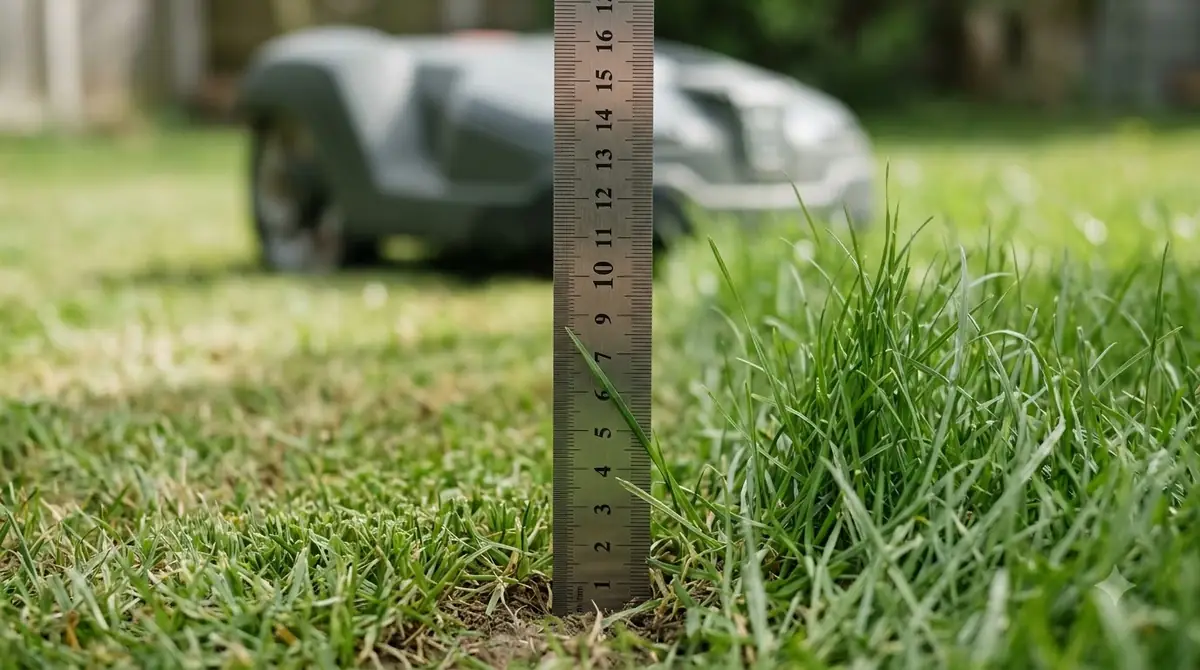
Iowa State recommends a different height for each part of the year, with the taller cut reserved for the hottest months. In spring and fall, Kentucky bluegrass lawns should be mowed at 2.5 to 3 inches. During June, July, and August, the same extension guidance raises the cut to 3 to 3.5 inches.
| Season | Recommended height | Source |
|---|---|---|
| Spring and fall | 2.5 to 3 inches | Iowa State University Extension |
| Summer (June to August) | 3 to 3.5 inches | Iowa State University Extension |
The seasonal change is the detail most lawn guides skip. A single setting chosen for the best mowing height for Kentucky bluegrass in April and left alone for the year will either run too low in July or too high in May. Set the mower for the season you are in, and adjust again when the weather changes.
Why Kentucky bluegrass gets a taller summer cut
Taller blades keep the plant crowns cooler through the hottest weeks, according to Iowa State. Kentucky bluegrass is a cool-season grass, and our reading is that the extra leaf area acts as a buffer when summer heat slows growth. This is the core reason the best mowing height for Kentucky bluegrass changes with the season.
- Shade for the crowns: the extra leaf area shades and cools the crowns, the base of each plant.
- More food production: taller leaves provide more food-producing foliage during stress.
- Deeper roots: Iowa State says the higher cut also promotes deeper root growth.
Our reading is that the summer raise matters most when you are mowing in heat and drought, because the best mowing height for Kentucky bluegrass is then the one that protects the crowns. A lawn that is watered less and cut shorter in July has less buffer against stress, so the higher setting is the cheaper insurance.
How the one-third rule applies to Kentucky bluegrass
The one-third rule says never remove more than one third of the total leaf area at one time, Iowa State advises, and that limit applies whatever the best mowing height for Kentucky bluegrass is in your yard. Removing more severely injures the turf and reduces its ability to withstand stress.
An older University of Kentucky rule of thumb is slightly looser, allowing one third to one half of the grass height at one mowing. The stricter one-third figure is the safer target for any lawn under stress.
To turn the rule into a mowing trigger, divide the target height by about 0.67. This is our arithmetic, not a figure from a source:
| Target height | Mow when grass reaches (our arithmetic) |
|---|---|
| 2.5 inches | About 3.75 inches |
| 3 inches | About 4.5 inches |
| 3.5 inches | About 5.25 inches |
Our reading is that the trigger works best with frequent mowing. If the grass has grown well past the trigger in spring, our reading is that taking the first cut in two steps rather than one limits the shock.
Why older guides list lower heights
A University of Kentucky article from February 2005 gave 2 to 2.5 inches for Kentucky bluegrass, tall fescue, and creeping red fescue. That range is lower than Iowa State’s current spring and fall guidance, and the article does not separate spring from summer.
The same 2005 article gave a different range for perennial ryegrass, 1 to 2 inches, which shows that cool-season species were not all treated alike. Because the older advice comes from one publication and one date, use it as background rather than a target.
Purdue University’s turf mowing table (AY-8) differs from Iowa State on timing. It lists 2 to 3.5 inches for Kentucky bluegrass and says: “Do not vary the mowing height during the year.” Iowa State, by contrast, raises the cut in summer. Both agree on the one-third rule, so the seasonal question is the one to settle with your local extension office.
- Older range: 2 to 2.5 inches, as stated in 2005.
- Current range (Iowa State): 2.5 to 3 inches in spring and fall, 3 to 3.5 inches in summer.
- Local check: your county extension office can confirm which range suits your soil and climate.
Setting a robot mower for Kentucky bluegrass
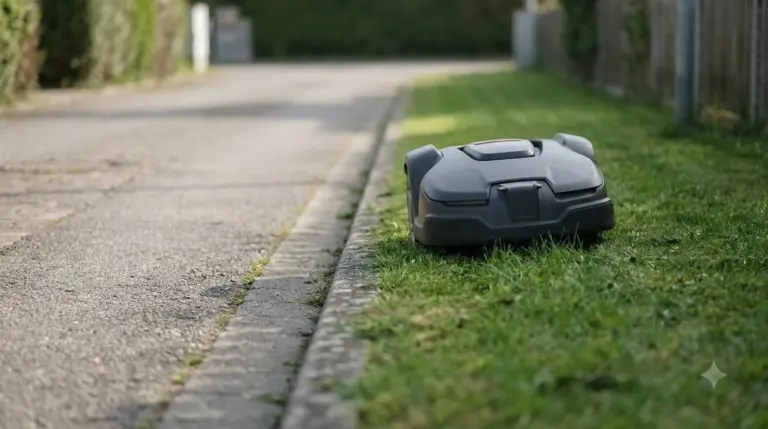
Extension guidance is written for conventional mowers, so the steps below are our reading of that guidance applied to a robot mower, not a quote from any source. Use them to translate the best mowing height for Kentucky bluegrass into settings your machine can actually hold. For the wider picture, read whether a robot mower can cut cool-season grass.
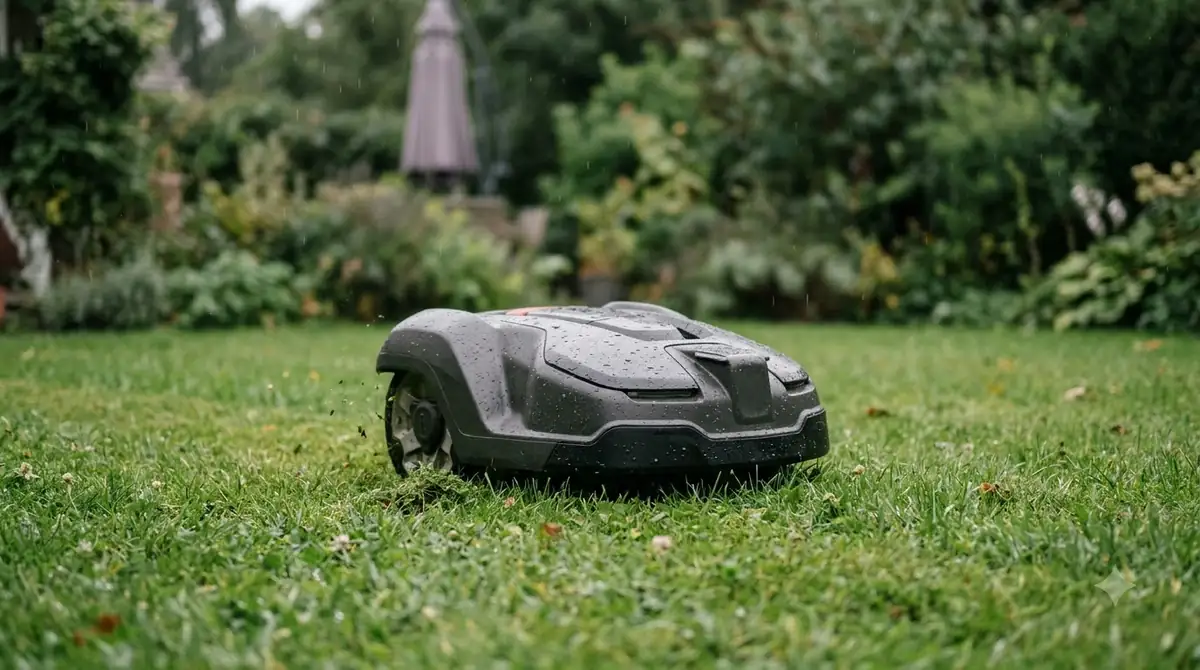
- Check the highest cutting height first. A robot mower must reach your target height, so compare its maximum setting with 3.5 inches before you buy or set it up.
- Raise the setting before summer. Move to 3 to 3.5 inches in June and keep it there through August, then lower it again in fall.
- Run short, frequent sessions in spring. Frequent passes remove a small amount each time, which keeps every cut inside the one-third rule.
- Keep the blades sharp. Our reading is that dull blades leave ragged leaf tips, which makes the lawn look stressed after each cut.
- Watch for scalping. Scalping is cutting grass too short. If brown stems show after a pass, the cut was too low for that week, so raise the setting.
Our reading is that a robot mower works best when it runs often enough that the grass never grows far above the target. Long gaps between runs push the lawn toward the one-third limit, which is where scalping starts.
Before you change your mower, confirm the best mowing height for Kentucky bluegrass with your county extension office, because summer raises and the Purdue no-change advice can lead to different results on the same lawn.
Frequently asked questions
Is 2 inches too short for Kentucky bluegrass?
Two inches sits at the low end of the 2005 University of Kentucky range of 2 to 2.5 inches. Iowa State’s current guidance for spring and fall is 2.5 to 3 inches, so a cut near 2 inches leaves less leaf for summer heat. Raise the setting in hot weather.
Does a taller summer cut prevent scalping?
A taller cut leaves more leaf area, which Iowa State says helps keep the plant crowns cooler. Scalping can still happen if too much leaf is removed in one pass, so the one-third rule still applies in summer.
How often should I mow Kentucky bluegrass?
Neither source gives a fixed schedule, and our guide on how often to mow Kentucky bluegrass covers the timing. Mow often enough that each pass removes no more than one third of the leaf height. In spring, when growth is fast, that usually means more frequent cuts.
Can a robot mower cut Kentucky bluegrass at 3 to 3.5 inches?
Only if its highest cutting setting reaches that height, which is the practical test for any best mowing height for Kentucky bluegrass. Check the spec sheet before buying, because a lower maximum will keep the lawn shorter than the summer target.
Sources
- What is the correct mowing height for a lawn in summer? (Iowa State University Extension): spring, fall and summer heights, the reason for the summer raise, and the one-third rule.
- AY-8: Mowing, Dethatching, Aerifying and Rolling Turf (Purdue University Extension): 2 to 3.5 inch range for Kentucky bluegrass, the advice not to vary height through the year, and the one-third rule.
- Mowing grass for best results (University of Kentucky College of Agriculture, February 2005): the older 2 to 2.5 inch range and the one-third to one-half rule of thumb.
 Up next9 min readBy YardHow Often to Mow Kentucky Bluegrass by SeasonUpdated Nov 11, 2026
 8 min readBy YardBest Mowing Height for Fescue: Tall vs Fine Fescue GuideUpdated Nov 11, 2026
 7 min readBy YardBest Mowing Height for Centipede GrassUpdated Nov 11, 2026
 8 min readBy YardBest Mowing Height for Buffalo Grass (What Extension Guides Say)Updated Nov 11, 2026
 8 min readBy YardBest Mowing Height for St Augustine GrassUpdated Nov 11, 2026
 9 min readBy YardPerennial Ryegrass Mowing Height and Schedule ExplainedUpdated Nov 11, 2026