
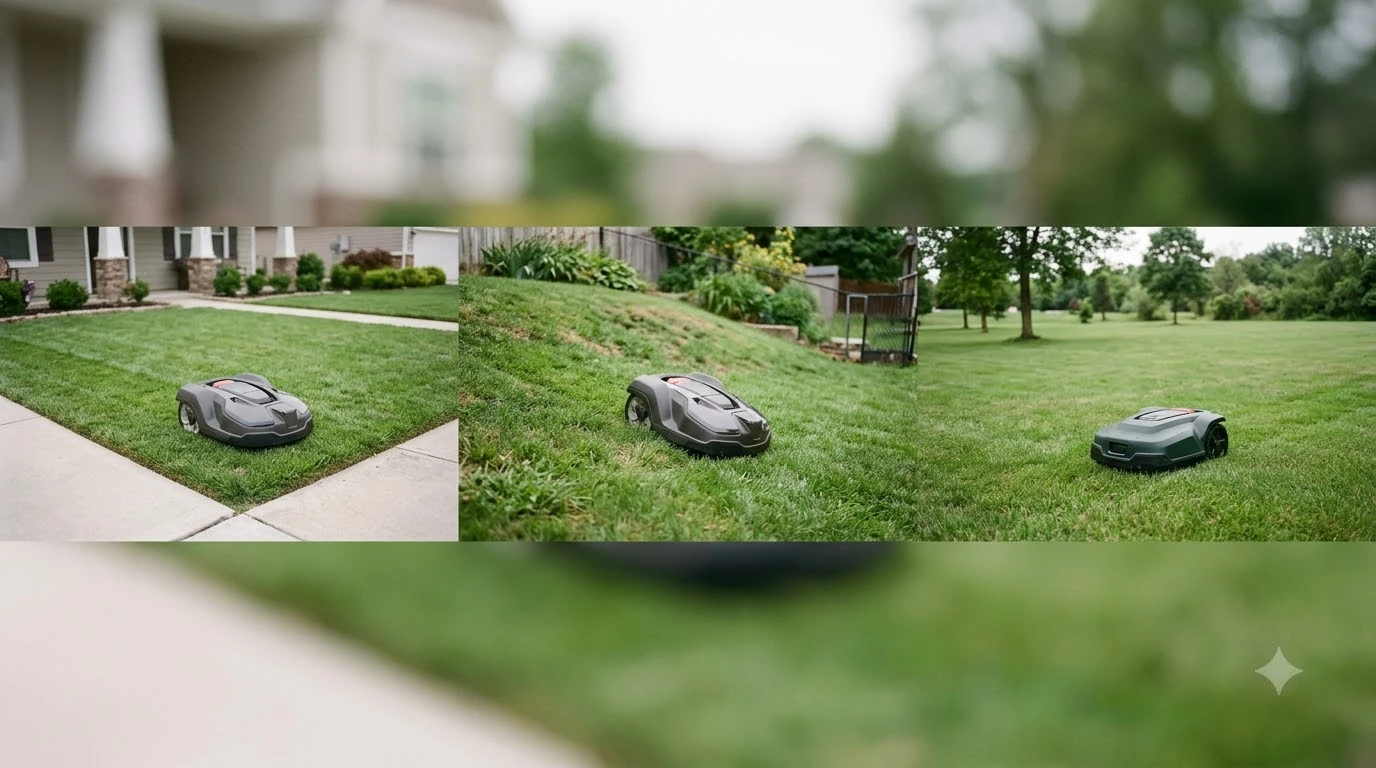

On how does a robot mower handle tree roots, the short answer is that it mostly works around them. A root that stands above the soil can still stop it. Exposed roots can make bumps and gaps that lift one wheel or leave the chassis catching on the surface. The usual fix is a no-go zone or a smoother ground surface, not a different mower.
The short answer
- Stopping: an exposed root can lift one side of a robot mower while the opposite wheel loses grip, according to a Eufy troubleshooting guide.
- Repeated stops: a root at one border can cause the mower to stop again and again at the same spot.
- Main fix: add a no-go zone around the root, or level the ground so the wheels and chassis stay clear.
- Grass: roots also compete with turf for soil space, water and nutrients, according to UF/IFAS Extension.
How does a robot mower handle tree roots compared with a trunk?
Most people think of a tree as a single upright obstacle, but the part that matters most to a mower is often underground. Roots that grow close to the surface can push up through the grass, leaving a ridge, a hump or a dip that changes how the wheels meet the ground. A trunk is easy to see from a distance and easy to keep away from. A flat or low root is easier to drive over without noticing it.
The practical answer to how does a robot mower handle tree roots depends on the root’s height and the soil around it. Our reading is that a root problem is mainly a ground problem. A mower does not need to understand that it is passing a tree. It needs a surface where the wheels keep grip and the body clears the ground. That is why the same root can be harmless in one spot and a repeated stop in another, depending on how high it sits and how the soil around it has worn away.
Robot mowers follow a defined working area, so the first question is where the roots sit relative to that area. A root inside the mowing zone will be crossed many times over a season. A root at the edge may only matter when the mower turns near the border. Walking the yard after heavy rain is a useful habit, because wet soil shows where roots have pushed up and where ruts have started to form.
How exposed roots can stop the mower
A troubleshooting guide from the robot mower brand Eufy lists exposed tree roots among the common causes of a robot mower getting stuck, along with soft soil after summer rain and low sprinkler heads. The guide says an exposed root can lift one side of the mower while the opposite wheel loses grip, which is the mechanism behind many stops that look like sensor faults.
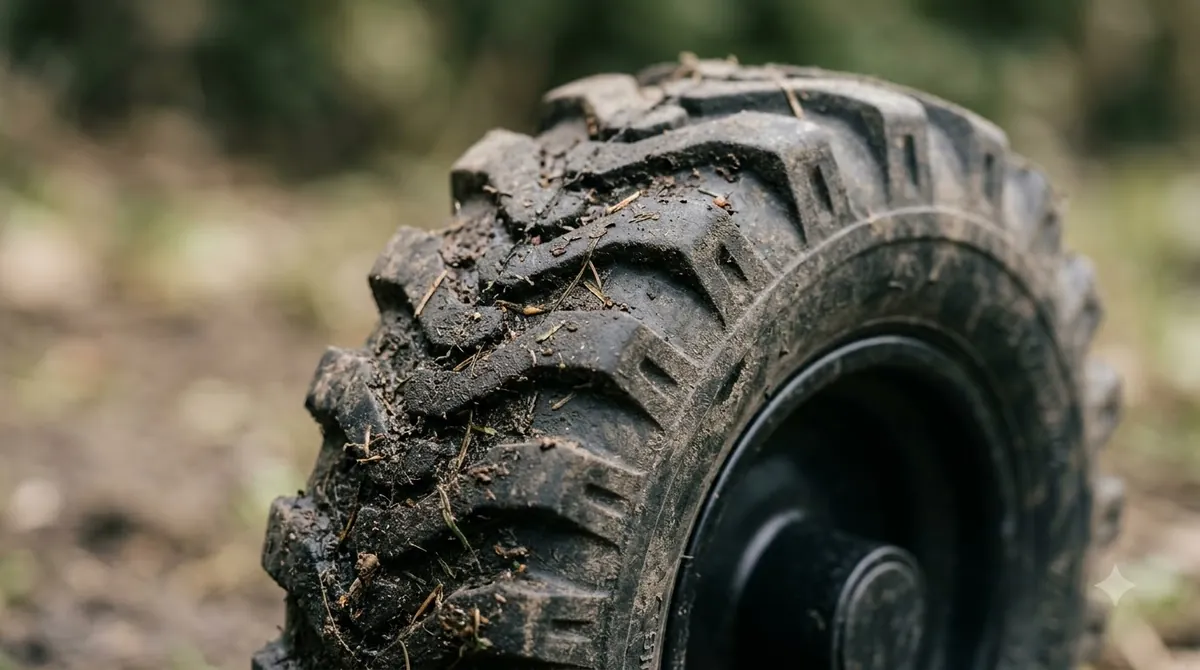
The same guide notes that uneven pavers, steel edging and raised borders can catch the chassis. Its troubleshooting table lists a root, edging, low object or map boundary as a cause of repeated stops at one border, with the suggested fix to repair the spot or add a no-go zone.
Watch for these signs that the ground, not the software, is the problem:
- The mower stops at the same spot on each run.
- One wheel spins or slips while the other keeps turning.
- A rut or a dip forms along one edge after rain.
- The mower lifts its front or rear over a raised line in the grass.
Heads up
A stuck mower is not always a sensor fault. Check the ground under the wheels and around the stop point before you change any settings.
Fixing the ground around an exposed root
The fixes in the Eufy guide are simple and do not involve the tree itself. The guide recommends letting a rutted area dry and repairing the surface before the next run. Under its advice for level areas where the wheels lose support, it suggests filling shallow holes and firming loose soil. It also recommends smoothing abrupt transitions between turf and pavers, since a small ground correction may be enough to stop one wheel from dropping below the chassis.
- Mark the stop point. Note where the mower stops and whether it is the same spot each time.
- Check the root height. A root that stays flush with the soil is a different problem from one that sticks up.
- Level the surface. Fill low spots and firm the soil so the wheels keep grip.
- Set a no-go zone. If the root cannot be leveled, keep the mower out of that patch with the app or boundary settings your model supports.
- Recheck after a few runs. If the stops continue at the same point, look at the edging and the zone boundary again.
Our reading is that cutting a large root to make room for the mower is a tree health decision, not a mowing fix. Cutting roots can stress the tree, so it is worth asking a certified arborist before removing any root that is part of the tree’s anchoring system. For most yards, a no-go zone or a leveled surface is the lower-risk option.
Tree roots and the grass under the canopy
UF/IFAS Extension states that grass growing under trees must compete with tree roots for soil space, water, oxygen and nutrients. Tree roots can extend far from the canopy line, beyond the branches and leaves, so the competition can reach areas that look open to the sky. The same publication notes that under a large oak tree, turfgrass may not be the best ground cover at all.
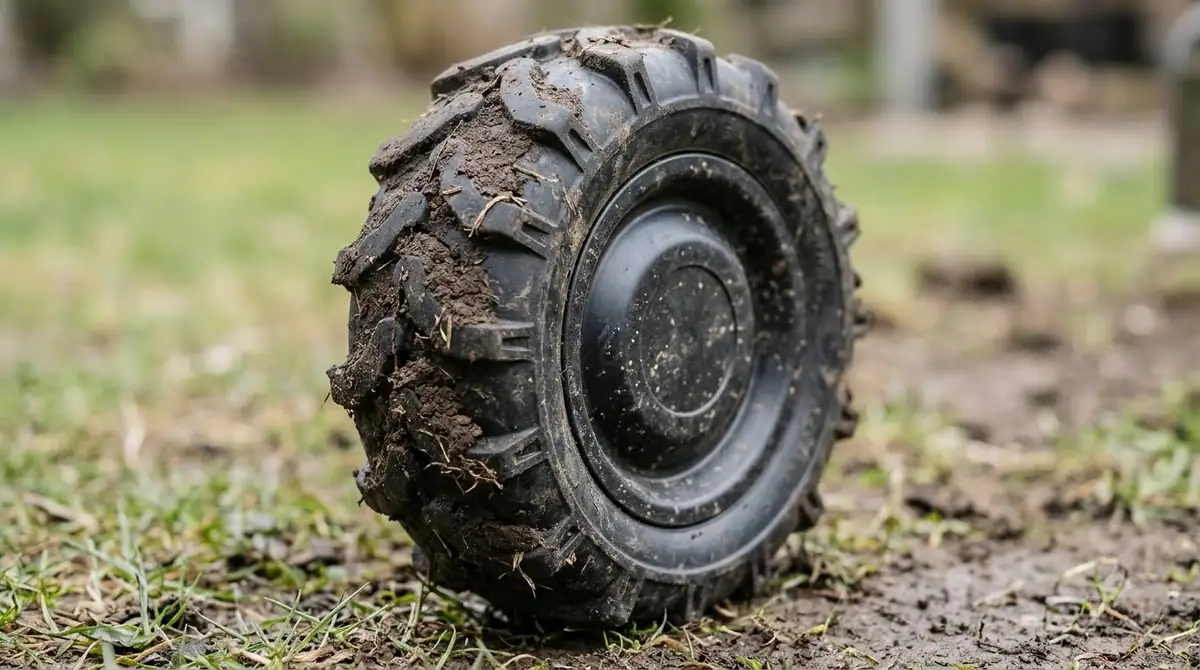
The UF/IFAS publication on growing turfgrass in the shade also gives three practices that matter for a robot mower. Mow at the highest recommended height for the species and cultivar, because higher mowing promotes deeper rooting. Use less fertilizer and water in shade than in full sun. Avoid heavy traffic, because traffic in shaded areas may also damage tree roots and cause tree health decline.
That last point matters for a robot mower. A machine that runs many passes over the same root zone in shade adds repeated traffic to ground that is already under stress. Our reading is that spreading the mowing pattern, avoiding narrow strips over the same roots, and keeping the grass a little higher can all reduce that wear. These are general practices from the extension guidance, not results from a test of any mower.
What to check in a yard with exposed roots
Before you rely on a robot mower in a yard with roots, map the problem areas once. A simple plan saves time when a stop happens later, and it helps you decide whether a no-go zone or a surface repair is the better choice.
- Walk the boundary: look for roots that break the surface along the edge of the mowing area.
- Check the inside zone: look for roots in paths the mower will take often, such as turns and narrow passes.
- Note the soil: soft or washed-out soil around a root is more likely to create ruts and stops.
- Plan the edging: raised edging or pavers near a root can catch the chassis, so smooth those transitions first.
The point of this check is not to make the yard perfect. It is to find the few spots where the mower is most likely to stop, so you can deal with them early rather than after the mower has been stuck several times in one week.
Frequently asked questions
How does a robot mower handle tree roots that stick up?
It depends on how high the root sits. A root that stays close to the soil may be crossed without trouble, but a root that sticks up can lift one wheel or catch the chassis. Watch the spot on the first few runs and fix any repeated stop.
Should I cut tree roots so the mower can pass?
Treat cutting roots as a tree care question rather than a mowing fix. Cutting a large root can stress the tree, so ask a certified arborist first. A no-go zone or a leveled surface is usually the lower-risk way to handle a root that blocks the mower.
Do tree roots affect the grass as well as the mower?
Yes. UF/IFAS Extension says grass under trees competes with tree roots for soil space, water, oxygen and nutrients. Roots can reach beyond the canopy line, so the effect can extend well past the trunk.
Is a no-go zone enough to handle a root?
Often it is enough for a small patch. The Eufy guide lists adding a no-go zone as the fix for repeated stops at one border. If the same spot keeps causing stops after the ground is leveled, check the zone boundary and the edging again.
Sources
- Growing Turfgrass in the Shade (EP072) (UF/IFAS Extension): tree root competition, traffic damage to roots, and higher mowing height for deeper rooting.
- Robot lawn mower stuck: causes and fixes (Eufy): exposed roots as a stop cause, wheel grip loss, and no-go zone and ground-leveling fixes.
 Up next8 min readBy YardHow Does a Robot Mower Handle Trees?Updated Nov 11, 2026
 9 min readBy YardHow Does a Robot Mower Handle Tree Stumps in the Lawn?Updated Nov 12, 2026
 8 min readBy YardBest Robot Mower for a Yard With Tree Roots: What to CheckUpdated Nov 13, 2026
 7 min readBy YardWill a Robot Mower Get Stuck on a Lawn With Tree Roots?Updated Nov 13, 2026
 8 min readBy YardCan a Robot Mower Handle a Lawn With Oak Tree Acorns in Autumn?Updated Nov 19, 2026
 7 min readBy YardHow Does a Robot Mower Handle a Swimming Pool?Updated Nov 10, 2026