
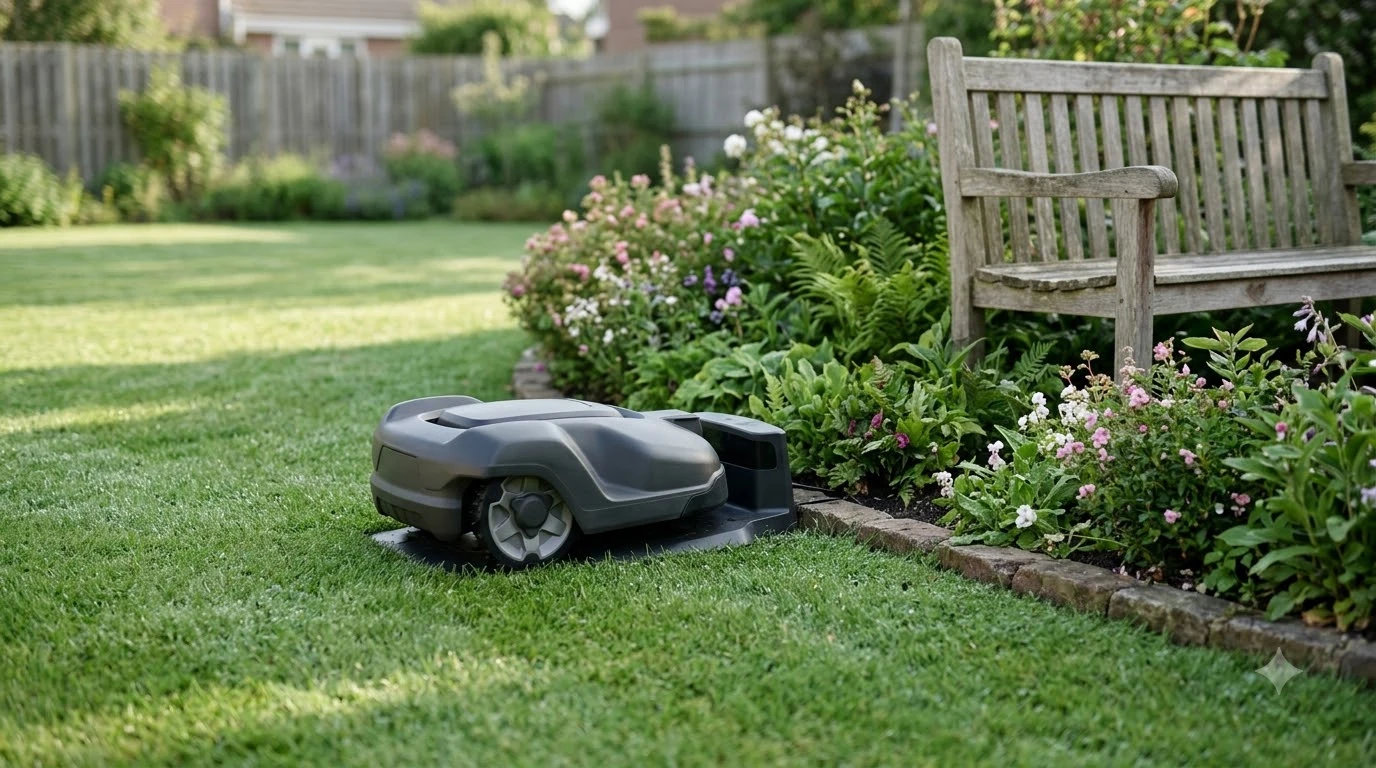

A robot mower long term ownership review should weigh upkeep and replacement costs, not only the purchase price. Manufacturers commonly describe the whole mower as lasting 5 to 10 years with good care, while the battery is usually the first major part to need replacing.
This robot mower long term ownership review sets out what the sources say about lifespan, battery life, upkeep, warranty terms and running costs. Where the figures are vendor estimates, we say so. All prices and listings are as of November 10, 2026.
The short answer
- Lifespan: 5 to 10 years for the whole unit, according to manufacturer estimates.
- Battery: typically 3 to 5 years, and the most likely major expense.
- Warranty: commonly 2 to 3 years for the unit and 1 to 2 years for the battery, with blades and wear parts excluded.
- Running cost: electricity is small, so blades and batteries drive most of the spending.
Robot mower long term ownership review: what lifespan to expect
Manufacturers in the US and UK put a typical robot mower at 5 to 10 years with good care. Ecovacs and Eufy both give that range in their own guides, so treat it as a vendor estimate rather than independent test data. Lawn size, terrain, weather, how often the mower runs, and how well it is cleaned and stored all affect where a unit lands in that range.
Usage matters as much as age. Ecovacs notes that a mower running daily on a large lawn wears its battery faster than one used on a small garden about every two weeks. Eufy also lists charging habits and build quality among the factors that shape lifespan. These are qualitative points, so use them to plan maintenance rather than to predict an exact year of service.
How long does the battery last, and what does replacement cost?
Battery life is the figure owners ask about most. Manufacturers quote 3 to 5 years for typical use. Husqvarna gives around 2 to 4 years and says it depends on the set running time. Robomow lists about 4 years for lithium-ion packs rated 500 to 800 charging cycles, and about 5 years for LiFePO4 packs rated 1,000 to 2,000 cycles. The sources do not agree on one number, so both the battery chemistry and your running time matter.
Replacement prices are the least standardized figure. Which? in the UK says replacement batteries are “sometimes more than £100.” A Navimow listing shows replacement packs from $159.99 to $449.99, listed in September 2026 and read as of November 10, 2026. It is a secondary source, and prices change, so confirm with the seller before you budget. The usual sign of an aging pack is the mower returning to its dock more often, as both Husqvarna and Robomow describe. If a pack is failing, upgrading a robot mower battery explains what to check first.
Storage affects battery life too. Battery University reports that lithium-ion cells kept hot lose capacity faster. After one year at 40°C with a full charge, about 65% of capacity remains recoverable, compared with about 96% after one year at 25°C with a 40% charge. That is general lithium-ion data rather than robot mower testing, but it explains why shade and a moderate charge level are common advice.
Blades, cleaning, and routine upkeep
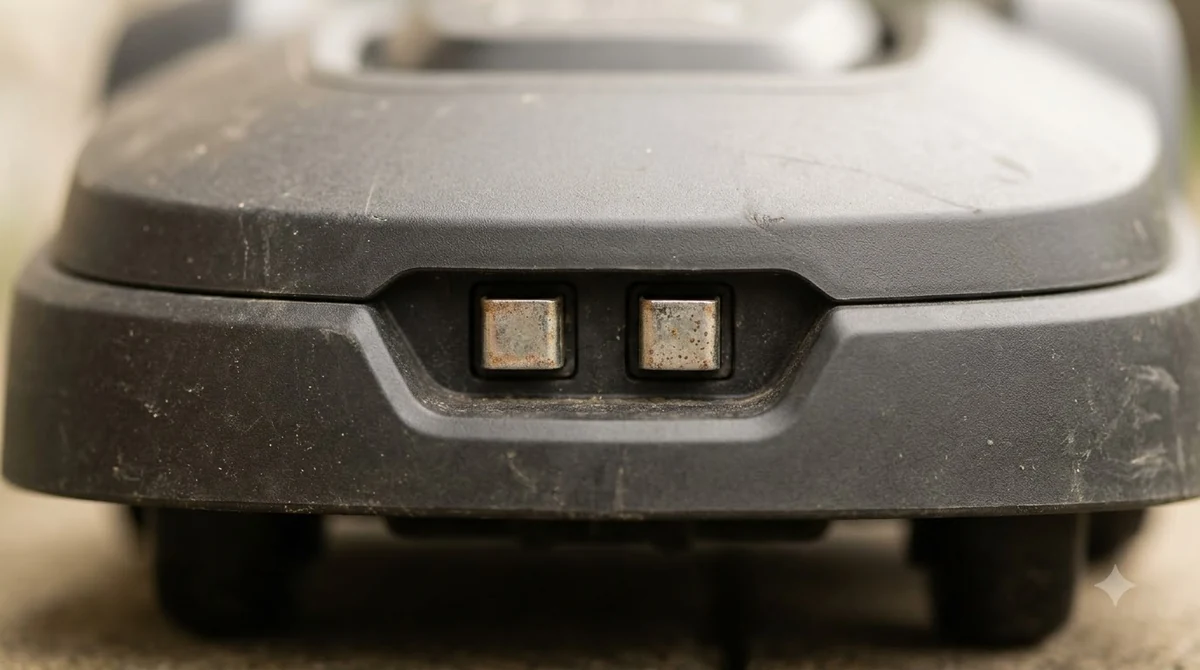
Routine upkeep is light but regular, and it shapes how long the mower lasts. Robomow’s maintenance guide recommends cleaning every 7 to 17 days. That means brushing off moist clippings from the underside and wiping the charging contacts when they look dirty or corroded. For a step-by-step routine, see how to clean a robot mower. Its guidance also says a blade replacement once a year is sufficient, and suggests keeping a spare blade on hand.
Brands disagree on the blade schedule. Ecovacs suggests replacing blades every 4 to 6 weeks or when wear appears. Robomow’s once-a-year figure and Ecovacs’ shorter interval are both vendor guidance, so check the cutting pattern through the season and replace blades when it deteriorates; how to change robot mower blades walks through the job.
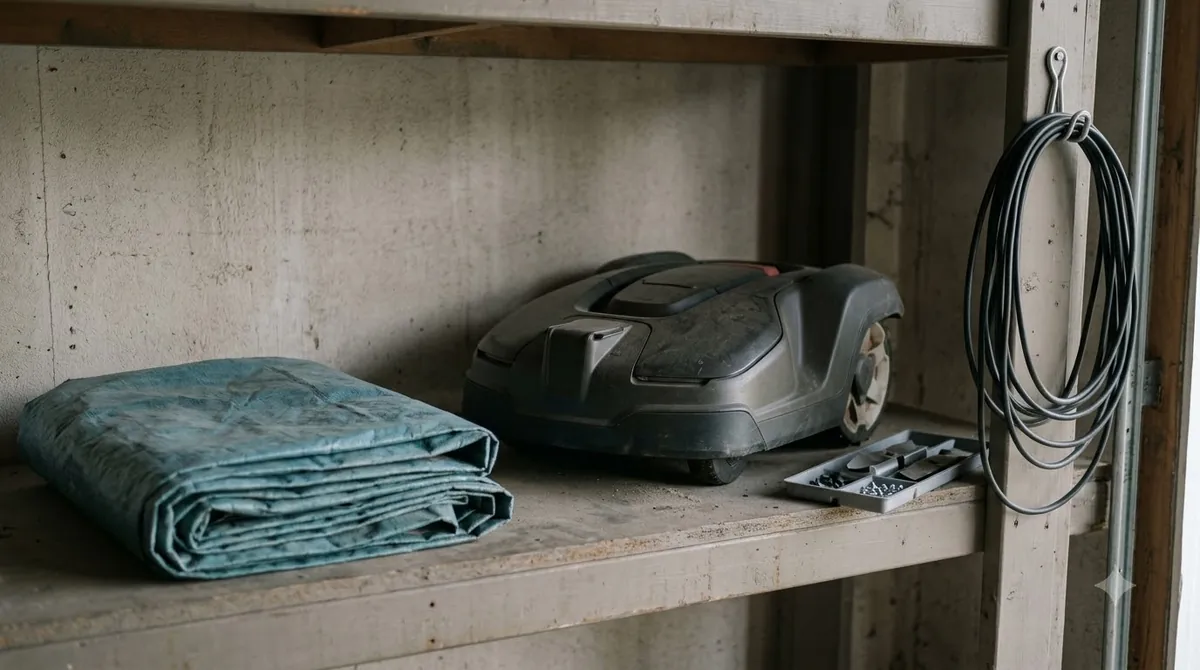
Winter needs a plan too. Robomow advises charging the battery to about 70% before storage, keeping the mower in a warm, dry place out of direct sunlight, and having a specialist check the sensors during winter service. In our reading, these low-cost steps are a practical way to protect the battery and electronics. Our guide to winterizing a robot mower covers the full routine.
What does the warranty cover over the years?
Warranty terms are one of the clearest long-term differences between brands, so any robot mower long term ownership review should compare them. Worx’s EU warranty statement gives a 2 year mower term, which extends to 3 years if the owner registers within 30 days. The battery carries a 1 year term that registration does not extend. Ecovacs’ UK support page lists a 3 year unit term and a 2 year battery term. Robomow describes a one-year manufacturer warranty on batteries that covers defects within that year.
Exclusions are the part owners often miss. Worx excludes blades, wheels, natural wear parts, non-original batteries, and damage from high-pressure or running-water cleaning. Ecovacs excludes wearing parts such as blades, normal wear, commercial use, and consumables such as filters or brushes. When you make a claim, Ecovacs asks for the original invoice or a cash receipt from a specialist reseller, so keep that paperwork with the mower.
In the US, the Federal Trade Commission says a written warranty on a consumer product costing more than $10 must be labeled “full” or “limited.” A limited warranty may require the consumer to pay labor and postage, so read the label before you buy. The Magnuson-Moss Act covers written warranties, not oral promises, so get any extra promise from a seller in writing. A separate robot mower warranty guide compares terms in more detail.
What are the yearly running costs?
In this robot mower long term ownership review, electricity is the smallest recurring cost. Ecovacs estimates a robot mower uses around 0.5 to 2 kWh per week. The US average residential retail price was 18.16 cents per kWh in August 2026, according to preliminary US Energy Information Administration data. Our calculation puts a year of charging at about $5 to $19 at that rate, though local rates differ and EIA figures change each month.
Blades and batteries drive the bigger costs. Ecovacs suggests blade replacement every 4 to 6 weeks, so blade spending can add up over a season, while Robomow suggests once a year. Battery replacement is the largest single expense in the sources reviewed here. Because the brands disagree, we recommend budgeting for the more frequent blade schedule until you see how your blades wear.
What do installation and subscriptions add?
Installation is a one-time cost. A 2024 comparison from Mowrator puts professional installation in the US at $200 to $800, rising with yard size and complexity, and DIY boundary wire at about $50 to $150. Robomow describes a DIY installation as a task of a few hours. Installation prices change, so treat the 2024 figures as a starting point and get a current quote.
Subscriptions can be a hidden ongoing cost. Mammotion advises checking whether key features depend on a subscription before you buy, so you know what the mower will cost after the first year.
A simple break-even check for your yard
Use one formula to compare a robot mower long term ownership cost with your current options. Divide the replacement battery price by the years it lasts, then add the yearly electricity and blade costs. Compare that total with the hours the mower saves you each year. In our reading, the result matters more than the sticker price, because a low purchase price can still lead to a high yearly cost if batteries or blades are expensive.
The inputs have limits. Lifespan figures come from manufacturers, and the result depends on your lawn size, terrain and running hours. If your yard is small and the mower is inexpensive, the math is usually easy. If the yard is large and the battery is costly, the check can change the decision. We recommend writing the result down and recalculating after the first battery replacement, since that is when a robot mower long term ownership review becomes concrete.
Frequently asked questions
How long does a robot mower last?
Manufacturers commonly estimate 5 to 10 years for the whole unit with good care. Those figures are vendor estimates, not independent test data. The battery is shorter-lived, often 3 to 5 years, and is usually the first part to need replacing.
How often should a robot mower blade be replaced?
Sources disagree. Robomow says a yearly replacement is sufficient, while Ecovacs suggests every 4 to 6 weeks or when wear appears. Check the cutting pattern through the season, and replace the blade when it deteriorates, as Robomow advises.
Does registering a robot mower change its warranty?
For some brands, yes. Worx says registering within 30 days extends the mower term from 2 to 3 years, but the battery term does not change. Check the registration rules and the excluded parts before you rely on the longer term.
Does a robot mower cost much to run?
Electricity is usually small. Using Ecovacs’ estimate of 0.5 to 2 kWh per week and the 18.16 cents per kWh EIA preliminary average for August 2026, our calculation gives about $5 to $19 a year. Blades and battery replacement are the larger costs.
Sources
- Robomow maintenance guide (manufacturer): cleaning, blade and winter storage steps.
- Worx warranty statement (manufacturer, EU): mower and battery terms, registration, exclusions.
- Ecovacs UK warranty support (manufacturer): unit and battery terms, claim steps.
- Federal Trade Commission, warranty guidance (government): full and limited warranty labeling.
- Ecovacs US, robot mower cost guide (manufacturer): weekly electricity use, blade interval, battery life.
- U.S. Energy Information Administration, electricity monthly (government): residential price, August 2026 preliminary.
- Battery University, lithium-based battery care (reference site, sponsored by Cadex): cycle life and storage data.
- Husqvarna, battery life guide (manufacturer): battery life range and wear signs.
- Robomow, battery life guide (manufacturer): cycle counts by battery chemistry, battery warranty.
- Which?, five questions before buying a robot lawn mower (UK consumer organization): replacement battery cost.
- Mowrator, robot lawn mower cost comparison (retailer, 2024): installation and boundary wire costs.
 Up next8 min readReviews & CompareRobot Mower vs Gas Mower: Long-Term Cost ComparedUpdated Nov 11, 2026
 8 min readReviews & CompareRobot Mower Owner Reviews After 2 Years: What to CheckUpdated Nov 11, 2026
 9 min readReviews & CompareWorx Landroid Vision Pros and Cons: What Reviews ShowUpdated Nov 11, 2026
 7 min readReviews & CompareLymow One Review: What the Sourced Specs Say Before You BuyUpdated Nov 11, 2026
 7 min readReviews & CompareHookii Neomow X SE Review: 0.75-Acre Specs and Slope LimitsUpdated Nov 11, 2026
 7 min readReviews & CompareMOVA LiDAX Ultra 2000 Review: Specs, Slope and LimitsUpdated Nov 11, 2026