
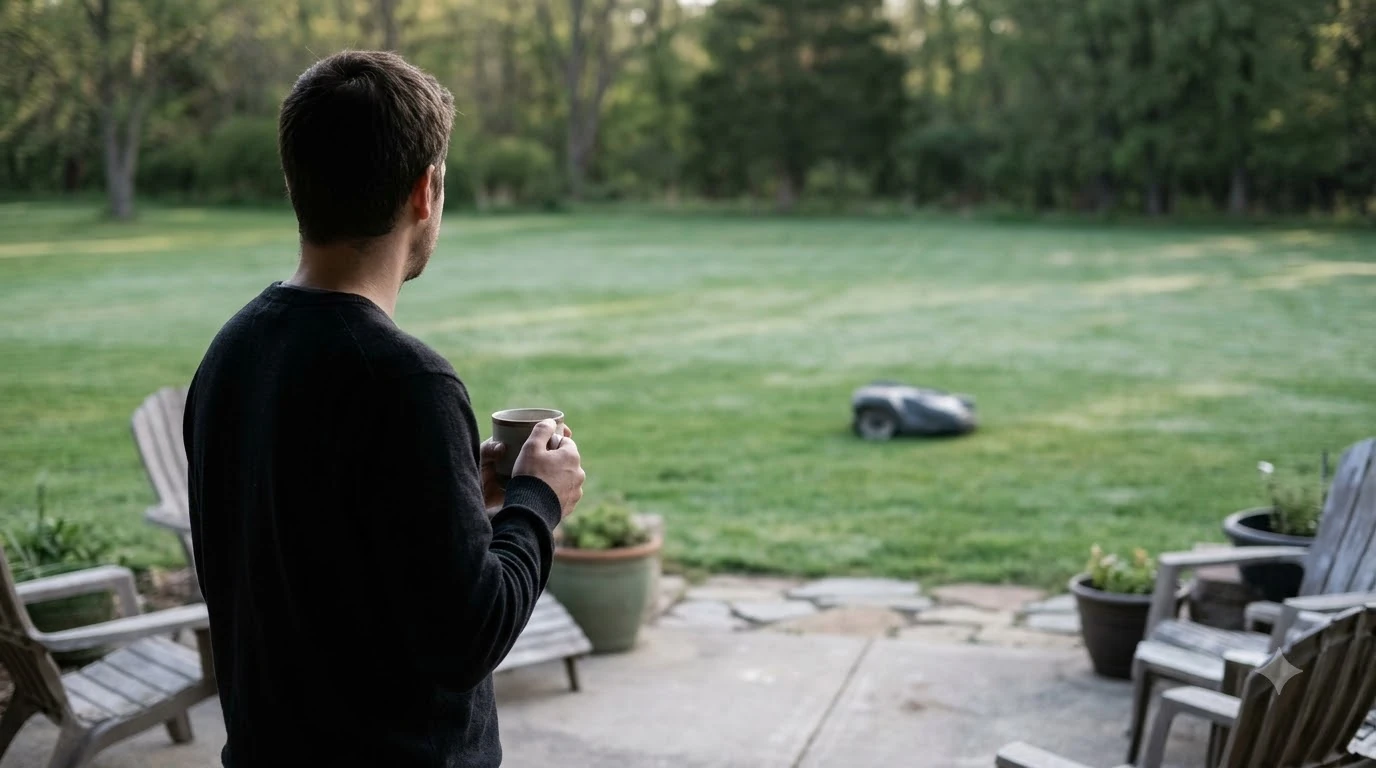

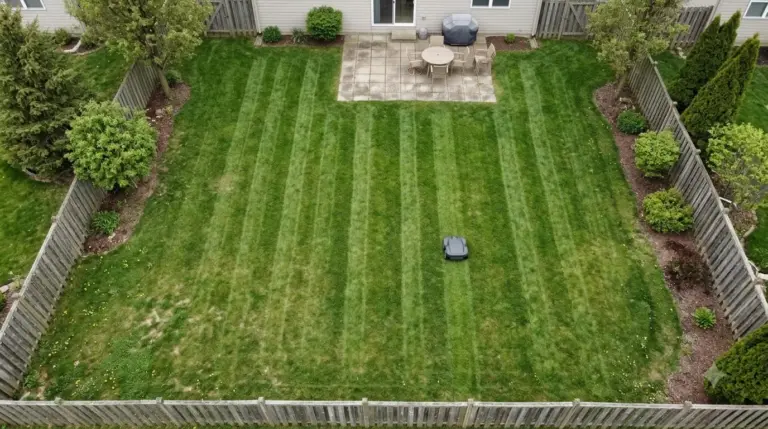
Robot mower mowing patterns come in two main types: random and systematic. Random mowing is the default on most robots, where the mower runs straight until it meets an edge and then turns. Systematic mowing cuts parallel rows that leave visible stripes, and it changes how evenly the lawn is covered.
Systematic modes are usually a setting on the same mower rather than a separate model. Check which robot mower mowing patterns the app and spec sheet list before you buy if stripes matter to you.
The short answer
- Random: straight runs that turn at the boundary wire, an obstacle or a sensor alert. More overlap, less predictable.
- Systematic: parallel, checkerboard or triangle rows. Fewer overlaps, and stripes appear.
- Edges: a parallel pattern can leave edges uncut. Checkerboard and triangle cover them from more angles.
Robot mower mowing patterns: random is the default
Most robot mowers run a random pattern, going straight until they reach the boundary wire, an obstacle or a sensor alert, then turning. Mammotion’s pattern guide describes random as the most common pattern and notes that it is less efficient, with more overlap and an unpredictable path. It still reaches full coverage over repeated sessions.
The trade-off in robot mower mowing patterns is time for simplicity. Random mowing needs no planned route, and Mammotion lists it as working without advanced mapping. The cost is that some areas are cut more than once in a session while others wait for a later run. Our reading is that random mowing suits small, irregular yards with many beds and corners, where a planned route is hard to set up. If you are weighing navigation types as well, compare wire-free vs boundary wire robot mowers.
Random and systematic patterns compared
Across robot mower mowing patterns, random mowing trades efficiency for simplicity, while systematic mowing cuts organised rows and usually relies on a navigation system to keep them straight. Mammotion says its systematic paths use GPS or RTK navigation to cut organised rows with fewer overlaps, and our guide to how RTK works on a robot lawn mower explains that positioning.
| Pattern | How the path runs | Edge coverage |
|---|---|---|
| Random | Straight runs that turn at the wire, an obstacle or a sensor alert | Uneven, with more overlap |
| Systematic parallel | Same direction every session, starting from a designated corner | Can leave edges uncut |
| Checkerboard | Each session runs 90 degrees to the previous one | Covered from multiple angles |
| Triangle | Each session runs 60 degrees to the previous one | Covered from multiple angles |
Husqvarna says that when the robot runs irregularly, it cuts the grass from different directions. Our reading is that this is why random mowing does not form a regular stripe.
Husqvarna’s systematic mowing page adds a performance claim: systematic mowing increases work area capacity by at least 50% on typical residential lawns, and by up to 100% in open areas such as football pitches. It also describes systematic mowing as most suitable for flat, open areas with few obstacles. Irregular mowing is ideal for lawns with slopes, complex work areas and obstacles such as trampolines or flower beds, because the lawn is cut evenly from all directions. Husqvarna lists the supported Automower models, so systematic mowing is not available on every Automower.
Systematic patterns: parallel, checkerboard and triangle
Husqvarna’s systematic mode offers three of the robot mower mowing patterns: parallel, checkerboard and triangle. The last two change the angle between sessions, which is why they look different from a single set of rows.
- Parallel: starts every session from a designated corner and moves in the same direction, which creates the clearest stripes.
- Checkerboard: each session runs 90 degrees to the previous one, forming a grid-like texture.
- Triangle: each session runs 60 degrees to the previous one, and the stripes are less visible than with parallel or checkerboard.
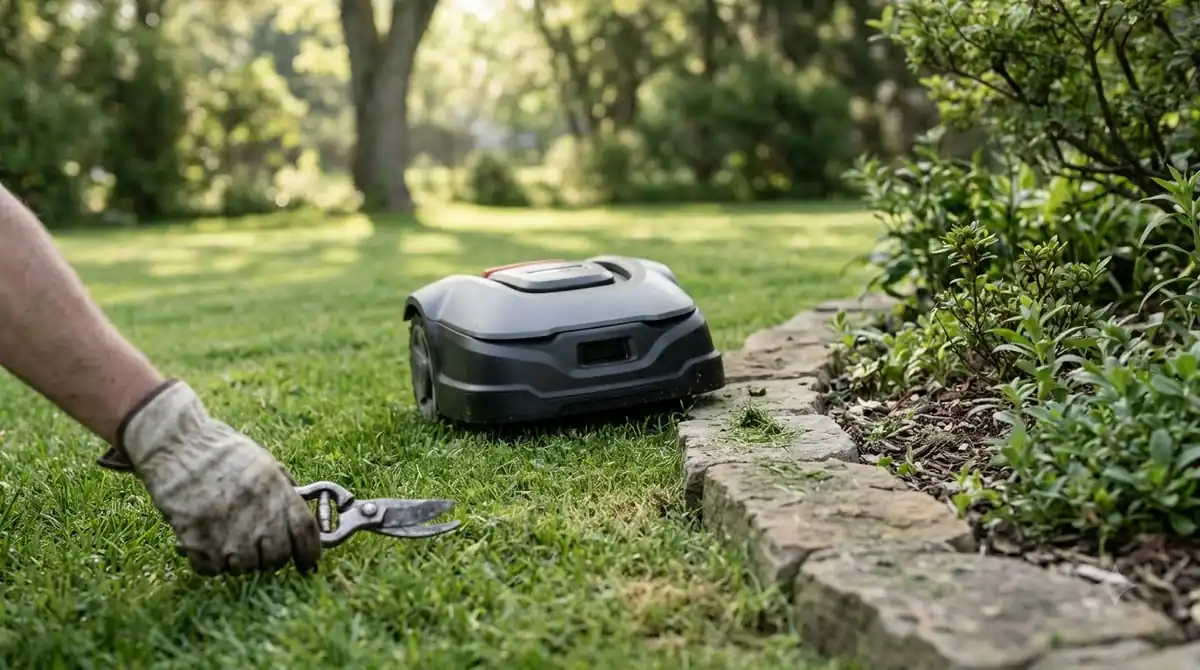
The edge trade-off matters. Husqvarna’s systematic mowing guide says a parallel pattern, where the mower runs in only one direction, can leave edges uncut, while checkerboard or triangle patterns cover edges from several angles. It also describes a final perimeter pass that removes uncut grass along the boundary. For more on edge cutting, see do robot mowers trim edges.
Heads up
If you want the clearest stripes among robot mower mowing patterns, parallel is the pick. If your lawn has many edges and beds, checkerboard or triangle is the safer choice. That is our reading of the source, not a rule from the manufacturer.

How stripes form and what grass height changes
Among robot mower mowing patterns, stripes form when mowing alternates direction, because each pass bends the grass blades one way. eufy’s stripe guide explains that each pass should run opposite to the previous one. The same guide says this alternation prevents ruts and reduces soil compaction, though it cites no studies for that claim.
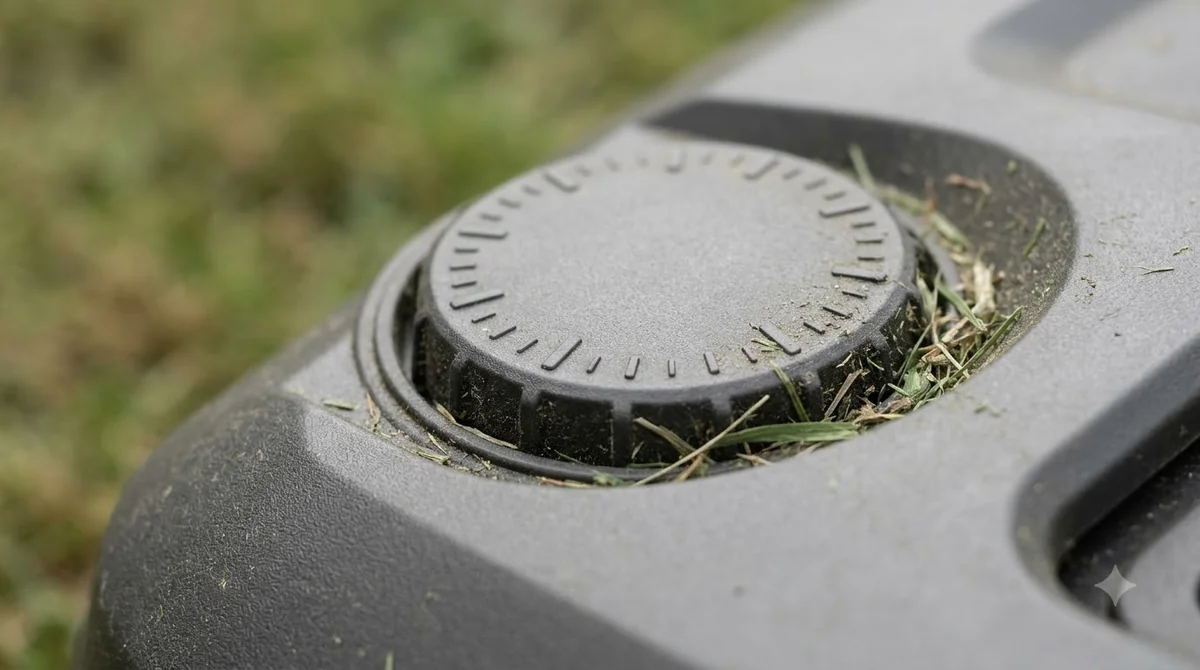
Grass height changes how clear the stripes look. eufy gives 2.5 to 3.5 inches for cool-season grass and 1.5 to 2.5 inches for warm-season grass, and says taller blades produce bolder stripes. Set the height for your grass type first, then choose the pattern. Our guide to the best mowing height for a robot-mowed lawn covers the height side.
Choosing and changing a pattern
Change your robot mower mowing patterns every few mowings so grass does not lean the same way over time, according to eufy. Mammotion gives a similar rhythm and notes that the app lets you set the path in detail.
- Check what the mower offers. Mammotion says its app offers zigzag and chessboard paths, and lets you set path spacing, cutting angle and start location.
- Alternate direction. Mammotion advises changing the pattern direction weekly, since robotic mowers may run several times a week or daily.
- Vary the start. Our reading is that a different start point every few sessions spreads wear, if your app allows it.
Do not assume every model stripes. Robot mower mowing patterns vary by model, so random mowers may leave no regular pattern, and systematic modes depend on the model and its navigation. Read the spec sheet for the exact options before you decide. Husqvarna adds that the mower keeps a slight offset at each systematic session to prevent track marks, and that the Automower 435X AWD NERA can leave uncut grass in sharp corners because of its size and turning space. Husqvarna also says you can set different patterns in different work areas through the Automower Connect app, which matters for yards with several zones; see how multi-zone robot mowers work.
Frequently asked questions
Is random mowing bad for the lawn?
Among robot mower mowing patterns, the sources read here do not describe random mowing as harmful. Mammotion calls it less efficient, with more overlap, but says it reaches full coverage over repeated sessions. Our reading is that the trade-off is time and predictability rather than lawn damage.
Do I need GPS for stripes?
Not always. Mammotion says its systematic paths use GPS or RTK navigation, while Husqvarna describes a wire-free systematic mode that runs in parallel lines. The spec sheet for a specific model shows which navigation it uses before you buy.
Do robot mowers leave stripes?
Only in some robot mower mowing patterns. Systematic parallel, checkerboard and triangle modes produce visible stripes, with parallel the clearest. Random paths cut from many directions, so they do not form a regular stripe, according to Husqvarna.
Which pattern covers edges best?
Checkerboard and triangle patterns cover edges from several angles, according to Husqvarna. Parallel mowing, where the mower runs in one direction, can leave edges uncut. A final perimeter pass also helps remove uncut grass along the boundary and obstacles.
How often should I change the pattern?
Mammotion advises alternating the pattern direction weekly, and eufy suggests changing striping patterns every few mowings. Pick the rhythm that fits your schedule, since robotic mowers may run several times a week or daily.
Sources
- What is Systematic Mowing? (Husqvarna): parallel, checkerboard and triangle patterns, edge coverage, perimeter pass.
- How to get stripes on your lawn (Husqvarna): systematic mode runs in parallel lines; irregular running cuts from different directions.
- Lawn Mowing Patterns for Robotic Lawn Mowers (Mammotion): random pattern behaviour, GPS or RTK systematic paths, app settings, weekly direction change.
- How to Mow Stripes (eufy): opposite-direction passes, grass height ranges, pattern rotation.
 Up next8 min readBest Robot MowersBest Quiet Robot Lawn Mower for Night Mowing: 60 dB GuideUpdated Nov 11, 2026
 8 min readBest Robot MowersBest Robot Mower for Straight Stripe Patterns: What to CheckUpdated Nov 11, 2026
 9 min readBest Robot MowersQuestions to Ask Before Buying a Robot MowerUpdated Nov 11, 2026
 8 min readBest Robot MowersCan You Use a Robot Mower With Sprinklers? Timing TipsUpdated Nov 11, 2026
 9 min readBest Robot MowersHow to Read a Robot Mower Spec SheetUpdated Nov 11, 2026
 9 min readBest Robot MowersRobot Lawn Mower Installation Cost: DIY vs Professional in 2026Updated Nov 11, 2026