
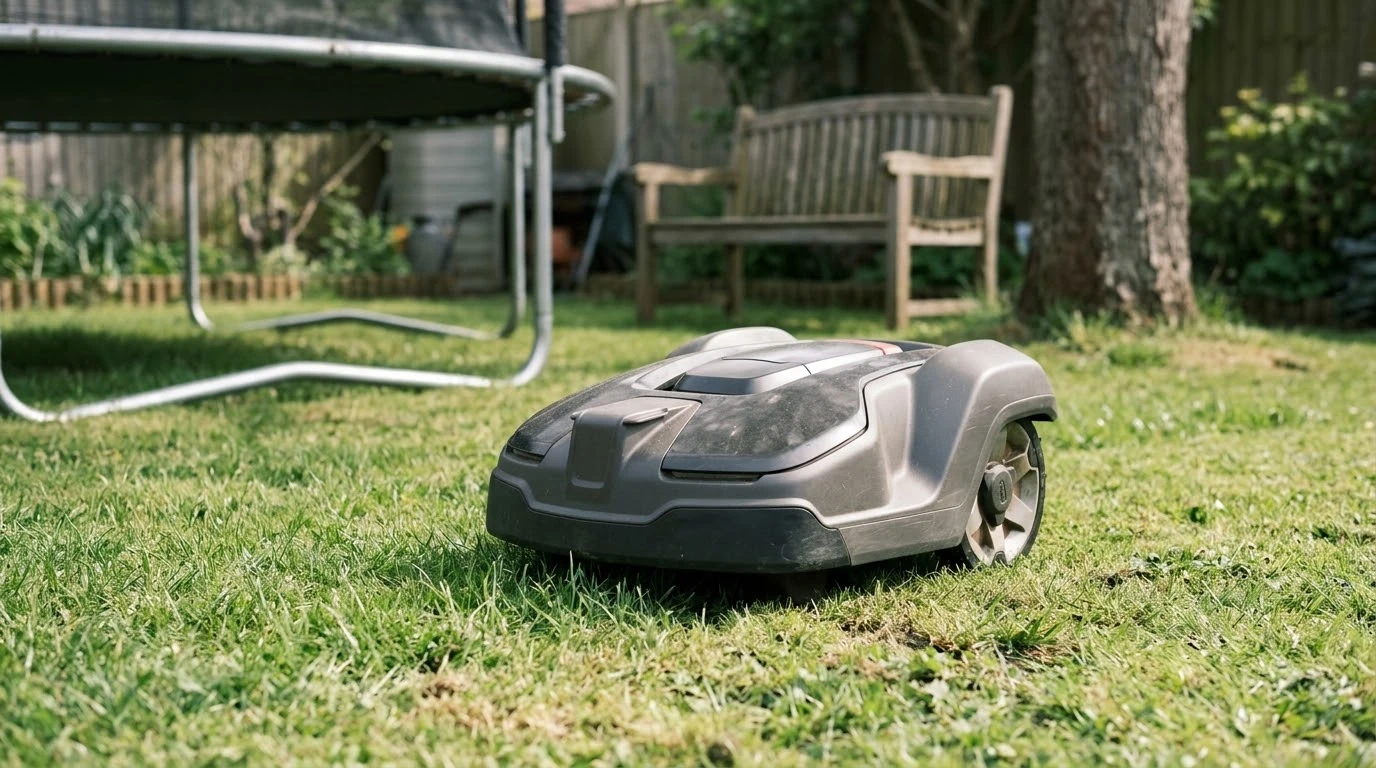

The one third rule for mowing grass says you should never cut off more than one-third of the leaf blade in a single mow. Cutting less at each pass protects the roots and keeps the lawn dense. The rule is a guideline rather than a law, and it is easiest to follow when you mow often enough that the grass never grows far past your target height.
The short answer
- Limit: remove no more than one-third of the leaf blade height in one mow.
- Example: grass that is 3 inches tall should come down to about 2 inches, not lower.
- Timing: mow once the grass has grown about 50 percent past your target height.
- Robot mowers: frequent, smaller cuts make the rule easier to keep.
What the one third rule for mowing grass says
The one third rule means cutting no more than one-third of the leaf blade height in one mow, so 3-inch grass drops to about 2 inches. LSU AgCenter states it as “Never remove more than one-third of the leaf blade height in a single mowing,” and calls it a general guideline.
LSU adds that the benefit comes mainly from mowing regularly, not from measuring exactly one-third each time. Lawnlove, a lawn care blog, gives the same worked example and summarizes the rule as “you shouldn’t cut more than one-third of grass’s height per mow.”
The one third rule for mowing grass sets a ceiling on how much you remove, not a fixed amount to cut. What matters is the share of the blade that comes off, so a lawn that is only slightly over target needs only a light trim.
The rule is not applied rigidly everywhere. Lawnlove notes that Florida turf experts still recommend it, even though St. Augustinegrass lawns there are often cut more aggressively without obvious harm.
Why the rule protects your lawn
Cutting off less than one-third keeps enough leaf to feed the roots, and removing too much at once can shock the turf. NC State’s Grady Miller, quoted by Lawnlove, says the rule helps prevent shock when a large amount of top growth is removed at once.
- Food supply. Lawnlove notes that cutting too much blade reduces photosynthesis, which in turn limits root growth and the uptake of water and nutrients.
- Density. LSU says mowing removes part of the shoots to encourage vigorous growth, and regular mowing increases shoot density while limiting the volume of clippings.
- Clippings. LSU warns that large clipping piles, if not removed, block light and will eventually thin the turf underneath.
- Shade and weeds. Lawnlove says taller grass shades the soil, which helps limit weed sprouting. Our reading is that this is one more reason to keep the cut height steady rather than shaving it each time.
How often to mow with the one third rule
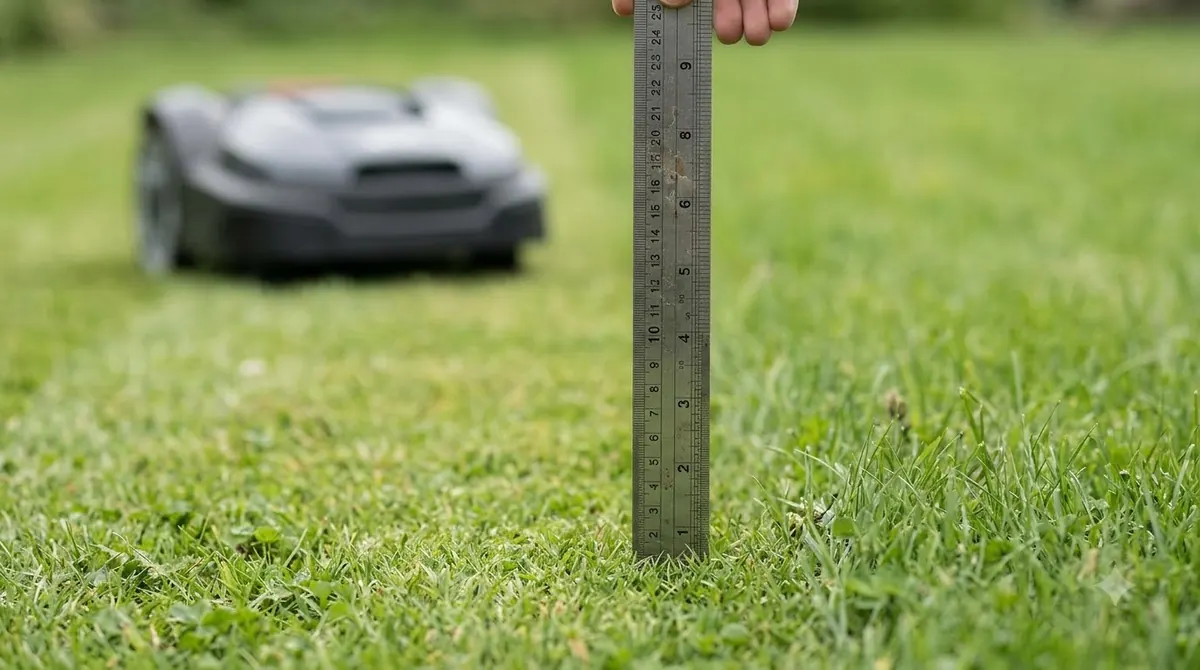
Under the one third rule for mowing grass, you mow when grass has grown about 50 percent past your target height. For a 3-inch target, that means mowing once the grass reaches about 4.5 inches, which is 1.5 inches of growth.
LSU advises mowing about once a week, or three to four times a month, during the active growing season from March through October in Louisiana. The turf is generally dormant from November through February, and mowing is usually unnecessary then.
Mammotion, a robot mower maker, uses an example that assumes grass grows about 0.2 inch per day. On that basis a 3-inch target means mowing about every 7.5 days. Real growth depends on species, temperature, rainfall, irrigation, fertility and season, so treat the number as a starting point and check the lawn every few days during fast growth.
Shorter cuts do not reduce the work. Mammotion notes that a lower target means grass reaches the cutting threshold sooner. LSU adds that fast-growing species such as bermudagrass may need more frequent mowing than slower species such as zoysiagrass. See how often to mow Bermuda grass for that case.
How the one third rule applies to a robot mower
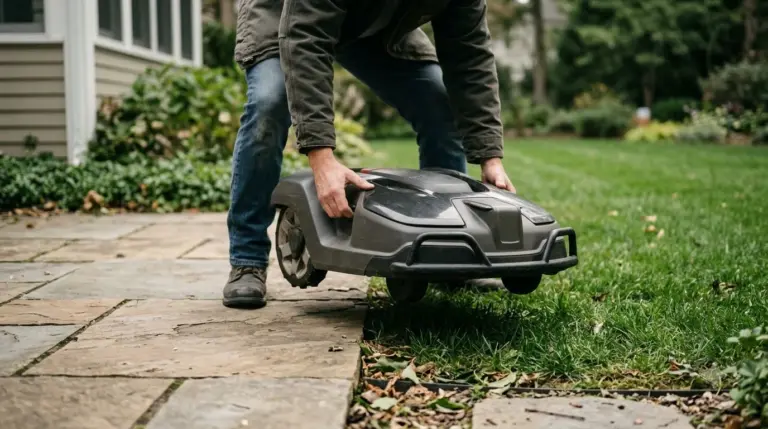
A robot mower fits the one third rule well because it runs on its own schedule and cuts in frequent, smaller passes. Mammotion says its robot mowers are built for “frequent, smaller cutting cycles,” which helps avoid large clumps that would remove too much grass at once.
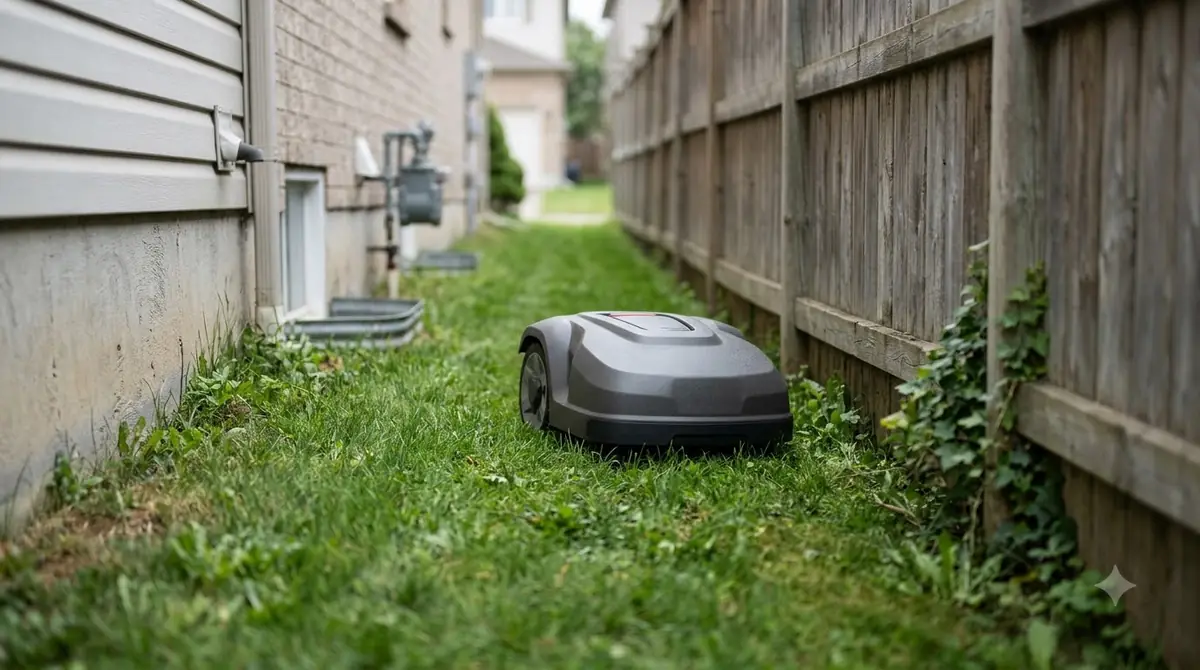
For a robot mower, the one third rule for mowing grass is easier to keep because the machine repeats short cuts. The schedule you set decides how close you stay to the rule. Our reading is that a mower set to run only once a week on fast-growing grass can still end up cutting more than one-third in a pass. We recommend setting the schedule to match the growth you see, not the calendar. The best mowing height for a robot-mowed lawn helps you pick the target.
- Check the height after setup. Measure the average blade height and confirm the mower’s cutting height matches your target.
- Raise the blades in heat or drought. Mammotion advises raising cool-season blades about 0.5 to 1 inch under heat or drought stress.
- Watch the first week. After a long gap, grass may be higher than the mower’s schedule assumes, so check it before the next run.
Heights by grass type
Target heights depend on the species, so the one third rule for mowing grass works best with the right target. LSU lists about 1 to 3 inches for the common turf grasses in Louisiana, from bermudagrass at the low end to St. Augustinegrass at the high end.
| Grass | LSU recommended height in Louisiana |
|---|---|
| Bermudagrass | 1 to 2 inches |
| Centipedegrass | 1 to 2.5 inches |
| St. Augustinegrass | 2.5 to 3 inches |
| Zoysiagrass | 1 to 2.5 inches |
Mammotion gives broader ranges, with cool-season grasses commonly at 2.5 to 4 inches and warm-season grasses at about 1 to 2.5 inches. Lawnlove’s table is different again, listing tall fescue at 3 to 6 inches and bermudagrass at 1.5 to 3 inches as ideal ranges. Because the sources disagree, use the range from your local extension service for your climate. For one grass in detail, see the best mowing height for St. Augustine grass.
Overgrown grass: cut in steps
If grass is more than 50 percent taller than the top of its ideal range, cut no more than one-third per mow and repeat over several days, according to Lawnlove. The one third rule for mowing grass still applies here, just in stages. The goal is to bring the lawn back into range without shocking it, and how to cut an overgrown lawn before using a robot mower lays out a full session schedule.
- Measure the average height. Set a level ruler on the ground and measure to the top of the blades, using the typical height rather than a few tall patches.
- Raise the blades. Start on the highest setting so the first pass removes only a small share of the blade.
- Cut one-third or less. Remove no more than one-third of the current height in each pass.
- Repeat over several days. Mow more often until the grass is back in its ideal range, then lower the blades in steps.
Common mistakes to avoid
Most errors with the one third rule for mowing grass come from cutting too much at once. The most common mistake is cutting too low in one pass, which can scalp the lawn and let weeds in. LSU notes that mowing at the proper height helps prevent scalping and reduces weed encroachment.
- Cutting a long lawn too short at once. Step the height down over several mows instead.
- Leaving clippings in heaps. Large piles block light, so spread or remove them. Fine clippings can work as mulch, as covered in how robot mowers mulch grass.
- Measuring only the tall patches. Use the lawn’s average height when you apply the rule.
- Mowing dormant grass on a calendar. LSU says mowing is generally unnecessary during the dormant months.
Frequently asked questions
Is the one third rule for mowing grass a strict law?
No. LSU AgCenter calls it a general guideline, and its benefit comes mainly from mowing regularly. Lawnlove, quoting NC State’s Grady Miller, says that not following the rule does not mean the grass will die.
Does a robot mower follow the one third rule automatically?
Not by itself. Mammotion says robot mowers cut in frequent, smaller cycles, but the schedule and cutting height you set decide how much blade is removed per pass. Check the grass height regularly and adjust both settings when the lawn grows fast.
How much grass should I cut at once?
No more than one-third of the leaf blade height in a single mow. A 3-inch lawn should come down to about 2 inches, then be mowed again once it grows back to the target range.
What height should I set for my lawn?
It depends on the grass. LSU lists 1 to 2 inches for bermudagrass and 2.5 to 3 inches for St. Augustinegrass in Louisiana. Check your local extension service, because ideal heights change with climate.
Sources
- Mowing rule (LSU AgCenter): the exact wording of the rule, mowing frequency and Louisiana cutting heights.
- One third rule of mowing (Lawnlove): the 3-inch example, overgrown-grass steps and the NC State quote.
- Lawn mowing guide (Mammotion): robot mower cutting cycles, the mowing frequency example and cool-season and warm-season height ranges.
 Up next8 min readBy YardRobot Mower for Tall Fescue Lawns: Height Limits That MatterUpdated Nov 11, 2026
 8 min readBy YardBest Mowing Height for Zoysia Grass: Summer, Spring and FallUpdated Nov 11, 2026
 8 min readBy YardBahia Grass Mowing Height and Schedule: What Extension Sources SayUpdated Nov 11, 2026
 8 min readBy YardBest Mowing Height for St Augustine GrassUpdated Nov 11, 2026
 8 min readBy YardBest Mowing Height for Buffalo Grass (What Extension Guides Say)Updated Nov 11, 2026
 7 min readBy YardBest Mowing Height for Shade Grass: What Extension Sources RecommendUpdated Nov 11, 2026