
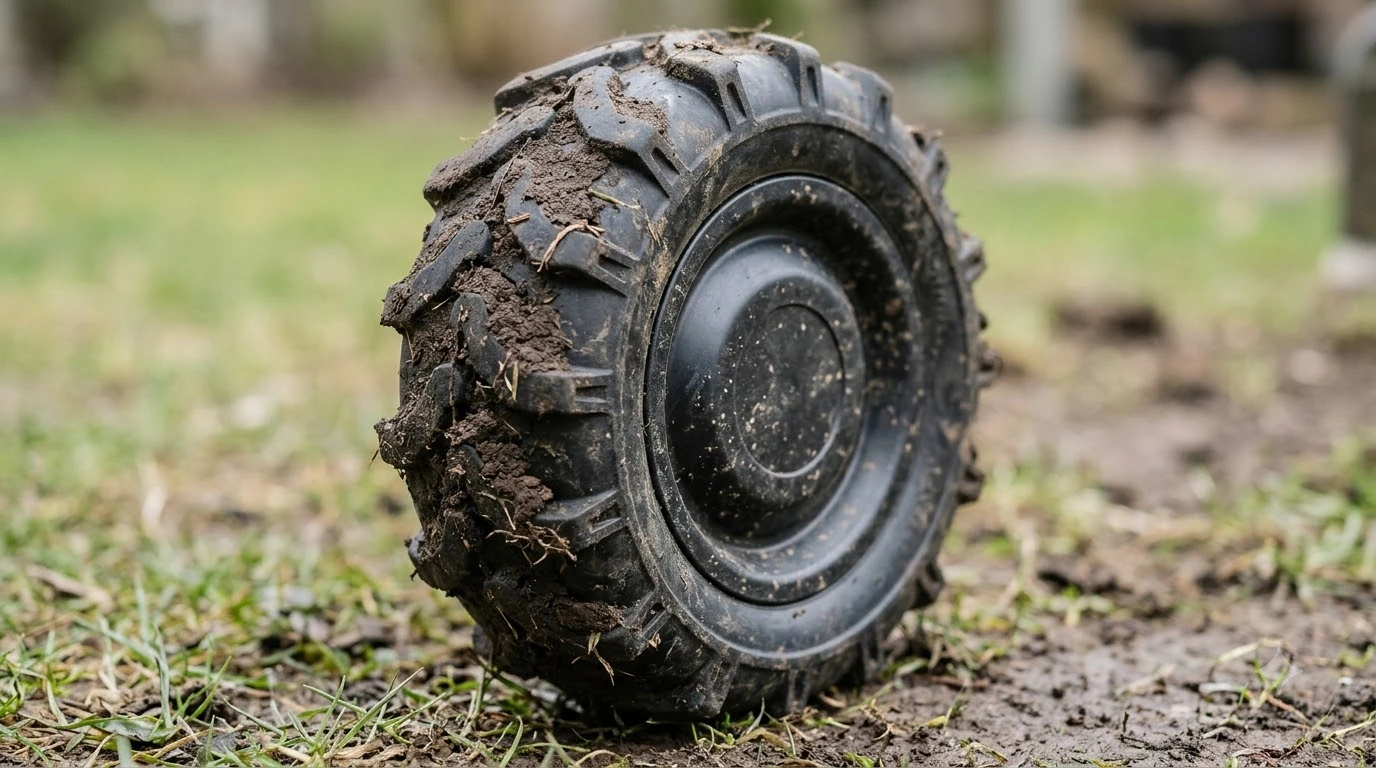

Will a robot mower get stuck on a sandy soil lawn? It can, mainly because loose sand gives its drive wheels little grip. The sources we read describe loose, dry or sandy ground as a cause of wheels digging in and spinning, and that risk grows on slopes and around dips or bare patches. Sand is seldom the only factor, so check the slope, the surface and the wheel tread together.
The short answer
- Yes, it can happen: loose sand lets the tire push in instead of biting, so the mower stalls.
- Slope makes it worse: the steeper the sandy section, the less margin the wheels have.
- Dips and bare patches are the usual trap: a wheel drops in and the mower loses contact.
- Fix the surface first: fill dips, keep the lawn thick, and clear grit from the wheels.
- Look at the tread: manufacturer sources favor all-wheel drive and stud-type traction wheels over shallow rubber treads.
Why a robot mower can get stuck on a sandy soil lawn
A robot mower depends on its drive wheels gripping the ground. Lymow, a robot mower maker, says that on loose, muddy or sandy ground “wheels dig into soft surfaces rather than gripping firmly.” Eufy, another maker, says that when the drive wheels lose contact with solid dirt, the mower stops moving and sends an error alert. Both are manufacturer descriptions of the problem, not independent trials on sandy lawns. Lymow’s page also notes that its performance claims come from the company and user reports.
The mechanism is simple, and it is why a robot mower can get stuck on a sandy soil lawn even when the slope looks mild. Sand shifts under the tire, so the tread pushes into loose material rather than biting into firm ground. Our reading is that the problem is worst where the sand is loose at the surface and the grass is thin enough that bare soil is exposed.
How slope turns a grip problem into a stuck mower
A sandy surface matters more on a hill, and the slope is the second thing to check when you ask will a robot mower get stuck on a sandy soil lawn. Lymow says standard 2WD models “manage gentle inclines of 20-25° (36-47% grade)” and that “A 25° slope equals approximately 47% grade.” Robomow says robotic mowers “are only designed for a certain slope. This can be 30%, 45% and even more,” and it advises a run-out zone near the boundary wire of about 15% or less, because the robot turns often there.
| Source | What it says about slope | Type |
|---|---|---|
| Lymow blog | 2WD models manage gentle inclines of 20-25° (about 36-47% grade) | Manufacturer |
| Robomow blog | Rated slopes of 30%, 45% and more; run-out zone about 15% or less | Manufacturer |
| eufy blog (AU) | Basic models 10-25%; mid-range up to 35%; AWD up to 70% (35°) | Manufacturer |
Eufy warns that running at the top of a rated slope “continuously strains the motor, drains battery reserves quickly, and increases tyre slip.” Its own figures are not fully consistent, since it lists 18° as 40%, while 18° is about 32% by simple arithmetic. For that reason we would not rely on one rated number alone. Our reading is to keep sandy hills well inside the rated limit, not at it.
Lymow adds layout advice for slopes: keep boundary wires 30 to 50 cm from the base of a slope so the mower has room to slow down, and route guide wires diagonally across the slope rather than straight up and down. It also says boundary-wire mowers can overshoot the wire when moving downhill at speed. For steeper ground, read our guide to a robot lawn mower for a 45 percent slope.
Dips, ruts and bare patches are the usual trap
Eufy advises that “Soil dips greater than 3 cm or exposed tree roots require filling in or marking out with virtual boundaries,” and recommends keeping surface variations under about 3 cm. Robomow notes that a wheel can catch where the boundary wire runs too close to a dropping lawn edge, and that a robot can get caught in a gravel bed. Our reading is that dips can form on sandy lawns where loose soil washes or wears away.
The practical steps from these sources are to fill small depressions with soil, keep the boundary wire clear of steep drops, and mark soft spots as no-go zones. Lymow suggests temporary exclusion zones for muddy patches in wet seasons,; for a wire-based mower, Robomow advises laying the wire accurately or bordering beds with bricks so a wheel cannot catch on a drop.
Lawn care that helps the mower grip
The lawn itself matters too when you ask will a robot mower get stuck on a sandy soil lawn, and our reading is that firmer, thicker turf gives the tire something to bite, which affects whether a robot mower will get stuck on a sandy soil lawn. For other soil types, see our guides on clay soil that stays wet and a rocky yard.
Purdue’s guidance on sandy soils says irrigation needs to be “more frequent and in smaller amounts” than on heavier soils. It advises mowing at “a minimum of 2.5″ and preferably 3.0 to 3.5″” to encourage deep rooting, and it says fertilizers should contain 50 percent or more slow-release nitrogen to reduce nitrogen movement through the soil. Purdue also lists tall fescue and some Kentucky bluegrass cultivars as having improved drought tolerance.
Utah State University Extension adds that “Compost increases water and nutrient holding capacity in sandy soils,” and it advises a topsoil layer of “a minimum of 6 to 12 inches” when establishing a new lawn. These are general lawn figures, not robot mower settings. Our reading is that a thicker, deeper-rooted turf covers exposed sand and gives the tire more to grip. Neither extension source tested that link, so treat it as an inference.
Wheel and deck care that protects grip
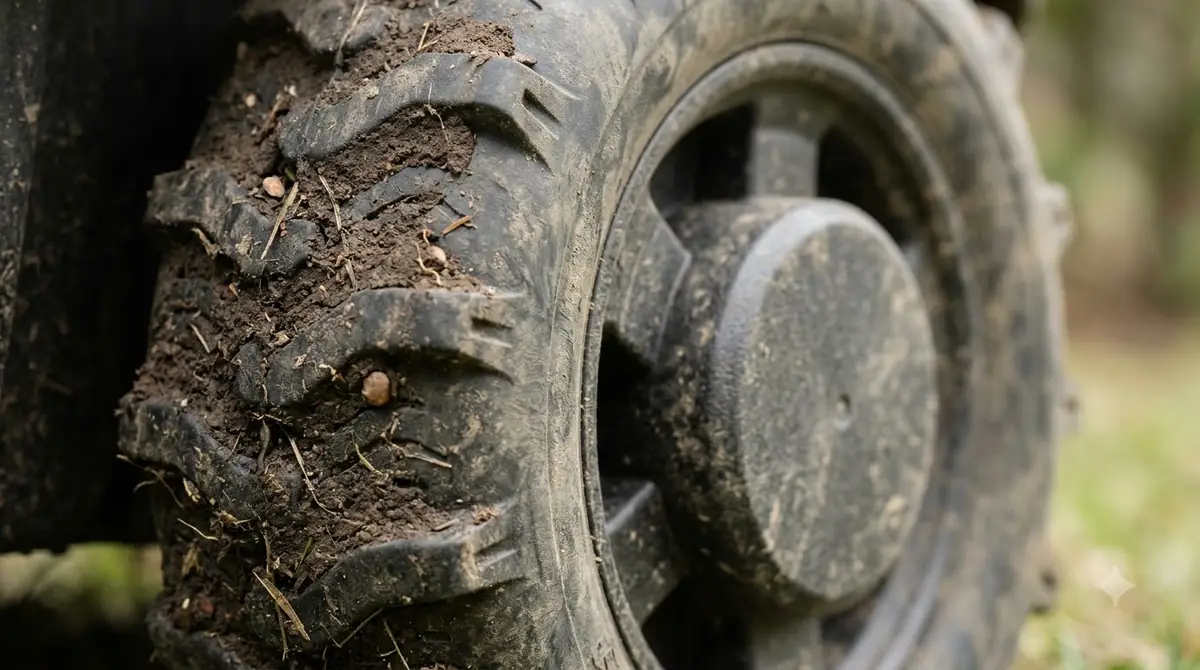
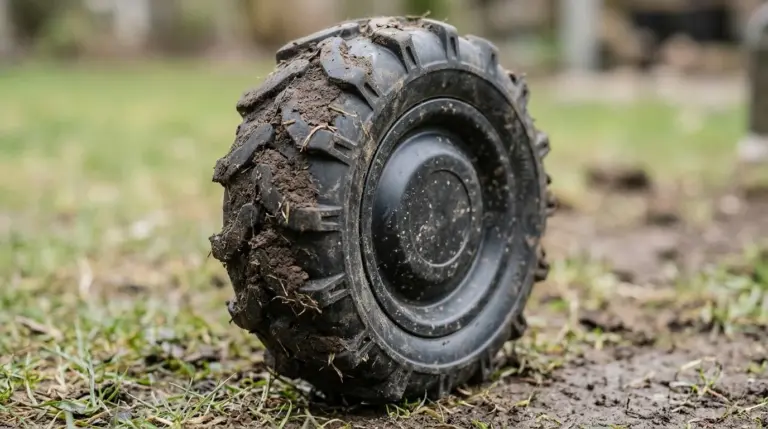
Lymow advises clearing debris, branches and rocks from slopes before mowing and cleaning treads after muddy sessions, although that advice is written for a track-based model. Robomow notes that coarse studs on traction wheels give better grip on slopes and uneven ground. After a session on sandy ground, brush grit and clippings out of the tread and the undercarriage so they do not build up between the lugs and reduce contact. Our guide on how to clean a robot mower covers the routine.
Will a robot mower get stuck on a sandy soil lawn? What to check before you buy
Will a robot mower get stuck on a sandy soil lawn if you pick the wrong drive system? If your lawn has sandy patches or slopes, the drive system matters as much as the software. Lymow says that AWD “spreads torque across four wheels, so if one loses grip, the others compensate,” and that standard rubber wheels with shallow treads “simply cannot maintain purchase on steep wet slopes.” Our reading is that 2WD models suit gentle, firm lawns, while sandy or sloped yards need more traction. Our comparison of AWD vs 2WD robot mowers for hills goes further on drive types.
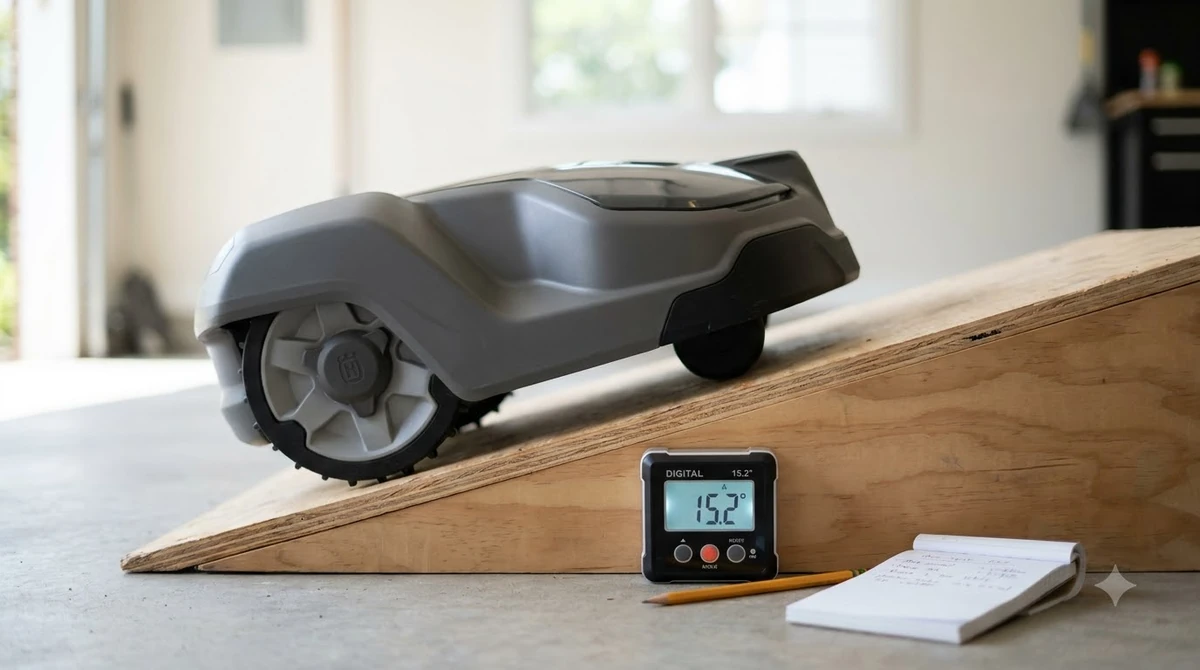
- Drive: compare 2WD and AWD against the slopes you actually have.
- Tread: look for stud-type traction wheels rather than plain shallow treads.
- Slope: measure the real slope with a level, because eufy notes that “Visual checks often fail because sloping yards look flatter than they really are.”
- Passages: Robomow advises keeping passages at least one meter wide so the robot does not bounce between edges.
- Dock: Lymow advises placing the charging station on flat ground or the gentlest slope, ideally under 15°.
Heads up
Most sources on this question are manufacturer blogs. The extension sources we read cover lawn soil and turf care, not robot mower performance on sand, so no independent test of whether a robot mower will get stuck on a sandy soil lawn is cited here.
Frequently asked questions
Will a robot mower always get stuck on sandy soil?
No. Whether a robot mower will get stuck on a sandy soil lawn depends on more than the sand. Sandy soil is one factor. Stuck events in these sources come from combinations of slope, dips, loose surface, wet grass and wheel tread, and none of the sources gives a failure rate for sand alone.
Does wheel tread matter on a sandy lawn?
Yes. Lymow says standard shallow treads cannot maintain purchase on steep wet slopes, and Robomow says coarse studs on traction wheels give better grip on slopes and uneven ground. Check the wheel design in your model’s spec sheet.
Can I make a sandy lawn easier for a robot mower?
Purdue and Utah State describe ways to improve sandy lawns: watering more often in smaller amounts, mowing at a higher height to encourage deep roots, using slow-release nitrogen, and adding compost to hold water and nutrients. A thicker turf covers exposed sand, which is our reading, not a tested result.
What should I do if the mower is stuck in sand now?
Stop the mower, clear grit and grass from the wheels, and fill the dip or rut that caught it. Check the slope against the rated limit before restarting, and for traction add-ons see robot mower traction spikes for slopes. Eufy says a loss of drive contact usually shows as an error alert, so follow the recovery steps in your model’s manual.
Sources
- Maintaining Lawns on Sandy Soils (Purdue Extension, Turfgrass Science): irrigation frequency, mowing height, slow-release nitrogen, drought-tolerant species.
- Preparing Soil for Turfgrass Establishment, Southern Utah (Utah State University Extension): compost for sandy soils, topsoil depth.
- Robot Mowers on Hills: Slope Ratings & Stuck Prevention (Lymow, manufacturer): slope conversions, wheel grip on loose ground, dock placement.
- Can a Robotic Lawnmower Get Stuck? (Robomow, manufacturer): terrain, boundary wire, passage width, traction studs.
- Robot Lawn Mower Slope Limits (eufy, manufacturer): slope tiers, dips above 3 cm, error alerts on lost drive contact.
 Up next8 min readBy YardWill a Robot Mower Get Stuck on a Clay Soil Lawn That Stays Wet?Updated Nov 11, 2026
 7 min readBy YardWill a Robot Mower Get Stuck on a Rocky Yard?Updated Nov 11, 2026
 9 min readBy YardWill a Robot Mower Get Stuck on a Lawn With Holes and Dips?Updated Nov 11, 2026
 8 min readBy YardWill a Robot Mower Get Stuck on a Newly Sodded Lawn?Updated Nov 11, 2026
 7 min readBy YardWill a Robot Mower Get Stuck on a Lawn with Mole Hills?Updated Nov 11, 2026
 9 min readBy YardWill a Robot Mower Get Stuck on a Soggy Lawn?Updated Nov 11, 2026