
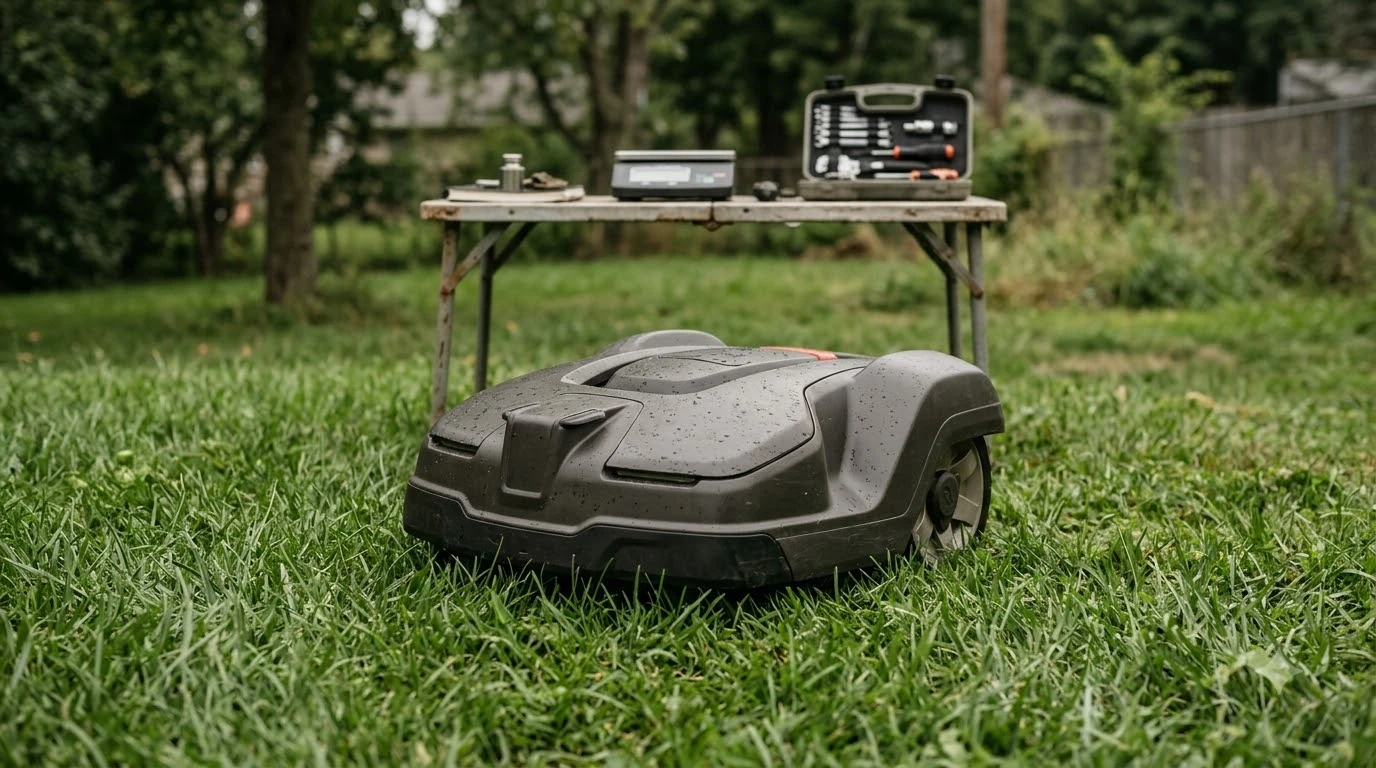

Will a robot mower get stuck on a clay soil lawn that stays wet? It can lose grip, leave muddy tracks and slip, though no source we read gives a fixed stuck rate for clay. Manufacturers say soft, waterlogged ground reduces wheel traction, and extension guidance says soils compact more easily when wet. As of 2026-11-10, the practical rule is to wait until the soil firms up before the mower runs.
The short answer
- Grip: soft ground reduces traction, so a robot mower can leave marks or lose control on slopes and turns, according to Eufy (Anker).
- Wait after rain: Husqvarna advises at least 24 hours after rain before mowing.
- Ruts: Husqvarna says mowing after heavy rain can create wheel ruts in soft, wet soil.
- Clay: clayey soils compact more easily when wet, so routine traffic should be limited to set paths.
- Rain sensor: keep it on. Pausing on wet days is our reading of the safer choice on clay.
Will a robot mower get stuck on a clay soil lawn that stays wet?
Yes, a robot mower can slip, leave tracks and struggle on a wet clay lawn, but the outcome depends on the slope, the mower and how saturated the soil is. The sources we read describe a traction and soil problem rather than a fixed failure rate. Eufy (Anker) says very wet lawns can reduce wheel grip and leave muddy tracks and uneven cutting. That is a reason to expect trouble on clay, not a guarantee that every run will fail.
Our reading is that a clay lawn may take longer to firm up after rain than the minimum figures suggest. Check the lawn before each session rather than relying on the calendar alone. Sandy ground behaves differently, as covered in robot mowers on sandy soil lawns.
When a robot mower does lose its footing, the typical sign is a stop rather than a silent failure. Eufy (Anker) says that when drive wheels lose contact with solid ground, the mower stops moving and sends an error alert to the phone app. That gives you a clear signal to check the lawn, clear the wheels and wait before trying again, instead of letting the mower keep spinning.
Why wet clay makes wheels slip and leave ruts
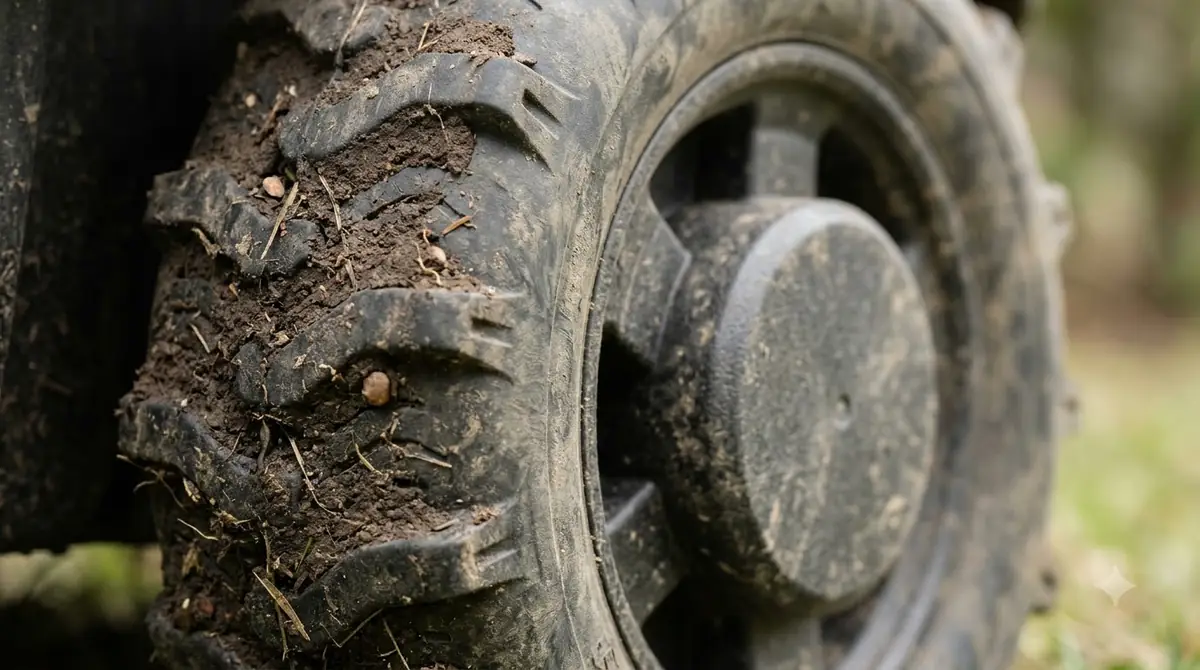
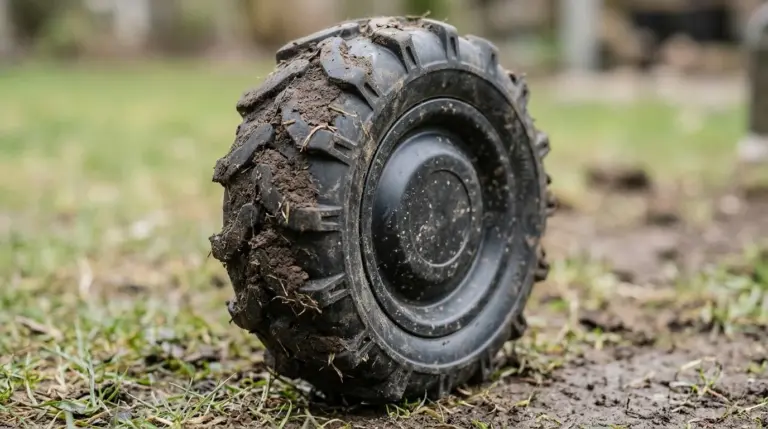
Wet soil has less strength, so wheels can cut into it. Eufy (Anker) notes that waterlogged soil has less strength, and that mower wheels may leave ruts and compact the ground when they travel over soft, saturated soil. Eufy’s guide to cutting wet grass also links the same soft ground to reduced traction and marks on turns.
Colorado State University Extension explains the mechanism for soil in general: moisture lets soil particles slide together and shrink the large pores that air and water need, which is why soils are more prone to compaction when wet. Husqvarna notes that many robot mowers are light enough not to cause soil compaction, so the bigger risk is repeated passes on the same wet tracks. Our reading is that keeping wheels clear of clippings and soil is a sensible habit on clay.
Slopes make the problem worse. Eufy (Anker) says damp turf acts like a slippery surface under mower tyres, and that even an incline inside a mower’s rated limit can lose grip when the grass is wet. In its words, slippery grass causes drive wheels to spin, dig holes in the lawn and leave uncut patches behind.
Eufy also calls a mower’s maximum rated slope an absolute limit rather than a target for daily mowing, so a clay slope after rain is a poor place to push that limit. Will a robot mower get stuck on a clay soil lawn that stays wet and slopes? It is more likely, so see the guide to robot mower traction spikes for slopes for one gear option.
How long to wait after rain on clay
Husqvarna advises waiting at least 24 hours after rain before mowing. Its wet grass guide also says heavy rain or overcast weather may need a longer wait, while strong sunlight may dry a lawn within a few hours. Husqvarna’s wet grass guide treats the 24-hour figure as a general rule, not a fixed limit.
Eufy (Anker) takes a different approach. It says there is no single number of hours that works for every lawn, and it recommends checking the grass blades and the soil. Its test is to wait until the blades are mostly dry and the soil feels firm underfoot. Eufy’s guide also gives different ranges in different sections, so this article does not repeat those numbers as firm rules. So will a robot mower get stuck on a clay soil lawn that stays wet after a full day? That depends on whether the soil has firmed up, not on the clock.
| Lawn condition | Guidance | Source |
|---|---|---|
| Heavy rain, saturated clay | Wait until the soil feels firm underfoot; no fixed number of hours | Eufy (Anker) |
| Rain about 24 hours earlier | Wait at least 24 hours before mowing | Husqvarna |
| Light rain with strong sun | May dry within a few hours | Husqvarna |
| Footprints stay visible | Wait longer before mowing | Eufy (Anker) |
Rain sensors and whether to keep them on
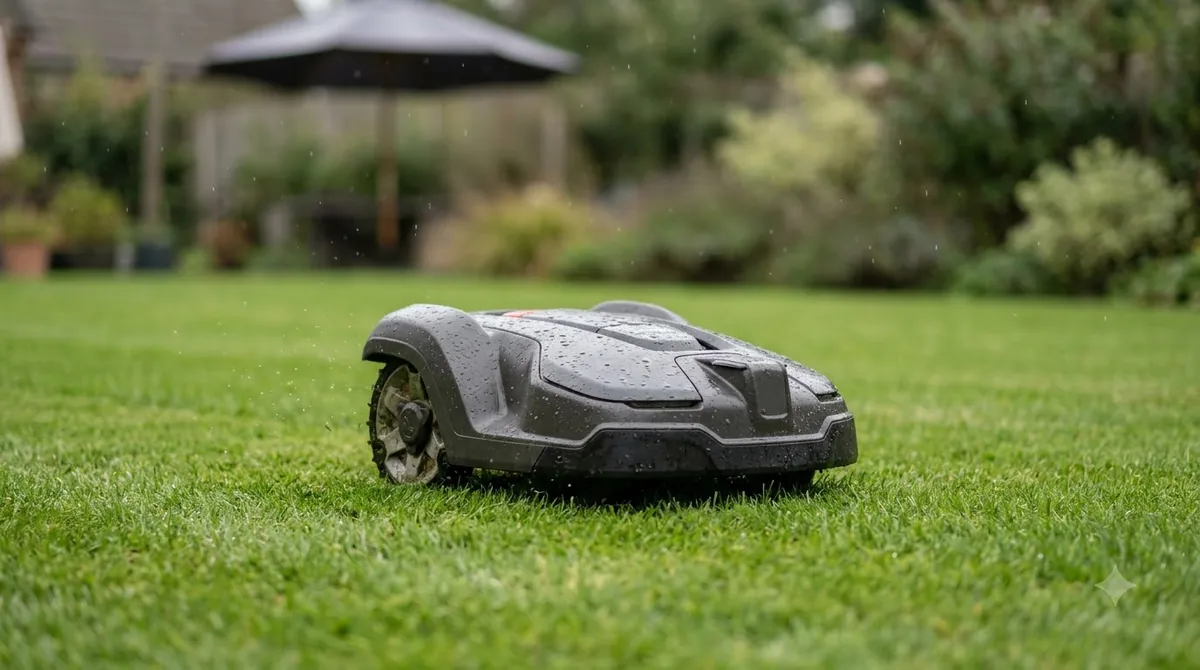
Eufy (Anker) says many modern robot mowers use rain sensors or weather protection features to pause mowing. Its guide does not explain how the sensor works or give a detection threshold, so the settings for your model should come from its manual. Will a robot mower get stuck on a clay soil lawn that stays wet if the rain sensor is left on? Less likely, in our reading, because the mower pauses instead of running in the rain. Eufy also notes that a weather-aware mower can pause or return to its charging station when rain makes mowing unsuitable.
Heads up
Turning off the rain sensor to mow a wet clay lawn is the choice most likely to cause slip and ruts. We advise against it, as our reading of the sources rather than a manufacturer instruction.
Protecting a clay lawn from mower traffic
Colorado State University Extension says traffic is the major contributor to soil compaction. For fine-textured clayey soils, it advises limiting routine traffic flow to selected paths. The same page gives an example of a moist soil reaching 75% of its maximum compaction the first time it is stepped on, which shows why wet ground is the time to be careful.
For lawns, the extension page advises aeration at least 1-2 times a year, and watering well before aerating so the plugs are at least 3 inches long. Our reading is that the same routine helps a clay lawn recover from ruts that a robot mower leaves behind. For a lawn that stays wet, the question will a robot mower get stuck on a clay soil lawn that stays wet is best answered by the checks below.
- Check the soil. Press a boot into the lawn. If the surface stays marked or feels soft, wait longer.
- Clean the wheels. Remove clippings and soil from the wheels before each session, as the guide on how to clean a robot mower explains. For worn wheels, see robot mower wheel replacement.
- Raise the cutting height. Husqvarna advises a higher setting than usual on wet grass.
- Keep the rain sensor on. Let the mower pause and return to its base during rain.
Frequently asked questions
Will a robot mower get stuck on a clay soil lawn that stays wet every time?
No. None of the sources we read gives a stuck rate for clay lawns. Wet clay makes slip, tracks and ruts more likely, but the result depends on the slope, the mower model and how saturated the soil is.
How long should I wait after rain before mowing a clay lawn?
Husqvarna advises at least 24 hours after rain. Eufy (Anker) says no single number of hours fits every lawn, so check whether the soil feels firm underfoot and whether footprints stay visible.
Should I turn off the rain sensor on a clay lawn?
Our reading is no. Eufy (Anker) says rain sensors and weather protection pause mowing in rain. Turning them off to cut wet clay raises the risk of slip and ruts.
What helps a clay lawn cope with a robot mower?
Colorado State University Extension advises limiting routine traffic on fine-textured clayey soils to selected paths and aerating lawns at least 1-2 times a year. Clean the wheels and raise the cutting height on wet days.
Sources
- Can you mow wet grass? (Husqvarna): 24-hour wait, wheel ruts, soil compaction, and higher cutting height on wet grass.
- Can you cut wet grass? (Eufy, part of Anker): traction on soft ground, waterlogged soil, rain sensors, and the no single number guidance.
- Soil Compaction, GardenNotes #215 (Colorado State University Extension): wet soil compaction, traffic on clayey soil, and aeration.
- Robot lawn mower slope limits (Eufy): damp turf and wheel grip, wheel spin on slippery grass, and the stop and error alert when drive wheels lose contact.
 Up next9 min readBy YardWill a Robot Mower Get Stuck on a Sandy Soil Lawn?Updated Nov 11, 2026
 7 min readBy YardWill a Robot Mower Get Stuck on a Rocky Yard?Updated Nov 11, 2026
 9 min readBy YardWill a Robot Mower Get Stuck on a Lawn With Holes and Dips?Updated Nov 11, 2026
 8 min readBy YardWill a Robot Mower Get Stuck on a Newly Sodded Lawn?Updated Nov 11, 2026
 7 min readBy YardWill a Robot Mower Get Stuck on a Lawn with Mole Hills?Updated Nov 11, 2026
 9 min readBy YardWill a Robot Mower Get Stuck on a Soggy Lawn?Updated Nov 11, 2026