
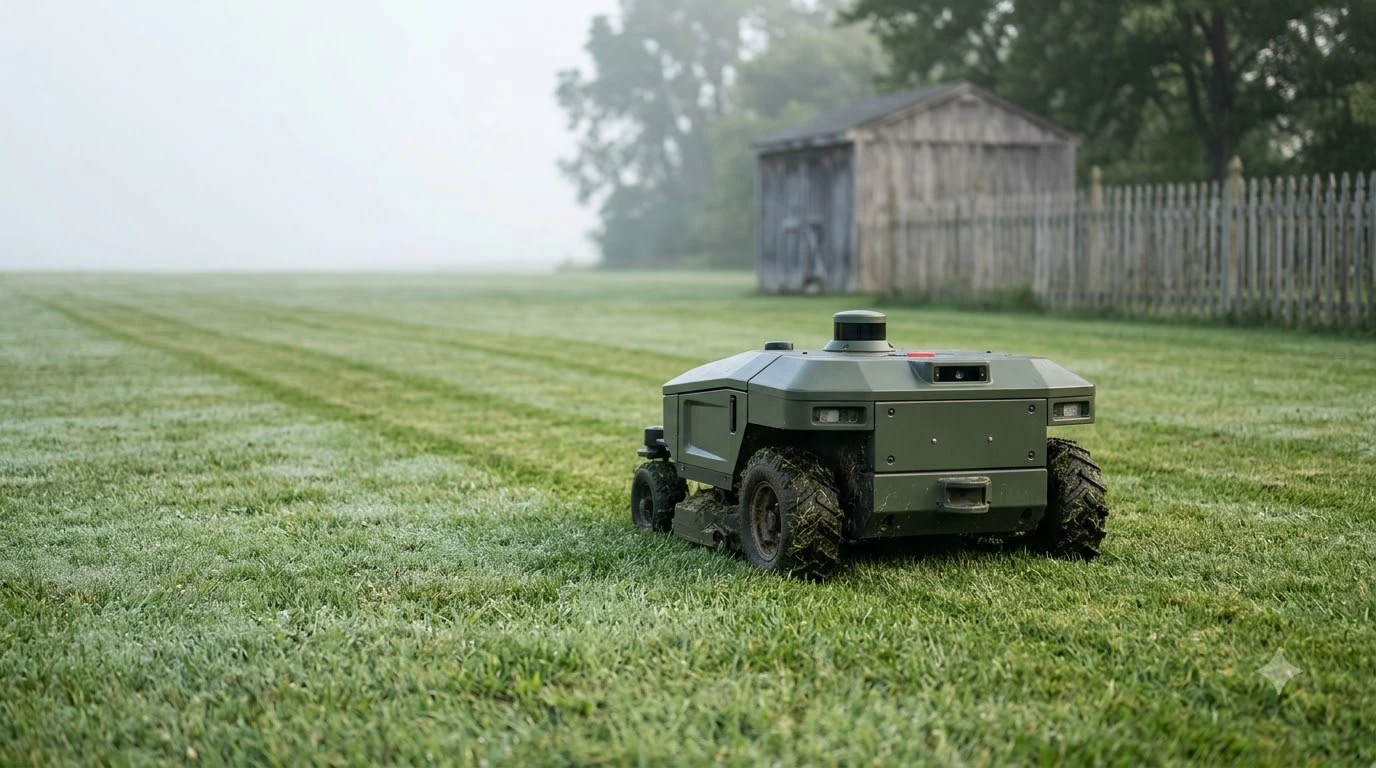

This Mammotion LUBA mini 2 AWD review covers the 1500H version, which the official manual rates for up to 1,500 square meters (0.37 acre) with a 2.2 to 4.0 inch main cutting height and a stated 80% maximum slope inside the work area. Those figures come from Mammotion’s own manual, which applies to the 1000, 1500 and 1500H models. The published numbers are useful, but the independent accounts we could read are a single reviewer’s notes and a site rating, not a lab test of this exact unit. This guide walks through the spec sheet first and then the two review sources, so you can see which numbers are verified and which are claims.
The short answer
- Lawn size: the 1500H is rated for 1,500 m² (0.37 acre) and up to 20 zones. Mammotion’s manual gives the 1000 model 1,000 m² (0.25 acre) and 10 zones.
- Slope: the manual lists 80% (38.6 degrees) inside the task area and 40% (21.8 degrees) at the edge. Treat 80% as a maximum rating, not a comfortable working slope.
- Cutting height: the main disc adjusts from 2.2 to 4.0 in on the 1500H. The edge disc sits at a fixed 2.6 in.
- Navigation: 360-degree LiDAR with AI vision, and no RTK reference station, according to the manual’s model table and two review pages.
- Battery and runtime: the spec sheet gives 150 minutes per charge from a 6.1 Ah battery. One reviewer reported two to three hours of mowing in moderate grass, so expect a range that depends on grass height, heat and slope.
- Warranty: the manual’s warranty table lists 3 years for the battery. Confirm the period for the other parts on the purchase paperwork.
Mammotion LUBA mini 2 AWD review: what the 1500H spec sheet says
The starting point for any Mammotion LUBA mini 2 AWD review is the manual, because it lists every model in the series in one table. The manual is dated version 1.0, January 2026, and it covers three variants: the 1000, the 1500 and the 1500H. Our reading is that the 1500H is the taller-cutting version of the 1500 with the same coverage rating, and the manual’s columns support that reading.
The manual gives these figures for the 1500H:
| Item | 1500H, per Mammotion manual |
|---|---|
| Recommended mowing area | 1,500 m² (0.37 acre) |
| Max zones | 20 |
| Max slope inside task area | 80% (38.6°) |
| Max slope at edge | 40% (21.8°) |
| Main cutting height | 55-100 mm (2.2-4 in) |
| Edge cutting height | 65 mm (2.6 in), fixed |
| Cutting width | Main disc 200 mm (7.8 in), edge disc 120 mm (4.7 in) |
| Vertical obstacle passing | 75 mm (2.9 in) |
| Battery | 21.6 V, 6.1 Ah, 131.76 Wh |
| Mowing time per charge | 150 min |
| Charging time | 150 min |
| Net weight | About 17.5 kg (39 lb) |
| Waterproof rating | IPX6 for robot and charging station |
| Recommended operating temperature | 5-40 °C (41-104 °F) |
Two things stand out. First, the manual’s cutting-height figures differ by version, so a listing that quotes 0.8 to 2.6 in is describing the standard 1000 or 1500, not the taller 1500H. Second, the manual states the 1500H weighs about 39 lb, slightly more than the standard 1500. The difference is small, and the manual gives the three weights in one row.
Slope: the 80% rating and how to read it
The 80% figure is the most quoted number in any Mammotion LUBA mini 2 AWD review, and it is the one most likely to be misread. The manual says 80% (38.6°) inside the task area and 40% (21.8°) at the edge. That is a maximum rating for the mower’s drive system on a clean, dry surface. It does not describe the slope the mower should work on every day.
A sibling model in the same family gives a useful caution. Notebookcheck tested the LUBA mini 2 AWD 1000, which carries the same 80% rating. On its test ramp the robot managed 70%, but it could not demonstrate 80% because of a “Mowing robot tipped” error message. That was one unit on one test day, and it is a different size from the 1500H, so it does not prove the 1500H would fail at the same point. It does show that a rated maximum and a stable working slope can be different numbers.
Husqvarna’s support guidance for its AWD Automower models, a different brand, divides slopes into zones: normal operation on slopes up to 50% inside the work area, no obstacles on slopes between 50% and 70%, and 1.5 m (5 ft) between the bottom of the slope and the boundary wire. Its guide also gives the formula for measuring a slope: vertical height divided by horizontal distance, times 100. A rise of 15 cm over 100 cm is a 15% slope. For a longer look at the rating itself, see what 80 percent slope claims show. Husqvarna’s steep-slope guide is the source for that method.
Our reading is that you should measure the steepest part of your lawn with the formula before you rely on the rating. Wet grass generally lowers grip on any slope, so check how the mower behaves after rain before you rely on the rating.
Navigation without RTK: LiDAR and AI vision
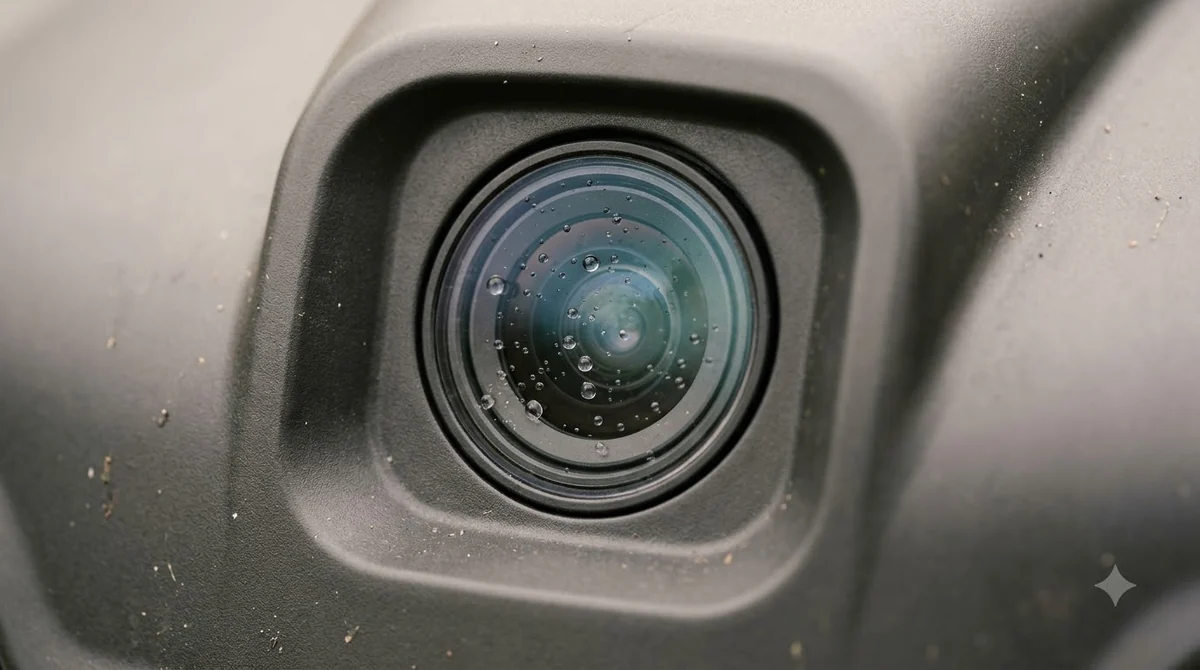
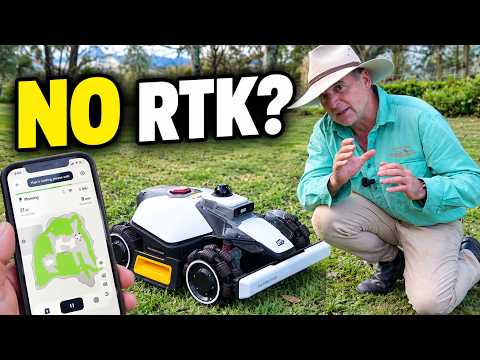
In this Mammotion LUBA mini 2 AWD review, the 1500H does not use an RTK reference station, according to the manual’s navigation rows and both review pages we read. The manual lists 360-degree LiDAR with AI vision for positioning and a physical bumper for obstacle contact. The techaeris review gives the LiDAR range as about 61 meters (200 ft).
That matters for setup. An RTK base needs a clear sky view and a suitable spot in the yard, and many buyers pick a robot for exactly that reason to avoid it. A LiDAR-based system is not automatically better, though. Its accuracy depends on how the sensors see the lawn edge, the fences and the trees, so check the mapped boundary in the app after you draw it.
Setup: boundary, charging station and the app
Installation covers the charging station, the zone map and the app. The manual describes placing the charging station, installing the vision module and then drawing task areas in the Mammotion app. The smarthomecompared review says setup took about an hour, from staking the station and plugging it in to drawing zones. The techaeris reviewer found the menus deep and said the map-editing submenus create a learning curve for first-time users.
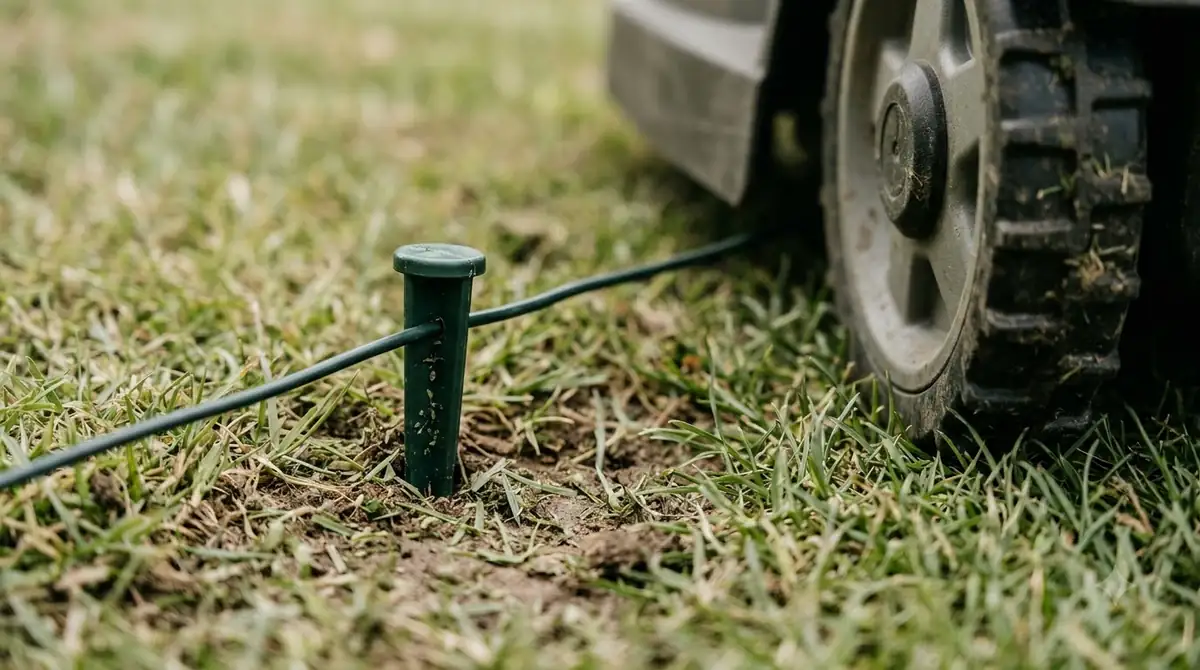
The boundary question is still worth asking before you buy. Some robot mowers need a buried or staked perimeter wire, and others rely on sensors. Mammotion’s model table points to sensor-based navigation for the 1500H, but the mowing area, zone limits and edge behavior still depend on how you draw the map. Our reading is that a yard with fences, a shed or trees close to the edges is where the map needs the most care.
Cutting height and the edge
The 1500H has two cutting discs. The main disc adjusts from 2.2 to 4.0 inches, which is the higher range that separates it from the standard 1000 and 1500 models. The edge disc is fixed at 2.6 inches. The smarthomecompared review lists the taller range as a pro, because it can be adjusted from the app.
The techaeris reviewer described the edge disc as running at roughly two inches, a little lower than the 2.6-inch spec. The manual lists a 2 in (50 mm) edge disc for the 1000 and 1500 and 2.6 in for the 1500H, so the reviewer’s number may be a rounded figure or may describe another version. Check it on your own lawn.
The edge disc is 4.7 inches wide. The smarthomecompared review says it trims to within about two inches of a wall, and it still says edges need a hand trimmer every few weeks. For the general idea, see what cut-to-edge distance means. Our reading is that a robot mower with a small edge disc will keep the perimeter tidy but will not replace a string trimmer.
Battery, runtime and the numbers that disagree
The manual gives 150 minutes of mowing per charge and 150 minutes to recharge. The battery is a removable 6.1 Ah pack, rated at 21.6 V and 131.76 Wh. The techaeris reviewer described two to three hours of continuous mowing in moderate grass, and said heat and heavy grass cut that time. The smarthomecompared review says recharging takes about two and a half hours between runs.
These numbers do not agree, and we have no test data that settles the gap. The manual figure is a rated value under stated conditions, and the reviewer figures come from one unit with no published test length. For planning, use the 150-minute figure from the manual as the floor and check whether your lawn needs more than one run in a day. Our reading is that a lawn of about a third of an acre, mowed on a regular schedule, is what the Mammotion LUBA mini 2 AWD 1500H is built for.
What the two reviews say about the 1500H
This Mammotion LUBA mini 2 AWD review draws on two review pages that were readable for this model. They agree on several points and differ on others, and we list them here as reported rather than as our own experience. We did not test this mower, and neither source describes a test period we could confirm.
The smarthomecompared page gives the 1500H a rating of 4.4 from 265 ratings and a brand rating of 4.2. Its listed pros are the 80% slope rating without a base station, the edge disc, the adjustable cutting height, the removable battery and the IPX6 body. It also lists 3 years of built-in 4G data, GPS theft tracking and voice control with Alexa, Google Home and Home Assistant.
Its listed cons include slow mowing at walking speed, a hard cap at 0.37 acre, a note that the robot mows rather than mulches, rough map editing, edges that still need a trimmer, a recharge of about two and a half hours, one owner who waited months for a warranty replacement, no Apple Home, SmartThings or Matter support, and a premium price for a third of an acre.
The techaeris review adds the learning curve in the app and a mention that summer heat can reduce runtime. It also notes the 1500H supports up to 20 zones.
Our reading is that the reviews are useful for the list of trade-offs, but they are not a long-term test. Treat any single owner comment as one data point.
Maintenance and warranty
The manual sets a clear maintenance schedule. It recommends replacing the cutting blades every three months or after 150 hours of use, and it says the motor has an expected lifespan of 1500 hours. Blade fit varies by model, so match the part to your version before you order, using Mammotion LUBA replacement blades as a starting point. It also asks for a charge to at least 80% every 90 days if the mower is not in use, and it says the robot should be kept indoors if the temperature falls below -10 °C (14 °F).
The warranty section names the battery as covered for 3 years. The same table lists the motor, the vision module and LiDAR, the PCBA, the GPS kit and the charging station, but the extracted text did not show the period for those parts. The warranty runs from the original purchase date on the receipt or invoice, and you need the serial number to start a claim. The smarthomecompared page lists a 3-year warranty overall, which is the same length as the manual’s battery row. Buy from a dealer and check whether the dealer or Mammotion handles the claim first; how to register a robot mower warranty covers the proof you should keep.
What to check before you buy
Use the spec sheet and this Mammotion LUBA mini 2 AWD review to answer five questions before you commit.
- Confirm the version. Check whether the listing is the 1000, 1500 or 1500H, because the cutting height and weight differ.
- Measure the lawn. Compare your yard area with the 0.37 acre rating, and count the zones you need against the 20-zone limit.
- Measure the steepest slope. Use the rise-over-run formula and treat 80% as a ceiling, not a target.
- Check the cutting height you need. If your grass grows long between cuts, the 2.2 to 4.0 inch range is the reason to choose the 1500H.
- Plan for runtime and warranty. Budget for a second run in a day on large or hot lawns, and keep the purchase receipt with the serial number. To see how this model lines up against another brand’s spec sheet, read LUBA mini 2 AWD vs Navimow i210 AWD specs.
Frequently asked questions
Does the LUBA mini 2 AWD 1500H need an RTK base station?
The manual’s model table and two review pages describe the 1500H as LiDAR-based and RTK-free. Check the installation section of the manual for the exact unit you buy before you assume the yard setup is simple.
How big a lawn is the 1500H rated for?
Mammotion’s manual gives the 1500 and 1500H a recommended mowing area of 1,500 m² (0.37 acre) and up to 20 zones. The 1000 model is rated for 1,000 m² (0.25 acre) and 10 zones.
What slope can the LUBA mini 2 AWD climb?
The manual gives a maximum of 80% (38.6 degrees) inside the task area and 40% (21.8 degrees) at the edge. Those are maximum ratings. A sibling model tested by Notebookcheck managed 70% but reported a tip-over error before reaching 80%, so plan for a lower working slope.
How long does the battery last?
The manual gives 150 minutes of mowing per charge and 150 minutes to recharge. One reviewer reported two to three hours of mowing in moderate grass, and heat and heavy grass shorten the run. We found no independent test that settles the difference.
Sources
- Mammotion LUBA mini 2 AWD user manual (manufacturer, v1.0, January 2026): model table, specifications, battery, warranty and maintenance for the 1000, 1500 and 1500H.
- Smart Home Compared (review site): 1500H spec table, rating, pros and cons.
- Techaeris (review, August 2026): 1500H specs, LiDAR range, runtime and app observations from the reviewer.
- Husqvarna (manufacturer support): slope formula and zone guidance for steep ground, a different brand.
- Notebookcheck (independent test): tip-over behavior of the sibling LUBA mini 2 AWD 1000.
 Up next8 min readReviews & CompareMammotion LUBA 2 AWD Review: Specs, Slope Limits and What to CheckUpdated Nov 11, 2026
 10 min readReviews & CompareLuba Mini 2 AWD vs Navimow i210 AWD: Specs ComparedUpdated Nov 16, 2026
 7 min readReviews & CompareIs the Mammotion LUBA 2 AWD Worth It? Slopes, Height and LimitsUpdated Nov 17, 2026
 7 min readReviews & CompareMammotion YUKA mini 2 Review: What the Published Specs ShowUpdated Nov 16, 2026
 8 min readReviews & CompareMammotion LUBA 2 AWD Pros and Cons: What the Specs SupportUpdated Nov 12, 2026
 7 min readReviews & CompareMammotion LUBA 3 AWD vs LUBA 2 AWD: What the Published Specs ShowUpdated Nov 12, 2026