
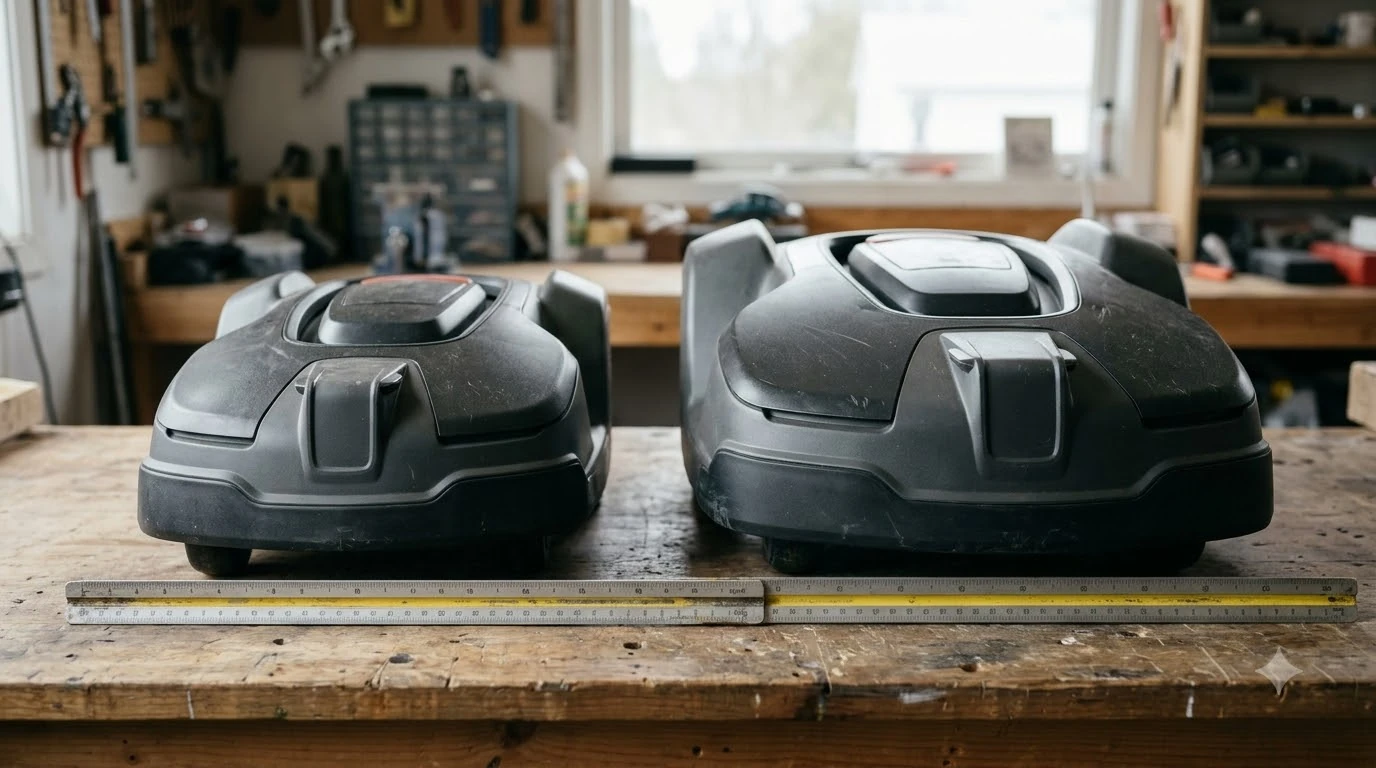

LUBA mini 2 AWD vs Navimow i210 AWD is a close comparison of two wire-free robot mowers, but their spec sheets disagree on slope, weight and noise. The LUBA mini 2 AWD 1500H is rated for up to 1,500 square meters and a steeper slope, while the Navimow i210 AWD is listed as lighter with a lower cutting range. Several figures differ between the pages we could read, so the sections below separate what is consistent from what needs checking before you buy.
The short answer
- Area: the LUBA is rated for up to 1,500 m² (0.37 acre), the Navimow for up to 1,000 m².
- Slope: the LUBA lists 80% inside its task area, the Navimow lists 45%, and the two ratings may not be measured the same way.
- Weight and cut: the Navimow is listed at 12.3 kg with a 2 to 6 cm cutting range, the LUBA at about 17 kg with a 55 to 100 mm main disc.
- Navigation: the LUBA uses 360° LiDAR and dual cameras, the Navimow uses EFLS NRTK with vision.
LUBA mini 2 AWD vs Navimow i210 AWD: specifications side by side
The LUBA mini 2 AWD 1500H is rated for up to 1,500 m², and the Navimow i210 AWD for up to 1,000 m². The table below uses the figures from the Techaeris review of the LUBA and the NeozOne test of the Navimow, with the conflicting values marked in the section on disagreements.
| Spec | LUBA mini 2 AWD 1500H | Navimow i210 AWD |
|---|---|---|
| Recommended area | Up to 1,500 m² (0.37 acre) | Up to 1,000 m² |
| Max slope | 80% (38.6°) inside task area, about 40% (21.8°) at edge | 45% (24°) in spec table |
| Cutting width | 200 mm main disc, 120 mm edge disc | 18 cm |
| Cutting height | 55 to 100 mm main, about 65 mm edge | 2 to 6 cm, manual adjustment |
| Weight | About 17 kg | 12.3 kg |
| Battery | 6.1 Ah | 5.1 Ah |
| Charging time | About 150 minutes | 120 minutes |
| Noise | 70 dB maximum, about 56 dB A-weighted | 59 dB in spec table |
| Navigation | 360° LiDAR plus dual-camera AI vision, no RTK antenna | EFLS NRTK plus vision |
| Obstacle detection | 300+ stationary and moving obstacles (manufacturer claim) | Vision Fence with a 140° field |
| Water rating | IPX6 | IP66 |
Spec sheets rarely use identical measurement methods, so a gap of 5 percentage points in slope or a few decibels in noise may not reflect a real difference on your lawn. Read the LUBA mini 2 AWD vs Navimow i210 AWD figures as a starting point only. Use the table to narrow your shortlist, then confirm the numbers on each manufacturer’s current listing.

Navigation without a boundary wire
Both mowers avoid a perimeter wire, but they position themselves differently. The Techaeris review says the LUBA uses 360° LiDAR with dual-camera AI vision and needs no boundary wire or RTK antenna on this model. The NeozOne article lists the Navimow i210 AWD with EFLS NRTK plus vision, and its reviewer describes the wire-free setup as simple, with most steps handled in the Navimow app, which was still in beta during that test.
Obstacle handling is the detail most buyers miss. The LUBA spec sheet claims detection of more than 300 stationary and moving obstacles, and the Techaeris reviewer says it handles objects down to roughly one inch. The Navimow’s Vision Fence covers a 140° field. Neither spec sheet shows how the mower reacts to a garden hose or a child’s toy left on the lawn, so check the behavior described in each manual.
Our reading is that LiDAR navigation and RTK with vision are different designs, and the right choice depends on what your yard blocks. Open areas with clear sky suit either design, while tree cover and walls can affect satellite-based positioning and make the vision and LiDAR approach more useful to check closely. Our guides to RTK vs LiDAR vs vision robot mowers and what EFLS means on Segway Navimow explain the two approaches.
Slopes, wheels and traction
In the LUBA mini 2 AWD vs Navimow i210 AWD slope comparison, the LUBA lists the higher rating, 80% (38.6°) inside its task area and about 40% (21.8°) at the edge. The Navimow spec table lists 45% (24°). The NeozOne reviewer says the Navimow can climb slopes up to 45% but states they did not test at 45° because their own lawn did not have that gradient. A rating inside the task area and a rating at the edge are different claims, so for a yard with steep borders, the edge figure may matter more than the headline number.
To convert between the two units, see robot mower slope rating explained, and use how to measure yard slope in percent and degrees on your own lawn.
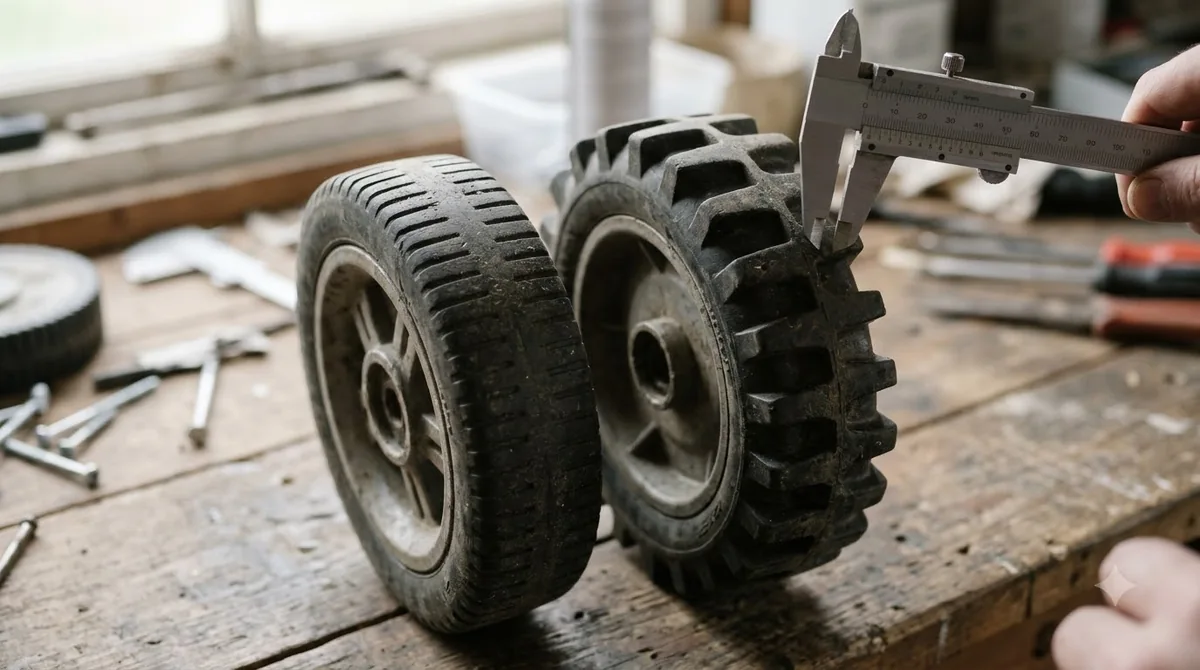
Both models carry AWD in their names, which stands for all-wheel drive. The pages we could read do not give wheel tread dimensions for either mower, so this article does not compare traction beyond the slope ratings. Check the wheel design in the manufacturer’s manual if your lawn has wet or uneven ground.
Coverage and cutting performance
In the LUBA mini 2 AWD vs Navimow i210 AWD comparison, the LUBA is rated for 1,500 m² and the Navimow for 1,000 m², but a rated area is a best case rather than a guarantee for your lawn. Slopes, obstacles and separate zones all reduce real coverage, so a mower rated for more area still needs time to finish a yard that is mostly steep or cluttered.
The cutting ranges also differ. The LUBA main disc is listed at 55 to 100 mm and the edge disc at about 65 mm, which is a higher cut than the Navimow’s 2 to 6 cm manual range. If you want a short, even lawn, the Navimow’s range reaches lower. If you prefer longer grass or a higher cut for dry weather, the LUBA’s range may suit you better.
Battery and charging
The battery figures are close. The LUBA lists a 6.1 Ah battery, about 150 minutes of charging time and up to about 500 m² per charge. The Navimow lists 5.1 Ah and 120 minutes of charging. Techaeris puts the LUBA’s runtime at two to three hours in moderate grass and does not reconcile that with the 150-minute spec, so the per-charge area is the more useful comparison.
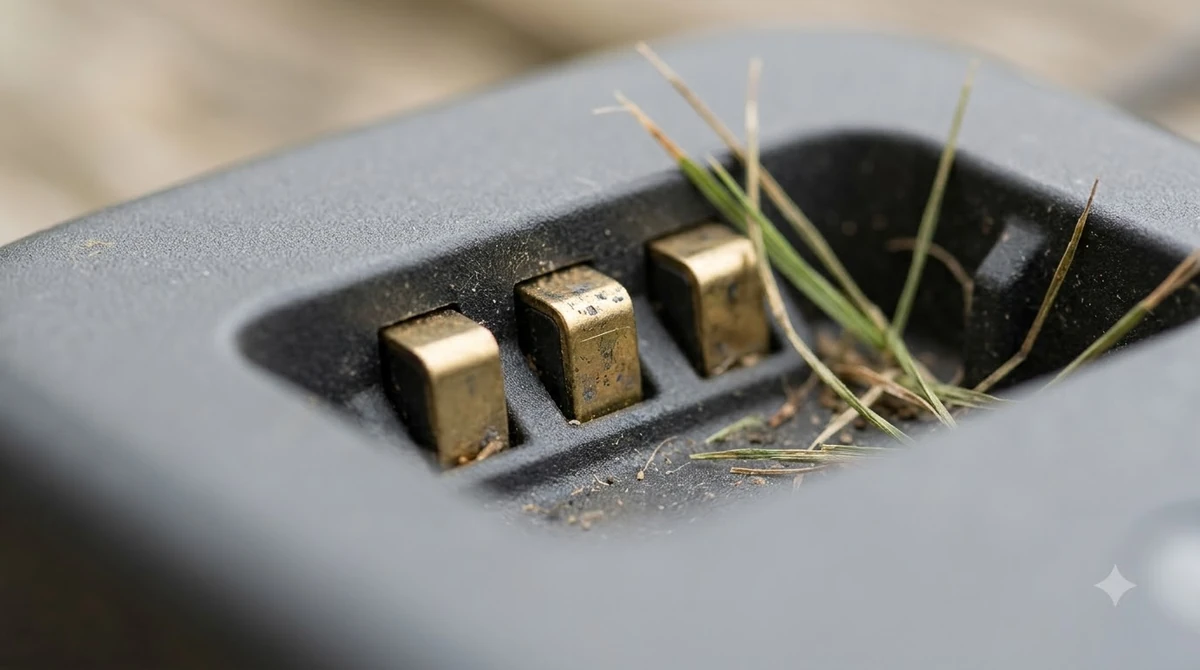
Techaeris adds that runtime falls to about ninety minutes on steep slopes and thick grass, and that prolonged direct summer heat can trigger thermal charging throttling. Those are reviewer observations rather than manufacturer specs, but they point to the same practical rule: a mower that is near its rated limit will run shorter sessions on a hard lawn.
Noise and weight
In the LUBA mini 2 AWD vs Navimow i210 AWD noise comparison, the Navimow is listed at 59 dB and weighs 12.3 kg. The LUBA is listed at up to 70 dB, which is a maximum, and the Techaeris review gives about 56 dB on an A-weighted scale. Those are not like-for-like figures, so the two noise numbers cannot be ranked without the measurement method. The NeozOne article itself gives 59 dB in its spec table and 53.2 dB in its pros list, so even one source is inconsistent.
The weight gap is about 4.7 kg on the Techaeris figure of about 17 kg (about 38 lbs), which matters if you plan to lift the mower onto a deck, a trailer or a garage shelf. Mowautonomous lists the LUBA at about 30 lbs, which is closer to 13.6 kg, so confirm the weight with Mammotion before deciding. For noise basics, see how to reduce robot mower noise.
Where the sources disagree
Neither LUBA source is Mammotion’s own specification page, so the conflicts below stay open, and the Navimow figures come from a single test article. Treat the following conflicts as open questions until you check the current manufacturer listing.
- Cutting height: Techaeris lists 2.2 to 4.0 inches, while mowautonomous lists 1.0 to 2.4 inches.
- Weight: about 17 kg (about 38 lbs) in Techaeris, about 30 lbs in mowautonomous.
- Charging and runtime: Techaeris gives about 150 minutes of charging and a two to three hour runtime estimate, mowautonomous gives a 90-minute recharge and up to 180 minutes of runtime.
- Water rating: IPX6 in Techaeris, IPX5 in mowautonomous.
The mowautonomous page also describes its author’s own 60 days of testing. We could not verify those claims, so this article uses only the spec figures from that page and flags them where they conflict.
Who each option suits
The LUBA mini 2 AWD vs Navimow i210 AWD choice depends on priorities. The LUBA suits buyers whose yard needs the larger rated area and the steeper slope rating, and who accept a heavier mower. The Navimow suits buyers who want a lighter machine with a lower cutting range and a published 59 dB noise figure. Our reading is that neither choice is clearly better until the disputed figures are confirmed.
| Priority | Leans toward |
|---|---|
| Largest rated area (1,500 m²) | LUBA mini 2 AWD 1500H |
| Steepest headline slope (80%) | LUBA mini 2 AWD 1500H, if the task-area rating applies to your lawn |
| Lighter weight (12.3 kg) | Navimow i210 AWD |
| Lower cutting range (2 to 6 cm) | Navimow i210 AWD |
| Quieter rated noise | Not settled by the sources |
What to check before you buy
- Confirm the slope method. Find out whether the rating applies to the task area or the edge, and compare it with your steepest section.
- Check the cutting height. Use the current manufacturer listing, since the two LUBA sources disagree on the range.
- Measure your lawn. Compare your mowable area with the rated figure and leave room for obstacles and zones.
- Verify the weight and noise. Confirm both on the manufacturer’s page if you plan to lift the mower or run it near a patio.
- Check the current listing. Confirm the price, warranty and return terms on the seller page, since review figures age quickly.
Frequently asked questions
Which mower covers more area, the LUBA or the Navimow?
The LUBA mini 2 AWD 1500H is rated for up to 1,500 m² (0.37 acre), and the Navimow i210 AWD for up to 1,000 m². These are manufacturer or reviewer ratings, not tests on your lawn, so leave headroom for slopes and obstacles.
Do either of these mowers need a boundary wire?
The Techaeris review says the LUBA needs no boundary wire or RTK antenna on this model, using LiDAR and cameras. The NeozOne article describes the Navimow’s wire-free setup as simple, with navigation based on EFLS NRTK plus vision.
Which one is quieter?
The sources do not settle it. The Navimow is listed at 59 dB, while the LUBA is listed at up to 70 dB, or about 56 dB A-weighted. Those figures use different measures, so compare them only after checking each manufacturer’s method.
How much does the LUBA mini 2 AWD weigh?
The sources disagree. Techaeris lists about 17 kg (about 38 lbs), while mowautonomous lists about 30 lbs. The Navimow i210 AWD is listed at 12.3 kg in the NeozOne spec table. Confirm the LUBA figure with Mammotion before you rely on it.
Sources
- Mammotion LUBA mini 2 AWD review (Techaeris): LUBA specifications, navigation, obstacle claims, runtime and heat observations.
- LUBA mini 2 1500H review (MowAutonomous): alternative LUBA figures for cutting height, weight, recharge time, runtime and IP rating.
- Navimow i210 AWD test (NeozOne): Navimow specification table, slope, navigation and reviewer observations on setup and noise.
 Up next12 min readReviews & CompareMammotion LUBA mini 2 AWD Review: Specs, Slope and Battery FactsUpdated Nov 16, 2026
 8 min readReviews & CompareMammotion LUBA 3 AWD 1500H vs Segway Navimow i215 LiDAR: Specs ComparedUpdated Nov 12, 2026
 7 min readReviews & CompareLUBA 3 AWD 3000H vs Navimow X430: High-Cut Specs ComparedUpdated Nov 12, 2026
 10 min readReviews & CompareSegway Navimow X3 vs Mammotion Luba 3 AWD: Published Specs ComparedUpdated Nov 11, 2026
 7 min readReviews & CompareNavimow i210 AWD Review: Specs, Slope and Conflicts to CheckUpdated Nov 16, 2026
 8 min readReviews & CompareMammotion LUBA 2 AWD Pros and Cons: What the Specs SupportUpdated Nov 12, 2026