
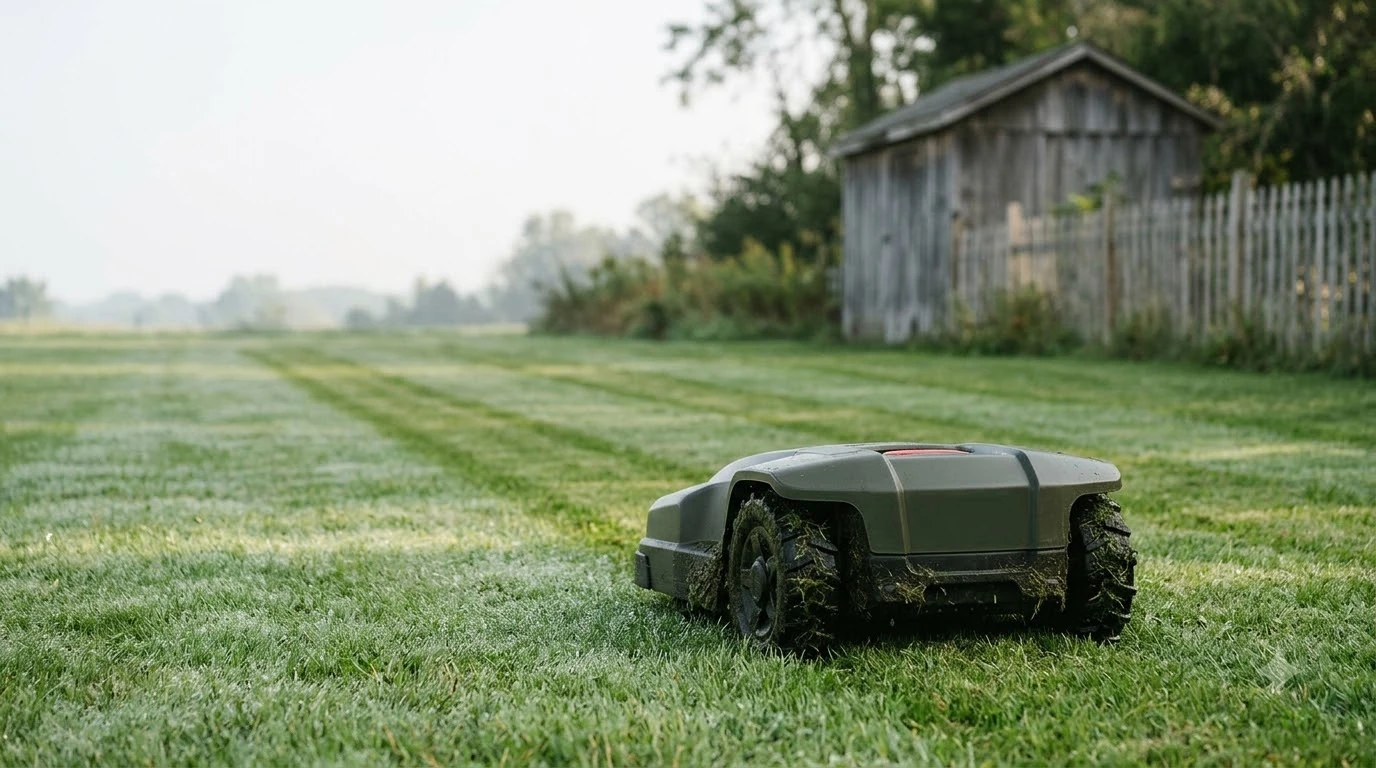

The best robot mower for bermuda grass is the one whose lowest cutting height reaches your grass type and whose drive can handle your slopes. Common (seeded) bermuda is kept at about 1 to 1 1/2 inches, and hybrid bermuda at about 1/2 to 1 inch, according to University of California guidance. Because the cutting floor matters more than brand names, this guide explains how to choose a robot mower for bermuda, which specs to compare, and what to check before you buy. It does not rank individual models.
The short answer
- Match the floor to the grass: common bermuda needs about 1 to 1 1/2 inches, hybrid about 1/2 to 1 inch.
- Check the minimum height on the spec sheet, not just the maximum. Many robot mowers stop above hybrid bermuda’s range.
- Look at traction if the lawn has slopes, because bermuda grows fast and needs regular runs.
- Plan for frequent short runs so you never remove more than about one-third of the blade in one pass.
- Confirm the blade and battery can handle the mowing schedule your lawn size and growth rate require.
What bermuda grass asks from a robot mower
Bermuda is a warm-season grass that spreads by runners and recovers quickly, which is why it suits frequent robot mowing. The same vigor creates two problems. Growth is fast in spring and summer, so the mower must run often. And low settings can scalp the turf if the grass is cut too short in one pass. A robot mower works well with bermuda only when it can hold the right height and run enough times to keep the grass from getting ahead of it. The feasibility question for this turf is answered in robot mowing on bermuda grass. Bermuda is a warm-season grass, and the warm-season mower roundup gives the wider view.
| Source | Lawn type | Recommended height |
|---|---|---|
| UC Healthy Lawns (UC IPM) | Seeded (common) bermuda | 1 to 1 1/2 inches |
| UC Healthy Lawns (UC IPM) | Hybrid bermuda | 1/2 to 1 inch |
| NC State Extension | Bermuda lawns in general | Best at 3/4 to 1 inch with a reel mower; acceptable range 5/8 to 2 1/2 inches |
| LSU AgCenter | Bermuda lawns in general | 1 to 2 inches |
The sources differ because they describe different lawns and climates. For a robot mower, the practical question is simpler: does the lowest setting sit inside the range for your grass type? If you do not know whether your lawn is common or hybrid, check the seed or sod label, or ask the installer. That answer decides which height band you need the mower to reach.

Criteria for the best robot mower for bermuda grass
Start with minimum cutting height, then move to drive, runtime and blade quality. Those four points decide whether a model can serve as the best robot mower for bermuda grass on your particular lawn. A mower that cannot go low enough will keep hybrid bermuda too tall. A mower that goes low but has weak traction can leave ruts or stall on slopes, and that damage is harder to repair on a fast-growing lawn. A slower-growing grass uses different criteria for height and frequency, as centipede lawn criteria explains for warm-season lawns.
- Minimum cutting height: compare the lowest setting in millimetres or inches with the band for your grass. Leave a small margin, because the mower’s height readings are not always exact.
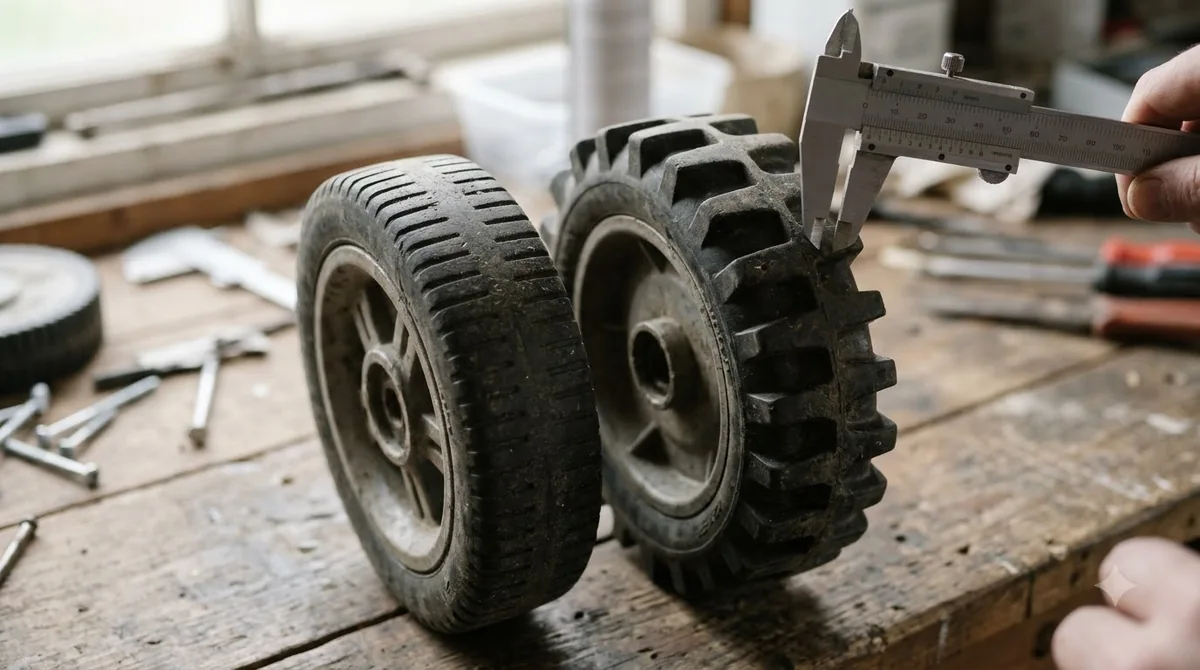
- Drive system: two-wheel drive handles flat, even lawns. All-wheel drive is more forgiving on slopes and wet patches, which are common where bermuda sits in low areas.
- Runtime and coverage: bermuda often needs more frequent cutting than cool-season grass, so check that the battery covers your lawn in one charge or with the charging station’s return routine.
- Blade system: sharp, well-balanced blades cut cleanly at low heights and reduce the brown tips that dull blades leave behind.
- Boundary and obstacle handling: bermuda spreads into beds and edges. Check how the mower handles tight corners and any boundary wire or sensor setup you would need.
Our reading of the extension guidance is that the minimum height is the single decisive spec for bermuda. Traction and runtime come next, because they determine whether the mower can keep the lawn at that height without running constantly.
Why the one-third rule matters more with a robot
LSU AgCenter describes the one-third rule as a general guideline: never remove more than one-third of the leaf blade height at a single mowing. A robot mower can follow this rule easily when it runs often in short sessions. The risk comes from setting a low height and letting the grass grow long between runs, because the next pass then removes too much at once. A robot that keeps the lawn short but steady is the goal, not a robot that sets the lowest height and waits. The general question of whether warm-season turf can be cut at all is covered in cutting warm-season turf.
Heads up
Hybrid bermuda at 1/2 to 3/4 inch is in reel-mower territory. NC State Extension notes that heights below 1 inch need a reel mower and very level ground. Before you buy a robot for a low hybrid lawn, confirm that its minimum setting is actually that low, and that the lawn is smooth enough for a robot to cut evenly.
Matching the mower to common and hybrid bermuda
Finding the best robot mower for bermuda grass starts with knowing which type you have. Common bermuda is the easier match. Its 1 to 1 1/2 inch band sits within the range of many robot mowers, so the decision usually comes down to traction, runtime and lawn size. Hybrid bermuda is harder, because the band sits lower and the grass is more demanding about height and evenness. For hybrid, the minimum setting becomes the first filter, and a flat, well-drained lawn matters more than extra features. Heat and humidity speed up growth through the summer, as humid-climate lawn behavior explains for southern lawns. Growth bursts in spring change how often the mower should run, which is covered in fast spring growth handling.
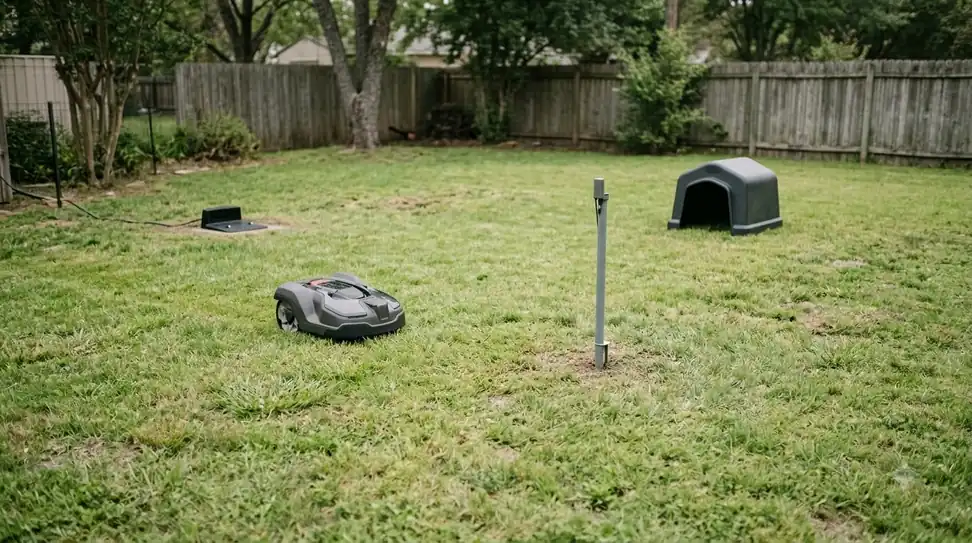
Whatever the grass type, set the mower higher at the start of the season and lower it only after the lawn has filled in. UC guidance recommends cutting higher on new lawns and on turf under drought, heat, traffic, shade or pest pressure, so a robot should not be set to the lowest height until the grass is healthy.
What to check before you buy
Before you commit to a model, work through a short list. First, write down your grass type and the height band it needs. Second, find the minimum cutting height in the manufacturer’s specification and compare it with that band. Third, measure your slope and the lawn area, then confirm the drive and battery can handle both. Fourth, check whether the mower’s blades and cutting deck are easy to sharpen or replace, since bermuda wears blades quickly at low heights. Finally, read the warranty and service options, because a mower that needs repair in peak season can leave the lawn unmown for weeks. Another warm-season grass with coarse blades is compared in Bahia grass mower picks, which cover cutting height and run time.
Prices and availability change often, so this guide does not list fixed costs. Use the spec sheet and the manufacturer’s current support pages as the final source, as of Nov 2026.
Related reads: A low-water native turf is compared in native buffalo grass picks, which cover cutting height and growth habits.
Frequently asked questions
What height should a robot mower cut bermuda grass?
Common (seeded) bermuda is typically set to 1 to 1 1/2 inches, and hybrid bermuda to 1/2 to 1 inch, according to UC IPM guidance. Choose a mower whose minimum setting reaches your band.
Do I need all-wheel drive for bermuda?
Not always. Flat lawns can work with two-wheel drive. All-wheel drive helps on slopes and in soft, wet areas where traction is weaker.
How often should a robot mower run on bermuda?
LSU AgCenter suggests weekly mowing or three to four times a month in the active season for homeowners. A robot can run more often in short sessions, which fits the one-third rule.
Can a robot mower scalp bermuda grass?
It can if the height is set too low for the grass and the lawn is left to grow long between runs. Frequent short runs and a height inside the grass’s band reduce that risk.
Sources
- UC Healthy Lawns (UC IPM), mowing warm-season grasses (University of California): used for the common and hybrid height bands, the one-third rule and cutting higher on stressed turf.
- NC State Extension, bermudagrass lawn maintenance calendar (NC State University): used for the reel-mower note below 1 inch and the frequency and scalping guidance.
- LSU AgCenter, mowing rule (LSU AgCenter): used for the one-third guideline and the weekly mowing suggestion.
 Up next9 min readBy YardCan a Robot Mower Cut Bermuda Grass?Updated Nov 11, 2026
 8 min readBy YardHow Often to Mow Bermuda Grass by SeasonUpdated Nov 11, 2026
 9 min readBy YardChoosing a robot mower for a lawn with bermuda and fescue transition zonesUpdated Nov 19, 2026
 6 min readBy YardBest Robot Mower for Thick Southern Grass: 3 to 4 Inch CheckUpdated Nov 17, 2026
 9 min readBy YardBest Robot Mower for Buffalo Grass: Heights and Settings to CheckUpdated Nov 11, 2026
 9 min readBy YardBest Robot Mower for Centipede Grass: 6 Checks Before BuyingUpdated Nov 13, 2026