
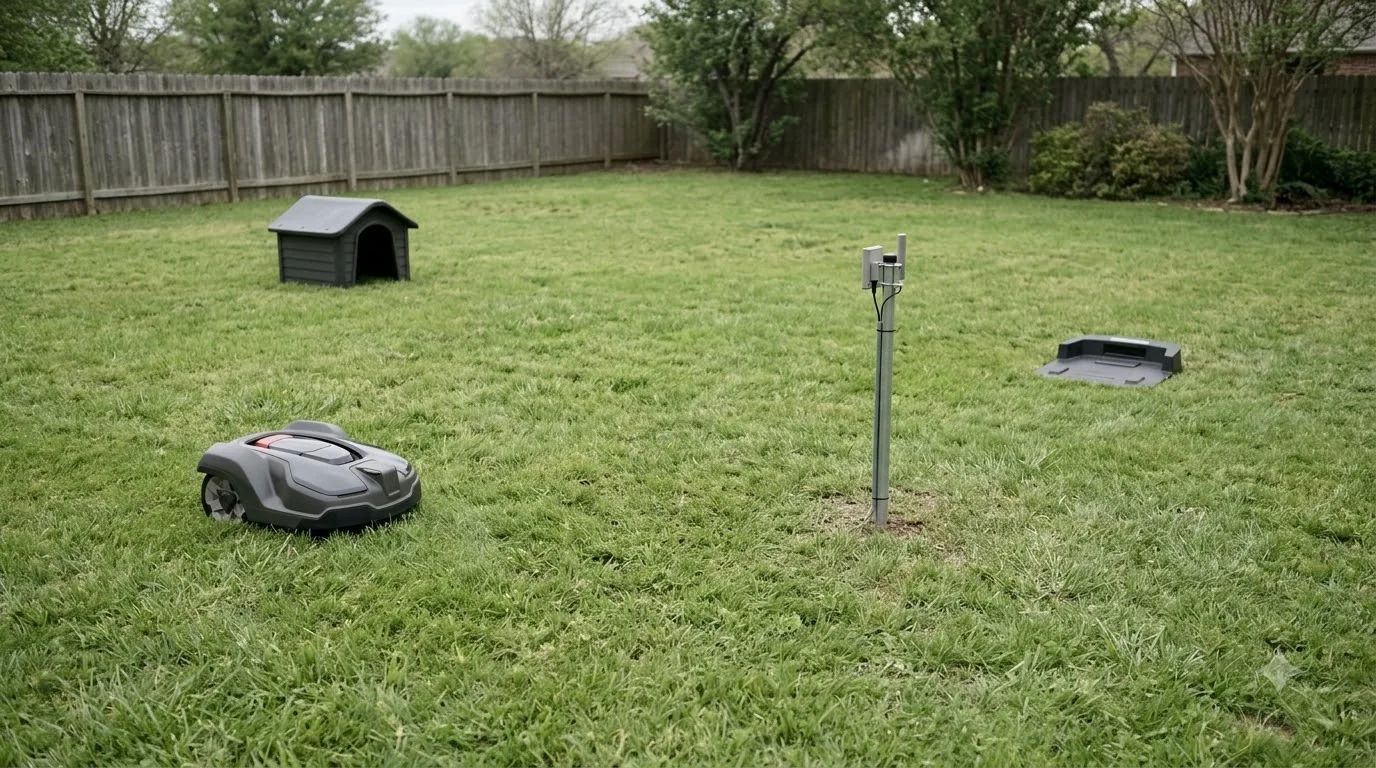

The best robot mower for thick southern grass is one whose maximum height reaches the upper range of St. Augustinegrass and similar warm-season lawns, usually 3 to 4 inches. Warm-season grasses are cut at very different heights, from about 1 inch for some zoysia and hybrid bermuda lawns to 2.5 to 4 inches for St. Augustinegrass, so the grass name alone does not settle the setting. A University of Florida article from June 2026 gives an average of 3 to 4 inches for most warm-season grasses.
The short answer
- St. Augustinegrass: Clemson HGIC gives 2.5 to 4 inches, with a medium to high mowing frequency.
- St. Augustinegrass, UC IPM: a set-mower height of 1 to 2 inches, which is far lower than the Clemson range.
- Zoysia and hybrid bermuda: much lower, roughly 0.5 to 1 inch in UC IPM’s set-mower ranges.
- Mower check: UF/IFAS says most robot mowers were designed for European lawns and cool-season grass, so a warm-season lawn needs a spec sheet check first.
Best robot mower for thick southern grass: the height check
Thick southern grass is not one height. St. Augustinegrass is the grass where the sources in this guide disagree most. Clemson HGIC gives a cutting range of 2.5 to 4 inches for St. Augustinegrass. UC IPM’s warm-season guide gives a set-mower height of 1 to 2 inches for the same grass, with a mow-when range of 1.5 to 3 inches. Whether a mower can manage dense turf is covered in cutting thick southern grass with a robot. A common thick cultivar is covered in the Floratam lawn mower picks.
Those numbers do not contradict each other as neatly as they look. Clemson describes a practical cutting range for home lawns, while UC gives a set height and a point at which to mow. Our reading is that the safest plan is to check which numbers your local extension office uses, then choose a height inside your mower’s range.
| Grass | Source | Height |
|---|---|---|
| St. Augustinegrass | Clemson HGIC | 2.5 to 4 inches |
| St. Augustinegrass | UC IPM (set-mower) | 1 to 2 inches |
| Zoysiagrass | UC IPM (set-mower) | 1/2 to 1 inch |
| Hybrid bermudagrass | UC IPM (set-mower) | 1/2 to 1 inch |
| Warm-season grasses (average) | UF/IFAS news, June 2026 | 3 to 4 inches |
The table shows why the grass name is only the first step. A mower that cuts at 1 inch is right for zoysia or hybrid bermuda and too low for most St. Augustinegrass lawns, while a mower capped at 2 inches cannot reach the top of Clemson’s St. Augustinegrass range.

Why most robot mowers struggle with warm-season lawns
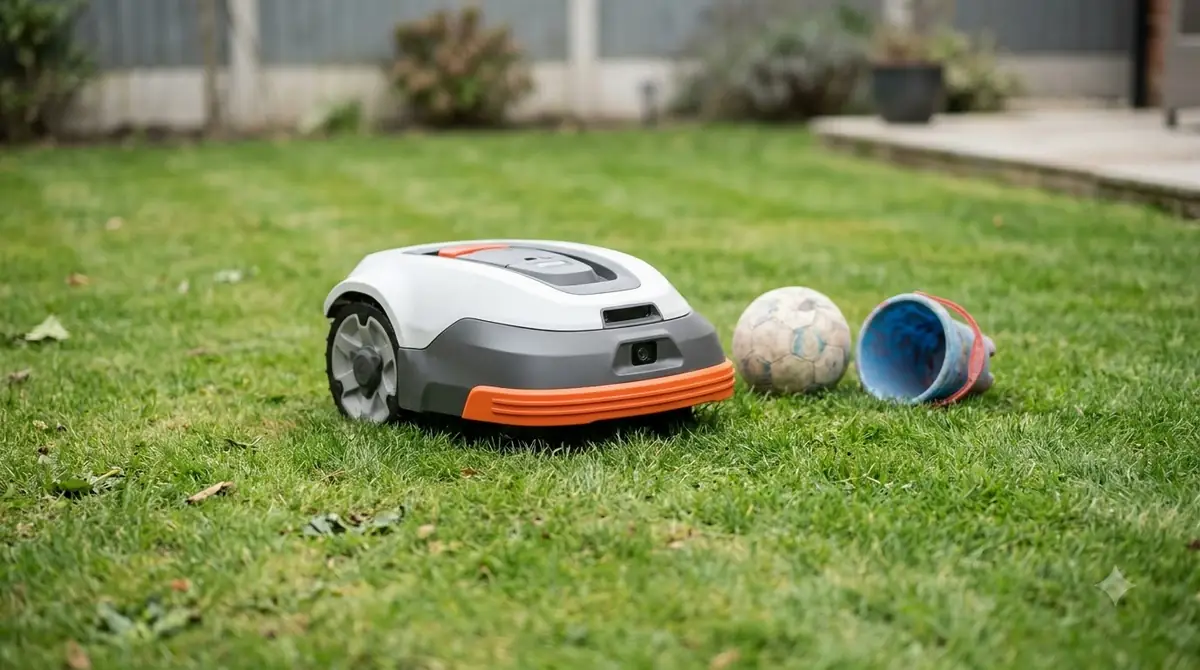
UF/IFAS explains that most robot mowers were designed for European lawns and cool-season grasses. That is the main reason a mower that works well on a cool-season lawn can struggle on a thick southern one. A warm-season lawn may need a height the mower was not built around, so the range has to fit the grass at both ends. Thick southern lawns are warm-season turf, and the warm-season lawn mower picks give the wider context. Warm-season lawns challenge many mowers, and cutting zoysia with a robot mower covers one dense turf in detail.
UF/IFAS also reports on a 2026 study that tested a lower cut of 2.4 inches on St. Augustinegrass. The article describes the lawn as denser and healthier at that height, but it does not report sample sizes or a full set of results, so treat it as a single signal rather than proof for your lawn.
Mowing schedule for thick southern grass
Schedule matters as much as height. The UF/IFAS article contrasts conventional mowing, which is usually about every seven days and removes a third of the blade, with robotic mowing, which runs daily and leaves small clippings. The daily pattern means each pass removes very little grass, which fits the one-third rule. Coarse St. Augustine lawns follow a similar schedule, as the St. Augustine mowing guide explains. Growth bursts change the schedule, and fast spring growth picks cover them.
UC IPM advises mowing higher for a new lawn and for turf that needs to tolerate drought, heat, traffic, shade or pests. Our reading is that a thick southern lawn under heat stress should sit at the upper end of its range, and the mower’s schedule should not push it lower in summer.
Steps for choosing and setting up the mower
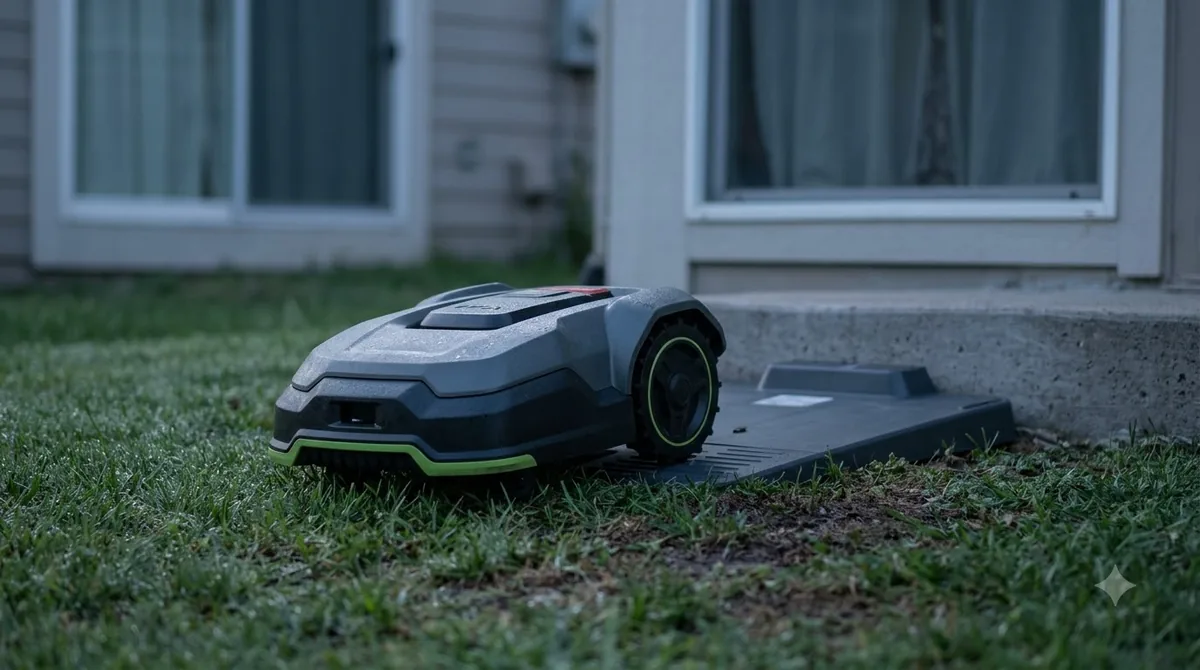
Start with the grass, then check the mower’s range against it, then plan the schedule. The steps below follow the guidance above. Another dense warm-season grass is compared in the Bermuda lawn mower picks, which cover cutting height and run time.
- Identify the grass. Confirm whether the lawn is St. Augustinegrass, zoysia or bermuda, since the heights differ.
- Check the maximum cutting height. The top setting should reach 3 to 4 inches for St. Augustinegrass lawns, based on the Clemson and UF/IFAS ranges.
- Check the lowest setting. Zoysia and hybrid bermuda need about 1 inch or lower, so a mower with a 2 inch floor will not work for them.
- Run daily and keep runs short. The UF/IFAS article describes robotic mowing as daily with small clippings, which suits the one-third rule.
- Plan the docking station. UF/IFAS recommends routine insecticide for fire ants at the dock and suggests grounding the dock or using surge protection against lightning.
Heads up
Do not set a warm-season mower to the lowest preset just because the spec sheet allows it. UC IPM’s low set heights are for specific grasses. Our reading is that a St. Augustinegrass lawn set far below Clemson’s 2.5 inch range carries more risk in heat.
Related reads: Dense zoysia turf raises similar cutting issues for the blade, as zoysia mower criteria explains for warm-season lawns.
Frequently asked questions
What height should St. Augustinegrass be mowed at?
Clemson HGIC gives 2.5 to 4 inches for St. Augustinegrass. UC IPM gives a set-mower height of 1 to 2 inches, and says to mow when the turf reaches 1.5 to 3 inches. The sources differ, so choose a height inside your mower’s range and your local guidance.
Can a robot mower cut thick southern grass?
Some can, but UF/IFAS says most robot mowers were designed for European lawns and cool-season grasses. Check that the maximum height reaches 3 to 4 inches for St. Augustinegrass before you buy.
Does a robot mower need to run daily on warm-season grass?
UF/IFAS describes robotic mowing as daily with small clippings, compared with conventional mowing about every seven days. Short, frequent runs fit the one-third rule, but the schedule should still match growth and heat.
What about fire ants and the docking station?
UF/IFAS recommends a routine insecticide to keep fire ants away from the dock, and suggests grounding the dock or using surge protection against lightning.
Sources
- UF news on robot mowers (June 2026) (University of Florida): warm-season average height, daily robotic mowing, dock and fire ant notes, and the 2.4 inch St. Augustinegrass study.
- Mowing Warm Season Grasses (UC Healthy Lawns, UC IPM): set-mower and mow-when heights for St. Augustinegrass, zoysiagrass and bermudagrass.
- Mowing Lawns (Clemson HGIC 1205): St. Augustinegrass cutting range and mowing frequency.
- Autonomous or Robotic Mower Use on Florida Lawns (ENH1402) (UF/IFAS Extension): mower design origin and cool-season limits.
 Up next9 min readBy YardCan a Robot Mower Cut Thick Southern Grass?Updated Nov 11, 2026
 7 min readBy YardBest Robot Mower for Bunch-Type Tall Fescue: 3.5 Inch CheckUpdated Nov 14, 2026
 6 min readBy YardBest Robot Mower for a Yard With a 3 Foot Side Passage: What to CheckUpdated Nov 13, 2026
 8 min readBy YardRobot Mower for Compacted Soil Lawn: 4 Checks FirstUpdated Nov 11, 2026
 8 min readBy YardBest Robot Mower for Shaded Lawn: 4 Things to CheckUpdated Nov 11, 2026
 9 min readBy YardChoosing and Using a Robot Mower for a Lawn With Thick Thatch and Moss PatchesUpdated Nov 19, 2026