
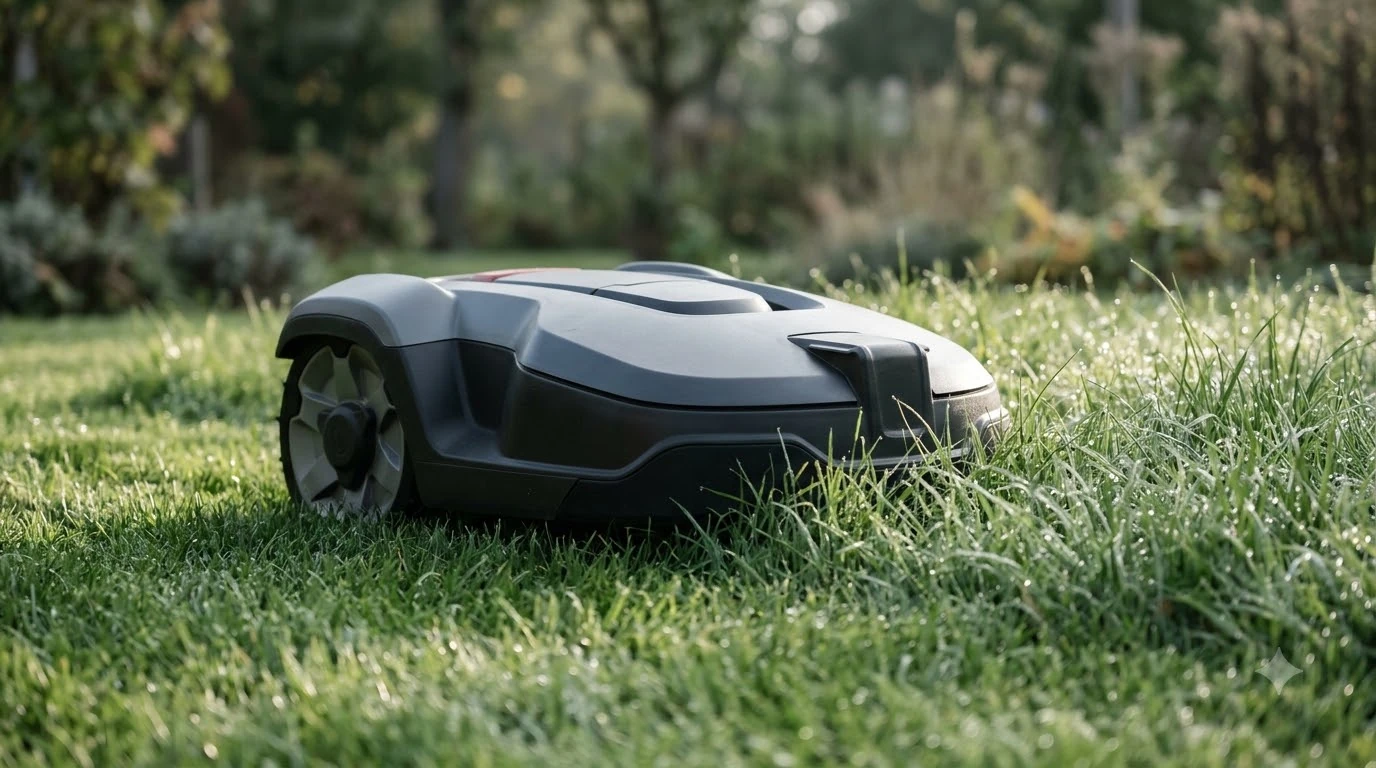

Can a robot mower cut thick southern grass? Yes, if the mower’s lowest cutting height reaches the range for that grass, and a 2026 UF/IFAS study reports that a 2.4 inch robotic cut kept St. Augustinegrass healthy in Florida. St. Augustinegrass, zoysiagrass and bermudagrass each have their own range. This guide shows the sourced heights, what the study reports and leaves out, and how often to run the mower.
The short answer
- Cutting height: the lowest setting has to reach the range, and UC IPM sets St. Augustinegrass at 1 to 2 inches, zoysiagrass at 1/2 to 1 inch and seeded bermudagrass at 1 to 1 1/2 inches.
- The study: UF/IFAS reports a 2.4 inch robotic cut kept St. Augustinegrass healthy, with denser turf than conventional mowing; its news article gives no sample size or trial length.
- Frequency: the one-third rule still applies, so frequent short runs suit a robot mower.
- Docking: plan for fire ants and lightning protection around the charging station.
Which thick southern grasses a robot mower has to handle
Thick southern lawns are warm-season grasses with dense blades and runners that spread across the soil. The three most common types in the South are St. Augustinegrass, zoysiagrass and bermudagrass, and each has its own cutting range. Knowing your grass type matters more than knowing the mower brand.
A robot mower has one limit to keep in mind. According to UF/IFAS, most robot mowers were designed for European lawns and cool-season grasses. That does not rule out thick southern lawns, but it means you should check the specific mower’s cutting range against your grass before you buy, because the lowest setting decides whether the height you need is reachable.
Can a robot mower cut thick southern grass at these heights?
Extension sources do not agree on one number for each grass, so the answer to “can a robot mower cut thick southern grass” depends on which source you follow. UC IPM gives a set height and a height at which to mow again, while other sources give wider or higher ranges. The table below lists the figures we found, with the source for each, so you can compare them.
| Grass | Source | Set mower to | Mow when turf reaches |
|---|---|---|---|
| St. Augustinegrass | UC IPM | 1 to 2 inches | 1 1/2 to 3 inches |
| St. Augustinegrass | Clemson HGIC 1205 | 2.5 to 4 inches | Medium to high frequency |
| St. Augustinegrass | UF/IFAS ENH10 | 2.5 to 4.0 inches (rotary) | Not stated |
| Zoysiagrass | UC IPM | 1/2 to 1 inch | 3/4 to 1 1/2 inches |
| Zoysiagrass | LSU AgCenter | 1 to 2.5 inches | Not stated |
| Seeded bermudagrass | UC IPM | 1 to 1 1/2 inches | 1 1/2 to 2 1/4 inches |
| Hybrid bermudagrass | UC IPM | 1/2 to 1 inch | 3/4 to 1 1/2 inches |
The ranges differ for a clear reason: the Florida sources, Clemson and UF/IFAS, give St. Augustinegrass 2.5 to 4 inches, while UC gives 1 to 2 inches. Zoysia varies by cultivar too. The UF/IFAS Charlotte County extension blog puts Cashmere zoysia at 0.5 to 1.5 inches and EmpireTurf at 1.5 to 2.5 inches. Our reading is that the cultivar and the region matter as much as the grass name.
Heads up
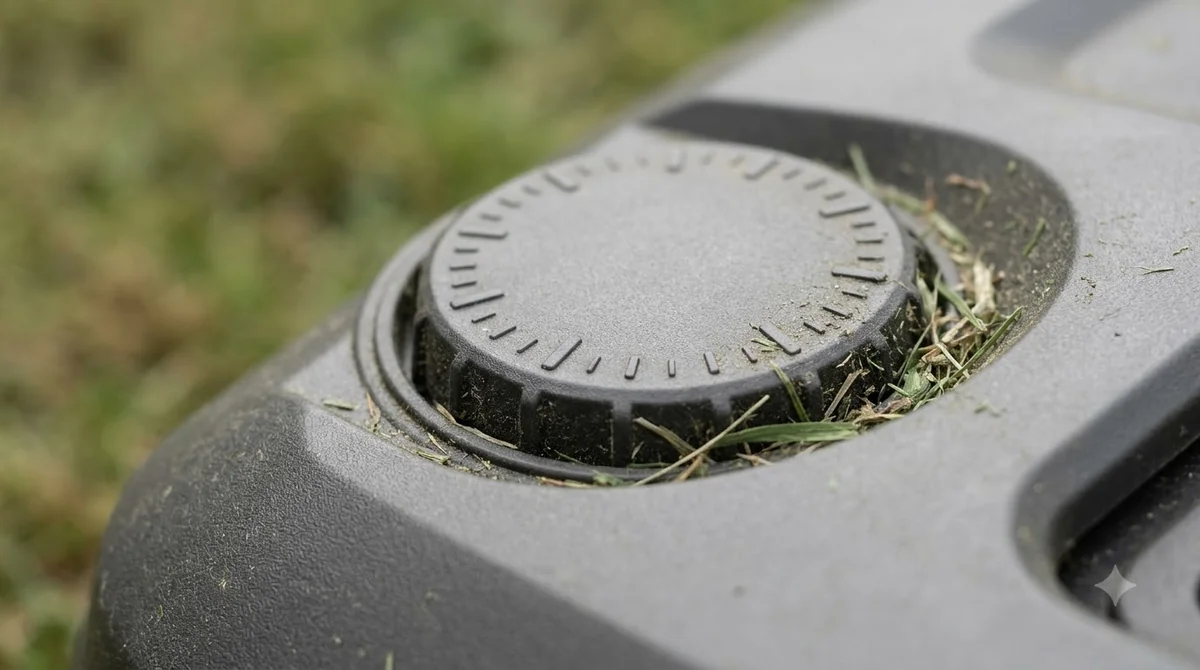
UC IPM advises choosing the upper end of the range for a new lawn, and for turf that needs to tolerate drought, heat, traffic, shade or pests. A robot mower should follow that advice, not the lowest number on the chart.
What the UF/IFAS robot mower study shows and what it leaves out
UF/IFAS researchers asked whether a robotic mower’s lower cut height of 2.4 inches could maintain hardy St. Augustinegrass, a worry because 3 to 4 inches is the average height recommended for most warm-season grasses. According to the UF/IFAS news article on the research, the answer is yes. It reports that daily mowing with the robot’s small razor blades increased turf density and gave healthier turf, more resistant to pests and disease, than conventional mowing.
The article adds that most robot mowers were originally designed for European lawns and cool-season grasses, which thrive at the 2.4 inch cut. The researcher it quotes calls the turf “spectacular and quite healthy” next to conventional results. That is the most direct evidence we found on this topic, and it is encouraging for St. Augustinegrass in Florida.
The news article also leaves several things out:
- No sample size or trial length is given.
- No mower models or measured turf figures are given, only the general finding.
- The research covers Florida and St. Augustinegrass, so zoysiagrass, bermudagrass and other regions are not tested in the article.
Our reading is that the study is a strong sign for St. Augustinegrass at 2.4 inches, not a guarantee for every grass, mower or region. If you try a lower setting, test it on a small area first and read the full UF/IFAS paper if you can find it.
How often a robot mower should run on thick grass
Mow often enough that each cut removes only a small part of the blade, because frequency matters as much as height. The one-third rule says to remove no more than one-third of the leaf height in a single mowing. LSU AgCenter calls it a general guideline and suggests that homeowners mow about once a week, or three to four times a month, in the growing season.
The UF/IFAS article compares the two approaches directly. Conventional mowing is typically about every seven days, removing a third of the blade each time. Robotic mowing clips small amounts of grass repeatedly, which is closer to daily light cuts, and the article credits that daily mowing for keeping the grass healthier and denser. It gives no figures, so the size of the benefit is unknown.
| Approach | Typical pattern | What it removes per cut |
|---|---|---|
| Conventional mower | About every 7 days | About one-third of the blade |
| Robot mower | Daily or near daily runs | A small amount at each run |
Keep the schedule seasonal, since growth changes with the season. St. Augustinegrass is dormant in many parts of Florida, and UF/IFAS advises reducing watering and not fertilizing during cool months in Central and North Florida. Our reading is that the mower should run less often while the grass is dormant, rather than on a fixed daily timer all year.
Setting the mower for shade, heat and thick grass
Start at the top of your grass range and lower the setting one step at a time, which is the safest way to find out how low the mower can cut your grass. This keeps the first few weeks safe for the lawn and shows you how the mower handles the turf.
- Check the lowest setting first. The spec sheet decides whether your grass range is reachable. We did not find a single lowest-height figure that applies to all robot mowers, so verify the number for the exact model.
- Start high. Set the mower near the top of the range, following UC’s advice for a new lawn.
- Raise the height in shade. Clemson’s zoysia calendar gives 2 to 2.5 inches for shaded zones, so shaded parts of the lawn should sit higher than sunny ones.
- Raise it again in heat and drought. Clemson advises raising the mower slightly during high heat or lack of rain, and keeping it there until the stress ends. The same rule applies in a summer heat wave (see mowing a lawn in heat and drought).
Zones under trees often need a different height from open sun. Our reading is that separate zones, or a higher setting for shaded areas, is easier to manage than one height for the whole yard.
Docking, rain and lightning in southern yards
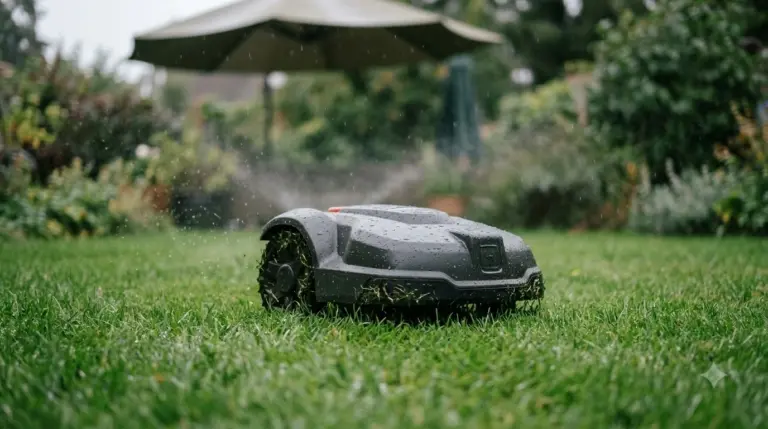
UF/IFAS reports no negative impacts from running a robot mower in rainy conditions, though the article gives no measured figures. Wet grass is therefore not a reason to stop the mower on its own, but check the lawn for ruts after heavy rain (more in robot mowers and wet grass).
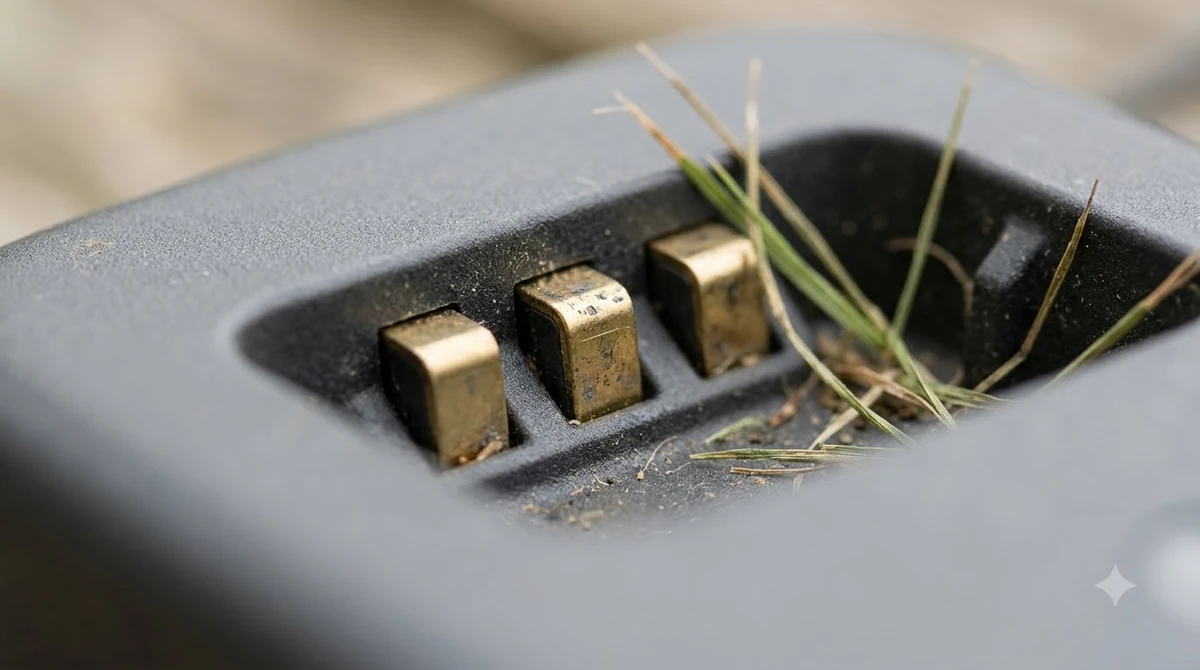
Docking is part of setup in a warm yard (see where to put the charging station). UF/IFAS flags two hazards for the docking station:
- Fire ants: they are drawn to electrical equipment and can build mounds around docks, so a routine insecticide treatment is recommended.
- Lightning: ground the docking station or connect it to surge protection.
Frequently asked questions
Can a robot mower cut St. Augustine grass at 2 inches?
It can, if the mower’s lowest setting reaches 2 inches, so the answer depends on the model. UC IPM sets St. Augustinegrass at 1 to 2 inches, while Clemson and UF/IFAS give 2.5 to 4 inches. UF/IFAS reports that a 2.4 inch robotic cut kept St. Augustinegrass healthy in its Florida research, though its news article gives no sample size or trial length.
Can a robot mower cut thick southern grass like zoysiagrass?
Zoysia is usually cut lower than St. Augustinegrass. UC IPM gives 1/2 to 1 inch and LSU AgCenter gives 1 to 2.5 inches. Cultivar matters: Cashmere is finer and cut at 0.5 to 1.5 inches, while EmpireTurf sits at 1.5 to 2.5 inches.
Can a robot mower cut thick southern grass in the rain?
UF/IFAS reports no negative impacts from running robot mowers in rainy conditions. The article does not give measured figures, so check the lawn for ruts after heavy rain.
How often should a robot mower run on St. Augustine grass?
Frequent short runs fit the one-third rule best. LSU AgCenter gives about once a week, or three to four times a month, as a baseline for conventional mowers in the growing season, and a robot schedule should follow how fast your grass grows.
Before you buy, read the lowest setting on the spec sheet (see how to read robot mower specs), then compare it with your grass’s range. If the lowest setting sits above your grass’s range, choose a different model.
Sources
- Mowing warm-season grasses (UC Healthy Lawns, UC IPM): set and mow-when heights for St. Augustinegrass, zoysiagrass and bermudagrass, and advice to cut higher for stress.
- UF/IFAS News on robot mowers (University of Florida IFAS, June 2026): 3 to 4 inch warm-season recommendation, the 2.4 inch robotic question, schedule comparison, docking and rain notes.
- Mowing your Florida lawn (UF/IFAS ENH10): 2.5 to 4.0 inch rotary height for St. Augustinegrass.
- Mowing lawns (Clemson HGIC 1205): St. Augustinegrass range and mowing frequency.
- Zoysiagrass maintenance calendar (Clemson HGIC): shade height and stress advice for zoysia.
- Foolproof lawncare: zoysiagrass (UF/IFAS Charlotte County Extension): Cashmere and EmpireTurf height ranges.
- The One-Third Mowing Rule (LSU AgCenter): the one-third guideline and homeowner mowing frequency.
 Up next8 min readBy YardCan a Robot Mower Cut Centipede Grass? Heights and LimitsUpdated Nov 11, 2026
 8 min readBy YardCan a Robot Mower Cut Cool Season Grass?Updated Nov 11, 2026
 9 min readBy YardWhat Happens If You Cut Grass Too Short?Updated Nov 11, 2026
 10 min readBy YardCan a Robot Mower Cut St. Augustine Grass?Updated Nov 11, 2026
 9 min readBy YardCan a Robot Mower Cut Bermuda Grass?Updated Nov 11, 2026
 7 min readBy YardRobot Mower Wet Grass: Can You Cut It and When to WaitUpdated Nov 11, 2026