
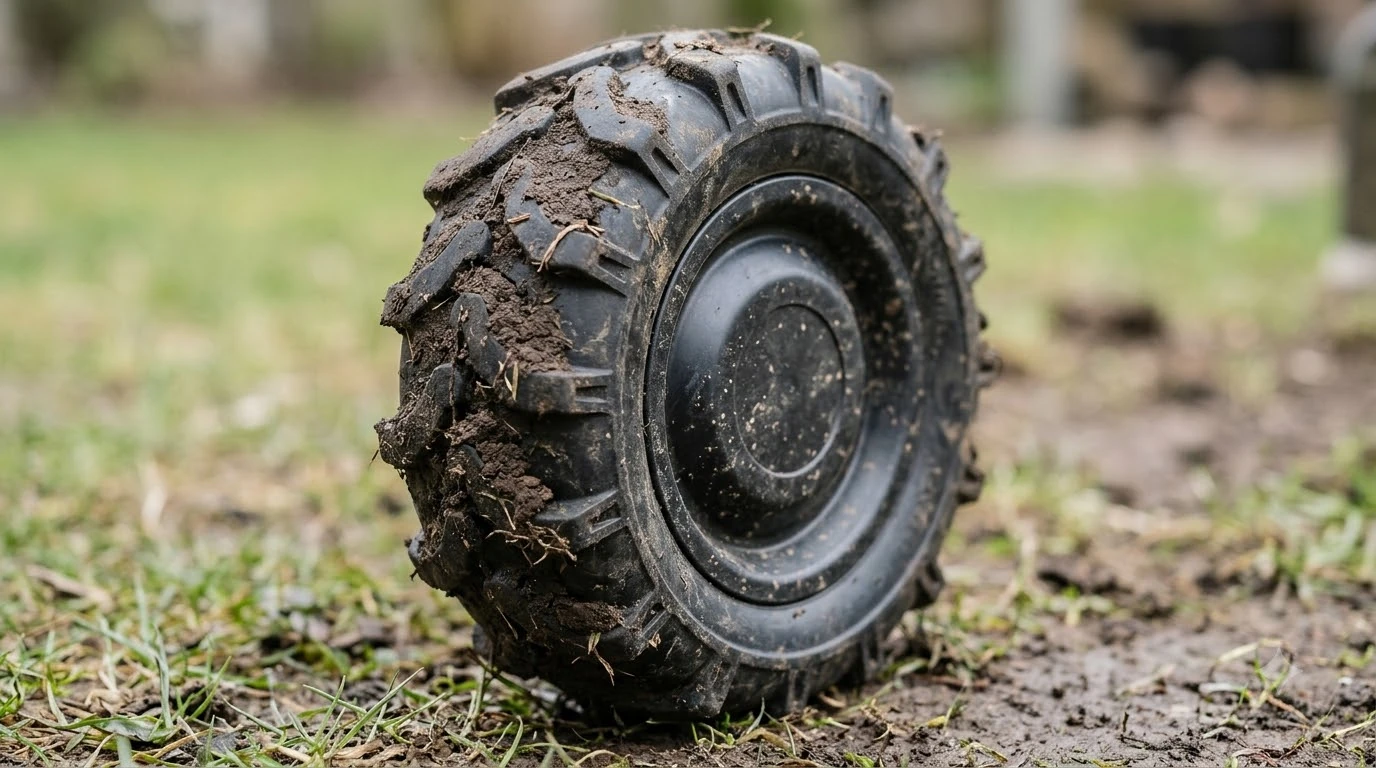

Is a robot mower for compacted soil lawn a bad idea? Usually not. A robot mower is generally light enough not to compact soil much, so the bigger risks are repeated passes on the same tracks and foot traffic across a lawn that is already packed down. Colorado State University Extension says traffic over the soil is the major contributor to compaction, and Husqvarna says many robot mowers are lightweight enough not to cause soil compaction. As of 2026-11-11, the practical advice is to check the lawn before setting a schedule and to aerate on a regular cycle.
The short answer
- Weight: many robot mowers are light enough not to cause soil compaction, according to Husqvarna.
- Main cause: traffic over the soil is the major contributor to compaction, according to Colorado State University Extension.
- Roots: a compacted layer restricts root growth, and large pore space that carries air and water is reduced.
- Foot traffic: Clemson HGIC says foot traffic is probably the most common source of compaction in turf.
- Recovery: Colorado State University Extension advises aerating at least 1-2 times a year, while Clemson HGIC says every two to three years may do where compaction is not a big problem.
Is a robot mower for compacted soil lawn a bad idea?
Only a little, in most cases, and mostly where the mower runs the same tracks again and again. Husqvarna says many robot mowers are lightweight enough not to cause soil compaction, so the mower’s weight is not the first thing to worry about. The lawn’s existing condition matters more. A lawn that is already hard-packed from foot traffic, play, or parking will stay packed whether or not a mower runs over it.
Our reading is that a robot mower for compacted soil lawn raises a narrower question than “will the mower compact the lawn”. It is more “is the lawn already compacted, and where do people and wheels cross it most.” That framing is the one the extension sources support. It also explains why two lawns with the same mower can behave very differently.
What compaction does to grass roots and water
Compaction squeezes soil particles together. Colorado State University Extension defines soil compaction as the compression of soil particles, and says it significantly reduces the large pore space that lets air and water move into and through the soil. The same page says root growth into a compacted layer will be restricted or even minimal, and that a moist soil could reach 75 percent of its maximum compaction the first time it is stepped on.
For a homeowner, that means a compacted patch often shows up as thin grass, slower drainage, and puddles after rain, not as a single obvious failure. Compaction is also harder to see than wheel ruts. Clemson HGIC says soil compaction in a turf area destroys the structure of the soil, and that it can happen on both sandy and clay soil.
Why the mower is rarely the main cause
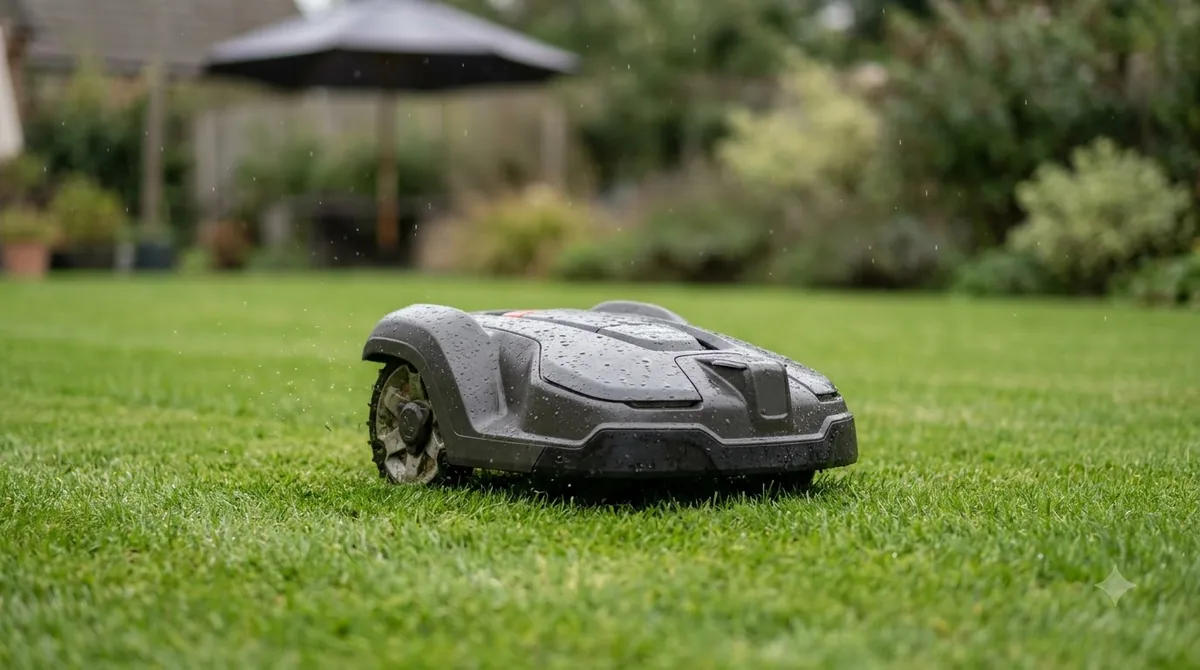
Several sources point to people and repeated traffic, not the mower’s weight. Clemson HGIC says foot traffic is probably the most common source of soil compaction in turf. Colorado State University Extension says the same thing in different words: traffic over the soil is the major contributor. A robot mower is usually a small part of that traffic, because it runs on a schedule and often covers the same lawn in narrow passes.
Husqvarna adds a caveat for wet weather. Its guide to mowing wet grass says mowing after heavy rain can create wheel ruts in soft, wet soil. Ruts are the visible sign of soil that was pressed when it was too soft to hold its shape. The mower itself did not cause the lawn to be compacted, but a wet, already packed lawn is where ruts form fastest. If ruts and bare strips are already showing, our guide to robot mower wheel ruts and brown patches covers what to repair first.
Our reading is that a robot mower and a family of four walking on the same path is not a fair comparison. The people are usually the bigger load on the lawn, and they often walk the same routes every day, which is where the compacted strip begins.
Where a robot mower does add to compaction
The mower adds to compaction in a few predictable places. The sources do not give a fixed list, so the table below uses our reading of where repeated wheel passes and foot traffic combine.
| Area | Why it matters | Source basis |
|---|---|---|
| Charging dock and its approach path | The mower returns to the same spot many times, and people walk the route to the dock | Our reading; traffic is the major cause (CSU) |
| Gates, shortcuts and worn paths | Repeated traffic on one line turns a thin strip into a compacted track | Foot traffic is the most common cause (Clemson HGIC) |
| Wet lawn after heavy rain | Soft soil forms ruts, and ruts sit on a compacted base (see a robot mower stuck on a soggy lawn) | Wheel ruts in soft, wet soil (Husqvarna) |
| Clay or fine-textured soil | Clayey soils compact more readily, and rain and sprinklers compact the surface | CSU; Clemson HGIC |
A mulched bed beside a path can help. Colorado State University Extension says three to four inches of wood or bark chips will minimize the effect of foot traffic, which is useful advice for the border a robot mower and people both cross.
Checks before you run a robot mower for compacted soil lawn
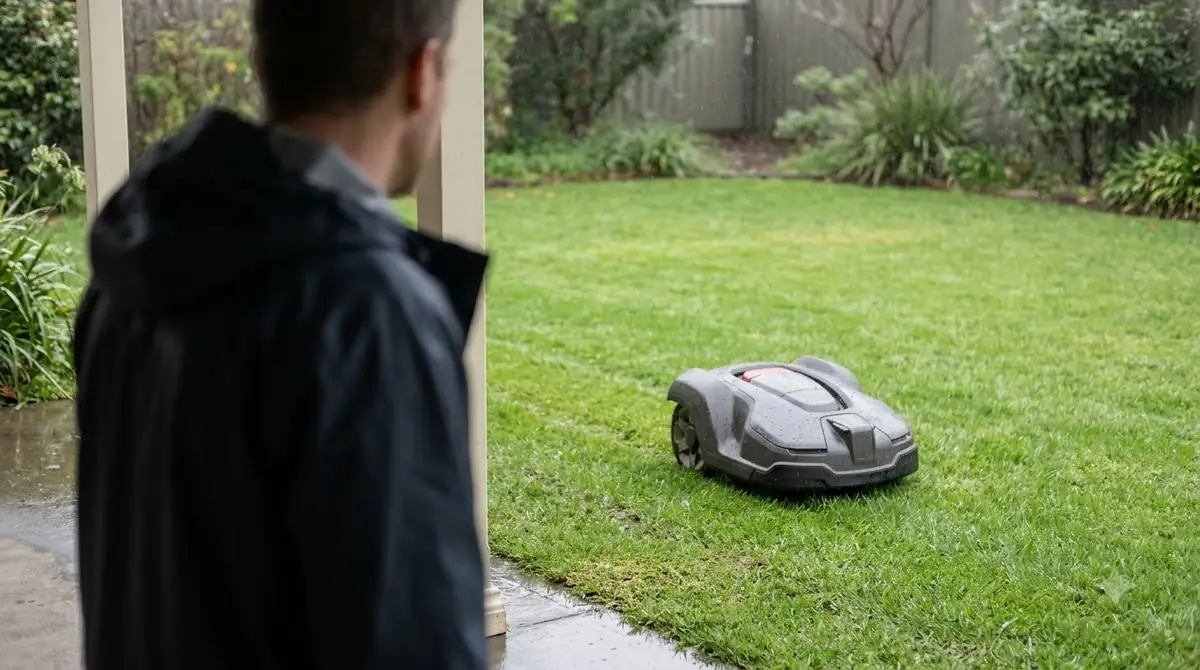
Run these checks before you commit to a schedule. They take a few minutes and show whether the lawn is firm enough for regular mowing or needs work first. If rain is the main worry, our explainer on robot lawn mowers mowing in the rain helps you set the schedule.
- Walk the lawn after a dry day. Note any strip where grass looks thin or where your heel leaves a deep mark. Those are the likely compacted areas.
- Check drainage after rain. Puddles that stay for a long time suggest reduced pore space, as the CSU page describes.
- Look for ruts after a wet spell. Husqvarna says mowing after heavy rain can create wheel ruts in soft, wet soil, so a rut is a sign to wait.
- Map the traffic routes. Mark where people and pets cross the lawn most, and keep the mower’s boundary wire or no-go zones off those lines where you can.
Aeration and recovery
Colorado State University Extension advises aerating at least 1-2 times a year, and says to make enough passes with the aerator to have plugs at two-inch intervals. That is the extension advice for lawns with regular traffic, and it is the number to start from if you are not sure.
Clemson HGIC takes a more relaxed view for lawns that are not heavily used. It says there is no set number of times a turf can be aerified, and that sites where compaction is not a big problem may get by with aeration every two to three years.
Our reading is that a robot-mowed lawn with a busy path or a dock on a worn route sits closer to the first case, and a lightly used lawn is closer to the second. Our guide to lawn aerators for robot mower lawns covers the tools for that job. Aeration, not the mower, is what treats the compaction, so a robot mower for compacted soil lawn use works best alongside it. If you are unsure, the simplest test is the walk and drainage check above, repeated each spring.
Frequently asked questions
Is a robot mower for compacted soil lawn a bad idea?
It can add to compaction, but Husqvarna says many robot mowers are lightweight enough not to cause soil compaction. The bigger contributor in the extension sources is traffic over the soil, which includes people and pets as well as the mower on repeated tracks.
How does compacted soil affect grass?
Colorado State University Extension says compaction significantly reduces large pore space, restricting air and water movement, and that root growth into a compacted layer is restricted or even minimal.
Should I avoid mowing a compacted lawn after rain?
Husqvarna says mowing after heavy rain can create wheel ruts in soft, wet soil. Our reading is to wait until the soil firms up, check for ruts, and keep the mower off the same tracks on wet days.
How often should a lawn be aerated?
Colorado State University Extension advises aerating at least 1-2 times a year. Clemson HGIC says there is no set number and that lawns where compaction is not a big problem may need aeration only every two to three years.
Sources
- Can you mow wet grass? (Husqvarna): many robot mowers are lightweight enough not to cause soil compaction; mowing after heavy rain can create wheel ruts in soft, wet soil.
- Soil Compaction, GardenNotes #215 (Colorado State University Extension): definition, pore space, root restriction, traffic as the major cause, aeration frequency and plug spacing, mulch and foot traffic.
- Turfgrass Cultivation (Clemson Home and Garden Information Center): foot traffic as the most common source of turf compaction, compaction on clay and sandy soil, and aeration frequency.
 Up next8 min readBy YardBest Robot Mower for Shaded Lawn: 4 Things to CheckUpdated Nov 11, 2026
 9 min readBy YardBest Robot Mower for a Small Backyard in the City: What to Check FirstUpdated Nov 11, 2026
 7 min readBy YardBest Robot Mower for Bahia Grass: Check the Cutting Range FirstUpdated Nov 11, 2026
 9 min readBy YardRobot Mower for Terraced Yard: What to Check FirstUpdated Nov 11, 2026
 8 min readBy YardRobot Lawn Mower for Bumpy Uneven Lawn: What to Check FirstUpdated Nov 11, 2026
 8 min readBy YardWill a Robot Mower Get Stuck on a Clay Soil Lawn That Stays Wet?Updated Nov 11, 2026