


A robot mower battery replacement pack should be matched to the original part number in the manufacturer’s documentation, not to a retailer’s list of “compatible” models. Retailer listings for mower packs often cross-reference many models, but the sources we could read do not confirm those claims. Battery storage and heat advice from Battery University is more reliable, and it affects how long any replacement pack lasts.
The short answer
- Match the part number printed on your current pack, and check it against the mower maker’s manual or support site.
- Treat “compatible with” lists from sellers as unverified until the manufacturer confirms them.
- Store the pack at about 40% charge over winter, rather than full or empty.
- Keep the pack cool. Heat is the main thing that shortens lithium-ion life in storage.
Why part numbers matter more than model lists
A robot mower pack is not a generic battery. Voltage, connector layout, and the battery-management system all have to match the mower, and sellers’ lists are not the same thing as manufacturer confirmation. In our reading, the safest way to buy is to read the part number on the label of the pack you are replacing, then confirm it with the mower’s maker. Pack choice sits within a wider decision, and a battery buying guide for robot mowers outlines the basics. Part numbers differ between models and even between versions, as YUKA replacement battery specifics illustrate.
The retailer listings we saw show the same problem from different angles. Some packs are listed under a manufacturer part number, and others are described only by a model range. Voltage and capacity also vary between listings for the same mower family, so a pack that looks similar may not be the same electrical design. Check the spec sheet before you order.
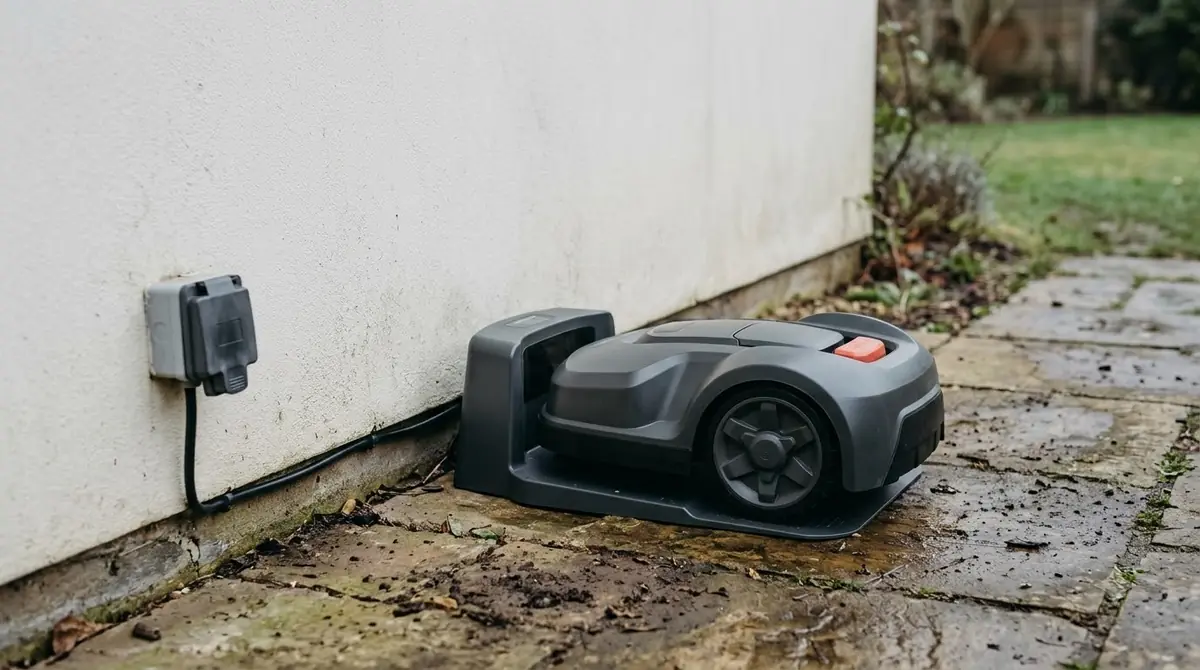

Storing the pack over winter
Battery University advises storing lithium-ion at about 40% state of charge. Its storage page says that finding the exact 40 to 50% level is not critical, but that storing a cell fully charged causes greater losses. It also recommends a storage temperature of about 15°C (59°F), with heat speeding up permanent capacity loss.
The same site’s data on one year of storage makes the point clearly. At 25°C, a pack kept at 40% charge retained about 96% of its capacity, while one kept at 100% retained about 80%. At 40°C the figures fell to about 85% and 65%. Our reading is that a mower pack left on the charger over a cold season, or parked in a hot garage, will lose more capacity than one stored partly charged in a cool place.
Heads up
Battery University says a lithium-ion cell kept below about 2.00V per cell for more than a week may be damaged, and a cell that has dropped that low should be checked before reuse. If a pack has sat unused for months, measure it before you put it back in the mower.
Heat, cold, and charging
Battery University treats temperatures above 30°C (86°F) as elevated, and calls keeping a fully charged battery hot the worst case for life. It advises keeping the battery well ventilated and charging at 1C or less, which means avoiding fast chargers when you can. Heat and cold both affect charging, and effects of cold on lithium packs are explained in a related article.
Choosing a robot mower battery replacement pack
Start with the label on your current pack. Note the voltage, the capacity in amp-hours, the physical size, and the connector. Then find the same part number in the manufacturer’s manual or support site. If you cannot find it, contact the maker with the mower model and serial number, because they can confirm whether a pack is approved for your unit. To see how another brand lists its spares, Sunseeker replacement battery notes provide a comparison.
When you compare a robot mower battery replacement pack with the original, write down the part number, voltage, capacity, and connector side by side. A short table makes it easy to spot a mismatch before you pay for shipping. Capacity is not the only factor. A higher-capacity pack may run longer per charge, but it may not fit the compartment or may not be approved by the manufacturer. Our reading is that a pack that is the wrong size or wrong design is a bigger risk than a slightly shorter runtime.
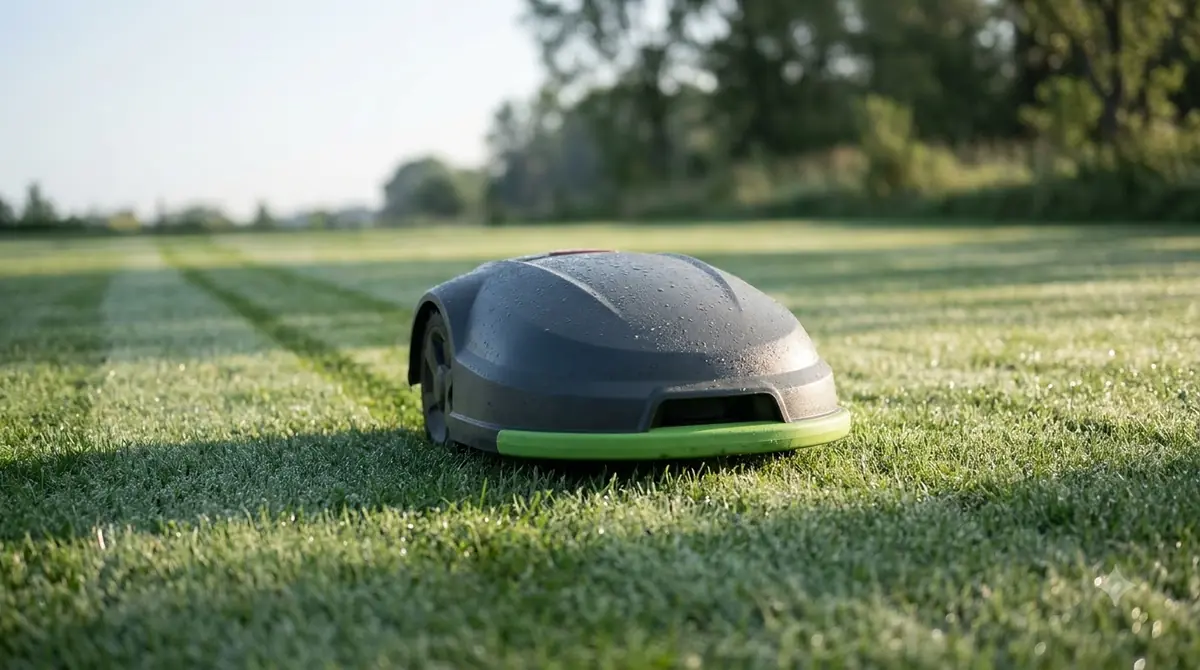
How to tell a pack is failing
A pack that loses capacity may run for shorter periods, need more charging, or shut down in thick or wet grass when the battery-management system trips on heat or voltage sag. Watch for swelling, a warm pack after normal charging, or a charge that never reaches full. Stop using a pack that swells or gets hot, and handle it according to its safety label. Signs of failure are easier to judge when you know how long a pack should last under normal use.
What to check before you buy a replacement pack
Confirm the part number with the manufacturer, not only with the seller. Check the voltage and capacity against your mower’s manual. Make sure the pack fits the compartment and the lid closes fully. Ask whether the seller stores the pack partly charged, because a pack that arrives empty or full may already have lost some life.
After installing the new pack, store it and the mower in a cool place when the season ends. Charge it to about 40%, check it in the spring, and recharge it before the first mowing.
Frequently asked questions
Can I use a battery from a different robot mower brand?
Only if the manufacturer confirms it. Voltage, connector, and battery-management design can differ, and a seller’s compatibility list is not the same as approval from the mower maker.
What charge level should I store the pack at?
Battery University advises about 40% state of charge, in a cool place around 15°C. Storing at full charge causes greater capacity loss over time.
Does heat really shorten battery life?
Yes. Battery University says heat speeds up permanent capacity loss, and its one-year data shows a pack stored at 40°C lost more capacity than one stored at 25°C.
What should I do with a pack that was left empty for months?
Measure its voltage before use. Battery University warns that a cell kept below about 2.00V per cell for more than a week may be damaged, so check it before putting it back in the mower.
Sources
- Battery University, How to store batteries (BU-702) (battery education site): used for the 40% storage charge, the 15°C storage temperature, and the voltage warning for stored cells.
- Battery University, How to prolong lithium-based batteries (BU-808) (battery education site): used for the one-year storage capacity figures at 25°C and 40°C and the temperature guidance.
 Up next7 min readGearHusqvarna Automower Replacement Blades: Part Numbers and Fit ChecksUpdated Nov 20, 2026
 7 min readGearWorx Landroid Replacement Blades: Pack, Timing, and FitUpdated Nov 20, 2026
 8 min readGearWorx Landroid Spare Parts: What Exists and How to Match ItUpdated Nov 19, 2026
 8 min readGearDreame Spare Parts: Blades, Battery and What to Check Before You BuyUpdated Nov 12, 2026
 7 min readGearRobot Mower Charger Power Adapter Replacement: What to Match Before You BuyUpdated Nov 20, 2026
 8 min readGearMammotion LUBA Replacement Blades: What to Match Before You OrderUpdated Nov 20, 2026