
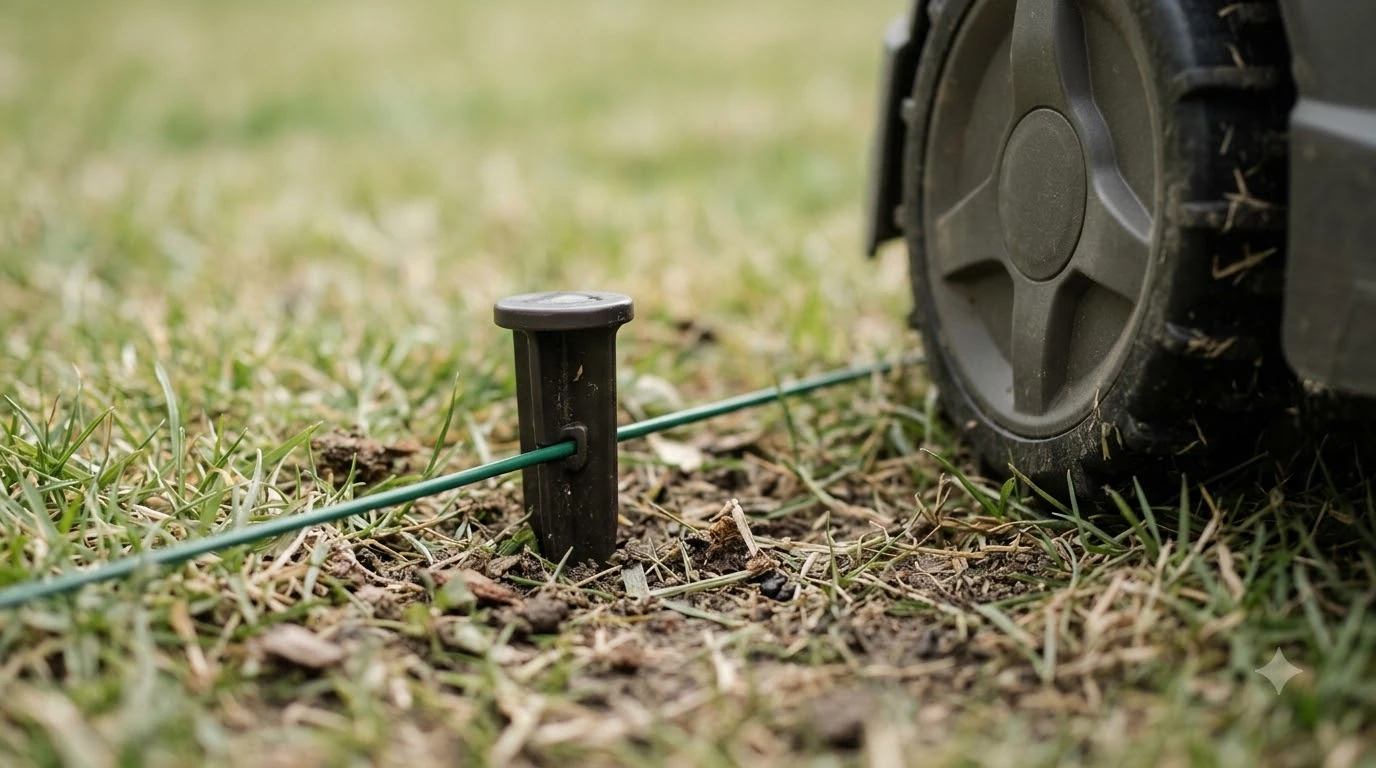

Robot mower pet fence integration is possible, but it does not happen automatically. A robot mower and a pet fence can work in the same yard, but they need a plan. Both systems use buried or boundary wire signals, so the two can interfere if the wires sit too close. The safe approach is to plan the wire layout, keep the systems apart, and test with the dog or cat before you trust either one.
The short answer
- Compatibility: it depends on the specific mower, the pet fence transmitter, and how they are installed. There is no universal fix.
- Wire spacing: ask both manufacturers or a qualified installer for the permitted separation between the mower loop and the pet fence wire.
- Testing: walk the yard with the pet’s collar on after the mower wire is laid, and watch for false corrections.
- Safety first: never switch off pet containment while animals are loose in the yard.
Why a robot mower and a pet fence can clash
A robot mower finds its boundary by following a loop of buried or surface wire that carries a low-voltage signal. An invisible pet fence works in a similar way: its transmitter sends a signal through a wire, and a receiver collar on the animal warns and then corrects when the pet gets too close. Because both rely on wire signals, the two loops can couple with each other when they run close together. Pet fences come in several forms, and pet fences that keep dogs clear of the mower are compared in the roundup.
The interference is most likely where the wires run parallel for a long stretch, cross each other, or share a corner of the lawn near the charging dock. The pet fence signal is weaker and more local than the mower’s lawn-wide loop, so a nearby mower wire can disturb the collar receiver even when the mower itself works fine.
Robot mower pet fence integration: how to lay out the wires
Most of the problems come from layout, so plan it before you bury anything. Keep the mower perimeter and the pet fence wire on separate paths, and avoid running them side by side. Where they must cross, cross them at a right angle and as briefly as possible. If wires clash, virtual fence markers as a wire-free option are covered for models that use satellite positioning.
The exact separation is the part you should confirm in writing. Installers and vendor guides give different figures, and some pet fence brands publish their own minimum distances. Use the manufacturer’s numbers for your specific models, not a generic rule of thumb.

Testing the setup with the pet’s collar
Installing the mower wire is not the end of the job. For robot mower pet fence integration to hold up over time, the collar test is the step that tells you whether the layout works. Once the mower wire is in place, walk the boundary with the pet’s collar on and watch for warning tones or corrections that happen away from the pet fence line. If the collar reacts where it should not, the wires are probably too close, or the signal frequency needs adjusting. Extra loops need extra cable, so boundary wire for extra fenced zones should be sized before installation.
Do this test with the pet supervised and on a leash if needed, and do not let the animal roam while you troubleshoot. A collar that corrects an animal near the robot mower can be confusing and, if it happens repeatedly, may cause the pet to avoid the yard entirely.
Heads up
Do not turn off the pet containment system to get the mower to work. Keeping a pet inside the yard is the reason the fence exists, so if the two systems conflict, fix the wire layout or get installer help instead.
When a gate or physical barrier makes more sense
Some owners avoid wire conflicts altogether by using a physical barrier. A gate or a fence panel that the mower passes through at a set time can keep a pet out of the cutting zone without any wire signal. Some newer gate products are built to check for nearby animals before they open. Read the specification for how the sensing works, and do not assume that every product is designed for pets. The same physical-barrier logic is used for no-go areas around tree roots.
A physical barrier also helps with a dog that is still learning the boundary. Wire-based fences depend on the collar being worn correctly and the battery being charged, while a physical gate works whether or not the dog has the collar on.

What to check before you buy or install
Before you buy a pet fence or a robot mower for robot mower pet fence integration, check the following. Ask whether each vendor has tested or documented use alongside the other system. Confirm the frequency or signal type each one uses. Plan the wire route on paper, including the charging dock and any corners where wires might meet. Finally, schedule the collar test before you let the pet back into the yard. Pets are not the only obstacle, and a hose reel kept off the lawn is another item to plan for. If the mower uses a camera-based fence instead of a wire, Navimow vision fence troubleshooting explains common failures.
Our reading of the available guidance is that a clean layout and a documented test beat any trick for making two wire systems share the same space. If you cannot get clear separation numbers from the manufacturers, that is a good reason to choose a different setup.
Frequently asked questions
Can a robot mower and an invisible dog fence use the same yard?
Often yes, but only with careful wire layout. The two systems can interfere when their wires are close or cross, so check the separation guidance from both manufacturers before installing.
Why does my dog’s collar react near the mower wire?
The mower’s boundary signal can disturb the pet fence receiver when the two wires are too close. Move the wire path apart, then test again with the collar on.
Should I turn off the pet fence while the mower runs?
No. Turning off containment while a pet is loose in the yard is a safety risk. Keep the pet inside or away from the mower, and fix the layout instead.
Is a gate a better option than wire for pets?
It depends on the yard and the animal. A gate avoids wire conflicts and does not rely on a collar, but you still need to check how the gate detects animals and whether it fits your layout.
Sources
- Gardenia Organic (blog): read for the point that compatibility depends on the specific mower, transmitter and installation, and for the advice to ask manufacturers or an installer about permitted separation.
- DogWatch blog (manufacturer): read for the vendor’s claim that its hidden fence can work near a robotic lawn mower, and for the note that collars give a warning before a correction.
 Up next8 min readGearBest Pet Fence to Keep Dogs Away From Robot MowerUpdated Nov 11, 2026
 6 min readGearRobot Mower Weather Station Integration: What Works and What to CheckUpdated Nov 20, 2026
 7 min readGearRobot Mower Virtual Fence Markers: How the Boundary Points WorkUpdated Nov 20, 2026
 8 min readGearBest Garden Fence for Robot Mower No-Go Zone: What Works and What Doesn’tUpdated Nov 13, 2026
 8 min readGearBest Pet Waste Scooper for Robot Mower Yards: What to CheckUpdated Nov 14, 2026
 8 min readGearBest Lawn Edging to Bury Robot Mower Wire: What Works and What to AvoidUpdated Nov 14, 2026