


An automatic lawn mower price usually falls into three tiers, and the tier you land in depends on lawn size, slope, and how the mower finds its boundary. One retailer buying guide places entry models under about $1,500, mid-range models between about $1,500 and $3,000, and premium models above $3,000. Prices move often, so treat those ranges as a starting point and check the current figure as of Nov 2026.
The short answer
- Entry tier: small, simple yards, usually with basic GPS or wire-based navigation.
- Mid-range tier: mid-size yards, usually wire-free RTK navigation and often all-wheel drive.
- Premium tier: larger or steeper lawns, multi-zone layouts, and centimetre-level positioning.
- Beyond the sticker: budget for installation, battery replacement every few years, and an annual service.
- Check first: the lawn size and slope rating, since those two specs decide the automatic lawn mower price tier you need.
How much an automatic lawn mower price usually runs
The retailer guide at Lawnlove’s robotic lawn mower guide groups models by tier and gives example prices on its top picks page. Its examples put a Segway Navimow i210 AWD at $1,299, a Segway Navimow H220 at $2,199, a Husqvarna Automower 435X AWD at $2,999.99, and a Mammotion Luba 2 AWD 3000HX at $4,499. Those are one retailer’s listed prices on the day that page was read, not a fixed rule.
| Tier | Typical yard size (per the guide) | What the guide says you get |
|---|---|---|
| Under $1,500 | Yards up to about a quarter acre | Basic GPS or wire-based navigation, 2WD, app control. Expect limits with complex obstacles or steep slopes. |
| $1,500 to $3,000 | Mid-size yards up to 0.5 or 1 acre | Wire-free RTK navigation, better obstacle detection, often AWD. |
| $3,000 and up | 1 to 2.5 or more acres | Steep slopes, multi-zone layouts, centimetre-precise RTK. |
The tiers are useful because they tie the automatic lawn mower price to the job the mower has to do. A mower in the entry tier that is pushed past its rated yard size or slope will cost you more in frustration than you saved at checkout. Measure your lawn first, then look at the tier that covers it.
What drives the automatic lawn mower price
The automatic lawn mower price rises with the features that let a mower handle a harder yard. The Lawnlove guide names navigation type, two-wheel versus all-wheel drive, coverage area, obstacle detection, and app features such as scheduling, firmware updates, and smart home support as the main differences between tiers. The guide does not assign a dollar amount to each feature, so you cannot simply add up a price from the list. Models are easiest to compare once you know robot mower budget tiers.
Consumer NZ, an independent consumer organization, takes the same view from the testing side. Its robot lawn mower guide says the mowers usually cost more than a standard lawn mower, then lists the features to compare: navigation options from basic random movement to GPS, RTK, LiDAR, and AI-assisted navigation, mowing zones, cutting height range, rain sensor, IP rating, and anti-theft features. Its guide does not give prices, so use it to choose features and the retailer guide to check the tier.

Boundary wire vs wire-free cost
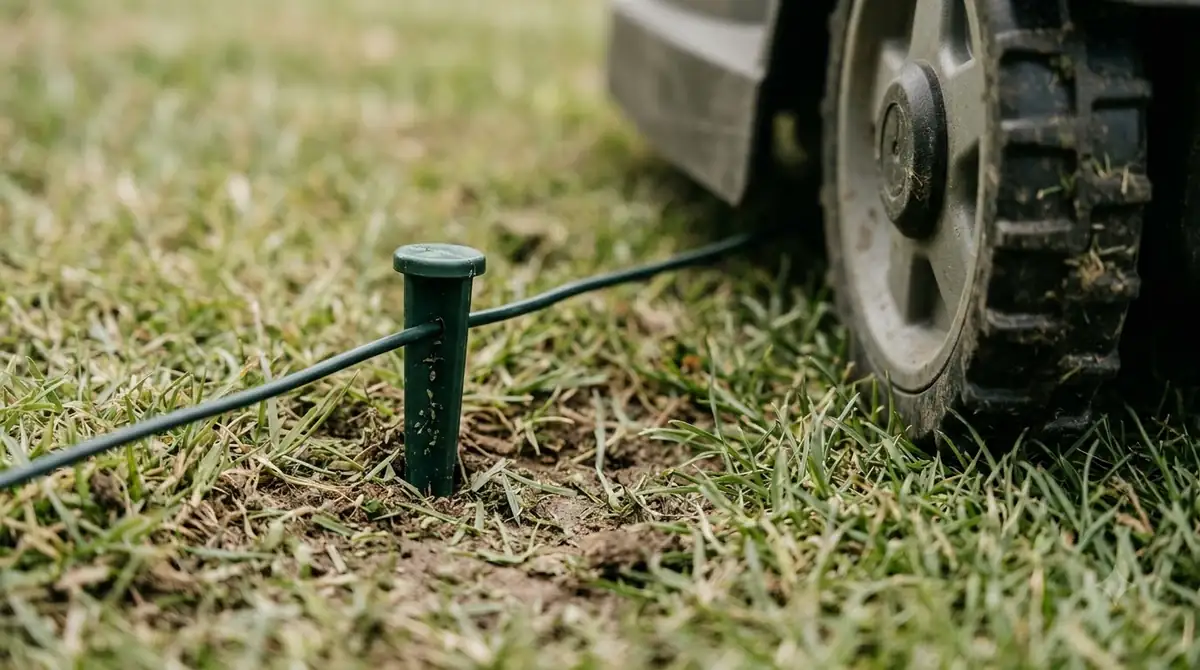
Boundary wire is the older setup, and Lawnlove describes it as reliable and cheap but dependent on installation. The real cost is your time or the installer’s fee. Consumer NZ notes that a wire-boundary model needs the perimeter wire laid, either pegged or buried, and that the wire can be damaged and must be moved if you change your mowing zones.
Wire-free installation is now standard across most mid- and upper-tier models, according to Lawnlove. Consumer NZ warns that trees, buildings, or valleys can weaken the satellite signal, and that RTK models usually need an antenna mounted on a roof or shed. Neither source gives a dollar figure for installation, so ask the seller for the cost of any install package before you compare the automatic lawn mower price on the sticker.
Costs after the purchase
The automatic lawn mower price on the sticker is only part of what you will spend. Consumer NZ says batteries need replacing every few years, so check whether you can swap the battery yourself or whether a service agent will be required, which can cost more. It also says to check that replacement batteries are available locally and what they cost. Most manufacturers require or recommend an annual winter service at a specialist centre. Some models add recurring charges, covered in the guide to fees that continue after purchase. Costs after the purchase decide whether a lower sticker price pays off, which is why refurbished robot mower value is worth checking. Costs after the purchase decide whether a lower sticker price pays off, so a guide to a used robot lawn mower is a useful companion read.

Heads up
Neither source discusses electricity use or the running cost of charging the mower. Estimate that cost from your local rate and the mower’s rated power draw, rather than assuming it is negligible.
How to set a budget for an automatic lawn mower price
Start with the lawn, not the brand, because the automatic lawn mower price follows the lawn size. Measure the area and the steepest slope, then pick the tier that covers both with some room to spare. Next, add the costs the sticker leaves out: installation or the cost of a wire kit, a replacement battery in a few years, and an annual service. A budget that includes those lines is easier to stick to than one based only on the purchase price. To see how the numbers compare over time, read robot mower against hiring a lawn service.
- Measure the lawn and slope. Use the largest slope you have, not the average.
- Choose a tier. Match the automatic lawn mower price tier to your yard size and navigation needs.
- Price the install. Ask for the cost of a wire kit or an installer before you commit.
- Price the upkeep. Add the expected battery swap and annual service to your yearly total.
Frequently asked questions
How much does an automatic lawn mower price usually run?
One retailer guide places entry models under about $1,500, mid-range between about $1,500 and $3,000, and premium above $3,000. Check the current price as of Nov 2026, since prices move often.
Is a wire-free mower worth the higher price?
It depends on your yard. Lawnlove says wire-free installation is standard across most mid- and upper-tier models, while Consumer NZ notes that tree cover, buildings, and valleys can weaken the satellite signal.
Do I need to pay for a battery replacement?
Consumer NZ says batteries need replacing every few years. Check whether you can replace the battery yourself and what the replacement costs before you buy.
Does installation add much to the total cost?
Neither source gives an installation dollar figure. Boundary wire takes time to lay, and RTK models may need an antenna mounted outside, so ask the seller for the cost of any install package.
Sources
- Lawnlove, Best Robotic Lawn Mowers of 2026 (retailer): used for the three price tiers, the top picks prices as listed, and the wire-free install statement.
- Consumer NZ, Robot lawn mowers guide (independent consumer organization): used for the feature list, the boundary wire and RTK install notes, battery replacement, and annual service.
 Up next6 min readBest Robot MowersBest Wire-Free Robot Mower Under $700: What to Expect at This PriceUpdated Nov 17, 2026
 7 min readBest Robot MowersBest Automatic Lawn Mower: How to Choose One in 2026Updated Nov 13, 2026
 8 min readBest Robot MowersHow to Choose the Best Robot Lawn Mower with Automatic Height Adjustment in AppUpdated Nov 19, 2026
 9 min readBest Robot MowersHow to Choose the Best Robot Lawn Mower With Automatic Rain-Forecast SchedulingUpdated Nov 19, 2026
 7 min readBest Robot MowersWhat to Expect From a Robot Mower Under 1500Updated Nov 11, 2026
 9 min readBest Robot MowersWhat to Expect From a Robot Mower Under $500Updated Nov 11, 2026