
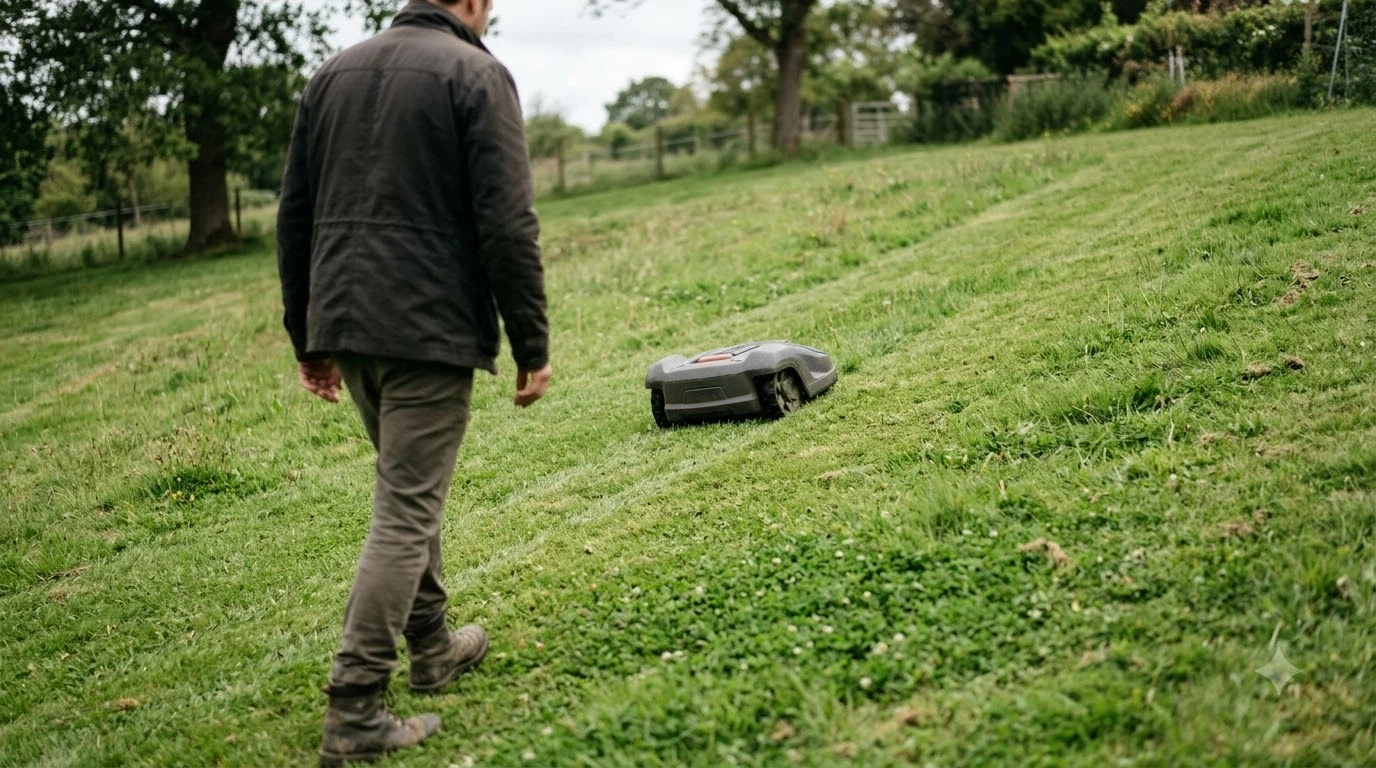

The best robot lawn mower under $1000 is the one whose rated area, cutting height, slope limit and boundary type match your yard. On a budget category page read in November 2026, the six listed models sit between $599 and $999, and five of the six are wire-free. The price alone does not tell you whether a model will cover your lawn, so this guide shows which figures to check first and where the manufacturer pages give more detail than the listings.
The short answer
- Price band: listed budget models run about $599 to $999 as of November 2026, according to a listing-site category page.
- Lawn area: budget ratings run from 0.125 to 0.5 acre. Buy for at least 20 to 30 percent more area than your grass, which is our reading of common buying advice.
- Cutting height: the mower must reach the height your grass type needs. UC IPM lists 1 1/2 to 3 inches for tall fescue.
- Slope: listings usually give one maximum slope. Premium manufacturer pages give a limit inside the work area and a lower one at the boundary.
- Wire or wire-free: five of six listed budget models are wire-free. Check the install and boundary terms before you order.
What the best robot lawn mower under $1000 usually covers
A robot mower under $1000 is a budget machine built for a small, fairly flat lawn. On a listing-site category page read in November 2026, the listed prices ran from $599 for the Gardena SILENO flex to $999 for the Segway Navimow i2 AWD and the Greenworks AiMowbot C20. Between them sat the ANTHBOT M9 at $769, the Sunseeker V3 at $899 and the ANTHBOT M5 LiDAR at $949. Prices change often, so treat these as a snapshot and check the live listing before you buy.
The listing also shows a pattern. Five of the six models are described as wire-free, and most of them are rated for coverage of about 0.125 to 0.25 acre. The Greenworks AiMowbot C20, rated at 0.5 acre, is the largest coverage claim in that group.
| Model (listed) | Listed price | Coverage | Boundary wire |
|---|---|---|---|
| Gardena SILENO flex | $599 | 0.2 acre | Yes |
| ANTHBOT M9 | $769 | 0.25 acre | No (wire-free) |
| Sunseeker V3 | $899 | 0.15 acre | No buried perimeter wire |
| ANTHBOT M5 LiDAR | $949 | 0.125 acre | No (wire-free) |
| Segway Navimow i2 AWD | $999 | 0.15 acre | No (wire-free) |
| Greenworks AiMowbot C20 | $999 | 0.5 acre | No (wire-free) |
The table is a starting point, not a verdict. Several listings leave out cutting height, battery or cutting width, so you will need the manufacturer page for those figures.
Match the rated area to your lawn
Coverage is the first figure to check for the best robot lawn mower under $1000, and it is easy to misread (see how to choose a robot mower for your lawn size). Count only grass. Driveways, patios, decks, garden beds and other non-grass areas do not count toward the mowing area. A common buying rule is to pick a mower rated for at least 20 to 30 percent more area than your grass, which leaves room for odd corners and uneven edges. This is our reading of that common advice, not a manufacturer requirement.
Oversizing has its own cost. A larger rated area usually means a longer boundary and a bigger dock, and a small yard gains nothing from either. On a narrow or irregular lot, the shape matters as much as the area, so compare the rated figure against a rough sketch of your grass before you decide.
Set the cutting height for your grass
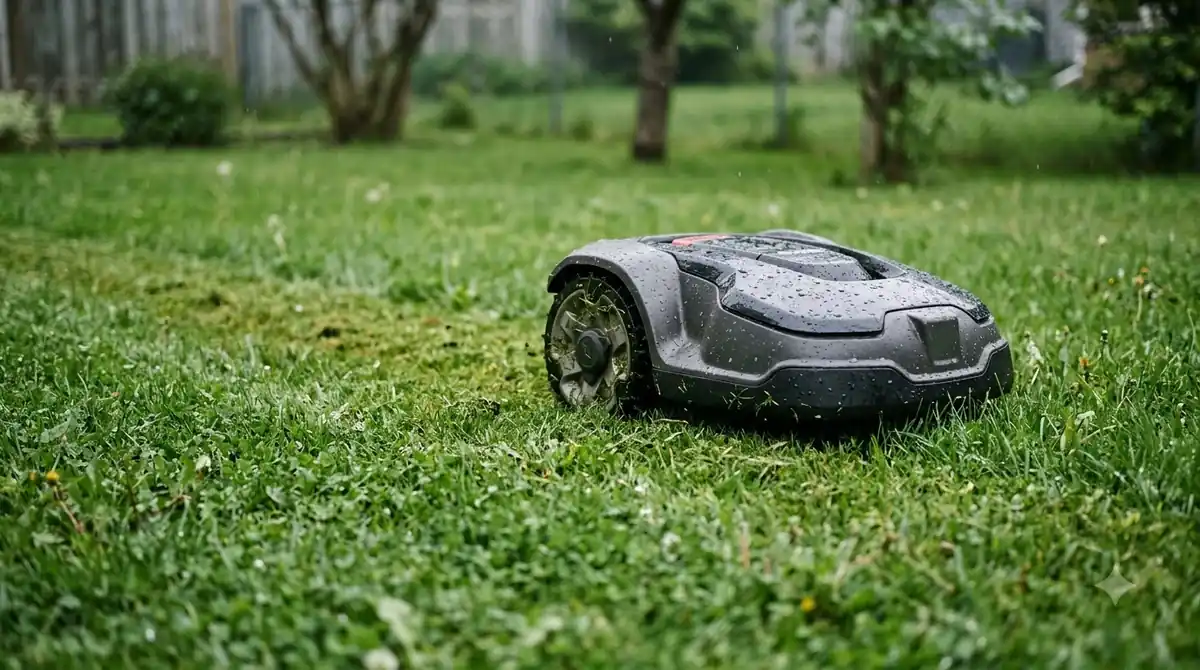
Cutting height depends on the grass type, and the best robot lawn mower under $1000 must still reach the range your lawn needs (for one grass, see robot mowers for tall fescue lawns). The UC IPM cool-season guidance sets tall fescue between 1 1/2 and 3 inches, Kentucky bluegrass between 1 1/2 and 2 1/2 inches, and perennial ryegrass between 1 1/2 and 2 1/2 inches.
UC IPM also gives a rule that applies to every mower: only remove one-third of the height of the lawn at a time. A robot mower that cuts often can follow that rule, but only if its minimum height is low enough for the grass you actually have. The Gardena listing shows 1.0 to 4.0 inches, the Greenworks listing shows 0.8 to 4.0 inches, and the Worx Landroid WR165 shows 1.18 to 2.36 inches according to the Mammotion comparison page. A mower whose range tops out at 2.36 inches will not give you a tall fescue lawn at 3 inches.
UC IPM advises cutting on the higher end of the range for a new lawn and for turf that needs to tolerate drought, heat, traffic, shade and pests. That advice applies to robot mowers as much as to push mowers.
Read both slope figures
Slope is where budget listings are least clear, and robot mower slope ratings explained shows how to read percent versus degrees. The listings in this price band give one maximum slope per model, and the figures run from 35 percent on the Gardena SILENO flex to 45 percent on the ANTHBOT M9, ANTHBOT M5, Navimow i2 AWD and Greenworks AiMowbot C20. The Sunseeker V3 is listed at 42 percent.
The figures do not always agree with themselves. On the Greenworks AiMowbot C20 page, the spec table says 45 percent, while the description gives 31 degrees, which is about 60 percent. Those two numbers are not the same measure, so do not treat either one as settled until you read the manufacturer manual.
A premium manufacturer page shows why two figures matter. The Husqvarna Automower 430XH lists a maximum slope of 45 percent inside the installation and 15 percent at the boundary. That gap means a mower can climb a steep work area but may not handle a steep edge, which is where the boundary wire runs. If a budget listing gives only one number, ask the seller or the manufacturer which area it refers to.
Slope also changes with weather. A wet lawn gives less traction, so a rated slope may not hold after rain. Our reading is to plan for the lower end of the rating on damp grass. For a sloped yard, the best robot lawn mower under $1000 is the one whose slope figure is clear on both counts.
Wire or wire-free setup
In the listing, five of the six budget models are wire-free, so you would not bury a perimeter wire. The same page’s introduction says mowers in this range tend to rely on a traditional boundary wire, so confirm the navigation type model by model. The Gardena SILENO flex is the wired exception in the listing, and the Sunseeker V3 entry says it has no buried perimeter wire. For the trade-offs, see wire-free vs boundary wire robot mowers.
Wire-free does not mean setup-free. You still define the boundary, and the mower needs a clear view of the area. Wire-based models usually need the wire laid around the lawn and around obstacles, which takes time on a larger yard. Check the install method in the manufacturer manual, not only the listing title, before you buy.
Specs listings leave out
Battery, cutting width and noise are often missing from budget listings. Where the Gardena listing gives them, the figures are an 18V 3.6 Ah lithium-ion battery and a 10-inch cutting width. The Husqvarna Automower 430XH, which is a premium reference rather than a budget model, lists a 5 Ah battery, a 9.45-inch cutting width and a sound level of 58 dB(A).
Noise matters if the mower runs in the morning or near neighbors. Compare the dB(A) figure from the manufacturer page, since a listing may leave it out completely (background in how loud robot lawn mowers are). Battery and width affect how long a run lasts and how many passes a lawn needs, so they belong on your checklist.
Trade-offs at this price
Budget models make trade-offs, and some manufacturers say so themselves. Mammotion describes its YUKA Mini 600, listed at $899, as a model with a limited coverage area that is best for smaller lawns, and says it may not perform well on very uneven terrain. Its page gives coverage up to 0.15 acre and a slope rating up to 45 percent (24 degrees).
The same Mammotion page describes the Worx Landroid WR165, listed at $699, as limited to smaller lawns of about 0.125 acre and as having no GPS or advanced mapping features. Those are the brand’s own words about a competitor, so read them as a comparison written by one maker, not as independent testing.
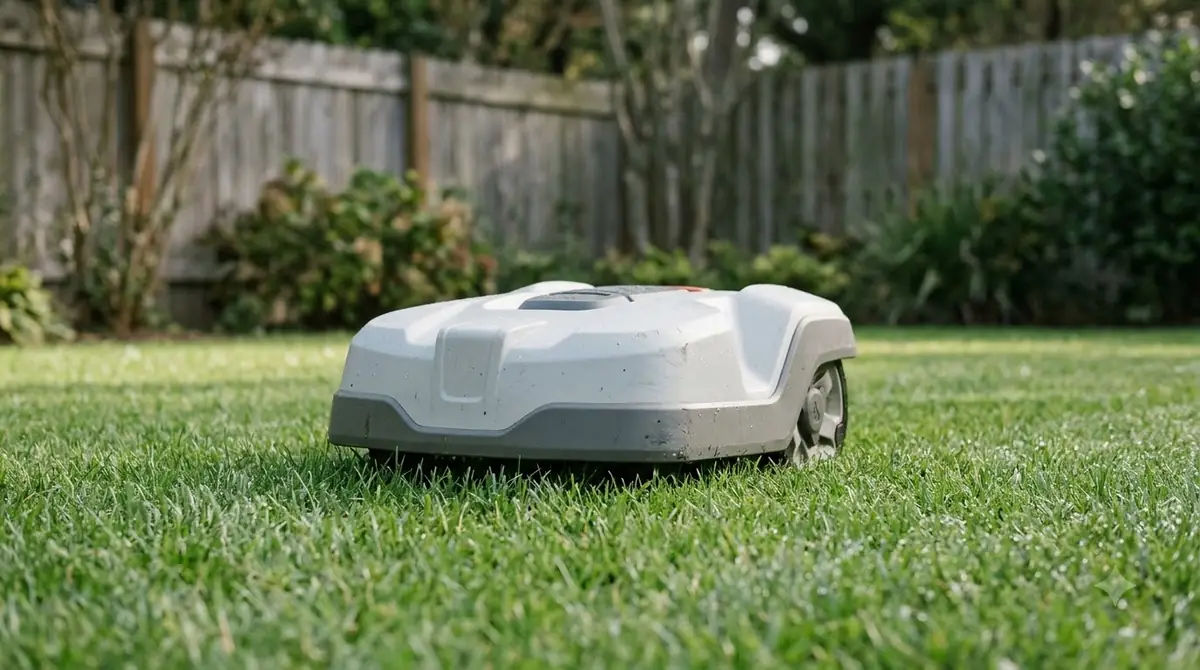
The clearest trade-offs are coverage, navigation and terrain. The best robot lawn mower under $1000 can be a good fit for a small, flat, open lawn. It is a poor fit for a large or hilly yard with many obstacles, or for a yard that needs precise boundary control near beds and water features.
Heads up
No independent test data is used here. The figures come from manufacturer pages, a listing-site page and a university extension guide. Prices and stock change often, so confirm the figures on the current manufacturer page before you buy.
What to check before you buy
Work through these points in order to narrow down the best robot lawn mower under $1000. Each one narrows the list before you compare prices.
- Measure the grass area. Leave out beds, patios and driveways, then buy for at least 20 to 30 percent more coverage.
- Confirm the cutting height range. Match the minimum height to your grass type using the UC IPM ranges.
- Find both slope figures. Look for the limit inside the work area and the lower limit at the boundary.
- Decide on wire or wire-free. Read the installation terms in the manual, not only the listing.
- Check the missing specs. Get battery, cutting width and dB(A) from the manufacturer page before you order.
Frequently asked questions
Is a robot mower under $1000 enough for a normal lawn?
It can be, if the grass is small, fairly flat and open. Listed budget models are mostly rated for about 0.125 to 0.25 acre, and the largest listed rating is 0.5 acre. Measure your grass first and buy for at least 20 to 30 percent more area.
Do budget robot mowers need a boundary wire?
Most listed models in this band are wire-free. The Gardena SILENO flex is listed as needing a boundary wire. Confirm the navigation method in the manufacturer manual before you buy.
What slope can a budget robot mower handle?
Listings in this band show maximum slopes from 35 to 45 percent. Some listings give one figure without saying where it applies. Premium manufacturer pages list a higher limit inside the work area and a lower limit at the boundary, so check both figures.
How do I choose the cutting height?
Start with your grass type. UC IPM lists 1 1/2 to 3 inches for tall fescue and 1 1/2 to 2 1/2 inches for Kentucky bluegrass and perennial ryegrass. Make sure the mower’s minimum height reaches the range you need, and cut on the higher end for a new or stressed lawn.
Sources
- Mowing cool-season turfgrass (UC IPM): cutting height ranges, the one-third rule and the advice to cut higher under stress.
- Automower 430XH (Husqvarna): premium reference for slope inside and at the boundary, boundary wire, area, width, battery and sound level.
- Best robot lawn mower under $1000 (Mammotion): listed prices, coverage and the brand’s stated limits for YUKA Mini 600 and the Worx Landroid WR165.
- Budget robotic lawn mowers under $1000 (Freshlycharged): listed prices, coverage, slope and wire status for the budget band, as of November 2026.
 Up next6 min readBest Robot MowersBest Wire-Free Robot Mower Under $1000: Fit Before PriceUpdated Nov 14, 2026
 7 min readBest Robot MowersBest Robot Lawn Mower Under $3000: What to Check Before You BuyUpdated Nov 14, 2026
 9 min readBest Robot MowersBest Robot Lawn Mower Under $700: What to Check Before You BuyUpdated Nov 12, 2026
 8 min readBest Robot MowersBest Robot Lawn Mower Under $5000: What to Check Before You BuyUpdated Nov 12, 2026
 7 min readBest Robot MowersBest Wire-Free Robot Mower Under $1200: What to Check Before You BuyUpdated Nov 16, 2026
 9 min readBest Robot MowersWhat to Expect from a Robot Mower Under 1000Updated Nov 11, 2026