
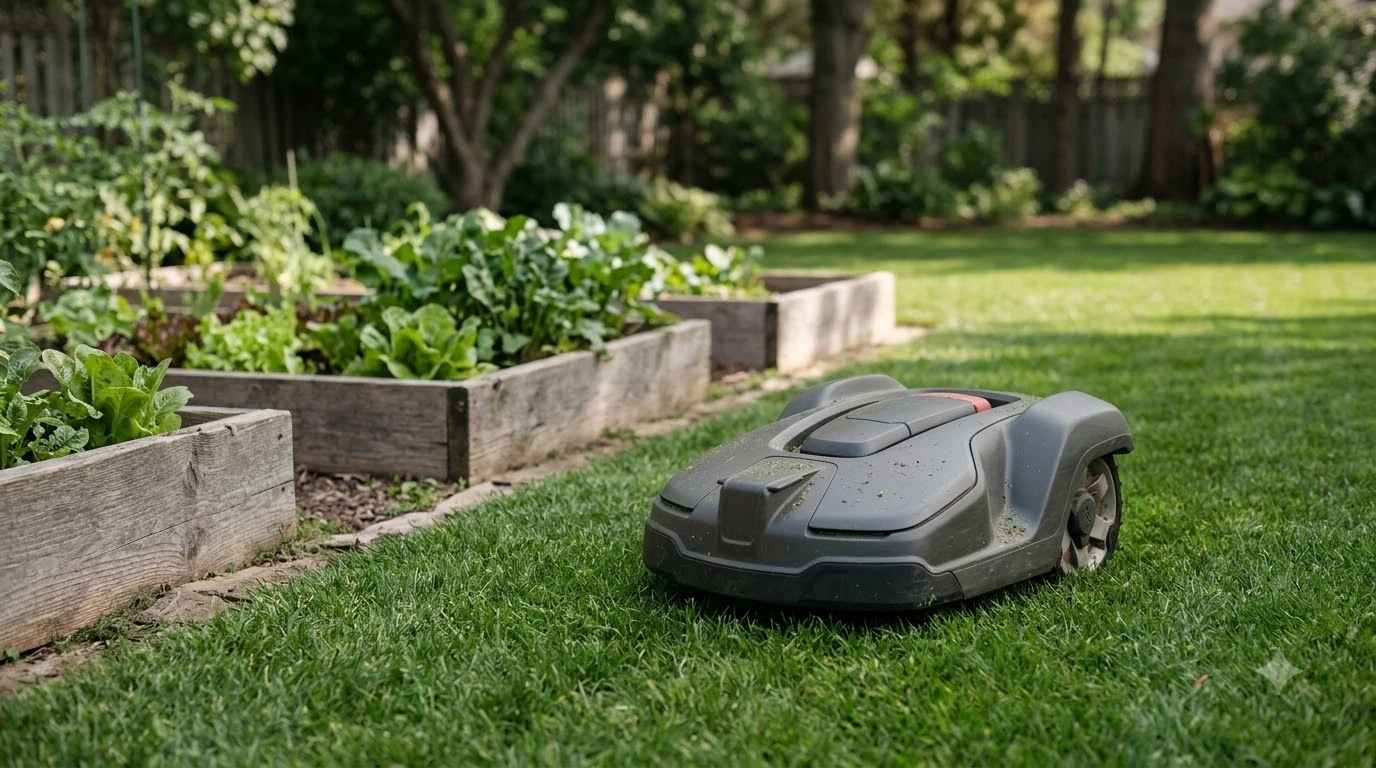

The best Ecovacs GOAT robot mower model to buy depends on your lawn. As of November 2026, the right pick turns on lawn size, slope, and how much sky a mower can see for satellite positioning. Ecovacs lists its US GOAT models as wire-free mowers that map their own boundaries, so the practical decision is mostly about coverage, navigation type, and terrain.
The short answer
- Small yard, up to 1/4 acre: the GOAT O1000 RTK is listed for areas up to 1/4 acre, with a 45% (24°) maximum work-area slope.
- Half-acre yard with open sky: the GOAT A2500 RTK is listed for 1/2 acre (27,000 sq ft), with a 50% (27°) slope rating.
- Trees, buildings, or weak satellite signal: LiDAR-based models such as the GOAT A3000 LiDAR PRO are the category to compare, since they do not depend on satellite signal alone.
- Setup: the models reviewed here are described by Ecovacs as not needing a physical boundary wire.
Best Ecovacs GOAT robot mower model to buy, by lawn size
The Ecovacs GOAT range has changed across generations, so the first step is to match a model to the specs its own product page publishes. The table below uses the three US product pages we read for this guide, with values copied from the spec tables and marketing text as published. Where those two disagree, both values are shown.
| Model | Listed coverage | Max work-area slope | Cutting height | Noise (dBA) | Navigation |
|---|---|---|---|---|---|
| GOAT O1000 RTK | Up to 1/4 acre | 45% (24°) | 1.2 to 3.2 in (spec table) | 57 | RTK + camera + 3D ToF |
| GOAT A2500 RTK | 1/2 acre; up to 27,000 sq ft | 50% (27°) | 1.2 to 3.6 in (spec table) | 60 | RTK + camera + 3D ToF |
| GOAT A3000 LiDAR PRO | Not stated as a maximum; mowing rate 250 to 400 m²/h | 50% (27°) | 30 to 90 mm (about 1.2 to 3.5 in) | 62 main body, 82 trimmer | Multiline LiDAR + 3D ToF + AI camera |
Two points stand out. The O1000 RTK is the only model in this set with a stated 1/4 acre coverage ceiling, so it is the most direct fit for a small lot. The A3000 LiDAR PRO lists a mowing rate rather than a lawn-size limit, which means the buyer has to estimate usable mowing time against their own lawn. Our reading is that a mowing rate is more useful when you plan a schedule than a single acreage number.
RTK, LiDAR, and obstacle sensing: what the navigation means
Navigation type decides where the best Ecovacs GOAT robot mower model to buy for your lot can work reliably, more than any other spec. Each GOAT family uses a different combination of sensors, and the names on the product pages are not interchangeable.
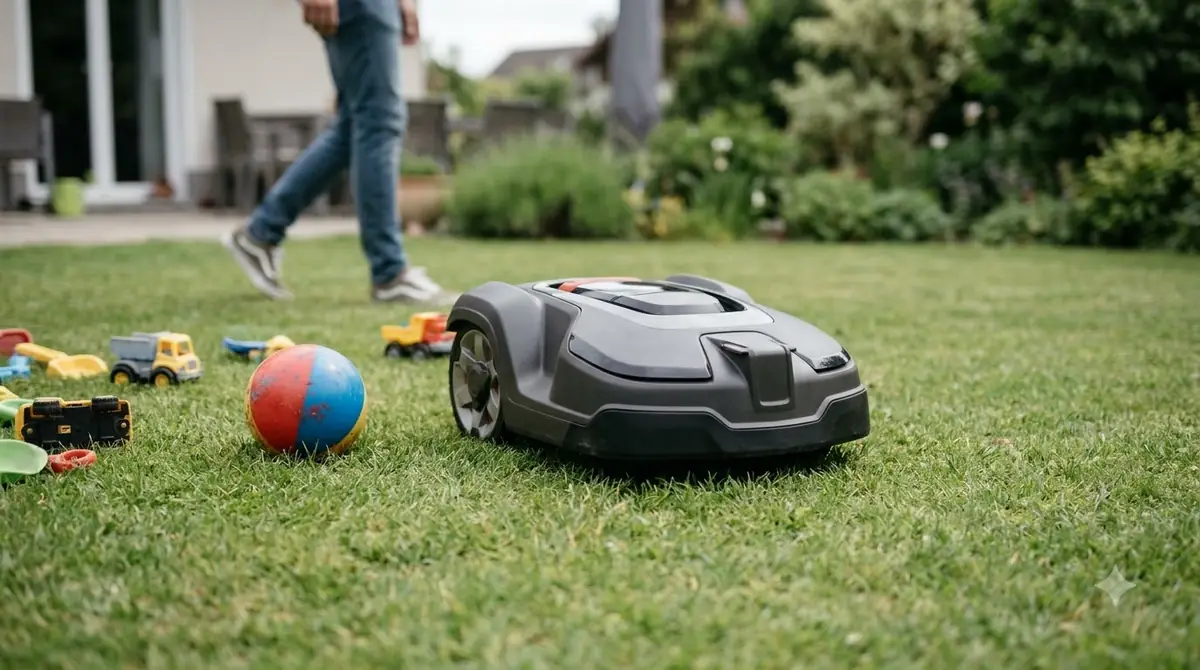
- RTK positioning. The O1000 RTK and A2500 RTK pages describe RTK paired with a camera and 3D ToF sensing. RTK depends on a clear view of the sky, so tall trees and buildings close to the lawn can reduce accuracy. This is a general limit of satellite positioning, and the Ecovacs pages do not say how much tree cover is too much. For tree-covered lots, see our guide to a robot mower that works under trees without RTK.
- LiDAR mapping. The A3000 LiDAR PRO page describes multiline LiDAR with a 3D ToF and AI camera. LiDAR senses the surroundings directly rather than relying on satellites. Our reading is that this makes it a better starting point for yards with heavy canopy, though we have not tested it in those conditions.
- AIVI 3D obstacle detection. The O1000 RTK page names AIVI 3D obstacle avoidance using a 3D ToF+ camera. Obstacle detection is a separate job from positioning: it helps a mower stop or steer around toys, pets, and furniture, but it does not replace a good map.
Ecovacs publishes an RTK accuracy figure of 0.79 inches on its A2500 RTK page. That is a vendor claim from its own lab tests, and the page notes that results may vary with grass type, terrain, and other conditions. Treat it as a manufacturer figure, not an independent measurement. If the term is new to you, see our explainer on what RTK stands for on a robot mower.
Wire-free setup and what it means for your yard
All three product pages describe a boundary setup that does not use a physical wire. The O1000 RTK page says it “does not require users to set physical boundaries,” and the A3000 LiDAR PRO page says the mower detects and remembers boundaries “without setting physical wires.” The A2500 RTK page gives a setup time of 15 minutes.
The pages also list a virtual boundary limit: 17% for the O1000 RTK and 20% for the A3000 LiDAR PRO. This is a separate figure from the work-area slope rating, and it applies to the virtual boundary rather than to the whole lawn. Check both numbers if your lot has a steep edge along a path or slope. Our explainer on how robot lawn mowers work without a wire covers the basics.
Slope and cutting height limits
Slope is the spec most buyers underestimate. Ecovacs lists a maximum work-area slope of 45% (24°) for the O1000 RTK and 50% (27°) for the A2500 RTK and A3000 LiDAR PRO. Those numbers describe the mower’s rated capability, not a guarantee for every grass surface, and wet grass can reduce traction on any slope. For very steep lots, see our guide to a robot lawn mower for a 45 percent slope.
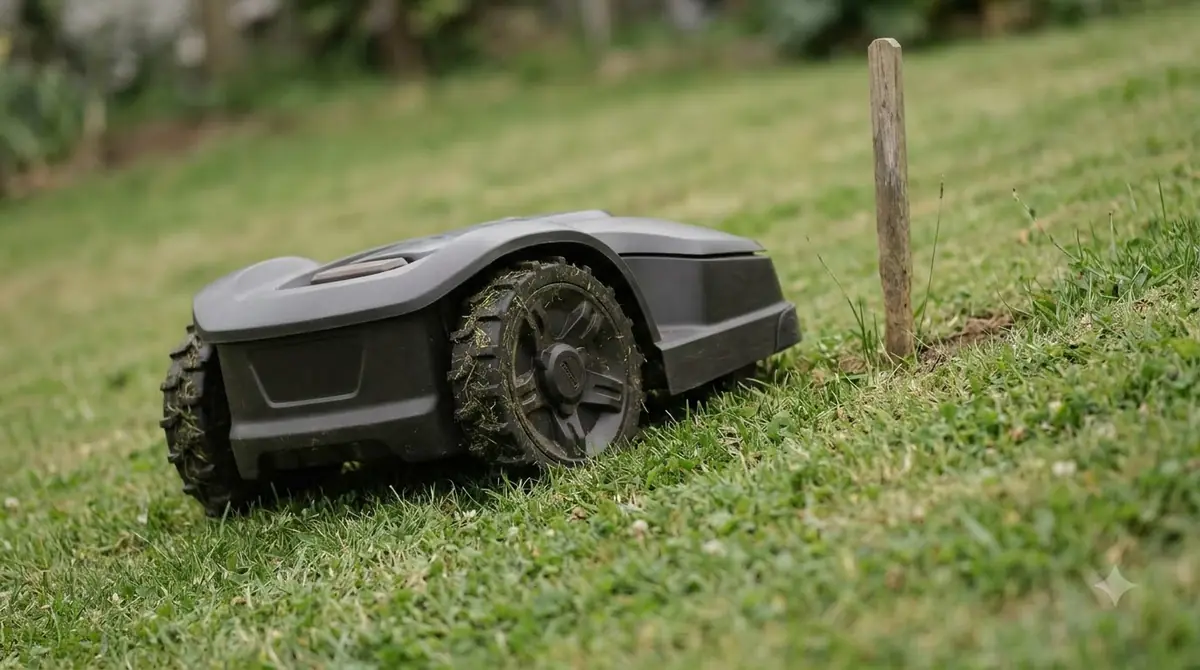
Cutting height is listed in inches on the spec tables and in millimeters in the marketing copy, and the two do not always match. On the O1000 RTK page, the spec table gives 1.2 to 3.2 inches while the marketing text gives 3 to 8 cm. On the A3000 LiDAR PRO page, the spec table lists 30 to 90 mm, which the page also writes as about 1.18 to 3.54 inches. Our reading is that buyers should compare the spec table values for each model rather than mixing units from different parts of the same page.
Noise and mowing rate
Noise is listed in dBA on each page. The O1000 RTK is rated at 57 dBA and the A2500 RTK at 60 dBA. The A3000 LiDAR PRO lists 62 dBA for the main body and 82 dBA for its trimmer, so the trimmer figure matters if you run it near a house or neighbours. The page does not say at what distance these figures were measured, so compare them as manufacturer values rather than as sound-level readings you can apply to your own yard. For a wider look, see our guide to the best quiet robot lawn mower for night mowing.
For mowing capacity, the A2500 RTK page gives an efficiency of 4,305 sq ft per hour and a single-charge figure of 5,382 sq ft, while the O1000 RTK page gives about 1,507 to 1,938 sq ft per hour depending on mode. The A3000 LiDAR PRO lists 250 to 400 m² per hour as a range that depends on mowing speed. These are the manufacturer’s numbers, and a real lawn with obstacles, edges, and charging stops will take longer.
A checklist for choosing the best Ecovacs GOAT robot mower model to buy
Use the published specs to narrow the list, then check the points below against your own lot before you choose a model.
- Measure the largest mowing area. Compare it with the listed coverage, and leave margin for beds, paths, and charging stops.
- Find the steepest slope. Check it against the work-area slope rating, not the virtual boundary figure.
- Look up at the sky. If trees or walls block most of the lawn, RTK accuracy may drop, and LiDAR models deserve a closer look.
- Confirm the cutting height you need. Use the spec table value for the model, and match it to your grass type.
- Check the warranty on the current product page. The O1000 RTK and A2500 RTK pages link to a returns and warranty page but do not state a term on the product page itself.
- Check the price on the live site. This guide does not list fixed prices, since they change.
The checklist is short: coverage margin, slope, sky view, cutting height, and the warranty term on the live page. If those five answers point to one model, that is the best Ecovacs GOAT robot mower model to buy for your yard, whatever any ranking says.
Frequently asked questions
What is the best Ecovacs GOAT robot mower model to buy for a small yard?
Among the three models on this page, the GOAT O1000 RTK has the smallest published coverage, up to 1/4 acre. It is the most direct fit for a small lot, provided the yard has a clear view of the sky.
Do GOAT RTK mowers need a boundary wire?
The O1000 RTK and A2500 RTK product pages both say a physical boundary wire is not required. Ecovacs describes the setup as wire-free, and the A2500 page gives 15 minutes as the setup time.
Is a LiDAR model better than an RTK model?
Neither is ranked here. RTK depends on satellite visibility, while LiDAR senses the surroundings directly. Which fits better depends on how much sky and canopy your yard has.
Is the warranty listed on the product page?
On the O1000 RTK and A2500 RTK pages, Ecovacs links to a general returns and warranty page but does not state a term on the product page. Check the live page and the warranty document before buying.
Sources
- GOAT O1000 RTK product page (Ecovacs): coverage, slope, cutting height, noise, navigation, and wire-free setup.
- GOAT A2500 RTK product page (Ecovacs): coverage, slope, noise, navigation, 15-minute setup, and the RTK accuracy claim.
- GOAT A3000 LiDAR PRO product page (Ecovacs): LiDAR navigation, slope, cutting height, noise, mowing rate, and wire-free navigation.
 Up next9 min readBest Robot MowersBest Husqvarna Automower Robot Mower Model to BuyUpdated Nov 11, 2026
 8 min readBest Robot MowersBest Mammotion Robot Mower Model to Buy: How to Choose by LawnUpdated Nov 11, 2026
 8 min readBest Robot MowersBest Worx Landroid Robot Mower Model to Buy: How to Choose in 2026Updated Nov 11, 2026
 8 min readBest Robot MowersBest Segway Navimow Robot Mower Model to Buy in 2026Updated Nov 11, 2026
 8 min readBest Robot MowersBest Hookii Robot Mower Model to Buy: 3 Models ComparedUpdated Nov 11, 2026
 10 min readBest Robot MowersBest Robot Lawn Mower for Elderly Parents: What to Check Before You BuyUpdated Nov 11, 2026