
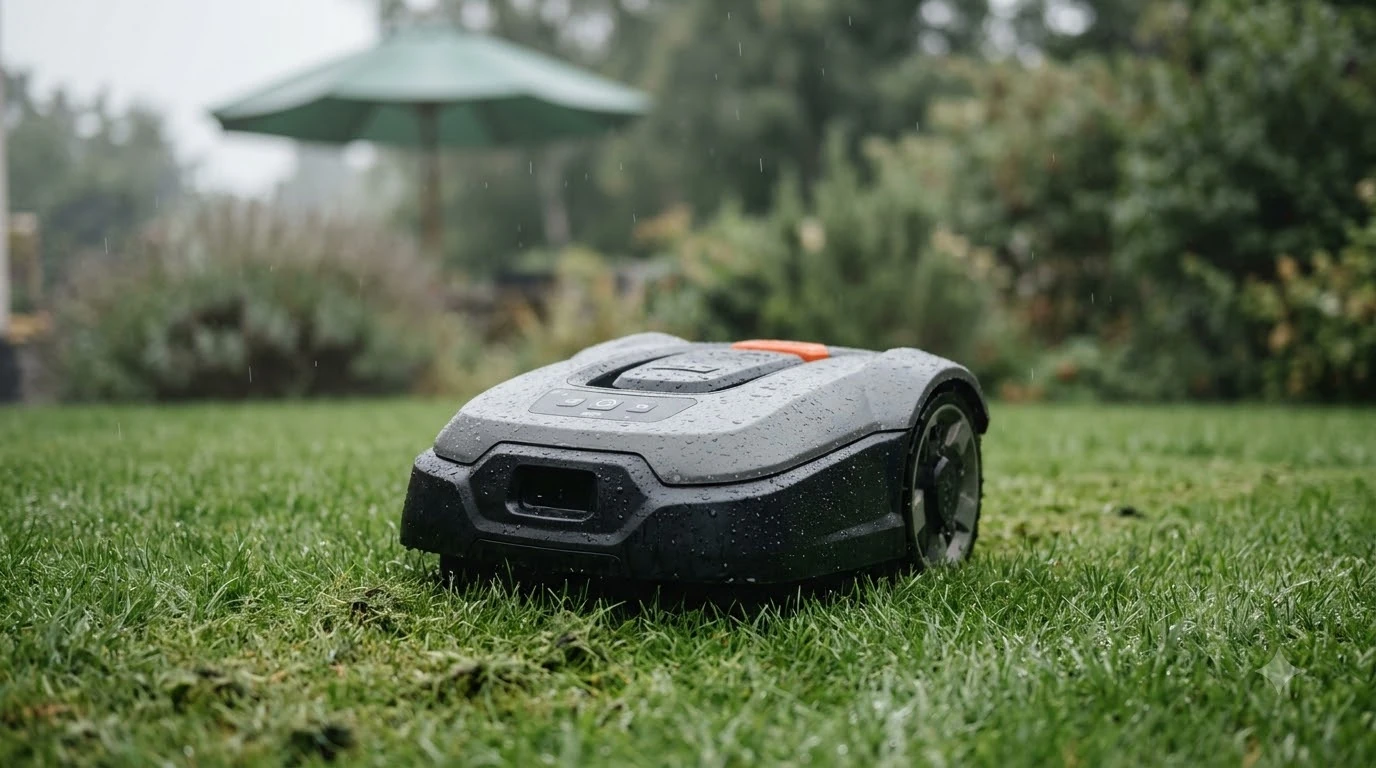

The best robot lawn mower for the Midwest lawns is the one whose rated area, slope limit and weather rating fit your yard and a long cool-season mowing window. Manufacturer spec pages are the reliable source for those numbers, not review roundups. Midwest lawns usually mean cool-season grass, a spring and fall growing rhythm, and wet periods that affect when a mower can run.
The short answer
- Size first: match the rated area to your lawn after beds, trees and patios are subtracted, not to the total parcel.
- Check slope and boundary method: one manufacturer figure is 70% inside the cutting area and 50% at the boundary wire.
- Check weather: an IPX4 rating means the mower can run in rain, but a rain routine can still park it.
- Cut height: Iowa State Extension advises 3 to 3.5 inches for standard mowing and never removing more than one-third of the blade.
- Season: plan for an October to November stop window, and no mowing on frozen grass.
Sizing the best robot lawn mower for the Midwest lawns
Robot mower sizing starts with the rated area, and the rating is a range, not a promise. Husqvarna’s US page for the Automower 435X AWD describes it as rated for “complex, medium-to-large sized lawns up to 0.9 acres of grass (±20%).” Across its range, the company lists recommended sizes such as 0.5 acre for the 410 iQ, 1 acre for the 420 iQ, 2 acres for the 440 iQ and 1.5 acres for the 560 EPOS, with the same ±20% tolerance on each. The mower’s rating is therefore a planning figure, and a lot with beds, trees and a shed may need a model with more headroom.
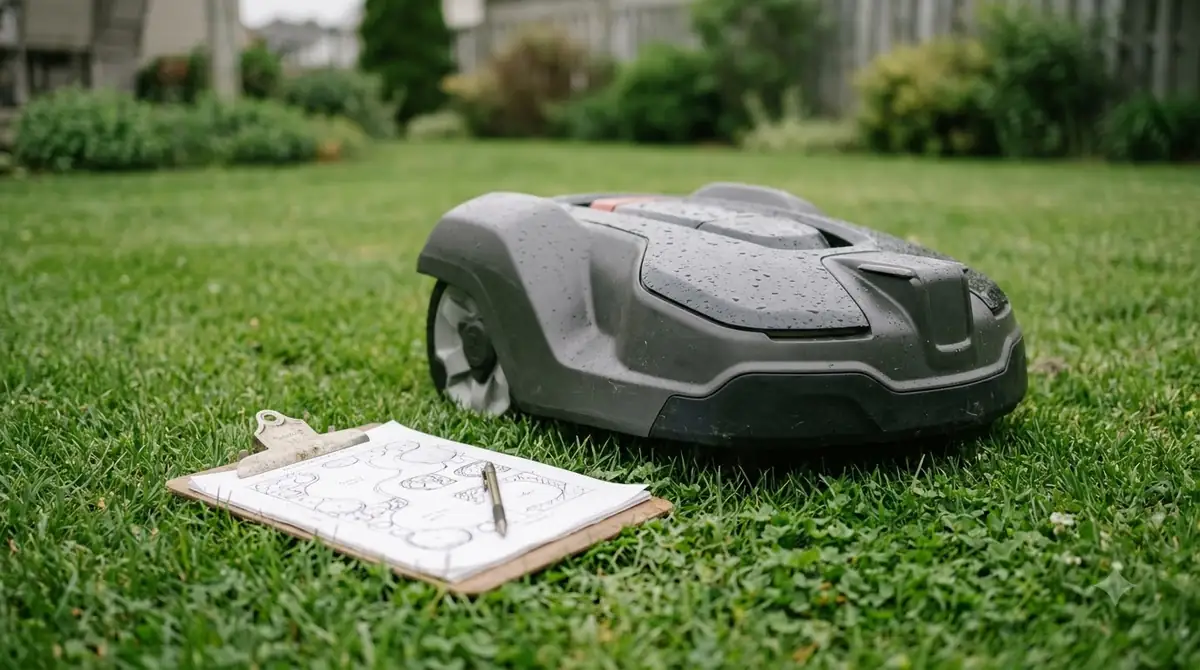
A practical way to use these figures is to measure the grass area you want the mower to cover, then compare it with the rated size and reduce it by the area of obstacles. Our reading is that a yard with many island beds or a long, narrow shape should move up one size class, because the mower spends more time on edges and turns, and the spec sheet should be checked for run time and charging details as well.
| Husqvarna model (US range page) | Recommended lawn size (±20%) | Boundary option listed |
|---|---|---|
| Automower 410 iQ | 0.5 acre | Physical wire or virtual wire |
| Automower 420 iQ | 1 acre | Physical wire or virtual wire |
| Automower 440 iQ | 2 acres | Virtual wire or physical wire |
| Automower 435 iQ AWD | 1.3 acres | Virtual wire or physical wire |
| Automower 435X AWD | 0.9 acre | Physical wire |
| Automower 560 EPOS | 1.5 acres | Virtual wire |
The table shows that the company lists sizes in acres only and that most model pages do not state a maximum slope. For that reason, the slope figure should be compared only where the manufacturer states it.
Slopes and boundary method
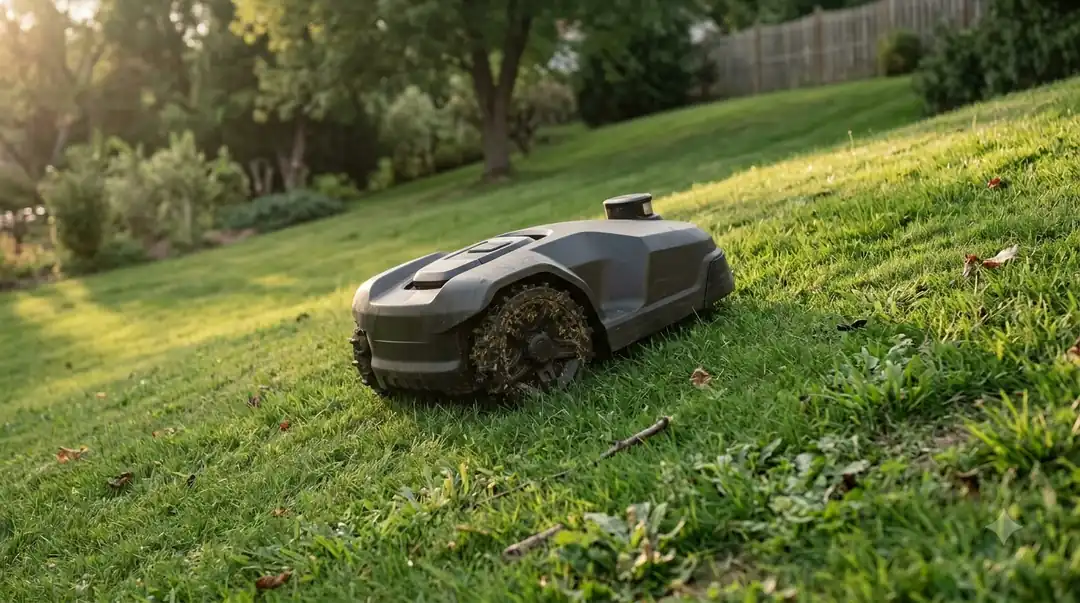
The important number is the slope the mower can handle inside the cutting area compared with the slope it can handle at the boundary. For the Automower 435X AWD, Husqvarna’s FAQ says the mower “can comfortably handle slopes up to 70% (35 degrees) inside the cutting area, and up to 50% at the boundary wire.” That split matters, because the two figures are different and a yard can have steep sections near its edges.
The boundary method changes installation work more than it changes mowing, which matters when you shortlist the best robot lawn mower for the Midwest lawns. The US 435X AWD uses a physical perimeter wire to define the mowing boundary, so a Midwest owner with long, curved beds should plan time for laying and burying wire. Other models in the same range list a virtual wire, which is mapped in an app rather than buried. Whichever method you choose, confirm on the spec page that the model you are buying supports it, because the range pages list options by model rather than as a single feature.
Heads up
Slope limits in the Husqvarna range are not listed for most models, so do not assume that a figure from one model applies to another. Compare the number stated on each spec page, and measure your steepest section with a level or app before choosing.
Rain and wet grass
Rain affects both the mower and the lawn, and the best robot lawn mower for the Midwest lawns has to cope with both, so answer the two questions separately. Husqvarna says the 435X AWD is “fully weatherproof (IPX4 rated) and can mow in the rain.” It also notes that owners who prefer no mowing in rain can use Automower Smart Routines and Rain guard so the mower parks when rain is forecast. A weather rating describes the machine’s protection, and it does not say how the lawn will hold up on a wet day.
The company’s FAQ does not describe how the mower performs on wet grass, which is a separate question from rain on the machine. Our reading is that wet, soft ground is where wheel slip, rutting and a torn lawn are most likely, so a rain routine is a sensible default even when the mower is rated for rain. If the wheels spin on soft ground, read why robot mower wheels slip on grass. Penn State Extension notes that during drought a lawn may not need mowing until growth resumes after rainfall, which is a useful reminder that the grass, not the calendar, sets the cutting schedule.
Cut height and the one-third rule
For the best robot lawn mower for the Midwest lawns, cut height matters as much as size.
Cool-season grass is the norm across much of the Midwest (see robot mowers for Kentucky bluegrass and fescue lawns), and its cut height is set by the grass and the season. Iowa State University Extension advises setting mowers to “3 to 3-1/2 inches” for standard spring mowing and says to mow once grass reaches 4.5 or 5.25 inches for the first cut of the year. Its rule of “never remove more than one-third of the leaf blade in one mowing” is the one that matters most for a robot, because a robot mows often and small cuts are the normal pattern.
Penn State Extension gives a simpler target for mowing in general, saying lawns should be kept at “2 inches or above.” The two sources are compatible: a spring first cut and a standard height in the 3-inch range fall above that floor. A robot mower with a low minimum setting should therefore be run at the higher setting for the first weeks of spring and during drought, then lowered only as far as the grass tolerates. Our reading is that a robot can cut more often than a person with a walk-behind, so the one-third rule is easier to keep, but the height should still be set by the lawn.
Season window in the Midwest
The Midwest mowing season is long, and the best robot lawn mower for the Midwest lawns has to fit a clear end to it. Farmers Almanac says mowing may be ending when daytime highs stay near or below 50 F, and it recommends a simple test: mow normally, then wait. If 10 to 14 days pass with little growth, the season is probably over. The same source puts Minnesota and Wisconsin in an October to early November window, and Illinois, Ohio and Pennsylvania in October to November. These windows are approximate and not deadlines, so the grass should set the actual date.
The first frost is not the end of mowing, according to the same source. The practical rule is to stop mowing frozen or frost-covered grass and wait until the frost melts and the lawn is dry. University of Wisconsin-Madison Extension advises that a lawn should keep being mowed until it goes dormant, and that a lawn should not enter winter too tall. A robot mower can run through the fall window, but it should be parked during hard frost and when the ground is frozen. The same source advises clearing leaves and debris before snowfall. For colder yards, see robot mowers for a snowy region and whether a robot mower can stay outside in winter.
What to check before you buy
For the best robot lawn mower for the Midwest lawns, the checklist is short and it is based on figures you can verify. Start with the rated area after obstacles, then check the slope inside the cutting area and at the boundary, then choose a boundary method you are willing to install. Confirm the weather rating and whether the rain routine is included. Finally, plan the fall stop window using the 50 F signal and the frozen-grass rule rather than a fixed date.
Read the spec sheet for the exact model, because the ranges above are from one manufacturer’s US range page and other brands publish their numbers differently. If a figure is missing from the spec page, treat it as unknown rather than filling it in from a review.

Frequently asked questions
Is a 1-acre robot mower enough for a Midwest lawn?
It depends on what the lawn contains. Husqvarna’s 420 iQ is listed for 1 acre with a ±20% tolerance, so subtract beds, trees and paved areas before you decide.
Should a robot mower run in winter?
Not on frozen or frost-covered grass. Farmers Almanac advises waiting until frost melts and the lawn dries before mowing, and UW-Madison Extension advises keeping the lawn from entering winter too tall.
Does a physical boundary wire have to be buried?
The US Automower 435X AWD uses a physical perimeter wire to define the boundary. Other models in the same range list virtual boundaries, so check the spec page for the exact model.
Does the first frost end the mowing season?
Not automatically. Farmers Almanac says the first frost does not necessarily mean the season is over, so use daytime highs near 50 F and the 10 to 14 day growth test instead.
Sources
- Husqvarna Automower 435X AWD (manufacturer): recommended area, slope, boundary wire and IPX4 rain rating.
- Husqvarna robotic lawn mowers range (manufacturer): recommended lawn sizes with ±20% tolerance.
- Iowa State University Extension, spring mowing tips (university): first cut height, standard height and the one-third rule.
- Penn State Extension, lawn management through the seasons (university): 2 inches or above, and drought mowing.
- Farmers Almanac, when to stop mowing lawn (publisher): 50 F stop signal, growth test, regional windows and frozen grass.
- UW-Madison Extension, Wisconsin lawn care calendar (university): mow until dormant and clear debris before snow.
 Up next7 min readBest Robot MowersBest Robot Lawn Mower for Georgia Lawns: What to Check Before You BuyUpdated Nov 13, 2026
 8 min readBest Robot MowersBest Robot Lawn Mower for 1 Acre: What to Check Before You BuyUpdated Nov 13, 2026
 10 min readBest Robot MowersBest No Base Station Robot Lawn Mower 2026: What to Check Before You BuyUpdated Nov 13, 2026
 7 min readBest Robot MowersBest Robot Lawn Mower for Ohio Lawns: What to Check Before You BuyUpdated Nov 11, 2026
 8 min readBest Robot MowersBest LiDAR Robot Lawn Mower 2026: What to Check Before You BuyUpdated Nov 13, 2026
 9 min readBest Robot MowersBest Satellite Navigation Robot Lawn Mower 2026: What to Check Before You BuyUpdated Nov 11, 2026