
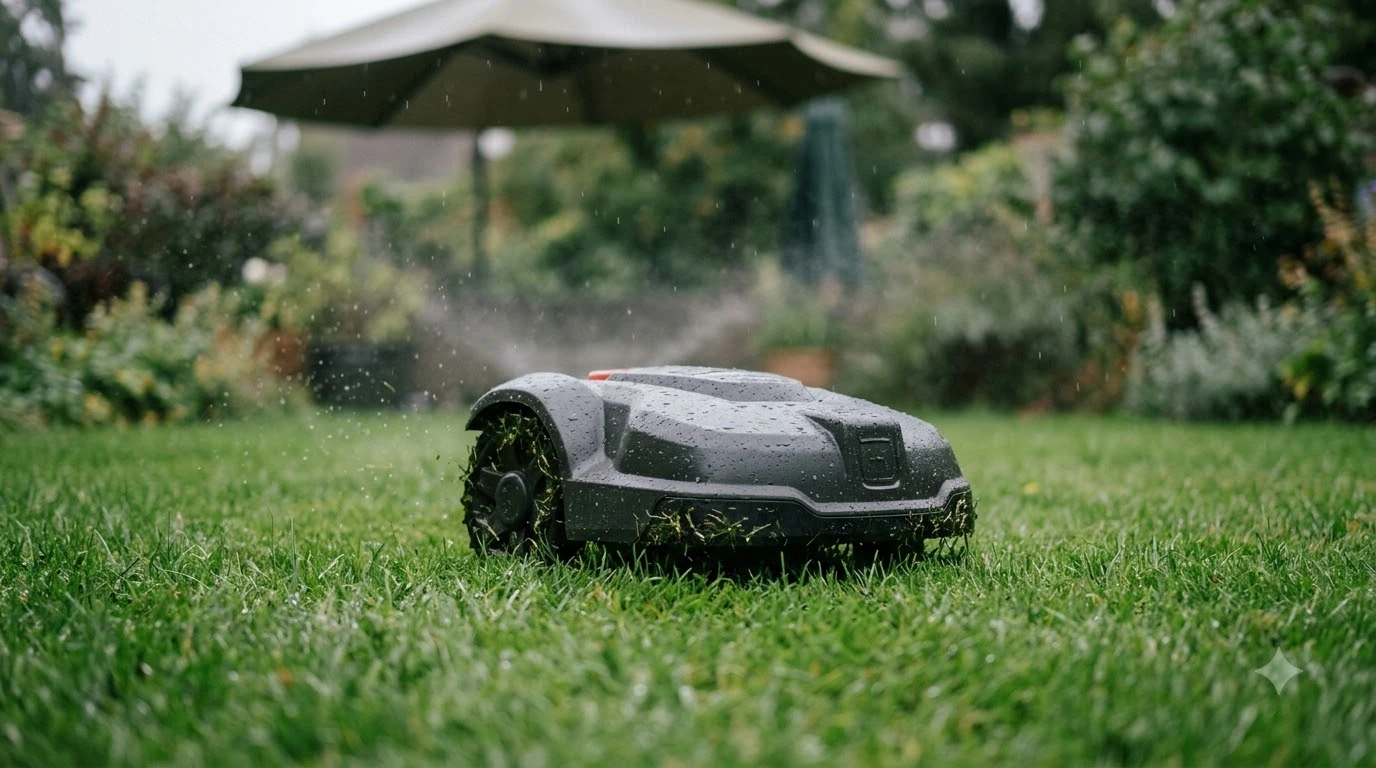

Robot mower wheels slipping on grass usually means the grass or soil under them is damp, soft, or on a slope. Water and soft soil lower the friction the drive wheels need to push the mower forward, so the wheels spin or slide. As of November 2026, the manufacturer pages we read agree on the cause, and they differ mainly on how long to wait after rain.
The short answer
- Damp grass is a common cause. Eufy says wet grass reduces tire grip, even on a slope within the mower’s rated limit.
- Soft soil causes wheel marks. Mammotion says soft ground may cause wheel slip, wheel marks, and difficulty holding a planned path.
- Slopes raise the risk. Honda says wet grass reduces grip for any mower, regardless of its incline rating.
- Wait for firm ground. Mammotion says mowing can resume once the mower travels without slipping or leaving noticeable tracks.
Why robot mower wheels slipping on grass happens
Damp grass and soft soil reduce the friction a wheel needs to push the mower forward, so the wheels spin or slide instead of pulling. Robomow says moisture often makes the wheels spin more easily, and the mower can slip as a result. Our reading is that robot mower wheels slipping on grass can appear on a flat lawn after rain, not only on a hill.
Soil matters as much as the grass on top. Mammotion’s wet-grass guide lists soft ground as a cause of wheel slip, wheel marks, and difficulty keeping a path, especially on slopes or in areas with poor drainage. Husqvarna adds that when the lawn is wet, the soil becomes softer and more open to compaction from the mower’s weight, and mowing after heavy rain can create wheel ruts in soft, wet soil.
Standing water is the clearest warning sign. Mammotion lists standing water or mud as poor traction and unsuitable lawn conditions. Our reading is that a dock-bound mower is the safer choice until the surface drains, even if the grass looks dry at the top.
How tread and drive wheels affect grip
Tread depth, tread width, and wheel size decide how much grip a robot mower keeps on damp turf, according to manufacturers. Honda says deeper, wider treads push through wet or soft grass rather than skating over the surface. Its HRM 1000 to 4000 models use broad-tread rear wheels that are designed to shed mud and keep grip in wet conditions, though Honda also says wet grass reduces grip for any mower. Drive layout matters as well, as explained in what AWD means on a robot mower.
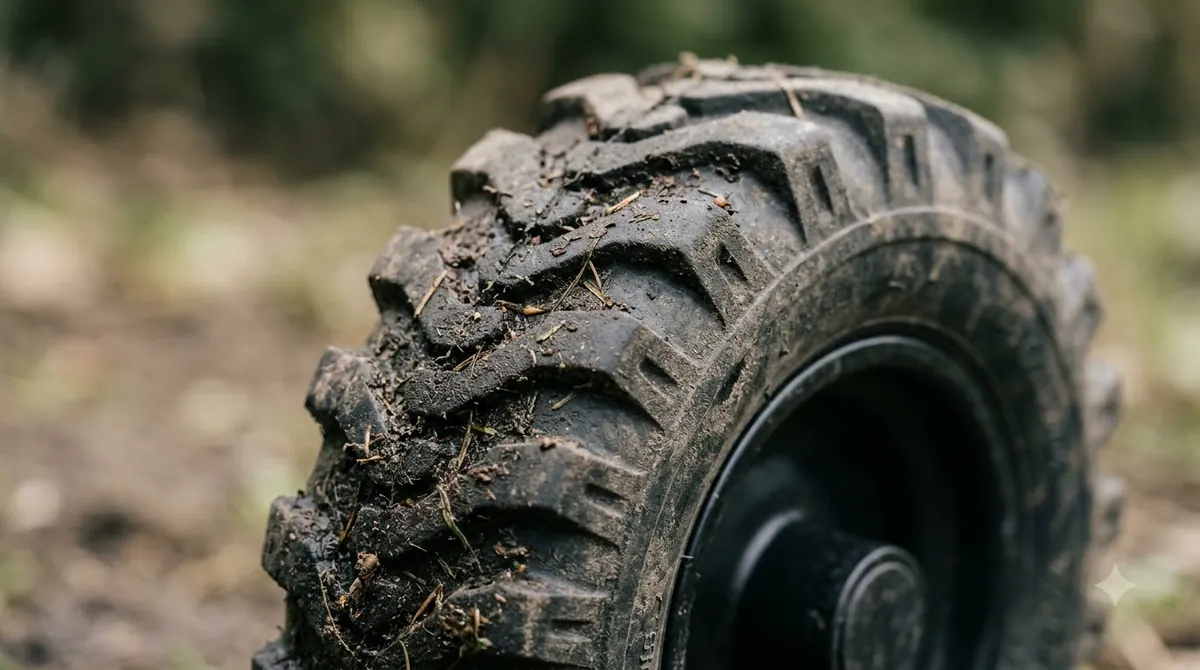
Robomow says drive wheels are usually larger, which helps grip, and that some suppliers offer an extra traction wheel on the mower. It also notes that special tires or spikes are often sold as optional accessories. Check your model’s accessory list and manual before assuming an add-on is included or suitable, because the fitting can differ between models. Our page on robot mower traction spikes for slopes covers that accessory in more detail.
Slopes, rated limits, and wet hills
A rated slope is an upper limit, and wet grass cuts the grip you can count on below that limit. Eufy describes a maximum rated slope as an absolute limit rather than a target for daily mowing. It also says choosing a mower rated above your steepest slope gives more reliable cutting.
Eufy warns that wet grass reduces tire grip even within the rated limit, which can cause the mower to slide sideways or slip downhill. The same page says that running at the top of the incline limit continuously strains the motor, drains the battery faster, and increases tire slip. Honda rates its HRM 1000, 1500, 2500, and 4000 models for slopes up to 47%, about 25 degrees.
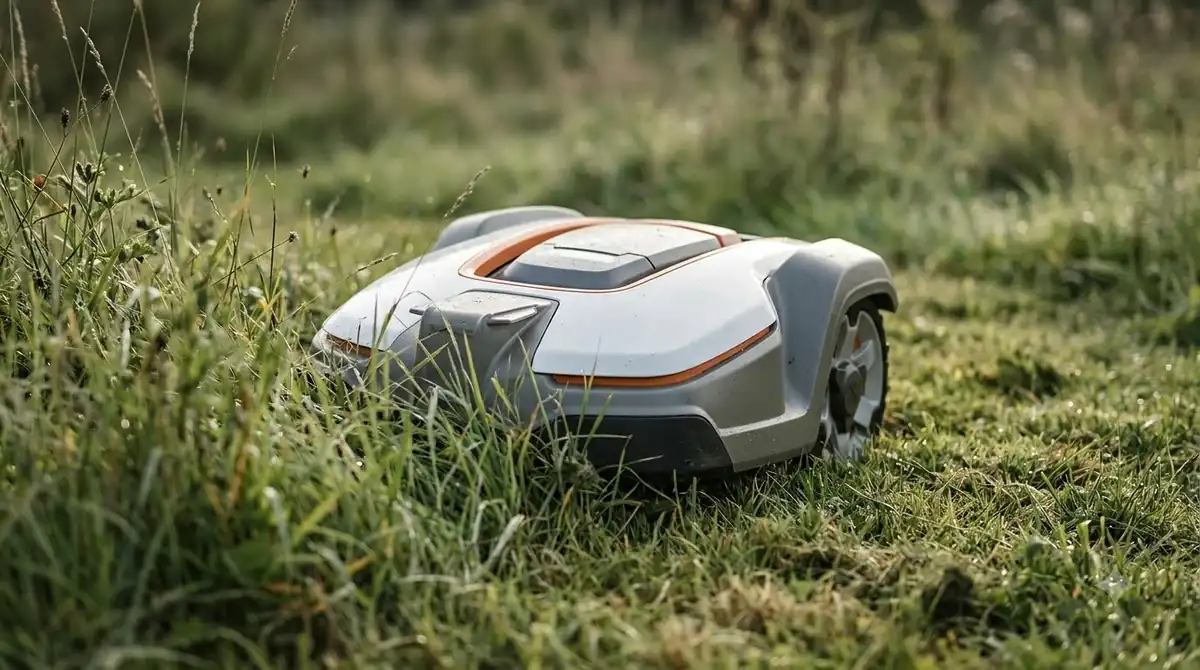
If the rating itself is unclear, percent versus degrees in a slope rating is explained separately. Our reading is that a rating like 47% describes a dry-condition limit. On a wet hill, a shorter cutting session or a wait for drier ground is the safer plan, even when the slope is within the stated figure.
What to check when the wheels start to slip
If you see robot mower wheels slipping on grass, stop the mower, look for deep marks, and check the ground before you restart it. Husqvarna advises waiting at least 24 hours after rain before mowing, with a longer wait after heavy rain or overcast weather. Strong sunlight may dry the lawn within a few hours.
- Look for tracks. Mammotion says to watch for increasing moisture under the mower and for severe wheel slip before you continue.
- Do the footprint test. Husqvarna suggests walking across the lawn. If your footsteps leave visible marks in the soil, wait a bit longer.
- Do the bounce test. Husqvarna says the grass may be ready when the blades feel dry and spring back up.
- Check the wait. Mammotion says there is no universal waiting period, and a fixed 2-hour rule is less reliable than checking the ground.
- Clear leaves. Robomow says leaves can also reduce grip on the ground, so clear them before mowing a damp lawn (see robot mowers and fall leaves).
- Clean the wheels. Our reading is that mud packed into the tread reduces grip, so wipe the wheels after a wet run.
Heads up
Mammotion advises avoiding mowing with severe wheel slip present. Pushing a mower that keeps spinning can dig holes and leave uncut patches.
Causes and fixes at a glance
Robot mower wheels slipping on grass usually trace back to a handful of causes, and each one has a different fix. The table below pairs what you may notice with the fix that the sources support.
| Cause | What you may notice | Fix the sources support |
|---|---|---|
| Damp grass after rain | Wheels spin on flat turf | Wait for firm ground; Husqvarna gives 24 hours as a starting point |
| Soft or poorly drained soil | Wheel marks, drifting path | Wait until the soil feels firm, not soft or muddy (Mammotion) |
| Steep slope | Slides sideways or downhill | Use a mower rated above your steepest hill (Eufy) |
| Leaves on the lawn | Reduced grip | Clear leaves before mowing (Robomow) |
| Mud packed in the tread | Spinning on otherwise firm grass | Clean the wheels; check accessory spikes or tires in the manual (our reading) |
Frequently asked questions
Will a robot mower slip on any wet grass?
Not always, but wet grass lowers traction for any mower. Honda says wet grass reduces grip regardless of incline rating. How much slipping you see depends on how soaked the grass and soil are and how steep the ground is.
Can wheel slip damage my lawn?
Yes. Eufy says spinning drive wheels can dig holes in the lawn and leave uncut grass patches behind. Husqvarna adds that mowing after heavy rain can create wheel ruts in soft, wet soil, so waiting protects the turf. See wheel ruts and brown patches for how to repair the marks.
Should I add spikes or special tires?
Only if your model supports them. Robomow says special tires or spikes are often available as optional accessories. Check the manufacturer’s manual for compatible parts before buying, because fitting can differ between models.
How long should I wait after rain?
Husqvarna advises waiting at least 24 hours after rain, and longer after heavy rain or overcast weather. Mammotion says there is no universal waiting period, so checking the footprint and bounce tests is more reliable than counting hours.
Our reading is that most slipping eases when the ground dries, so start with the wait and the leaves before you change any hardware. If robot mower wheels slipping on grass continues on dry, firm ground, the next things to check are the tread condition and the drive setup in the manual, or with the manufacturer’s support team.
If your lawn stays wet for days or has a steep section, treat the slope rating as a ceiling and plan shorter sessions after rain. Before you buy, read the spec sheet for slope rating, wheel design, and accessory options, then confirm them in the manual for the exact model.
Sources
- Mammotion wet-grass guide (Mammotion): soft ground, standing water, and waiting after rain.
- Husqvarna, can you mow wet grass (Husqvarna): 24-hour guidance, compaction, footprint and bounce tests.
- Eufy, robot lawn mower slope limits (Eufy): wet grass grip, rated limits, and wheel slip effects.
- Honda, robotic mowers and slopes (Honda): tread design and the 47% rating.
- Robomow, robotic mowers for slopes (Robomow): drive wheels, spikes, moisture, and leaves.
 Up next7 min readLearnWhy Does My Robot Mower Wheels Slip on Grass?Updated Nov 13, 2026
 8 min readLearnHow to Prevent Grass Buildup Inside Robot Mower Wheel WellsUpdated Nov 19, 2026
 8 min readLearnRobot Mower Keeps Getting Stuck on Edges? Causes and FixesUpdated Nov 11, 2026
 9 min readLearnRobot Mower Mapping Failed: Causes and Fixes That WorkUpdated Nov 11, 2026
 8 min readLearneufy E15 Mapping Problem: Causes and FixesUpdated Nov 11, 2026
 8 min readLearnRobot Mower Drifting Outside Boundary: Causes and FixesUpdated Nov 11, 2026