
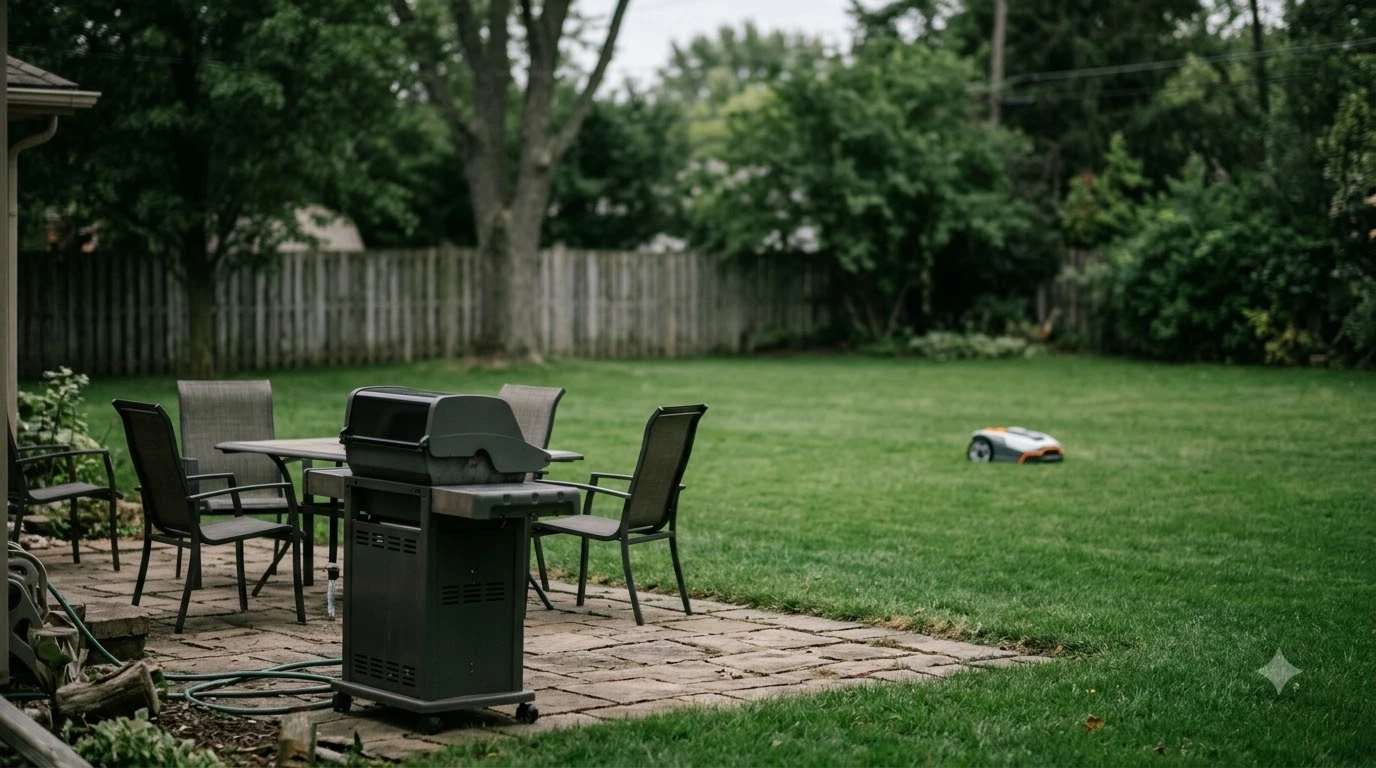

The best robot mower for a lawn after hydroseeding is one that can start high, cut in small steps, and stay off soft ground until the new grass is established: Iowa State Extension says a newly seeded lawn should be mowed when it reaches about 3 inches, at a setting of 2 to 2.5 inches, with a sharp blade. Hydroseed follows the same logic, but it comes up unevenly and sits on slurry and mulch, so the setup matters as much as the timing.
The short answer
- First mow: wait until the new grass is about 3 inches tall, then set the mower to 2 to 2.5 inches, per Iowa State.
- One-third rule: UC IPM advises cutting no more than one-third of the blade height at a time.
- Dry ground first: UC IPM says the lawn should be fairly dry before mowing so new turf is not pulled out.
- Lower gradually: Iowa State advises reducing height in later mowings instead of cutting to target at once.
- Slope and edges: hydroseeded banks and slopes need a mower rated for them, and a boundary check before the first automated run.
Why hydroseeded lawns need a different mowing plan
Hydroseeding sprays seed, fertilizer, and mulch as a slurry, so the grass often germinates in patches rather than in one even wave. Some areas are thick a week before others. A robot mower that runs on a fixed schedule does not know that, and it will keep cutting the taller patches and the bare patches alike. A growing lawn thickens quickly, and the guide to mowing thick grass during establishment covers what to expect. Another case with soft, young turf is new build lawns and sod.
UC IPM notes that seeded lawns may take up to two months before they are ready to be mowed, and that sod may be ready within two to three weeks. Hydroseed sits between those cases, and the grass itself is the better guide than the calendar. Check the turf by hand before you schedule the first automated run.
Best robot mower for a lawn after hydroseeding: first-mow height
Iowa State Extension gives the clearest starting rule for new grass. It says the lawn should be mowed when it is 3 inches tall, and if it grows to 4 inches or more first, set the blade as high as possible and mow promptly. The first cut should be at 2 to 2.5 inches, and the blade should be sharp so that the tips are not torn.
UC IPM adds a useful limit. Let the lawn grow to about one and a half times the recommended height before cutting, so that no more than one-third of the height comes off at a time. For a robot mower, that means it must be able to stay at the high end of its range for the first weeks. Confirm the maximum cutting height in the specifications, because some models do not go high enough for a freshly hydroseeded lawn.
Mowing schedule and gradual height changes
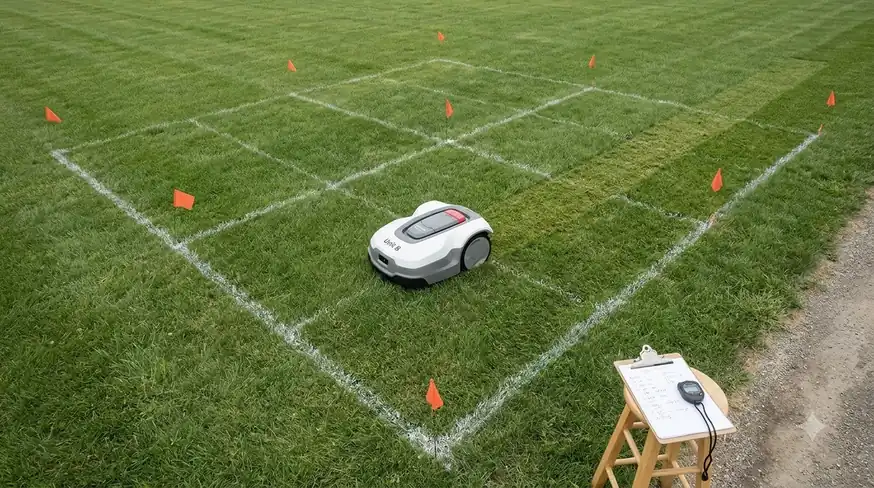
Robot mowers run often, which is convenient on an established lawn and risky on a new one. Iowa State’s advice to reduce the height gradually in later mowings is the part that suits automation best. Our reading is to set the robot to its high setting for the first two to three weeks, then lower it one step at a time while you watch how the grass responds. Uneven seedling coverage is discussed in mowing patchy new grass to round out the picture for this topic.
Use the mower’s schedule to limit runs during the early weeks, rather than letting it run daily. If the app allows zones or time windows, keep the new hydroseeded area out of the run until the ground is firm, and bring it back in once the grass has thickened.
Wet ground, soft soil and the first run
Hydroseeded ground stays damp for a while, and the surface can be soft even when it looks dry. UC IPM says to make sure the lawn is fairly dry before mowing, so you do not pull out the new turf. A robot mower’s wheels can leave ruts or lift young grass on soft ground, so set a rule to skip automated runs after heavy rain or watering. Soft ground under wheels is covered in soft clay soil and mowers.
Iowa State does not address soft ground directly, so the rule above comes from UC’s dry-before-mowing advice and our reading of how wheels behave on wet soil. If the ground shifts underfoot, wait.
Slopes, banks and boundary setup
Hydroseeding is often used on banks and slopes, where sod is expensive and seed is hard to hold in place. A robot mower’s slope rating matters here, because the steepest bank can decide whether the machine covers the whole yard. Compare the stated maximum slope with the steepest section, not the average grade.
Boundary setup needs care too. If your model uses a buried wire, avoid cutting it into freshly hydroseeded soil. A wire-free model that navigates by camera or satellite avoids that step, though you should still check that the mapping works around the bare patches.
What to check before you buy
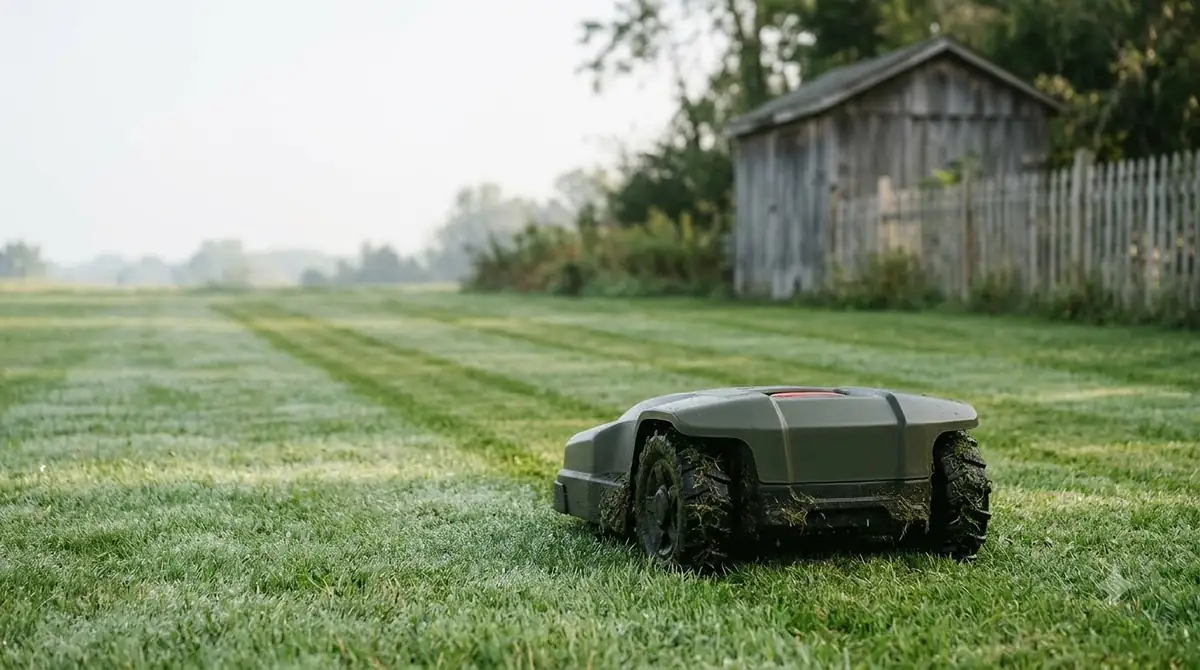
For the best robot mower for a lawn after hydroseeding, check four things. Confirm the maximum cutting height is high enough for the first weeks. Compare the slope rating with the steepest bank. Decide whether you want a buried wire or a wire-free system. Make sure you can change the height in steps, and can keep the new area out of runs until it is firm.
Those answers matter more than the list of features. A robot mower that cuts well on an established lawn is not automatically the right choice for newly hydroseeded ground.
Frequently asked questions
When can a robot mower run on a hydroseeded lawn?
Wait until the grass is about 3 inches tall and the ground is fairly dry. UC IPM notes that seeded lawns can take up to two months before they are ready to be mowed, so the grass itself is the better guide than a date.
What height should the robot mower use first?
Iowa State Extension advises mowing at 2 to 2.5 inches for the first cut, with a sharp blade. Keep the robot at its high setting for the early weeks and lower it gradually.
How much grass should come off in one cut?
UC IPM recommends removing no more than one-third of the blade height at a time. On new turf, that means letting the lawn grow past the target height before each cut.
Should I use a buried wire on a hydroseeded lawn?
A buried wire means cutting into soil that is still settling, which can disturb the new seed. A wire-free model avoids that step, but check its navigation and slope limit before buying.
Sources
- Iowa State University Extension, When should I start mowing a newly seeded lawn? (university extension): first-mow height, sharp blade, and gradual height reduction.
- UC IPM, Mowing newly established turf (university extension): timing for seeded lawns, the one-third rule, and dry-ground advice.
 Up next7 min readBest Robot MowersShould a Robot Mower Run After Dethatching?Updated Nov 16, 2026
 8 min readBest Robot MowersBest Robot Mower for Wisconsin Lawns: Cool-Season Cut GuideUpdated Nov 18, 2026
 7 min readBest Robot MowersCan a Robot Mower Cut Dandelions? What Happens to the PlantUpdated Nov 15, 2026
 8 min readBest Robot MowersBest Robot Mower That Cuts Close to Edges: What Decides the ResultUpdated Nov 11, 2026
 8 min readBest Robot MowersRobot Mower Buying Checklist for First-Time OwnersUpdated Nov 17, 2026
 7 min readBest Robot MowersBest Robot Lawn Mower Memorial Day Sale: What to Check FirstUpdated Nov 17, 2026